 how-to
Greywater Disposal On Utah Construction Sites: A 2026 Guide
Last Updated: October 29, 2026
Quick Summary
Greywater disposal on Utah construction sites means containing handwash and sink water in a holding tank and hauling it on a set schedule, never letting it drain to the ground. Size the tank using peak crew count, days between pickups, and a 25% buffer, and keep process water like concrete washout out of the greywater tank.
- Utah's graywater rule limits reuse to subsurface irrigation for single-family homes.
- Build a written wastewater plan naming each stream, provider, contact, and backup.
- Tank size = (workers × gallons per worker per day × days between pickups) + 25% buffer.
- Match tank size to the provider's pump truck capacity to avoid partial pump-outs.
- Set tanks on firm, level ground away from storm drains and keep a spill kit on site.
Table of Contents
- What Counts as Greywater on a Utah Construction Site
- Build a Construction Site Wastewater Management Plan
- Sizing a Greywater Holding Tank for Construction Sites
- Temporary Handwashing Station Wastewater Disposal
- Greywater Spill Prevention Best Practices
- Vetting a Portable Sanitation Provider: Checklist and Red Flags
- Scheduling Greywater Pickup and Service With Patriot Solutions
- Frequently Asked Questions
What Counts as Greywater on a Utah Construction Site
Greywater disposal on Utah construction sites starts with one question about greywater disposal: which water can be reused, and which cannot?
Utah's graywater rule limits reuse to subsurface irrigation for single-family homes, according to the Utah Division of Water Resources graywater feasibility report.
Here is what most crews get wrong. They assume a greywater tank replaces a portable restroom. It does not.
So greywater handling is a layer on top of your restroom plan, not a swap for it.
- Handwash and sink water: greywater
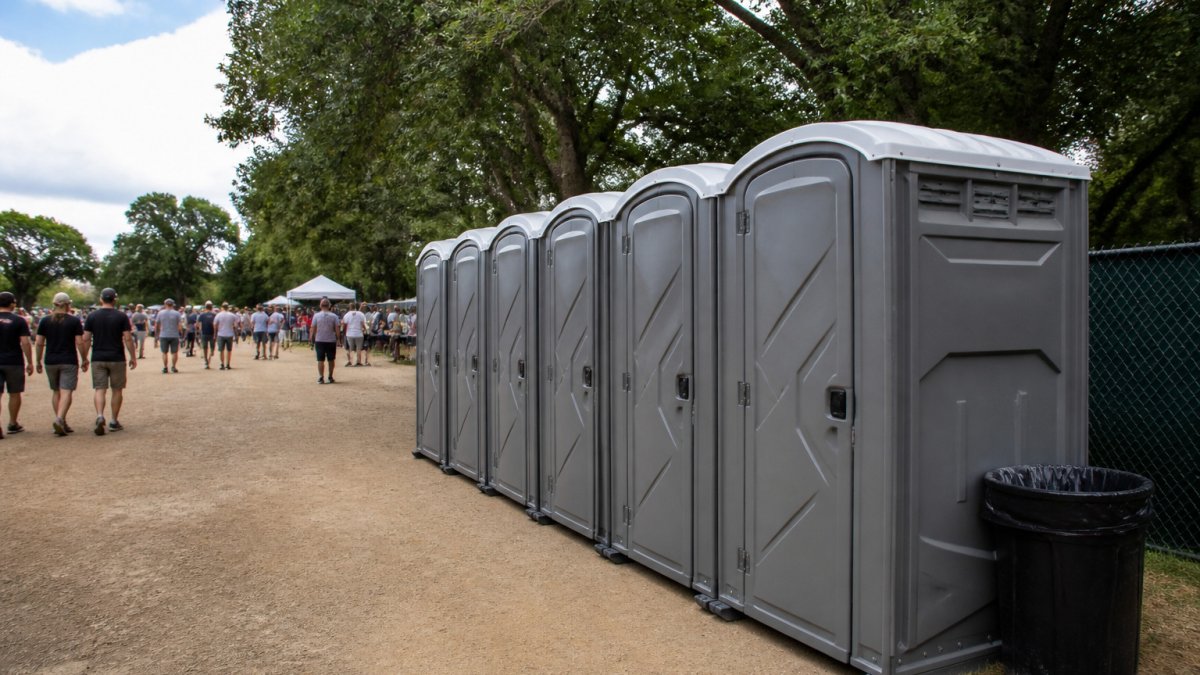
- Toilet waste: blackwater, handled by portable restrooms
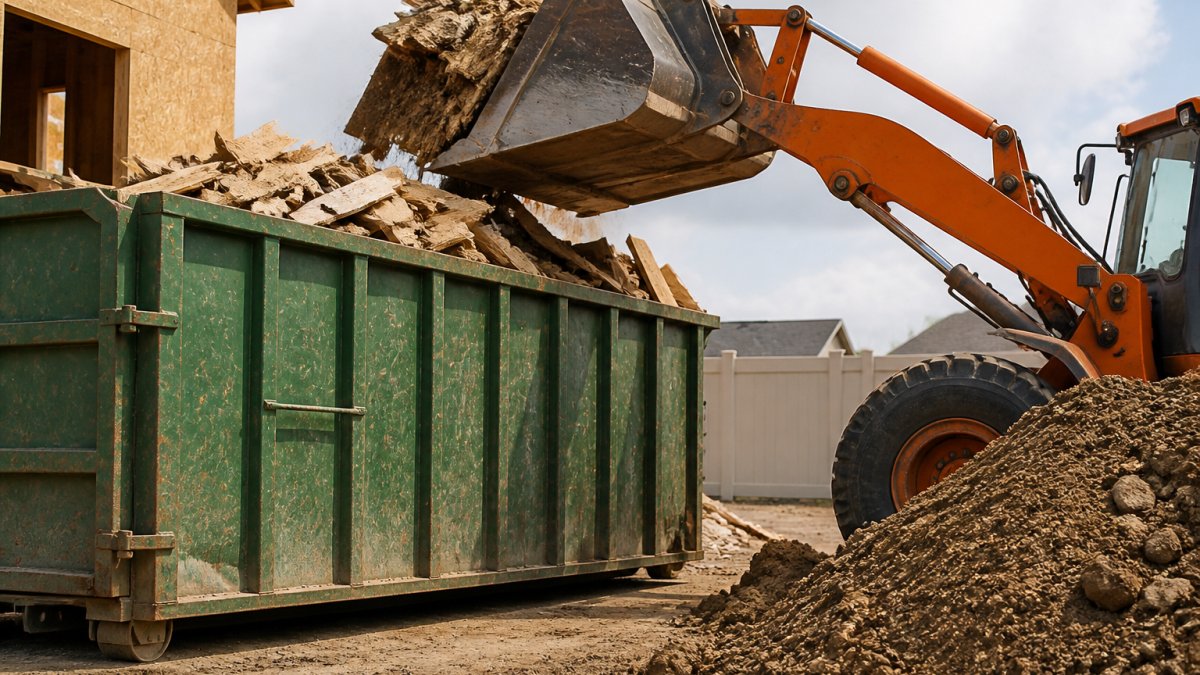
- Concrete washout, paint rinse, fuel spills: separate streams entirely
That last bullet is a common mistake. Washout water is not greywater, and mixing it in can turn a simple pump-out into a disposal problem.
Build a Construction Site Wastewater Management Plan
A construction site wastewater management plan is a written record of where every drop of dirty water goes, who hauls it, how often, and what happens when something fails. It is also the document a health inspector, general contractor, or owner's rep will ask for during a site audit.
Build the plan in seven steps, not five:
- Inventory every water source. Walk the site and list handwash stations, sinks, restroom units, concrete washout areas, paint and tool rinse stations, and any dewatering points. Note the location of each on a simple site map.
- Assign each source a stream. Label every source as greywater, blackwater, or process water. Concrete washout, paint rinse, and fuel-contaminated water are process water and must never enter a greywater tank.
- Size tanks and set pickup frequency. Use peak crew count, not average, and document the math (see the sizing section below). Record the provider's pump-truck capacity so tank size and truck capacity match.
- Name the provider, contact, and backup for each stream. List the primary hauler, a 24-hour phone number, and a named backup provider. A plan with one phone number is a plan with a single point of failure.
- Write the service schedule into the plan. State pickup days, expected service windows, and what "missed service" triggers. Vague schedules are the most common reason a plan fails an audit.
- Define spill response and contingency. Name a spill responder, list spill-kit locations, and describe what happens if a pickup is missed, a truck breaks down, or weather closes the access road. Include backup-unit arrangements in writing.
- Post, distribute, and update. Keep a copy in the site trailer, give one to the general contractor, and revise the plan whenever crew size, site layout, or the provider changes.
A plan that lives only in a manager's head fails the first time that manager is off site. Write it down, date it, and keep a revision log.
The Utah Water Research Laboratory at Utah State University publishes onsite wastewater training materials that help site managers understand how these systems are designed and sized.
For the broader rules your greywater plan sits inside, see our guide on how to comply with Utah construction site sanitation.
Sizing a Greywater Holding Tank for Construction Sites
Sizing a greywater holding tank comes down to headcount, days between pickups, and a safety margin. There is no single right size.
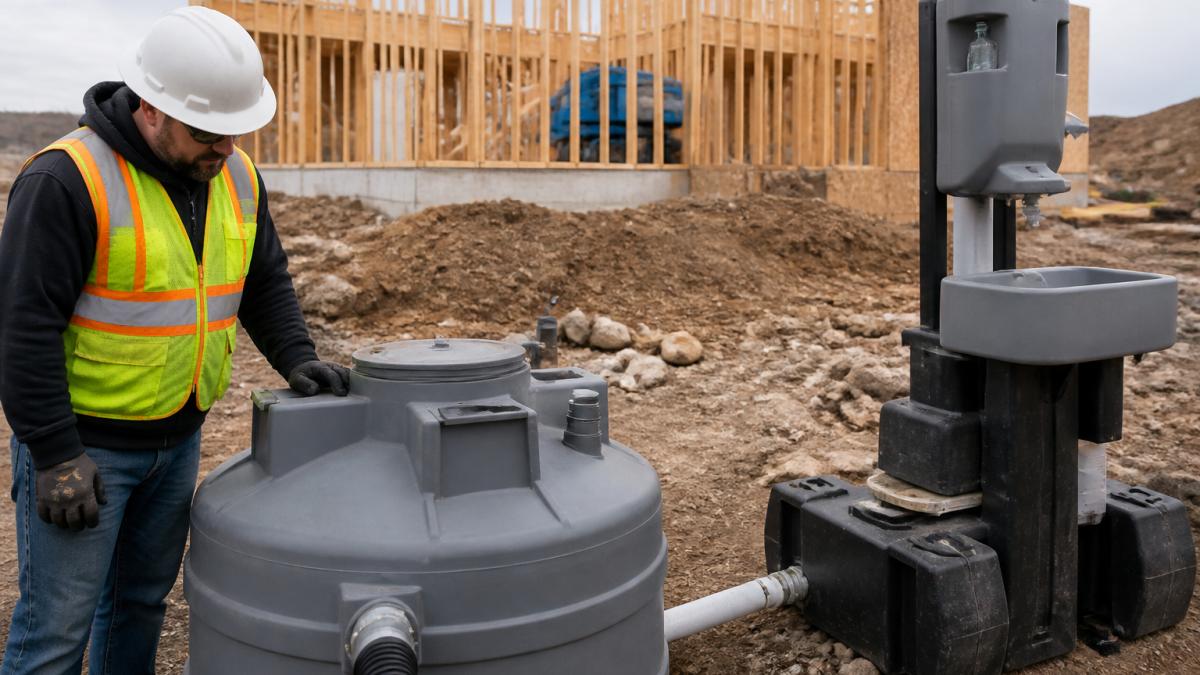
Use this formula:
Tank size = (workers × gallons per worker per day × days between pickups) + 25% buffer
Check the fixture's rated flow to estimate daily use.
Then match the tank to the truck. A tank that is too large for the pump truck means a partial pump-out and a return trip. A tank that is too small means overflow between visits.
- Count peak crew, not average crew
- Add buffer for hot weeks and extra handwashing
- Confirm the provider's pump truck can reach the tank
- Keep the tank on level ground with clear access
Pickup frequency drives the math more than tank size. Get that schedule right first.
Sizing comes down to headcount, days between pickups, and a safety margin, with a few site checks that keep the tank workable.
| Item | Value or rule | Note |
|---|---|---|
| Tank size formula | (workers × gallons per worker per day × days between pickups) + 25% buffer | Use peak crew, not average |
| Buffer | 25% | Covers hot weeks and extra handwashing |
| Crew count | Peak crew | Not average crew |
| Pickup frequency | Days between pickups | Drives the math more than tank size |
| Tank vs. truck | Match tank to pump truck capacity | Too large means partial pump-out and return trip |
| Tank placement | Level ground with clear access | Provider's pump truck must reach it |
| Example crew | 20-person crew on weekly schedule | Needs far more capacity than 5-person remodel |
Temporary Handwashing Station Wastewater Disposal
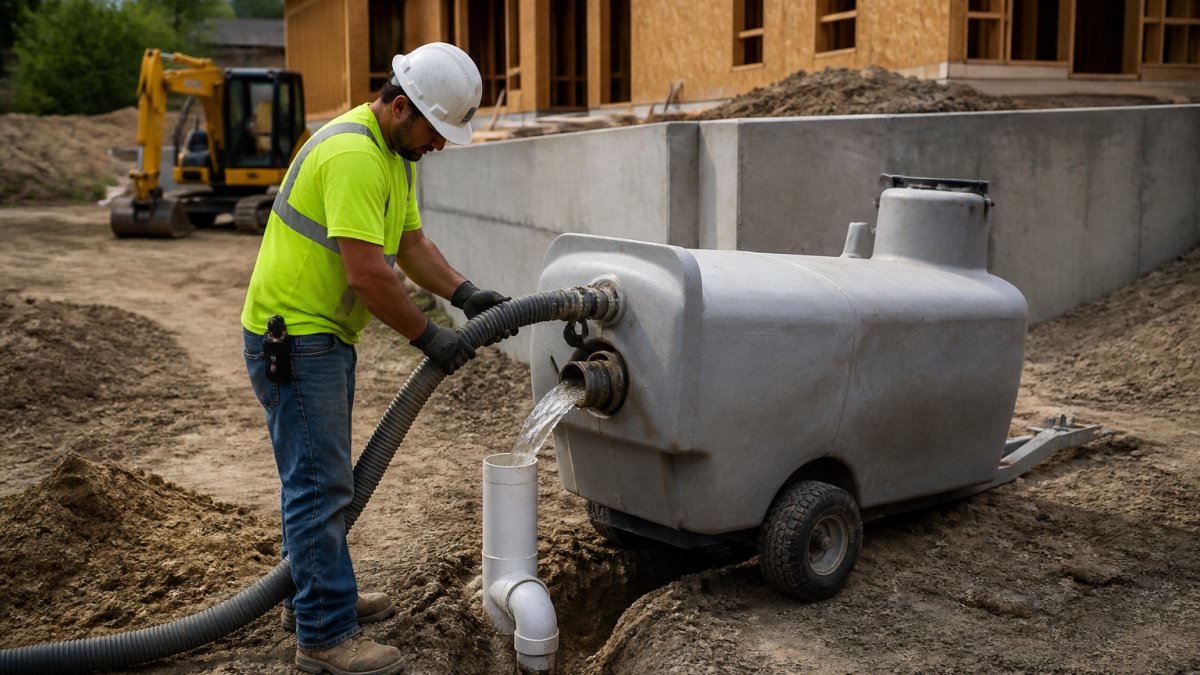
Temporary handwashing station wastewater disposal means capturing the water, not letting it soak into the dirt. A handwash station that drains to the ground fails a site audit and creates a muddy, unsanitary mess near the trailer.
The setup that works:
- A handwash unit with a self-contained fresh and waste tank
- A greywater holding tank for higher-volume stations
- A posted pickup schedule matched to crew size
- A rule that washout water never enters the greywater tank
Waste handling on a jobsite follows the same logic as any waste management plan: separate the streams, contain them, and haul them on schedule. Research on greywater treatment and reuse shows that simple, gravity-based filtration can improve reuse quality, but on a construction site the safer path is containment and hauling.
Greywater Spill Prevention Best Practices
Greywater spill prevention best practices come down to three habits: secure the tank, inspect it, and plan for the worst. Most spills are not dramatic. They are a slow leak under a tank nobody checked.
Follow these:
- Set tanks on firm, level ground away from storm drains
- Inspect hoses and fittings at every delivery and pickup
- Keep a spill kit with absorbent and bags on site
- Train one crew member as the spill responder
- Never overfill a tank to save a pickup
Watch out: a tank placed near a drainage channel turns a small leak into a runoff problem. Move it before the first rain.
Keep the kit stocked and visible.
Vetting a Portable Sanitation Provider: Checklist and Red Flags
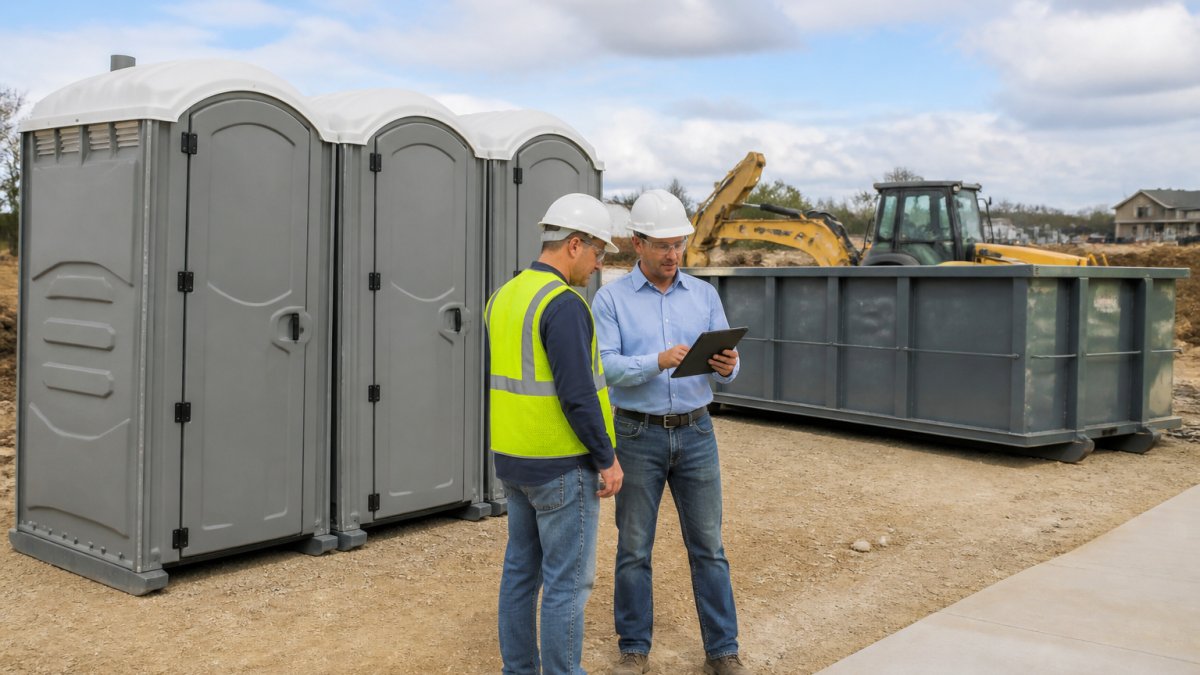
Vetting a portable sanitation provider means checking reliability, contract terms, and documentation before you sign, not after the first missed pickup. For a step-by-step guide to choosing a reliable portable sanitation provider, work through the checklist below. The right provider shows up on schedule, cleans equipment to a stated standard, answers the phone when something goes wrong, and puts its commitments in writing. The wrong one is cheap up front and expensive in downtime.
The vetting checklist
Work through this in order.
- Written service schedule. Pickup frequency, service days, and expected service windows stated in the contract, not just quoted verbally.
- Service-level commitments. Response time for service calls, what counts as a missed visit, and the remedy (credit, extra visit, backup unit).
- Cleaning and sanitation standards. Ask what "clean" means: tank evacuation, interior wash, deodorizer, fresh paper and sanitizer, and whether cleaning happens on site or at a yard.
- Backup and contingency plan. Named backup units, a backup truck or subcontractor, and a written procedure for breakdowns, weather closures, and holiday schedules.
- Insurance and licensing. Certificate of insurance naming your company or the general contractor as additional insured, plus proof of any required hauling or waste-transport permits.
- Disposal documentation. Where the waste goes and whether the provider can supply manifests or disposal records on request.
- Contract terms. Delivery, pickup, servicing, taxes, damage fees, overage charges, minimum rental periods, and cancellation terms all spelled out. See our portable toilet rental contract terms explained for what each clause should cover.
- Coverage area. Confirmed service to your specific site, including access-road and gate constraints for the pump truck.
- References. Two or three construction managers with crews your size, not just large-event clients.
- Emergency contact. A 24-hour number that reaches a person, tested before you sign.
Red flags to watch for
- Vague or verbal-only service schedules
- Quotes that omit delivery, pickup, or servicing fees
- No stated backup for missed pickups or breakdowns
- No certificate of insurance or evasive answers about disposal
- Slow callbacks before you even sign
- Fees buried in the contract: overage, damage, lock-out, or relocation charges
- No local references, or references only from event clients
- Pressure to sign a long minimum term before a site visit
Questions to ask on the call
- What is your service window, and what happens if you miss it?
- Can you send a sample contract and a certificate of insurance today?
- Who is my 24-hour contact, and what is the backup plan if that truck breaks down?
- Where does the waste go, and can you provide disposal records?
- What are the overage, damage, and cancellation terms?
Ask for references from crews your size. A provider that serves big sites well may still miss small jobs, and a provider that serves events well may not understand jobsite access constraints.
Scheduling Greywater Pickup and Service With Patriot Solutions
Scheduling greywater pickup and service starts with one call and a clear site plan. Patriot Solutions provides portable restrooms and roll-off dumpsters in the Delta, Utah area, with clean equipment and dependable local service.
Here is how we set up service:
Patriot Solutions offers portable restrooms and roll-off dumpsters in the Delta, Utah area.
Pricing depends on quantity, dates, and delivery. Visit the Patriot Solutions website or contact the company for current prices and a quote.
Frequently Asked Questions
What counts as greywater on a construction site?
Greywater is used water from handwashing sinks, portable restroom hand-wash stations, and similar washing points that does not include toilet waste. On a construction site, it usually comes from temporary handwashing stations and crew wash-up areas. Utah's graywater rules are narrow, so crews should not assume it can be handled as a standalone disposal method. Keep it separated from blackwater and collect it in a dedicated tank.
How often should greywater holding tanks be emptied?
Emptying frequency depends on crew size, how many handwashing stations you run, and how much water is used per shift. A common approach is to estimate daily greywater volume, then size the tank to hold at least two to three days so a missed service does not cause an overflow. Ask your provider for a written servicing schedule tied to your project phase, and confirm response times if a tank fills early. On larger sites, weekly pickup is typical; smaller crews can often stretch longer.
Can construction-site greywater be discharged onto the ground?
Not as a general practice. Utah's graywater rules are narrow and mostly address residential reuse. That means a construction site should not dump greywater on the ground, into a storm drain, or into a ditch. Collect it in a holding tank and have a licensed sanitation service haul it to an approved disposal point. Check with the local health department before any discharge.
What should a construction-site greywater disposal plan include?
A workable plan names the source points (handwashing stations, wash-up areas), the holding tank size and location, the servicing frequency, and the disposal destination. Add spill response steps, who is responsible for inspections, and a backup contact if a pickup is missed. Include the provider's quote, contract terms, and coverage area in writing. Review the plan at each project phase so tank sizing and service frequency still match actual crew numbers.
Missed pickups and mystery fees are the two things that sink a sanitation plan. Patriot Solutions fixes both with clean equipment, fast delivery, and dependable local service, plus roll-off dumpsters for the debris side of the job. Get started with Patriot Solutions and keep your site clean and compliant from day one.