 how-to
7 Steps to Calculating Dumpster Weight Limits for Construction Debris
Last Updated: October 31, 2026
Quick Summary
Calculating dumpster weight limits for construction debris means measuring your debris volume in cubic yards, converting it to weight using material density, and comparing that estimate to the included tonnage allowance. Volume alone won't tell you if a load is overweight, because heavy materials like concrete hit the scale limit before the container fills. Estimate the weight before delivery, then confirm the allowance and overage rate in writing.
- General construction debris runs roughly 300 to 400 pounds per cubic yard, while concrete runs about 4,000 pounds per cubic yard.
- Divide total cubic feet by 27 to convert to cubic yards, then add a volume buffer of 10% to 20%.
- Included tonnage is not standardized across the industry, so ask for the allowance in writing before you book.
- The hauler calculates debris weight as gross weight minus tare weight, and you should ask for the scale ticket on every haul.
- If your estimate lands within a half ton of the allowance, order the next size up or plan a second haul.
Table of Contents
- Why Volume Alone Won't Tell You If Your Dumpster Is Overweight
- Step 1: Measure Your Debris Volume in Cubic Yards
- Step 2: Use Construction Debris Weight per Cubic Yard by Material
- Step 3: Run the Numbers With a Construction Debris Weight Calculator
- Step 4: Compare Dumpster Weight Limits by Size
- Step 5: Understand Dumpster Included Tonnage and Overage Fees
- Step 6: Account for Moisture, Compaction, and Mixed Loads
- Step 7: Load It Safely and Verify the Weight at the Scale
- Frequently Asked Questions
Why Volume Alone Won't Tell You If Your Dumpster Is Overweight
A 20-yard dumpster full of framing lumber weighs far less than the same container packed with concrete.
At Patriot Solutions, we see the same problem on job sites around the area.
Weight limits often fill up before the container does, according to Junk Crusher's dumpster planning guidance.
Below, we walk through seven steps that take you from a debris pile to a weight estimate you can trust.
Step 1: Measure Your Debris Volume in Cubic Yards
Start by measuring the pile, not guessing at it. Break the debris into rough rectangular sections. Measure length, width, and depth in feet for each section.
If the pile is irregular, measure the longest, widest, and deepest points and take about 80% of that figure.
For a deeper walkthrough on sizing debris piles, see our guide on how to estimate construction waste volume.
Converting Cubic Feet to Cubic Yards
Divide total cubic feet by 27 to get cubic yards. That's the number every dumpster size is built around. A pile measuring 9 feet by 6 feet by 3 feet comes to 162 cubic feet, or 6 cubic yards.
Add a volume buffer of 10% to 20%. Debris never stacks as neatly as the math assumes.
Step 2: Use Construction Debris Weight per Cubic Yard by Material
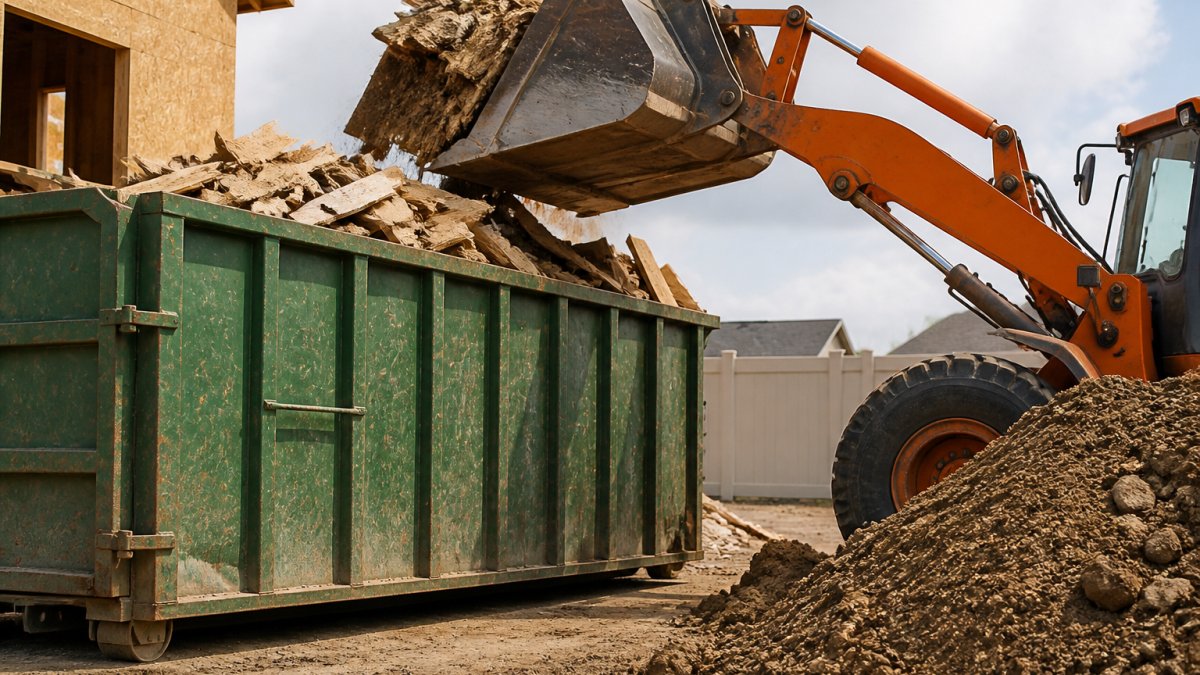
Now convert volume to weight using material density. General construction debris runs roughly 300 to 400 pounds per cubic yard, based on The Junk Sharks' debris weight estimates. Heavy materials run much higher.
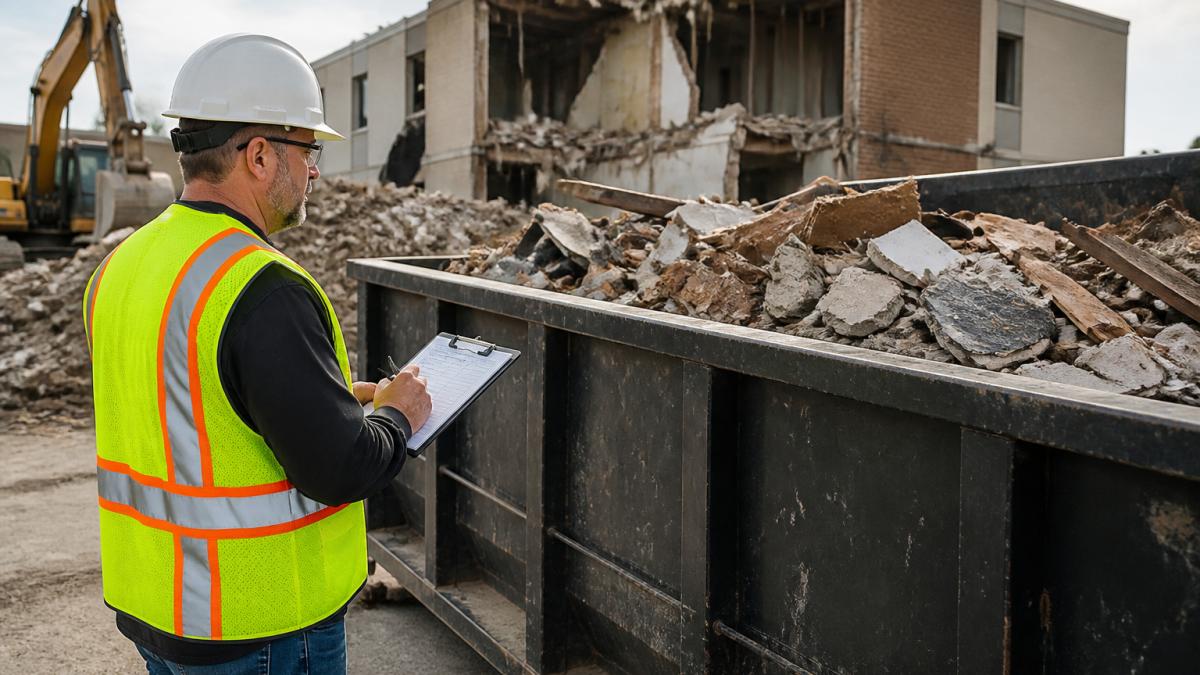
Here's a working reference for construction debris weight per cubic yard. Treat these as planning ranges, not scale-accurate figures, moisture, compaction, and how tightly the material is packed will move the real number within and sometimes beyond these bands:
| Material | Approx. Weight per Cubic Yard | Notes |
|---|---|---|
| Framing lumber and mixed light debris | 300-400 lbs | Loose, dry framing scrap; wet or green lumber runs heavier |
| Drywall | 500-600 lbs | Clean scrap; joint compound and tile backing add weight |
| Roofing shingles | 700-1,000 lbs | Varies with shingle type and how much tar paper is attached |
| Brick and asphalt | 1,500-2,000 lbs | Asphalt paving is denser than broken brick |
| Dirt | 2,000-2,500 lbs | Saturated soil can exceed the top of this range |
| Concrete | 4,000 lbs | Reinforced concrete with rebar runs slightly higher |
For the exact figure on the heaviest common material, read our breakdown of how much a cubic yard of concrete weighs.
Worked Example: From Measured Pile to Weight Estimate
Turning a measured pile into a tonnage number you can compare against a rental allowance is the step that matters most.
Say you're stripping a kitchen and bath remodel. You measure three debris sections:
- Section A (framing scrap and trim): 8 ft × 4 ft × 2 ft = 64 cubic feet
- Section B (drywall): 6 ft × 5 ft × 2 ft = 60 cubic feet
- Section C (tile and thinset): 4 ft × 3 ft × 1.5 ft = 18 cubic feet
Total volume: 64 + 60 + 18 = 142 cubic feet. Divide by 27 to get 5.26 cubic yards.
Now apply density. Use the midpoint of each range so you're not anchoring on the low end:
- Framing scrap: 64 cu ft ÷ 27 = 2.37 cu yd × 350 lbs = about 830 lbs
- Drywall: 60 cu ft ÷ 27 = 2.22 cu yd × 550 lbs = about 1,220 lbs
- Tile and thinset: 18 cu ft ÷ 27 = 0.67 cu yd × 1,750 lbs = about 1,170 lbs
Estimated debris weight: roughly 3,220 lbs, or about 1.6 tons.
That number is what you compare against the rental's included tonnage, not the 5.26 cubic yards.
Building the Buffer Into the Math
Apply the volume buffer before you convert to weight, not after. A 15% buffer on 5.26 cubic yards gives you about 6.05 cubic yards, which pushes the estimate to roughly 1.85 tons.
A common pattern among contractors is to round the final weight estimate up to the nearest quarter ton and compare that rounded figure to the allowance.
One habit worth building: keep a running list of material types as you demo, with rough volumes for each.
Step 3: Run the Numbers With a Construction Debris Weight Calculator
A construction debris weight calculator does the same math faster. Several providers offer tools built for specific materials, including shingles, drywall, asphalt, concrete, and carpet, per Dumpsters.com's weight estimation tools.
Run the calculator, then sanity-check the result against the density table above. If the two numbers land within about 15% of each other, you have a usable estimate.
One habit worth building: keep a running list of material types as you demo. Mixed loads are where estimates go wrong.
Step 4: Compare Dumpster Weight Limits by Size
Dumpster weight limits by size vary by provider, and that's the part most size charts skip. AAA Carting notes that weight limits vary by provider, so a general size chart should never replace the specific provider's limit, per AAA Carting's dumpster weight guidance.
Rough planning ranges:
- 10-yard dumpster: best for heavy debris in small volumes
- 20-yard dumpster: the middle ground for mixed renovation waste
- 30-yard dumpster: best for bulky, light debris like wood and siding
A bigger container is not automatically the right answer for heavy material, because heavy loads can exceed tonnage limits while container volume sits half empty.
When you know which size fits your tonnage, you can review the roll-off dumpster options for the area and book one.
Step 5: Understand Dumpster Included Tonnage and Overage Fees
Rentals typically include a set tonnage allowance, and anything past it is billed per ton, but the specific allowance depends on the provider's terms. That's the core of dumpster included tonnage and overage fees, but the mechanics matter more than the definition, because the allowance is where most surprise bills come from.
How Included Tonnage Is Set
Included tonnage is not standardized across the industry. That's why two providers can quote the same 20-yard container with different allowances, one may include 1 ton, another 2 tons, and a third may price heavy debris separately.
Ask for the allowance in writing before you book. A verbal "about a ton and a half" is not a number you can plan against.
How Overage Is Billed
Confirm two things:
- The per-ton overage rate. It is typically higher than the base rental rate per ton, because it covers disposal plus the administrative cost of the overage.
- Whether overage is prorated or billed in increments. Some providers round up to the nearest quarter or half ton. On a small overage, the rounding method can matter more than the rate.
Overage rates can run above the effective per-ton cost baked into the base rental, which is why estimating your weight in Step 2 is worth the effort.
How Scale Tickets Work
After hauling, the hauler weighs the truck at a certified scale twice: once loaded (gross weight) and once empty (tare weight). Gross minus tare equals the debris weight, per Sundance Disposal's scale ticket explanation.
Ask for the scale ticket on every haul, not just when you suspect an overage. The ticket shows the gross, tare, and net weights and the scale location.
What to Confirm Before Booking
Run through this list before you sign:
- Included tonnage for the specific container size, in writing
- Per-ton overage rate and whether it's prorated or rounded
- Whether heavy debris (concrete, dirt, brick) has a separate allowance or rate
- Whether the provider weighs every haul or only hauls that look heavy
- What happens if the load exceeds the container's rated capacity, refusal, re-load fee, or both
Overage charges are avoidable. Estimate your load weight in Step 2, compare it to the included tonnage, and size up if you're close to the line. If your estimate lands within a half ton of the allowance, order the next size up or plan a second haul.
Step 6: Account for Moisture, Compaction, and Mixed Loads
Wet debris weighs more than dry debris, and compacted debris weighs more than loose.
Mixed loads add a second problem. Our guide on disposing of concrete debris in a roll-off dumpster covers the right way to load it.
waste generation of 63.7 and 21.5 kilograms per square meter during deconstruction, per a San Francisco region construction waste study. The range shows how much material type shifts the total.
Step 7: Load It Safely and Verify the Weight at the Scale
Load heavy material first, spread it evenly, and stop at the fill line marked inside the container. Overloading creates two risks: a failed pickup and an unsafe haul.
After hauling, the hauler records gross weight and subtracts the empty tare weight to get the debris weight, per Sundance Disposal's scale ticket explanation.
For loading technique that keeps you under the limit, read our tips for loading construction dumpsters efficiently.
Frequently Asked Questions
How do you calculate the weight of construction debris in a dumpster?
Measure the debris volume in cubic yards, then multiply by the material's density in pounds per cubic yard. Framing lumber and general construction debris run roughly 300 to 400 pounds per cubic yard. For a mixed load, estimate each material separately and add the results. Divide the total pounds by 2,000 to get tons, then compare that figure against the dumpster's included tonnage before you fill it.
How much does a cubic yard of construction debris weigh?
It depends on the material. General framing lumber and mixed construction debris are estimated at roughly 300 to 400 pounds per cubic yard. Heavy materials weigh far more: concrete, asphalt, dirt, and brick all run substantially heavier per yard. That gap is why dumpster weight limits, not container volume, often decide how much you can actually load. Check a material-specific density reference before estimating.
What happens if a construction dumpster is overweight?
The hauler weighs the container at the scale and subtracts the empty tare weight to get your debris weight. If that exceeds the included tonnage, you pay an overage fee per ton over the allowance. In severe cases the hauler may refuse to transport the load until material is removed, since an overweight container is a safe transport risk. Confirm your provider's tonnage allowance and overage rate before delivery.
How can I reduce the weight of a construction dumpster load?
Separate heavy materials like concrete, dirt, and brick from lighter wood and drywall, and route the heavy items to a dedicated container. Break down bulky wood to fill voids rather than stacking air pockets. Keep rain-soaked debris and pressure-treated lumber out of the load, since moisture adds hidden weight. If you are close to the tonnage limit, schedule a swap-out rather than risk an overage fee.
Getting the weight math right before the container arrives is the difference between a clean project closeout and a surprise invoice. Patriot Solutions delivers clean roll-off dumpsters and portable restrooms across the area with fast, dependable local service, and we walk you through tonnage allowances before drop-off so there are no surprises at the scale. Get started with Patriot Solutions and keep your next demolition or renovation project on budget from the first load.