 how-to
How to Dispose of Concrete Debris in a Roll Off Dumpster
Table of Contents
- Why Concrete Needs a Roll Off Dumpster and Special Handling
- Concrete Dumpster Weight Limits and Tonnage Capacity
- How to Load a Dumpster with Concrete Safely and Efficiently
- Construction and Demolition (C&D) Waste Disposal: What Goes In and What Stays Out
- Choosing the Right Dumpster Size for Concrete Debris
- Recycling Concrete: Environmental Impact and Cost Savings
- Permits, Site Accessibility, and Scheduling Your Dumpster
- Frequently Asked Questions
Last Updated: September 21, 2026
Why Concrete Needs a Roll Off Dumpster and Special Handling
Concrete debris disposal is not like tossing old furniture into a dumpster. Concrete is one of the heaviest materials you can remove from a job site, and it needs a roll off dumpster built for that weight. This guide walks you through every step so you avoid overage charges and failed pickups.
A single cubic yard of broken concrete can weigh far more than the same volume of household trash. That weight is the whole problem. Standard trash bins and light-duty containers are not built for it, and neither are the trucks that haul them.
Here is what makes concrete different:
- It is dense, so small piles get heavy fast
- It does not compact, so it fills space quickly
- It often comes mixed with rebar, dirt, and other debris
- It can crack or damage a container that is not rated for the load
That is why you need a heavy debris container and a hauler who understands tonnage limits. Patriot Solutions provides roll off dumpsters built for construction and demolition waste, with clean equipment and fast local delivery.
Concrete Dumpster Weight Limits and Tonnage Capacity
Concrete dumpster weight limits are the maximum tonnage a container and its truck can safely handle. Most roll off dumpsters are rated by weight, not just size, and heavy debris fills that weight long before it fills the box.
A 10-yard container may hold several tons of concrete. A 20-yard box does not double that weight, because the truck still has to lift and haul it legally. Always ask about the tonnage limit before you load.
Calculating Cubic Yardage vs. Weight for Heavy Debris
Cubic yardage measures space. Weight measures mass. Concrete is heavy per unit of volume, so the two numbers do not match up the way they do for lighter debris.
The practical rule: estimate both. Measure the length, width, and height of your pile in feet, then divide by 27 to get cubic yards. Then estimate weight based on the type of concrete.
Here is the formula most contractors use for a concrete slab:
Step 1: Measure the slab's length, width, and thickness in feet. Step 2: Multiply length × width × thickness to get cubic feet. Step 3: Divide cubic feet by 27 to convert to cubic yards. Step 4: Multiply cubic yards by the weight per cubic yard for your concrete type.
For example, a 20 ft × 20 ft driveway slab that is 4 inches thick:
- 20 × 20 × 0.33 ft = 132 cubic feet
- 132 ÷ 27 = 4.89 cubic yards
- 4.89 × 4,000 lb (typical weight of broken concrete per cubic yard) = 19,560 lb, or about 9.8 tons
That single driveway slab weighs nearly 10 tons.
| Debris Type | Approx. Weight per Cubic Yard | Notes |
|---|---|---|
| Broken concrete slab | 3,500-4,500 lb | Fills a container fast |
| Concrete with rebar | 4,000-5,000 lb | Metal adds weight |
| Asphalt | 3,000-4,000 lb | Often accepted as clean fill |
| Mixed C&D debris | 1,500-2,500 lb | Lighter, but reduces recycling value |
What Happens If You Exceed the Weight Capacity
Going over the tonnage limit triggers overage charges, and the truck may not be able to lift the container at all. If the load is too heavy, the driver can refuse the pickup until you remove material.
How to Talk to Your Hauler About Weight
Before you order, ask three questions:
- What is the tonnage limit for the size I am renting?
- How much do you charge per ton over the limit?
- Do you offer a heavier-rated container for concrete-only loads?
Some haulers offer 10-yard and 15-yard containers with higher weight ratings specifically for concrete and dirt. These are often the better choice for a slab or foundation project, even if the box looks smaller.
How to Load a Dumpster with Concrete Safely and Efficiently
Loading a dumpster with concrete safely means controlling weight, protecting the container, and keeping your crew out of harm's way. Heavy debris is unforgiving, so a few habits make the job faster and safer.
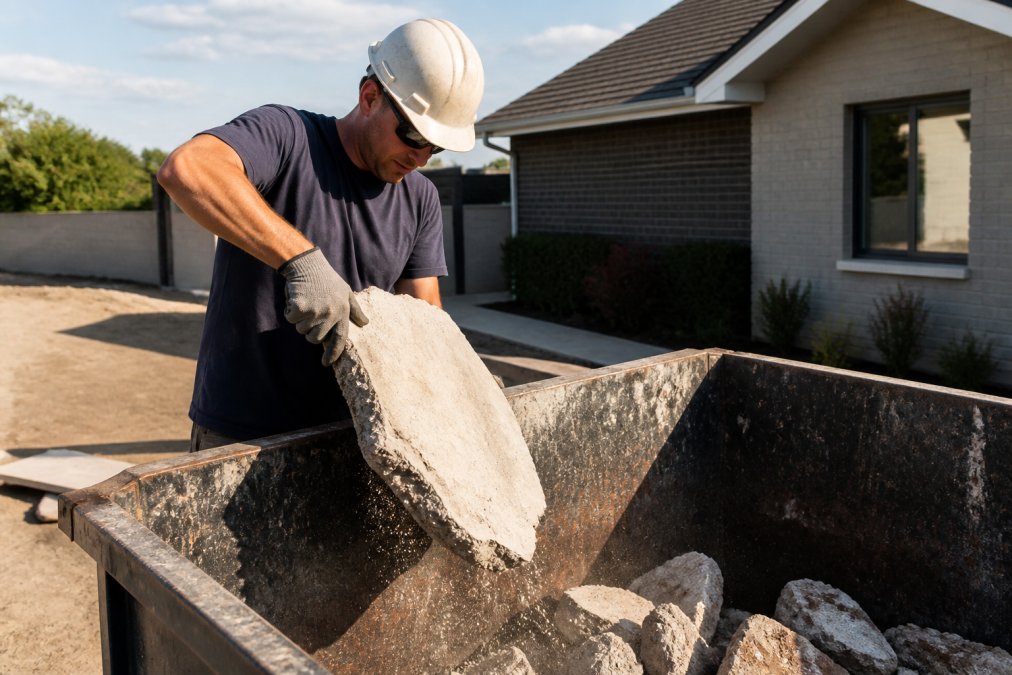
Follow these steps:
- Place the dumpster on firm, level ground near the work area
- Break large slabs into manageable pieces before loading
- Load heavy chunks first, then fill gaps with smaller rubble
- Keep the load even from side to side
- Stop loading at the weight limit, not the top of the box
Load Distribution and Structural Integrity
Load distribution keeps the container stable and protects its structural integrity. Weight piled in one corner can bend the walls or tip the box during pickup.
Construction and Demolition (C&D) Waste Disposal: What Goes In and What Stays Out
Construction and demolition (C&D) waste disposal covers the debris from building, remodeling, and teardown work. Concrete is a big part of it, but not everything from a job site belongs in the same container.
Prohibited Items and Contamination Penalties
Contamination penalties hit when banned items end up in a concrete-only load. A single can of paint or a bag of trash can turn a clean load into a mixed one.
Keep these out of a concrete dumpster:
- Paints, solvents, and liquids
- Treated wood and drywall
- Household trash and food waste
- Tires, batteries, and electronics
- Hazardous materials of any kind
Choosing the Right Dumpster Size for Concrete Debris
Choosing the right dumpster size for concrete comes down to weight first and volume second. A smaller box loaded with concrete often hits its tonnage limit before it looks full.
Recycling Concrete: Environmental Impact and Cost Savings
Recycling concrete turns old slabs into crushed concrete and aggregate for new projects. That keeps material out of the landfill and often lowers your disposal cost.
The recycling process is straightforward:
- Concrete is separated from other debris
- Metal rebar is pulled out and recycled
- The concrete is crushed into different sizes
- Crushed concrete is sold as aggregate
What Actually Happens at the Recycling Facility
When your concrete dumpster arrives at the recycling facility, it is weighed and inspected. If the load is clean, meaning no trash, wood, or other debris, it goes straight to the crusher. If it is contaminated, it may be rejected or diverted to a landfill, and you pay the higher tipping fee.
- 3-inch minus: Used as base for roads and parking lots
- 1-inch minus: Used for walkways and drainage
- Fines: Used as fill or in new concrete mixes
Clean Fill vs. Mixed Debris: The Pricing Difference
The biggest factor in your disposal cost is whether your load is clean fill or mixed debris.
Contamination Penalties: What They Are and How to Avoid Them
Contamination penalties hit when banned items end up in a concrete-only load. A single can of paint or a bag of trash can turn a clean load into a mixed one.
Keep these out of a concrete dumpster:
- Paints, solvents, and liquids
- Treated wood and drywall
- Household trash and food waste
- Tires, batteries, and electronics
- Hazardous materials of any kind
Permits, Site Accessibility, and Scheduling Your Dumpster
Permit requirements depend on where the container sits. A dumpster on private property usually needs no permit. A container placed on a public street often does.
Frequently Asked Questions
Can I put concrete in a standard roll-off dumpster?
Yes, but not a standard mixed-debris dumpster. Concrete is extremely heavy, so you need a heavy-debris roll-off container rated for the weight. A 10-yard dumpster is often the practical choice for concrete because it keeps the load within tonnage limits. Always tell your provider what you plan to throw in so they can set you up with the right container and weight allowance.
Why are there weight limits for concrete in dumpsters?
Weight limits exist because concrete weighs roughly 4,000 pounds per cubic yard. A dumpster that holds 20 cubic yards of light debris can easily exceed its rated capacity with just a few yards of concrete. Exceeding the weight capacity can damage the container, make it unsafe to lift, and lead to overage charges. Knowing the tonnage limit before you load protects your budget and the equipment.
How do I prepare concrete for dumpster disposal?
Break large slabs into manageable pieces using a sledgehammer or jackhammer. Remove rebar and wire mesh where possible, and keep pieces under 2 feet across so they load easily and don't bridge the container walls. Sweep up fine dust and small fragments separately. If the concrete is painted, sealed, or contaminated with oil, check with your disposal provider first, as those materials may need special handling.
Is it cheaper to recycle concrete than to landfill it?
Recycling concrete is often less expensive because it avoids landfill tipping fees and may earn a lower disposal rate at a recycling facility. Recycled concrete is crushed and reused as aggregate for roads, drainage, and new construction, which keeps it out of landfills. Ask your roll-off dumpster provider whether they separate clean concrete loads for recycling, as that can reduce your overall disposal cost.
Concrete debris is heavy, messy, and easy to get wrong. The right container and the right plan make the job simple.
Patriot Solutions delivers clean roll off dumpsters and portable restrooms across the Delta area, with fast delivery and dependable local service. Our team helps you pick the right size, understand the weight limits, and keep your project on schedule.
Get started with Patriot Solutions and keep your concrete debris disposal on track from drop-off to pickup.