 How-to
How Do You Calculate Event Waste Management Costs?
Last Updated: November 11, 2026
Quick Summary
To calculate event waste costs, estimate total trash, recycling, and compost volume from attendance, duration, and meals served, then convert that volume into cubic yards to match container sizes. Price each line item separately, including container rental, hauling, disposal or tipping fees, and cleanup labor, and add a 10 to 15 percent contingency.
- One cubic yard holds about 6 to 7 packed 33-gallon bags.
- A 100 to 500 guest event typically needs 20 to 30 cubic yards.
- Flat-fee quotes include a set tonnage, and overage above it is billed per ton.
- Divide total waste cost by attendance to compare events of different sizes.
- Recycling and composting can cut landfill fees but add sorting labor and separate hauling.
Table of Contents
- Step 1: Build Your Event Waste Generation Estimate
- Step 2: Convert Volume into Bags, Cubic Yards, and Container Sizes
- Step 3: Price Out Waste Removal and Disposal Charges
- Step 4: Run the Numbers Through an Event Waste Calculator
- Step 5: Drop the Figures into an Event Waste Management Budget Template
- Step 6: Apply Event Waste Reduction Strategies That Cut the Bill
- Get a Quote Built Around Your Event Size and Site
- Frequently Asked Questions
Step 1: Build Your Event Waste Generation Estimate
Learning how to calculate event waste costs starts with one number: how much trash your event will actually produce. Get that estimate wrong and every line item after it drifts. This guide from Patriot Solutions walks through the full method, from raw volume to a finished budget.
Most organizers skip this step and guess. That guess is where overage charges come from.
Attendee Counts, Event Duration, and Meals Served
Three inputs drive the whole estimate:
- Attendees: Use your expected head count, not your ticket cap.
- Duration: A six-hour festival and a three-day conference generate very different volumes.
- Meals served: Food service is the heaviest waste stream at most events.
A common mistake is counting only paid guests. Vendors, staff, volunteers, and performers all eat and all throw things away.
Separating Waste Streams by Type
Split your estimate into streams before you price anything:
- Food waste and compostables
- Recycling: cans, bottles, cardboard
- General trash: plates, wrappers, liners
- Bulk items: boxes, signage, packaging from vendors
Event Impacts measurement guidance tracks total waste, waste per participant, and the share sent to landfill. Those three measures tell you where the cost sits.
Step 2: Convert Volume into Bags, Cubic Yards, and Container Sizes
Once you have a volume estimate, translate it into the units haulers actually bill in. Waste volume conversion is the practice of turning estimated trash weight or bag counts into cubic yards so you can match the right container size to the job.
Here is the working conversion set:
- One standard 33-gallon trash bag holds roughly 4 cubic feet.
- One cubic yard equals 27 cubic feet.
- So one cubic yard holds about 6 to 7 packed bags.
Trash Bags, Liners, and Collection Bins
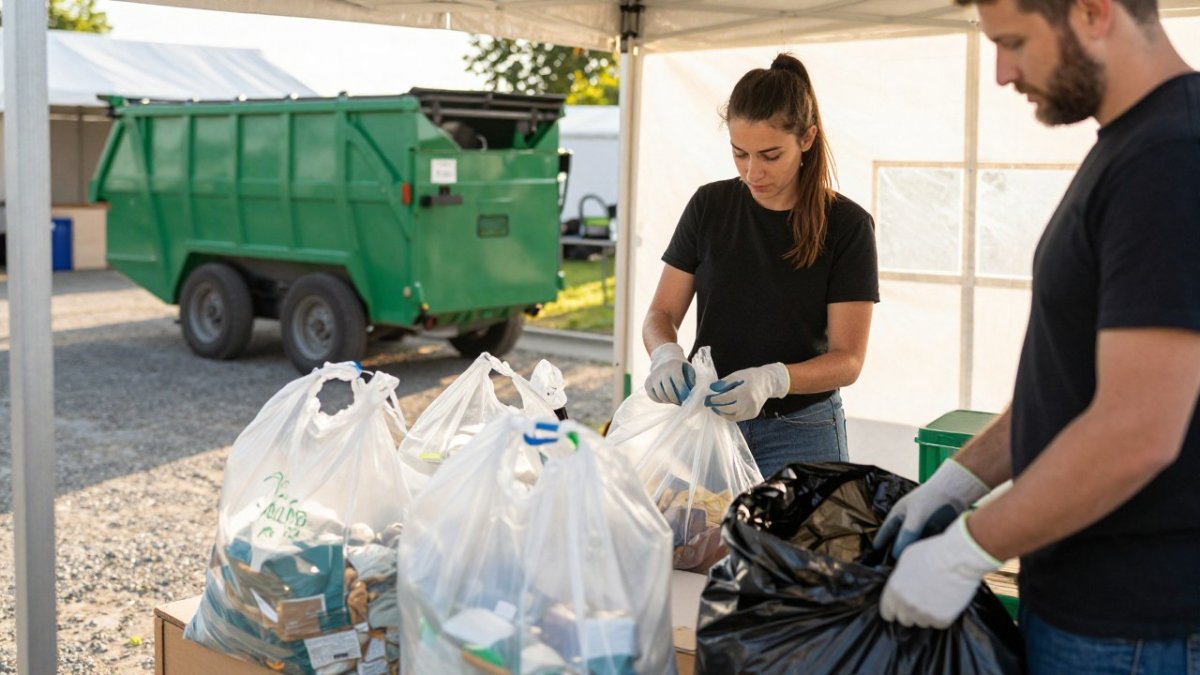
Bag and liner costs are small per unit but add up fast across a large site. Budget for:
- Liners sized to each bin
- Extra bags for mid-event swaps
- Collection bins placed at every food and beverage point
Loading containers well matters as much as sizing them. How to load a dumpster to maximize space and save money covers stacking and fill-line rules that keep you from paying for air.
Estimating Dumpster Requirements
Match container size to event scale:
| Event Size | Typical Container | Notes |
|---|---|---|
| Small gathering, under 100 guests | 10 to 15 cubic yards | Often one unit plus bins |
| Mid-size event, 100 to 500 guests | 20 to 30 cubic yards | Add recycling separately |
| Large festival, 500+ guests | Multiple 30 to 40 cubic yards | Staged pickups during event |
These are starting points. Food service, packaging, and site cleanup push volume up quickly.
Step 3: Price Out Waste Removal and Disposal Charges
Costs come in four buckets, and only one of them is the container itself. Waste removal and disposal charges typically break into container rental, hauling and pickup, disposal or tipping fees, and labor for cleanup. A common mistake is comparing quotes on the rental line alone. The disposal fee is where budgets break.
Asking every provider for a full itemized quote is a sound practice. Roll-off dumpsters in Delta, Utah shows the container options available for events and cleanup work.
The Line Items Behind a Real Quote
A complete event waste quote should show each of these as a separate line, not a single bundled number:
- Container rental: the base charge for the dumpster or bin, usually per day, per week, or per month.
- Delivery and pickup: a flat transport charge each way. Some providers fold it into rental; many do not.
- Hauling or pull charge: the cost of each trip to empty or swap the container, which matters most for multi-day events.
- Disposal or tipping fee: what the landfill or transfer station charges per ton. This is the line that moves with your actual weight.
Watch out: a quote that lists only "dumpster + haul" is not comparable to an itemized one, because the missing lines reappear later as overage or surcharges.
Flat Fees vs. Volume- and Weight-Based Pricing
Two billing models dominate:
- Flat fee: One price for the container and haul, often with a weight allowance included. Easy to budget, but you pay the same whether the container is full or half empty, and overage above the allowance is billed separately.
- Volume- or weight-based: You pay for what you actually dispose of, measured by cubic yard or by ton at the scale. This rewards good diversion: if you compost and recycle heavily, the landfill weight drops and so does the bill.
Flat fees are easier to forecast. Weight-based pricing is more accurate but requires you to trust the scale ticket. Ask for the ticket on every pull so you can reconcile it against your estimate.
How to Compare Two Quotes Fairly
Put every quote on the same worksheet before you decide:
- Normalize the rental period (per day vs. per week vs. per month).
- Add delivery and pickup to the rental line so both quotes include transport.
- Convert the weight allowance into a per-ton figure so overage rates are comparable.
- Add estimated fuel and after-hours charges for your event dates.
- Multiply hauling by the number of pulls your event actually needs.
The lowest rental line is frequently not the lowest total. Cost factors for long term dumpster rentals breaks down what drives the number. If your site needs a permit, 7 steps to calculate your dumpster permit costs covers whether a permit adds to the bill.
Step 4: Run the Numbers Through an Event Waste Calculator
An event waste calculator is a simple worksheet that multiplies your inputs by per-unit rates to produce a total. You do not need software. A spreadsheet with four columns works.
Build it in this order:
- Enter attendee count, duration, and meals served.
- Multiply by your per-attendee waste estimate to get total volume in cubic yards.
- Divide volume by container capacity to get container count.
- Multiply containers by rental, haul, and disposal rates.
- Add labor, bags, bins, and a contingency line.
A Worked Example You Can Copy
The numbers below are illustrative rates, not quotes. Substitute your provider's actual figures; the method is what matters.
Assume a one-day event with 400 attendees, food service, and a six-hour run.
| Line Item | Low | Base | High |
|---|---|---|---|
| Container rental (20 cu yd, one week) | $350 | $450 | $600 |
| Delivery and pickup | $100 | $150 | $250 |
| Disposal / tipping (allowance plus overage) | $150 | $250 | $400 |
| Extra haul or mid-event pull | $0 | $200 | $400 |
| Labor and site cleanup (hours × rate) | $300 | $500 | $800 |
| Bags, liners, and bins | $75 | $125 | $200 |
| Contingency (10 to 15 percent) | $100 | $170 | $300 |
| Estimated total | $1,075 | $1,845 | $2,950 |
Low
Divide the base total by attendance to get a per-attendee figure (about $4.60 in this example). That single number is what lets you compare a 400-person event to a 2,000-person festival on equal footing.
Set Low, Base, and High Estimates on Purpose
The three-column structure is not decoration. Low assumes favorable weather, good sorting, and no overage. Base assumes a normal event with one mid-event pull. High assumes rain, contamination fees, an extra haul, and heavier cleanup. Present all three to stakeholders so the contingency conversation happens before the event, not after the invoice.
Reconcile Against Actual Weights and Invoices
After the event, pull the scale tickets and the final invoice and compare them line by line to your base estimate. Record the variance on each line: container count, haul count, tonnage, labor hours, and supplies.
Watch out: a contingency line that gets spent on the first surprise is not a contingency; hold it until final reconciliation and release it only against documented overages.
Step 5: Drop the Figures into an Event Waste Management Budget Template
An event waste management budget template turns your calculator output into a line-item budget you can track. Structure it in five rows:
| Line Item | Basis | Notes |
|---|---|---|
| Container rental | Units × rate | Flat or monthly |
| Hauling and pickup | Trips × rate | Include mid-event pulls |
| Disposal fees | Weight or volume | Check allowance terms |
| Labor and cleanup | Hours × rate | Site sweep after event |
| Supplies | Bags, bins, liners | Add 10 percent buffer |
Add a per-attendee line at the bottom. Divide total waste cost by attendance. That single figure lets you compare events of different sizes and spot which ones run expensive.
Step 6: Apply Event Waste Reduction Strategies That Cut the Bill
The cheapest waste is the waste you never create. Event waste reduction strategies lower disposal costs before the first bag is filled.
Start with these:
- Swap single-use serviceware for compostable or reusable options.
- Set up clearly labeled stations for trash, recycling, and compost.
- Require vendors to pack in and pack out their own materials.
- Donate surplus food where local rules allow.
- Run a quick waste audit after the event to see what actually landed in each stream.
Recycling and composting carry their own trade-offs. They can cut landfill volume and weight-based fees, but they add sorting labor and separate hauling.
Multi-day events also need service frequency right-sized to daily volume. Portable toilet service frequency for events explains how scheduling affects the total bill.
Get a Quote Built Around Your Event Size and Site
Estimating event waste costs is a skill, and like any skill it improves with a real number to check against.
Patriot Solutions provides roll-off dumpsters and portable restrooms for events, construction sites, and cleanups across the Delta area. We deliver clean equipment and fast, dependable local service.
Guessing at waste volume is the fastest way to blow an event budget.
Frequently Asked Questions
How do you estimate the amount of waste an event will generate?
Start with expected attendance, event duration, and meals served, then estimate waste by type and volume before the event using prior event data and vendor input. Food service usually produces the heaviest waste stream, followed by packaging and paper. Build in a contingency of roughly 10 to 20 percent for weather, attendance swings, and unplanned materials. Write the estimate down so you can compare it against actual hauling tickets afterward and sharpen the numbers for your next event.
What factors affect event waste disposal costs the most?
Container size and count, haul frequency, and whether pricing is flat-fee or weight-based drive most of the bill. Location matters too: rural sites and venues with limited truck access can carry delivery and pickup surcharges. Food waste, recycling separation, and compost service add handling charges. Labor for cleanup and any overtime pickups push costs higher. Ask each provider to itemize container rental, delivery, hauling, disposal tonnage, and service fees so you can compare quotes on equal terms.
How many trash cans and dumpsters does an event need?
Base the count on your event waste generation estimate, not guesswork. Convert estimated volume into cubic yards, then match it to dumpster sizes and pickup frequency across the event duration. For collection bins, place them where waste is created: food service lines, entrances, and restroom areas. Overfill is what triggers extra pickups and overage charges, so size containers with headroom. A local provider can confirm what fits your site access and how often trucks can reach it.
How can event organizers reduce waste management costs?
Cut volume before you cut service. Switch to reusable serviceware, plan meals to reduce food waste, and set up clear recycling and compost stations so waste streams stay separated and hauling stays efficient. Track total waste, waste per participant, and the share sent to landfill so you can see which changes actually lower the bill. Pair reduction with right-sized containers and a single scheduled pickup instead of multiple emergency hauls.