 How-to
How to Secure a Dumpster on a Job Site: 7 Steps
Last Updated: November 10, 2026
Quick Summary
To secure a dumpster on a job site, match a hardened padlock or lock bar to the container's door design, park it in plain view, and latch the doors at every shift change. Limit access to named crew members and report any tampering or illegal dumping the same day.
- Confirm the door design with the rental provider before buying any lock.
- Use a hardened steel padlock with a shrouded shackle on rear swing doors.
- Park the dumpster on level ground within sight of the work area or trailer.
- Test the doors and lock at every shift change, not just at the end of the day.
- Photograph any tampering or illegal dumping before moving anything, then report it the same day.
Table of Contents
- Why Job Site Dumpsters Need Securing
- Step 1: Choose a Lock or Lock Bar That Fits Your Dumpster
- Step 2: Position the Dumpster Where It Can Be Seen and Monitored
- Step 3: Close, Latch and Check the Rear Swing Doors
- Step 4: Control Access and Keep the Area Clear
- Understanding Illegal Dumping Laws and Your Responsibility
- How to Prevent Dumpster Diving and Unauthorized Loading
- Booking Secure Dumpster Service for Your Next Project With Patriot Solutions
- Frequently Asked Questions
A dumpster left unlocked on a job site is an open invitation, so knowing how to secure a dumpster matters from day one. Trespassers can dump their own trash in it, scavengers can pick through it for valuable scrap, and loose debris can spill onto the lot. This guide is designed to help construction crews lock down their roll-off dumpsters and keep the site clean, safe and under control. The steps below are practical and easy to follow, so your crew can start today.
Why Job Site Dumpsters Need Securing
A roll-off dumpster on a construction site holds more than trash. It can hold building materials, tools that got tossed in by mistake, and debris that was never meant to leave the site. When the container is open or unattended, anyone can add to it or take from it.
Unsecured dumpsters create three main problems:
- Illegal dumping: Outside people fill the container with their own waste, and you pay the overage fees.
- Dumpster diving: People dig through the debris, which can create liability if someone gets hurt.
- Trip hazards: Loose material spills out and sits on walkways where workers walk.
Knowing how to secure a dumpster solves all three. It also shows the rental company and the site owner that you take waste control seriously.
Step 1: Choose a Lock or Lock Bar That Fits Your Dumpster
The locking method has to match the container's door design, so the first task is identifying what your unit has. Most roll-off dumpsters used on US job sites fall into one of three groups, and each one calls for different hardware.
Rear swing doors with a fixed hasp. This is the most common setup on standard roll-off containers. The doors close over a steel hasp or a welded eye, and a padlock passes through it.
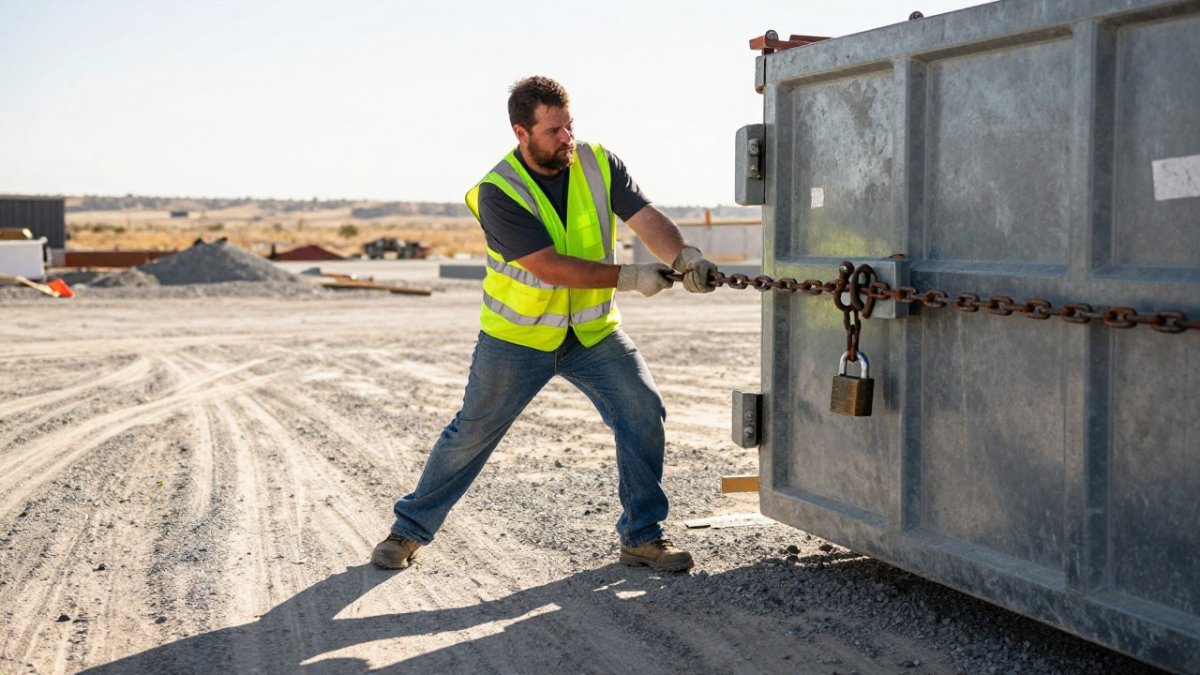
Rear swing doors with brackets for a lock bar. Some units have side brackets designed to accept a steel lock bar that spans both doors. The bar drops into the brackets and locks in place, so the doors cannot be pried apart at the seam. Check the brackets for cracks and loose bolts at delivery.
Open-top roll-off or other designs without doors. A lock bar and a padlock on a hasp will not secure an open container. Use a tarp or cover tied down to the frame, or ask the rental provider whether a lockable lid is available. Do not improvise attachments to the frame or sidewalls without approval from the rental provider.
Before you buy or install any lock, confirm three things with the rental provider: which door and bracket design the unit has, whether any locking points are approved by the manufacturer, and whether the company allows its own locks on the container. Some providers want their own lock bar or a specific padlock type, so check before you buy.
Watch out: a lock that is too small for the hasp or that is installed with the shackle loose enough to slip will be defeated without tools, so seat the padlock fully and test it by pulling on the doors afterward.
Assign one person to hold the keys or combinations and record where spares are kept.
The right lock depends on how your dumpster's doors are built, so match the hardware to the container before you buy.
| Door design | Recommended lock | Key check |
|---|---|---|
| Rear swing doors with fixed hasp | Hardened steel padlock with shrouded shackle | Confirm hasp is intact and fits |
| Rear swing doors with side brackets | Steel lock bar set in brackets | Check brackets for cracks and loose bolts |
| Open-top roll-off | Tarp or lockable lid tied to frame | Get rental provider approval first |
Step 2: Position the Dumpster Where It Can Be Seen and Monitored
Where you park the dumpster matters as much as how you lock it. A container tucked behind a fence in a dark corner invites trouble. A container in plain view of your crew and the street discourages it.
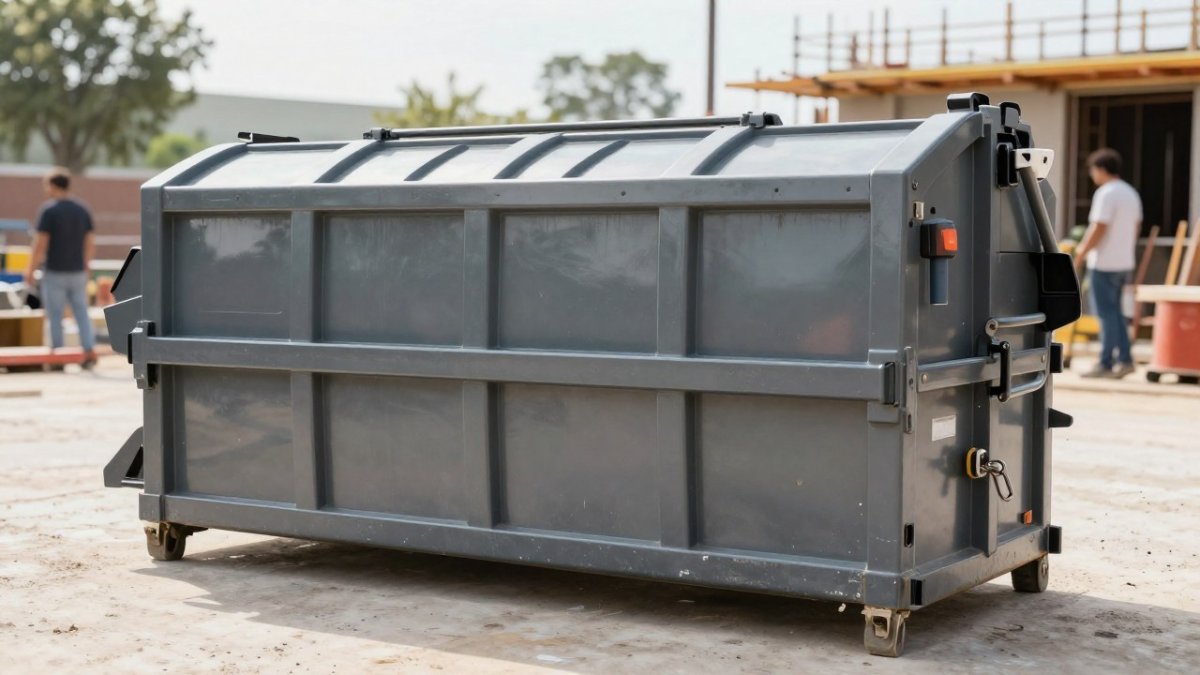
Place the dumpster:
- On firm, level ground that the truck can reach easily.
- Within sight of the job trailer, gate or main work area.
- Under good outdoor lighting when work runs into the evening.
- Away from fences or walls that someone could climb over to reach it.
Some crews add signage that says the dumpster is for job site debris only and that unauthorized dumping is prohibited.
Step 3: Close, Latch and Check the Rear Swing Doors
Every time your crew leaves the dumpster, the rear swing doors should be closed, latched and checked. A quick walk-around is enough.
Use this routine at the end of each shift:
- Close both rear swing doors fully.
- Engage the latch or lock bar.
- Pull on the doors to confirm they hold.
- Check that no debris is sticking out of the container.
- Confirm the lock is in place and the key is accounted for.
A door that looks closed but is not latched can swing open in wind or when someone bumps it. Test every time.
Step 4: Control Access and Keep the Area Clear
Access control works when someone is clearly responsible for it. On most job sites the dumpster sits idle between deliveries, and that idle time is when unauthorized use happens, so the rules need to cover handoffs as well as daily use.
Start by naming the people who may open the dumpster: crew members assigned to loading and the hauling company's driver during pickup. Write that list down and share it with the site supervisor. Anyone outside that list should be directed to the supervisor, not allowed to add material.
Key and combination handoffs are where control usually breaks down. Use a simple routine:
- The closing supervisor confirms the lock is engaged and the doors are latched at the end of each shift.
- The key or combination passes to the opening supervisor by name, and the handoff is noted in the site log.
- If a worker needs temporary access during the day, the supervisor opens the lock, watches the action, and relocks it.
- Spare keys stay in a locked location with a record of who holds them.
If you find the lock cut, the doors forced, or material dumped that was not your crew's, do three things in order. First, photograph the lock, the doors and the material before anything is moved. Second, report it to the rental provider and the property owner the same day, and note the time and the person who reported it. Third, check the lock and hasp for damage and replace the lock before the next shift.
Keep the area around the dumpster clear as well. Remove stray pallets, buckets and scrap that could block the truck or invite people to pile material beside the container. Clear space also reduces trip hazards, so workers can move between the dumpster and the work area safely.
For loading, avoid overfilling the container and never compress trash by climbing inside. Use a wheelbarrow or dolly to move heavy debris to the dumpster instead of dragging it across the lot.
Watch out: a dumpster that looks locked but has a loose lockbar or an unlatched door can be opened by wind or a bumped hasp, so test the doors at every shift change, not just at the end of the day.
Understanding Illegal Dumping Laws and Your Responsibility
Illegal dumping can carry fines and cleanup costs, and responsibility for what ends up in a container can depend on local rules and your rental agreement. Check your local rules and your rental agreement before you assume you are covered. Learn how to actually obtain the required permit in our guide to getting a dumpster permit in Delta, Utah.
For background on how regulators approach illegal dumping, you can review guidance from EPA guidance on solid waste management. Keep copies of your rental contract and any permits in your project file. Confirm with your local government whether a permit is required before the container arrives.
Write down any illegal dumping you find, take photos, and report it to the rental provider and the property owner right away.
Patriot Solutions can explain what your project needs before the dumpster arrives. Our guide on dumpster rental tips for new contractors covers common rules and what to check first.
How to Prevent Dumpster Diving and Unauthorized Loading
Dumpster diving happens when people dig through debris for scrap metal, tools or materials they can sell. It can also lead to injuries if someone climbs into an open container. Good security stops most of it.
Try these steps:
- Keep the lock bar or padlock on at all times when the dumpster is not in use.
- Park the container where the crew can see it from a work area.
- Post a sign that says unauthorized access is prohibited.
- Report anyone who climbs into or around the container to a supervisor.
Unauthorized loading is the other problem. A neighbor or passing driver may try to drop off their own trash. Watch for it, and call the rental provider or the property owner if you see it happen. Our guide on avoiding dumpster overage fees offers practical advice on preventing unauthorized loading and contamination. Many crews keep a simple log of dumping incidents, which helps when the rental company asks for details.
Patriot Solutions helps contractors understand the rules before they start. Our guide on how to schedule dumpster pickup shows how to time pickups so the container does not sit full and unattended for days.
Booking Secure Dumpster Service for Your Next Project With Patriot Solutions
Securing a dumpster takes planning, but it does not have to be complicated. Pick the right lock, park the container in a visible spot, latch the doors every time, control access and report problems fast.
When you are ready to book, Patriot Solutions offers roll-off dumpster service for construction and remodeling jobs. Read our roll-off dumpster rental guide for construction to learn what to expect, and reach out to our team for current pricing and availability. Our team can confirm delivery, pickup timing and the right container size for your project. Get your dumpster service set up with Patriot Solutions and keep your job site clean, safe and under control.
Frequently Asked Questions
Is there a way to lock a dumpster?
Yes. Most roll-off dumpsters can be secured with a lock bar across the rear swing doors, a heavy-duty padlock through the bar, or a combination of both. Choose a lock rated for outdoor use, keep the shackle protected from bolt cutters, and check that the latch engages fully every time the doors are closed. Ask your rental provider which locking points your specific unit includes before you start the project.
Is it illegal to use a construction site dumpster?
Using a dumpster that belongs to someone else, particularly one rented for a specific job, can lead to legal trouble. Illegal dumping laws can apply to anyone who deposits waste in a container without permission, and local rules vary. Keep the dumpster locked when unattended and post clear signage stating that only authorized contractors may use it.
How can I prevent illegal dumping in my rented dumpster?
Lock the rear doors when the crew leaves, position the dumpster in a visible area, and post signage listing what the container is for. Install lighting and, where practical, a camera pointed at the dumpster. Check the container at the start and end of each workday and report suspicious drop-offs to your rental provider and local authorities so the pattern can be addressed quickly.
Are there specific OSHA guidelines for dumpster security on job sites?
OSHA's construction standards focus on worker safety, including housekeeping, trip hazards and safe loading practices, rather than dumpster locks specifically. Keep walkways clear, avoid overfilling so debris does not fall out during handling, and make sure the container sits on firm, level ground. Your general contractor's site safety plan should address access control and daily cleanup in more detail.