 listicle
Roll Off Dumpster Rental for Construction: 2026 Guide
Table of Contents
- Roll Off Dumpster Sizes for Construction: Which Container Fits Your Project
- Types of Construction Debris Accepted in a Roll Off Dumpster
- Prohibited Items in Construction Dumpsters
- Construction Dumpster Rental Cost: What Drives Your Price
- Dumpster Rental Permit Requirements: A Municipal Guide
- Load Distribution, Site Accessibility, and Safety Protocols
- Sustainability, Waste Diversion, and LEED Certification Reporting
- How to Rent a Roll Off Dumpster: Scheduling and Rental Process
Last Updated: August 13, 2026
Roll off dumpster rental for construction looks simple until you get it wrong. Rent the wrong size and you're paying for a second haul. Miss a prohibited item and you're facing overage fees or a rejected load. The gap between a smooth project and a costly one almost always comes down to preparation. Below, we'll walk through sizing, accepted materials, permit requirements, load safety, and waste diversion.
Roll Off Dumpster Sizes for Construction: Which Container Fits Your Project
Choosing the right roll off dumpster size is the single most consequential decision in your rental. Too small and you're scheduling extra pickups; too large and you're paying for disposal capacity you never used.
Roll off containers are measured in cubic yards. A 10-yard dumpster holds roughly three pickup truck loads of debris, suitable for small bathroom remodels. A 40-yard container handles full-scale demolition waste from commercial builds or multi-unit gut renovations.
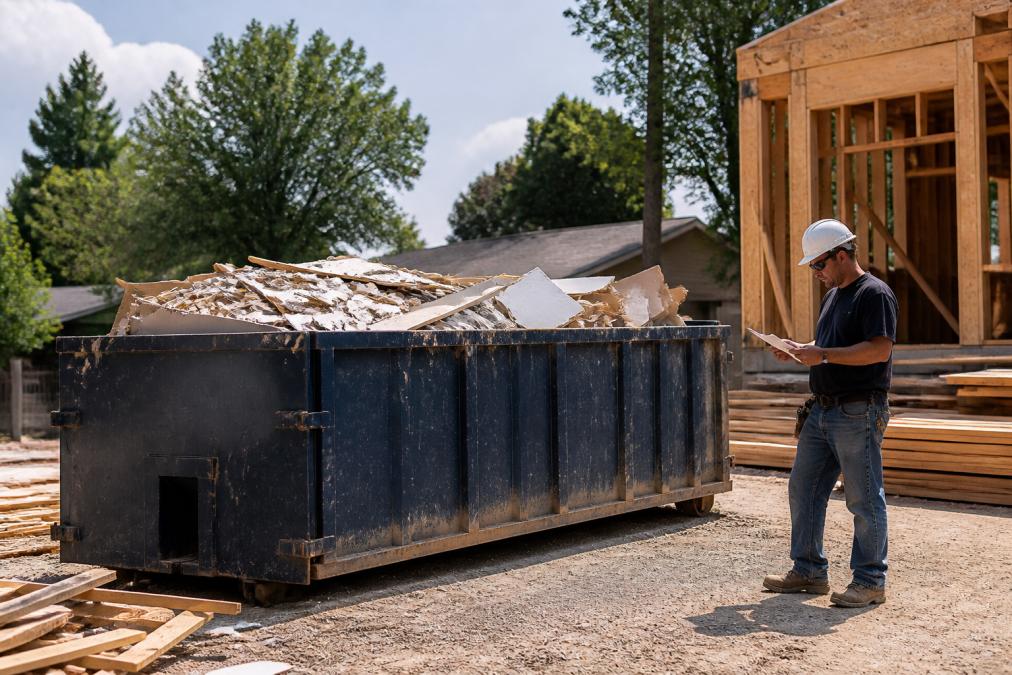
The most common mistake is underestimating cubic yardage. Drywall, lumber framing, and roofing shingles compress poorly, so a manageable-looking pile fills a container faster than expected.
Size Comparison Table: Cubic Yardage, Dimensions, and Typical Use Cases
| Size | Approximate Dimensions | Typical Weight Capacity | Best For |
|---|---|---|---|
| 10-yard | 12 ft x 8 ft x 3.5 ft | 1-2 tons | Small remodels, single-room cleanouts |
| 20-yard | 22 ft x 8 ft x 4.5 ft | 2-4 tons | Kitchen/bath renovations, roofing jobs |
| 30-yard | 22 ft x 8 ft x 6 ft | 3-5 tons | New construction framing, large cleanouts |
| 40-yard | 22 ft x 8 ft x 8 ft | 4-6 tons | Commercial demolition, full gut renovations |
If you're tearing out more than two rooms, start with a 30-yard container. Renting up is almost always cheaper than scheduling an emergency second pickup mid-project.
Types of Construction Debris Accepted in a Roll Off Dumpster
Most roll off dumpster rentals for construction accept wood framing and lumber, drywall and plaster, roofing shingles, flooring materials, insulation, windows and doors, metal scraps, concrete blocks, brick, and general site cleanup waste.
The key distinction is between mixed construction debris and heavy debris. Mixed loads are straightforward. Heavy debris, particularly concrete, asphalt, and masonry, requires separate handling.
Concrete, Asphalt, and Heavy Debris: Special Handling Considerations
Concrete and asphalt are dense enough to exceed weight limits in a fraction of the container's cubic yardage. A 10-yard container filled entirely with concrete can easily hit three times the standard tonnage limit, triggering significant overage charges.
Request a dedicated heavy debris container, sized smaller because weight, not volume, is the binding constraint. Asphalt and concrete recycling streams exist in most markets, and separating these materials often reduces your overall landfill fees.
According to the U.S. Environmental Protection Agency's construction and demolition debris guidance, concrete accounts for a substantial share of total construction and demolition waste generated annually, making proper sorting both an environmental and cost-management priority.
Prohibited Items in Construction Dumpsters
Prohibited items exist because hazardous materials require regulated disposal pathways that a standard roll off container cannot legally handle.
The most commonly prohibited items include:
- Hazardous materials: asbestos, lead paint, PCB-containing materials
- Liquid waste: paints, solvents, adhesives, oils
- Appliances with refrigerants: HVAC units, refrigerators, freezers
- Electronics: computers, monitors, televisions
- Tires and batteries
- Medical or biohazardous waste
- Flammable or explosive materials
Older buildings present the greatest risk. Structures built before 1980 often contain asbestos in floor tiles, ceiling texture, pipe insulation, and roofing materials. Before any demolition work on a pre-1980 structure, an asbestos survey conducted by a licensed inspector is required under EPA National Emission Standards for Hazardous Air Pollutants regulations. Disposing of asbestos-containing materials in a standard roll off dumpster is a federal violation.
Lead paint is similarly regulated. Renovation, repair and painting work in pre-1978 buildings falls under EPA's Renovation, Repair and Painting Rule, which governs how lead-containing debris must be handled.
Construction Dumpster Rental Cost: What Drives Your Price
Construction dumpster rental cost varies based on container size, rental duration, debris type, distance from the disposal facility, and local landfill fees. Because Patriot Solutions' pricing depends on your specific project scope, location, and rental period, contact us directly for a quote. Understanding the cost structure prevents surprises.
Weight Limits, Overage Charges, and Landfill Fees Explained
Every roll off container rental comes with a weight allowance, typically expressed in tons. Your quoted price covers disposal up to that tonnage limit. Exceed it, and overage charges apply per ton above the threshold.
Landfill fees are a pass-through cost most providers include in base pricing, but they fluctuate with local tipping rates. Projects generating heavy debris run the highest risk of hitting weight limits before filling the container's cubic yardage.
Always ask your provider what the weight allowance is for your container size before loading.
Cost-Saving Strategies for Long-Term Construction Projects
Separate your recycling streams from day one. Concrete and asphalt recycling divert heavy material from the landfill, reducing tonnage charges.
Schedule pickups strategically. Coordinate your pickup and delivery schedule with project phases rather than leaving a container on site for weeks between active periods.
Right-size your container. A 40-yard container sitting half-full for a month costs more than two 20-yard containers scheduled at the right milestones.
Negotiate on volume. For multi-phase commercial builds or ongoing renovation work, ask your provider about long-term project pricing.
Dumpster Rental Permit Requirements: A Municipal Guide
Permit requirements for placing a roll off dumpster on public property vary by municipality. Containers placed on public streets, sidewalks, or right-of-way require permits. Containers on private property generally do not, though zoning and HOA restrictions may apply.
The permit process typically involves:
- Identify your local permitting authority (usually the city public works or streets department)
- Submit a placement application with location, container dimensions, and rental dates
- Pay the applicable permit fee
- Post required signage or reflective markers on the container
- Comply with placement restrictions (distance from fire hydrants, intersections, and utility access points)
Permit approval timelines range from same-day to two weeks. Plan accordingly. The American Public Works Association's right-of-way management resources provides guidance on municipal standards that inform local permit frameworks.
Load Distribution, Site Accessibility, and Safety Protocols
Load distribution inside a roll off container is a safety issue. Uneven loading creates an unstable load during transport and increases the risk of material shifting or spilling in transit.
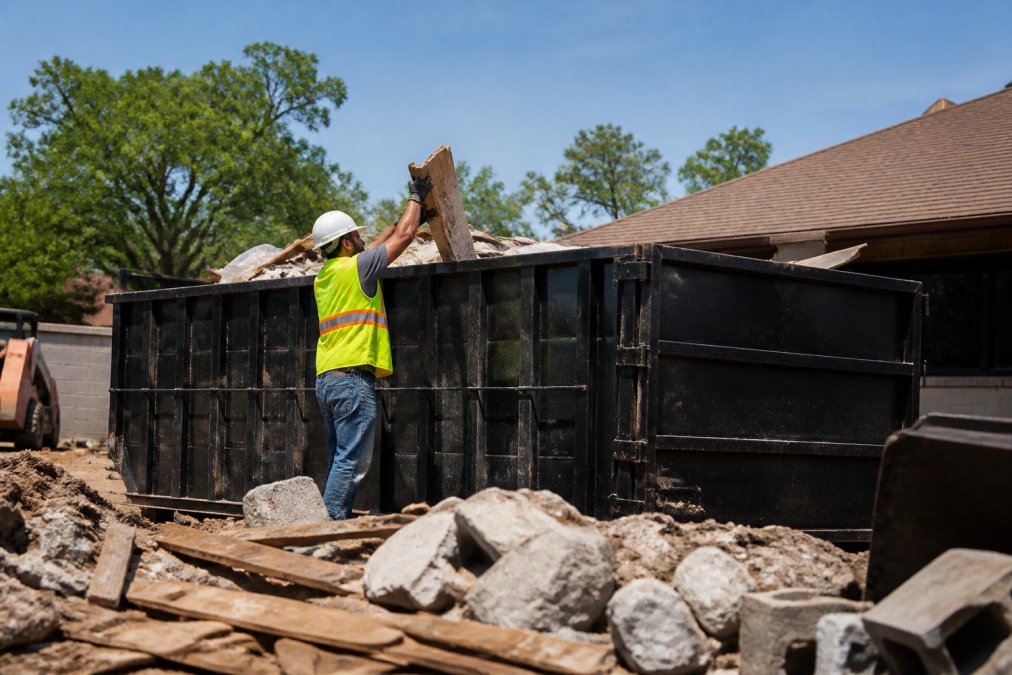
Distribute heavy debris, concrete, brick, and asphalt across the floor first, then layer lighter materials on top. Never fill beyond the container's fill line. Overfilled containers cannot be legally transported.
Site accessibility determines whether your rental goes smoothly. Before scheduling delivery, confirm:
- Overhead clearance of at least 23 feet along the delivery path
- A firm, level surface capable of supporting the container's weight plus debris load
- Enough linear space for the truck to back in and set the container
- Clear access for pickup without repositioning other equipment
Communicate site constraints to your provider before delivery day.
Sustainability, Waste Diversion, and LEED Certification Reporting
Waste diversion is increasingly a project requirement. Construction projects pursuing LEED certification under the U.S. Green Building Council's LEED rating system must document the percentage of construction and demolition waste diverted from landfill through recycling or salvage.
LEED's Materials and Resources credits require projects to track total waste generated, total waste diverted, and specific recycling streams used. Your waste disposal process needs to generate documentation.
To support LEED reporting:
- Request weight tickets for each container pickup
- Separate recyclable materials, concrete, metal, clean wood, and drywall into dedicated containers
- Confirm with your provider which materials are being recycled versus landfilled
- Calculate your diversion rate: total recycled or salvaged weight divided by total waste generated
A diversion rate above 50% qualifies for LEED credit; higher rates earn additional points. Establish your tracking process at project kickoff, not after the fact.
How to Rent a Roll Off Dumpster: Scheduling and Rental Process
Renting a roll off dumpster for construction is straightforward when you know what information to have ready:
- Assess your project scope. Estimate the volume and type of debris you'll generate. Use the size comparison table to identify your container size.
- Check permit requirements. Determine whether your placement location requires a municipal permit and allow time for approval.
- Contact your provider. Share your project address, debris type, estimated weight, desired delivery date, and rental duration.
- Confirm site accessibility. Communicate any overhead clearance issues, surface conditions, or access constraints.
- Schedule delivery. Confirm the delivery window and ensure someone is on site to direct placement.
- Load the container correctly. Follow load distribution guidelines and stay within the fill line.
- Schedule pickup. Contact your provider when the container is full or your rental period ends.
| Step | Action | Key Consideration |
|---|---|---|
| 1 - Size selection | Match container to debris volume and type | Heavy debris hits weight limits before volume limits |
| 2 - Permit check | Contact municipal public works | Allow up to 2 weeks for approval |
| 3 - Provider contact | Share project details for accurate quote | Include debris type and estimated weight |
| 4 - Site prep | Confirm clearance, surface, and access | Minimum 23 ft overhead clearance for delivery |
| 5 - Delivery | Have someone on site | Direct placement to avoid repositioning |
| 6 - Loading | Distribute weight evenly, stay below fill line | Never exceed fill line for legal transport |
| 7 - Pickup | Schedule when full or at rental end | Avoid idle rental days that add cost |
The conversation with your provider before delivery is where most problems get solved. A provider who asks about your debris type, site access, and permit status before dropping a container is worth more than one who just shows up.
Managing construction waste efficiently comes down to making the right decisions before the container arrives. The wrong size, a missed permit, or a prohibited item in the load can turn a simple rental into a costly delay. Patriot Solutions provides clean equipment, fast delivery, and the direct local service that construction managers in the Delta area rely on to keep projects on schedule. Contact Patriot Solutions to discuss your project scope and get a quote matched to your actual needs.
Frequently Asked Questions
What size are most construction dumpsters?
The most common sizes for construction projects are 20-yard and 30-yard roll-off containers. A 20-yard unit handles mid-size renovation debris like drywall, roofing shingles, and lumber, while a 30-yard container suits larger demolition or new-build cleanouts. For heavy debris such as concrete or asphalt, a 10-yard container is often recommended due to tonnage limits. Your provider can help match disposal capacity to your specific project scope.
What items are prohibited in a construction roll off dumpster?
Hazardous materials are never accepted in a standard roll-off container. This includes paint, solvents, asbestos, motor oil, batteries, and chemicals. Most providers also prohibit tires, appliances containing refrigerants, and electronics. Disposing of hazardous waste incorrectly violates EPA regulations and can result in significant fines. Always confirm your provider's prohibited items list before loading, accepted debris typically includes concrete, drywall, wood, metal, and roofing shingles.
Do I need a permit to place a dumpster on my construction site?
A permit is generally required when the roll-off container sits on a public street, sidewalk, or right-of-way. Placement entirely on private property, such as a driveway or project site, typically does not require one. Permit rules vary by municipality, so contact your local public works department before delivery. Some rental providers assist with permit acquisition. Failing to secure a required permit can result in fines or forced removal of the container mid-project.
How long can you keep a rented dumpster on a job site?
Standard rental durations range from 7 to 14 days, though many providers offer extended rental periods for longer construction projects. Daily overage fees apply once the agreed rental period ends, so confirm the exact terms before scheduling. For multi-phase builds or ongoing renovation work, ask about flexible swap-out arrangements, where a full container is hauled away and an empty one delivered, to keep the site cleanup on schedule without interruption.
How does construction waste disposal affect LEED certification?
LEED v4 awards points under the Construction and Demolition Waste Management credit when projects divert a defined percentage of waste from landfills through recycling or salvage. To qualify, you need documented waste diversion reports showing material types, weights, and recycling streams. Ask your roll-off dumpster provider whether they can supply diversion documentation. Sorting concrete, metal, and drywall into separate containers before hauling often increases your diversion rate and strengthens your LEED submission.
This article was written using GrandRanker