 listicle
7 Benefits of Professional Construction Waste Removal
Table of Contents
- Why Professional Construction Waste Removal Beats DIY Hauling
- 1. Job-Site Safety and Lower Injury Risk
- 2. Faster Site Cleanup and Real Time Savings
- 3. Fewer Work Interruptions and Better Project Efficiency
- 4. Construction Debris Removal: What Gets Hauled and How
- 5. Construction Dumpster Rental and Pickup Logistics
- 6. Construction Waste Disposal, Recycling, and Compliance
- 7. Construction Waste Removal Cost: What Drives the Price
- Frequently Asked Questions
Last Updated: October 12, 2026
Why Professional Construction Waste Removal Beats DIY Hauling
Most site managers assume hauling debris themselves saves money. It rarely does.
Professional construction waste removal is the coordinated pickup, sorting, hauling, and disposal of job-site debris by a licensed and insured service, rather than by your own crew and vehicles. At Patriot Solutions, we handle roll-off dumpsters and sanitation for contractors, demolition crews, and renovation projects across the Delta area, so we see both sides of this decision play out on real job sites.
The math usually favors hiring out. Your crew's hours are the most expensive asset on site, and every hour spent loading a trailer is an hour not spent building. Below, we break down seven benefits of professional construction waste removal services, plus what actually drives the price and how to choose a provider you can rely on.
1. Job-Site Safety and Lower Injury Risk
Debris piles are one of the most underrated hazards on any active site.
Loose nails, broken glass, and unstable stacks of drywall cause a steady share of job-site injuries, and heavy debris like concrete rubble is a genuine lifting hazard for workers without proper equipment. Professional removal crews arrive with the right hauling equipment, training, and safe material handling practices, which takes the riskiest task off your team's plate entirely.
The liability angle matters just as much. When an employee is injured moving debris, that injury lands on your workers' compensation record and can trigger an inspection. Handing debris collection to trained professionals shifts that exposure away from your crew and your insurance.
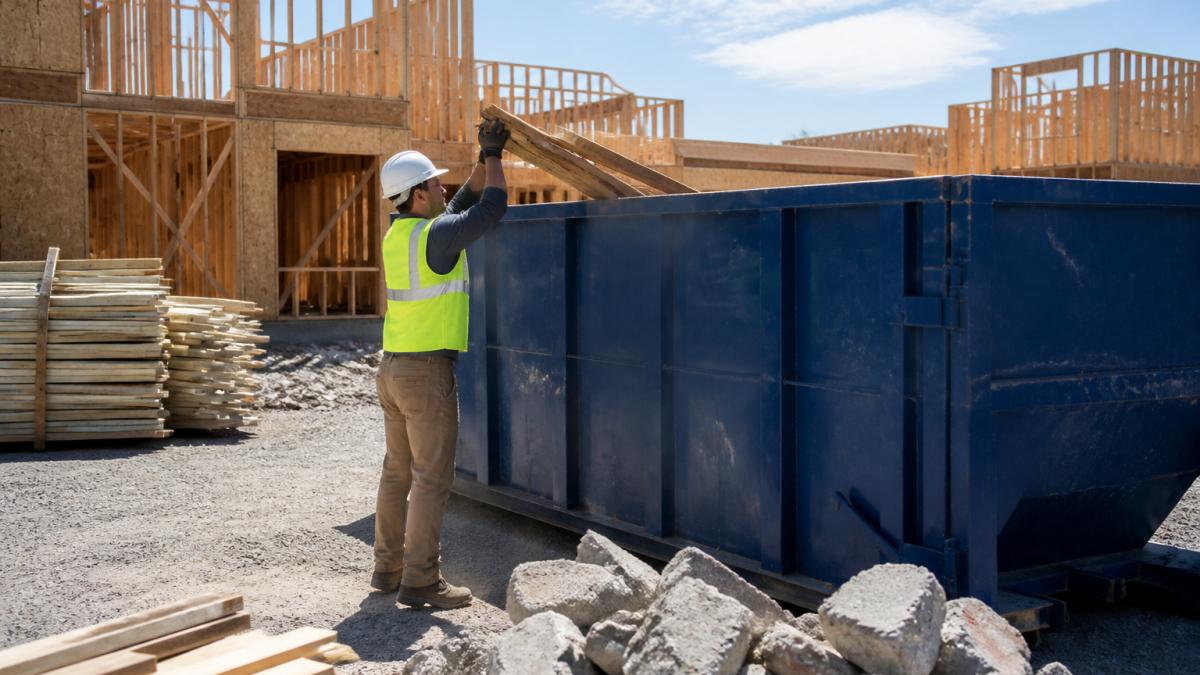
2. Faster Site Cleanup and Real Time Savings
Cleanup speed is where professional service pays for itself fastest, but the reason is more mechanical than most guides admit.
A removal crew clears a full job site in a fraction of the time your own workers can because the workflow is purpose-built: dedicated trucks with hydraulic loading, containers staged at the point of debris generation, and a crew that repeats the same route dozens of times a week. Your workers, by contrast, are generalists who load a trailer occasionally and lose their rhythm every time they do.
Consider what actually happens when a framing crew stops to load debris. They do not simply lose the loading hour. They lose the setup they had on the saw station, the rhythm of the cut-and-nail sequence, and often the rest of the afternoon to a task nobody scheduled. A common pattern on mid-size projects is that a single unscheduled cleanup day cascades into two or three lost production days across multiple trades.
The compounding effect is what most cost comparisons miss. A clean site means materials get staged faster, trades stop stepping over each other, and inspections pass on the first visit instead of the second. On a long project, those small gains routinely add up to days off the schedule, and schedule days are where the real money sits, not the disposal line item.
What does the time savings actually look like on a project?
A practical way to frame it: track how many crew-hours per week go to debris handling on your current project, then multiply by your fully loaded labor rate. Most contractors who run this exercise find the number is larger than the disposal invoice would have been, and that is before counting the schedule impact of a stalled trade or a failed inspection.
3. Fewer Work Interruptions and Better Project Efficiency
The hidden cost of DIY hauling is the interruption, not the labor.
When your crew stops framing to load a trailer, you lose more than the loading time. You lose momentum, you lose the setup, and you often lose the rest of the afternoon to a task nobody planned for. Scheduled pickups from a professional service run on a predictable rhythm, so debris leaves the site before it ever becomes a blocker.
An organized job site also protects your available workspace. Debris that sits too long eats the area you need for staging materials and moving equipment, and cramped sites slow every trade working on them.
| Problem | DIY Impact | Professional Service Impact |
|---|---|---|
| Crew time on hauling | Hours lost per week | Near zero |
| Pickup reliability | Depends on your schedule | Scheduled and predictable |
| Site space | Debris accumulates | Cleared on a set rhythm |
| Injury exposure | High for your workers | Handled by trained crews |
4. Construction Debris Removal: What Gets Hauled and How
Construction debris removal covers far more than general trash, and knowing what you can throw in a container prevents expensive mistakes.
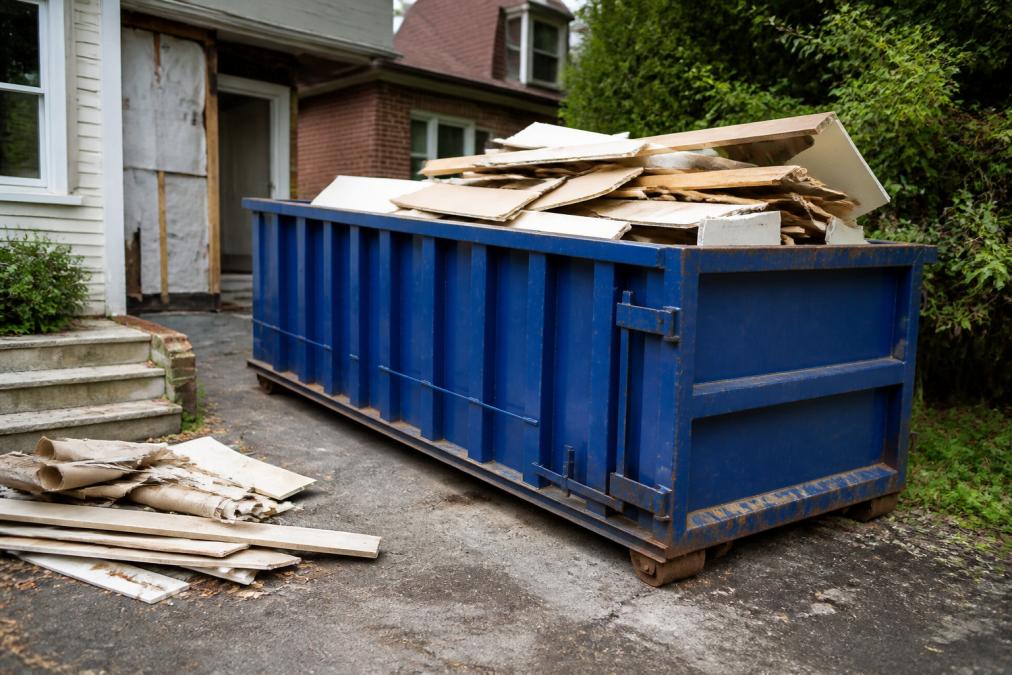
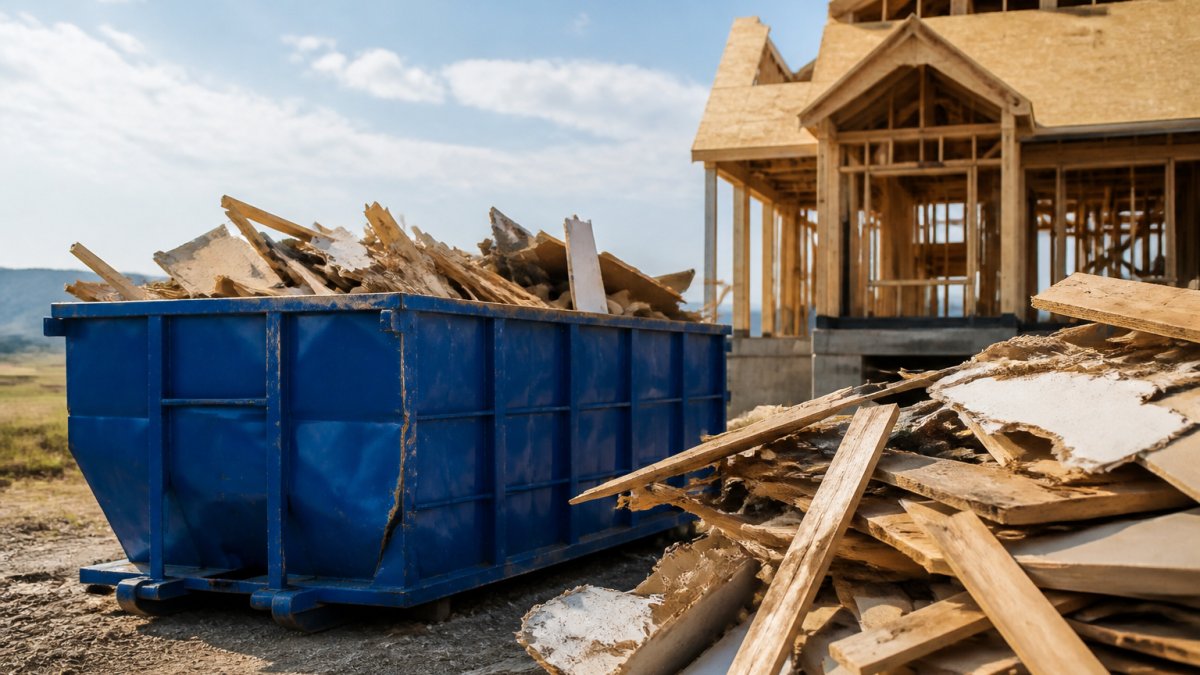
Most projects generate a mix of wood waste, drywall waste, metal scrap, concrete rubble, and packaging. Clean loads of single materials are the easiest to recycle, which matters because mixed loads often go straight to the landfill. Hazardous materials, including solvents, paint, and treated lumber, need separate handling and usually cannot go in a standard container at all.
Here is a quick reference for sorting:
- Wood waste: Untreated lumber and pallets, kept separate from painted or treated wood
- Metal scrap: Rebar, framing offcuts, and ductwork, highly recyclable
- Concrete rubble: Heavy debris that needs a container rated for the weight
- Drywall waste: Often recyclable when kept clean and dry
- Hazardous materials: Never in a standard container; ask your provider first
5. Construction Dumpster Rental and Pickup Logistics
Construction dumpster rental is the backbone of any removal plan, and logistics decide whether it works.
The size and placement of your container matter more than most people expect. A container that blocks site access or sits on soft ground creates problems that cost more than the rental itself. Pickup scheduling matters just as much, because a full container sitting for days is dead space on your site.
For most projects, we recommend planning your container drop before demolition starts, not after. That single decision keeps debris moving out as it is generated instead of piling up.
How far in advance should I schedule a dumpster?
Schedule at least several days before you need it, and confirm the pickup window at the same time. Rural sites and tight access points need the most lead time, since delivery equipment is larger than most people picture.
6. Construction Waste Disposal, Recycling, and Compliance
Construction waste disposal carries regulatory weight that DIY hauling quietly ignores, and the gap between a compliant project and a non-compliant one usually comes down to documentation, not intent.
Waste-disposal rules vary by state and locality, and they cover what can go to a landfill, how hazardous materials must be handled, and what records must be retained. A licensed professional removal service knows the local regulations, handles environmental compliance, and can provide the paperwork trail your project may need. But the more useful question for most contractors is not whether the rules exist, it is what specific documentation protects you when a compliance question arises months later.
Material-specific sorting and diversion rates
Recycling outcomes depend almost entirely on source separation, and different materials behave very differently:
- Concrete and asphalt: Highly recyclable when kept clean. Crushed concrete is commonly reused as base aggregate. Contamination with drywall, wood, or trash drops the load to landfill.
- Wood waste: Untreated lumber, pallets, and clean dimensional offcuts are recyclable into mulch, biomass, or engineered wood products. Painted, stained, or pressure-treated wood is a different stream and often cannot be recycled.
- Metal scrap: Rebar, framing offcuts, ductwork, and sheet metal are among the highest-value recyclables on a job site. Clean separation usually means a rebate rather than a disposal fee.
- Drywall: Clean, dry gypsum board is recyclable into new drywall or agricultural soil amendment. Wet, painted, or taped drywall generally is not.
- Mixed debris: Once materials are commingled, most facilities treat the load as landfill-bound. This is the single biggest driver of lost diversion.
Diversion rate is calculated as the weight of material diverted from landfill divided by total waste weight, expressed as a percentage. To report it credibly, you need weight tickets for each stream, which is why documentation and recycling are the same conversation.
Documentation and chain of custody
Every load should generate a paper trail: a weight ticket from the scale, a disposal or recycling receipt from the receiving facility, and a manifest for any regulated or hazardous material. Together these form a chain of custody that supports three things:
- Compliance audits, if a regulator asks where a specific load went, you can answer with a document, not a recollection.
- Client reporting, owners, general contractors, and green-building programs increasingly require diversion numbers, and those numbers must be backed by tickets.
- Dispute resolution, if a load is rejected or reclassified, the ticket shows exactly what was in it and when.
The EPA guidance on construction and demolition debris outlines how material recovery works and why source separation matters. The practical takeaway is that recycling is not a feel-good add-on, it is a documentation discipline, and a provider who cannot produce tickets cannot give you a defensible diversion number.
7. Construction Waste Removal Cost: What Drives the Price
Construction waste removal cost depends on four factors: container size, debris weight, haul distance, and how often you need pickups. Not the number of items you throw away.
Weight is the factor that surprises people most. Heavy debris like concrete and dirt can hit a container's weight limit long before the container looks full, which is why overage charges happen. Mixed loads cost more to dispose of than separated ones. Remote delivery addresses add to the hauling distance. And every extra pickup adds labor and fuel.
Pricing varies by project, so we quote each job based on these factors rather than publishing flat rates. Ask for a written quote that spells out the included weight allowance and the overage rate before you commit.
What should I check before hiring a removal service?
- Current license and insurance certificate on file
- Written quote listing container size, weight allowance, and overage rate
- Confirmed pickup schedule and missed-pickup policy
- Clear list of prohibited items before the first load
- Weight tickets and disposal documentation provided per load
- References from similar projects in your area
The real challenge with construction waste removal is not finding someone to drop a container. It is finding a provider who shows up when promised, explains what can go in the bin, and keeps your site moving. Patriot Solutions delivers clean roll-off dumpsters and portable restrooms with fast, dependable local service, backed by straightforward scheduling and clear guidance on what each container accepts. Get started with Patriot Solutions and keep your next project clean, compliant, and on schedule.
Frequently Asked Questions
What are the benefits of professional construction waste removal services?
Professional construction waste removal improves job-site safety, speeds up cleanup, reduces work interruptions, and keeps projects compliant with local disposal rules. For site managers in the Delta area, a dependable local provider means fewer missed pickups and more predictable scheduling.
How does construction waste removal improve job-site safety?
Trained crews handle heavy debris, sharp materials, and hazardous items that would otherwise put your workers at risk. By removing construction debris regularly, you keep walkways clear, reduce dust exposure, and prevent trips and falls.
What types of construction debris can a removal service handle?
Most services accept wood waste, metal scrap, concrete rubble, drywall, roofing materials, and general demolition debris. Always confirm what your provider accepts before loading a dumpster to avoid overage fees or rejected loads.
How can contractors reduce construction waste removal cost?
You can lower construction waste removal cost by separating recyclable materials like metal and concrete, scheduling pickups to match project phases, and choosing the right dumpster size to avoid multiple swaps. Asking about weight limits and overage fees upfront also prevents surprise charges.