 listicle
Portable Restroom Rental Costs for 2026
Table of Contents
- What Drives Portable Restroom Rental Costs
- Types of Portable Toilets and Their Price Ranges
- How Many Porta Potties for Event Planning
- Rental Duration Options: Daily, Weekly, and Monthly Rates
- Portable Restroom Delivery Requirements and Setup
- Luxury Portable Restroom Trailer Rental Cost
- Hidden Fees, ADA Compliance, and Additional Charges
- Conclusion
Last Updated: August 30, 2026
What Drives Portable Restroom Rental Costs
Portable restroom rental costs depend on unit type, rental duration, delivery distance, servicing frequency, and compliance requirements. Understanding these factors helps you budget accurately and avoid surprises.
The core cost drivers are straightforward: standard portable toilets cost less than deluxe units, one-day rentals cost more per day than monthly commitments, and rural delivery charges more than urban routes. Site accessibility affects delivery fees, remote construction sites cost more to service than paved parking lots. Servicing frequency matters too; a three-week project requires more visits than a weekend event, changing the per-day cost. ADA compliance adds expense if your site needs accessible units.
Gather specific information about your site, event size, rental duration, and regulatory requirements before requesting quotes to prevent sticker shock and compare apples to apples.
Types of Portable Toilets and Their Price Ranges
Standard portable toilets and deluxe units occupy different market segments, with price differences reflecting genuine feature gaps.
Standard Portable Toilets
A standard portable toilet is a basic self-contained unit with a toilet seat, small urinal, and holding tank designed for single occupancy. It requires no external water or power and represents the majority of units deployed on construction sites, outdoor events, and temporary work locations.
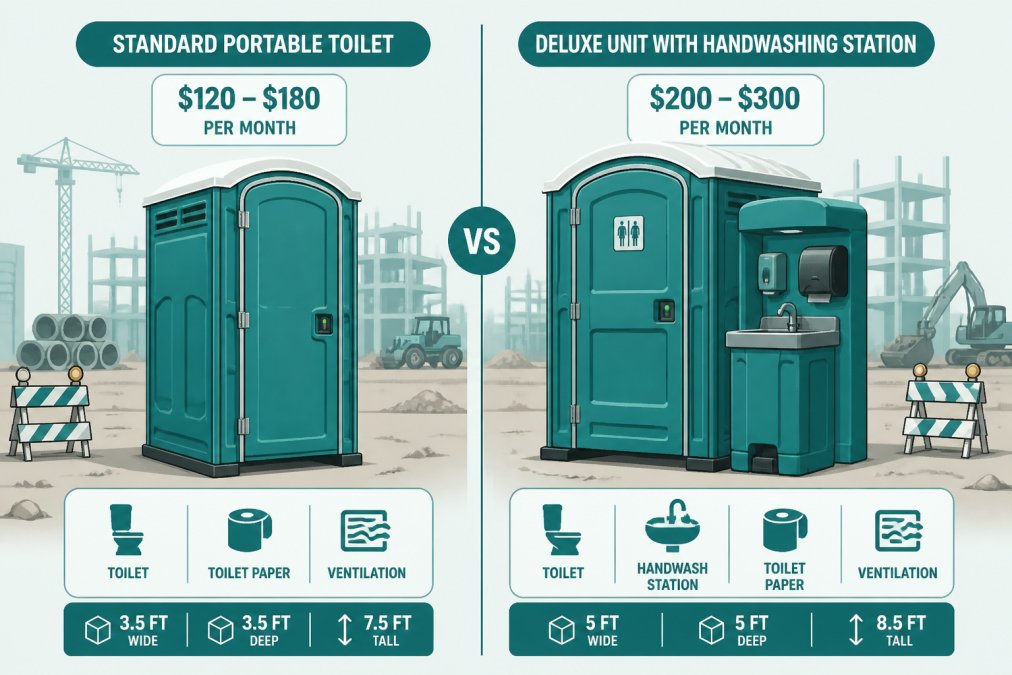
Standard portable toilets work well for short-term events and construction projects where users need functional sanitation. They're lightweight, easy to position, and require minimal site preparation. The holding tank capacity typically ranges from 40 to 60 gallons, so servicing frequency depends on usage volume (nsf.org). A standard unit at a small outdoor event might need emptying once over a weekend; the same unit at an active construction site might need daily service, directly impacting your total rental cost.
The trade-off is basic amenities: no handwashing station, no interior lighting, and minimal ventilation. For events where attendees expect comfort or for sites with regulatory handwashing requirements, standard units fall short. But for temporary construction sanitation or low-traffic outdoor events, they deliver reliable function at the lowest per-unit cost.
Deluxe Units and Handwashing Stations
Deluxe portable restrooms include interior lighting, improved ventilation, larger holding tanks (60-80 gallons), and integrated or adjacent handwashing stations with soap dispensers and paper towel holders. These upgrades matter for user experience and meeting health code requirements.
Deluxe units cost more per day than standard toilets, but the price difference is often smaller than the feature gap suggests. The real cost driver is the handwashing station component, which requires its own fresh water tank, drain tank, and servicing schedule. If you rent a deluxe portable restroom with an integrated handwashing station, you're paying for two systems' worth of maintenance and chemical treatment.
Deluxe portable restrooms make sense for weddings, festivals, corporate outdoor events, and upscale gatherings where appearance and user comfort influence satisfaction. They're also necessary when local health codes mandate handwashing facilities. For construction sites, deluxe units are less common unless the site is near public areas or employs a large crew requiring frequent handwashing.
How Many Porta Potties for Event Planning
Determining the right number of portable restrooms prevents long lines, regulatory violations, and guest frustration. Industry guidance suggests one portable restroom for every 75 to 100 attendees for daytime events without alcohol (the CDC). If alcohol is served, reduce that ratio to one unit per 50 to 75 attendees, since alcohol consumption increases restroom frequency (the CDC).
For multi-day events, the calculation shifts: a three-day festival with 500 attendees might require 8 to 10 units to maintain reasonable wait times. Site type also affects the calculation. An outdoor wedding with 150 guests in a rural location might require 2 deluxe units with handwashing stations. A construction site with 30 workers on-site requires at least 1 unit, but if workers are present 8 hours daily for weeks, you'll need 2 units to manage servicing without leaving the site without sanitation.
The safest approach is to estimate conservatively. Underestimating creates bottlenecks; overestimating costs more but ensures comfort. For events over 200 attendees, consult with your portable restroom provider to assess your site layout, expected usage patterns, and duration.
Rental Duration Options: Daily, Weekly, and Monthly Rates
Portable restroom rental pricing changes dramatically based on rental duration. Daily rates are highest on a per-day basis, while monthly commitments offer the lowest daily cost.
Daily rentals work for one-off events. Daily rates reflect delivery and pickup costs built into each transaction. Weekly rentals reduce the daily rate by spreading delivery costs across seven days. Many providers offer weekly rates noticeably lower than daily rates multiplied by seven.
Monthly rentals offer the lowest per-day cost because delivery and pickup are amortized across 30 days. A construction site or event venue committing to a month-long rental typically saves 30 to 40 percent per day compared to daily rates. Some providers offer discounts for multi-unit rentals, encouraging larger commitments.
Seasonal fluctuations affect pricing too. Summer months command higher rates than winter. If your project has flexibility, scheduling for fall or early spring can reduce costs compared to summer peak.
Portable Restroom Delivery Requirements and Setup
Delivery logistics significantly influence both cost and feasibility. Site accessibility is the primary factor. The delivery truck must reach the unit's final location. Paved parking lots or wide gravel roads mean straightforward delivery. Narrow dirt roads, soft ground, or steep terrain increase delivery costs or make delivery impossible.
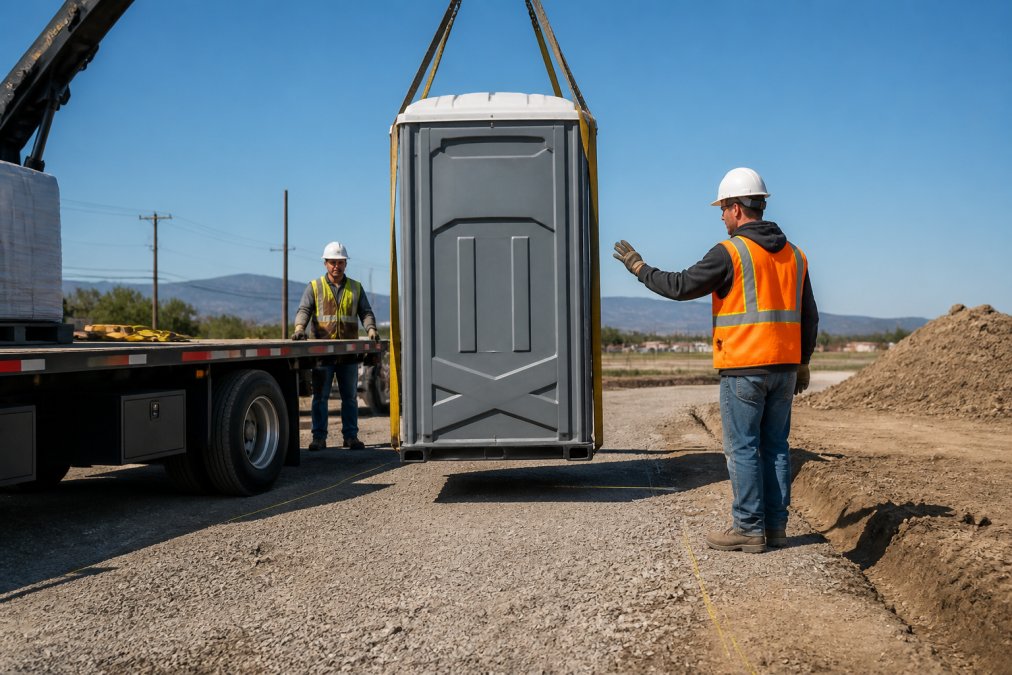
Ground preparation matters. The portable restroom must sit on level, stable ground. Soft mud, sand, or heavily rutted terrain can cause the unit to settle unevenly. If your site has poor ground conditions, the provider may recommend placing the unit on a wooden pallet or gravel pad to distribute weight and prevent settling.
Spacing and placement affect user experience and servicing efficiency. The unit should be positioned at least 50 feet from food service areas, water sources, and occupied buildings. For events, placement near parking areas reduces user inconvenience. For construction sites, placement considers both worker access and service vehicle access.
Standard portable restrooms require no water, electricity, or sewer connection. In hot climates, placement in shade extends chemical effectiveness and improves user comfort.
ADA accessibility requirements apply if your site is open to the public or if your event requires accessible facilities. ADA-compliant portable restrooms are wider, have grab bars, and include clear floor space for wheelchair maneuvering. They cost more to rent and require more space. Confirm ADA needs when requesting delivery, as not all providers have ADA units available.
Luxury Portable Restroom Trailer Rental Cost
Luxury portable restroom trailers represent the premium end of the portable sanitation market. These multi-stall units mounted on trailers include climate control, interior lighting, running water, flushing toilets, and finishes resembling permanent restrooms.
Luxury trailers serve high-end weddings, corporate events, film productions, and upscale outdoor venues. A typical unit is 24 to 40 feet long with 2 to 4 individual stalls featuring full plumbing and electrical systems. Interior finishes include tile, mirrors, and real sinks with hot and cold water.
Luxury portable restroom trailer rental costs reflect equipment value, operational complexity, and service level. These units require professional setup including electrical hookup, water supply connection, and waste line connection to a sewer or pump-out system. They're not self-contained; they depend on external utilities. Rental duration typically starts at weekly minimums, not daily, since setup and breakdown labor combined with equipment value make single-day rentals impractical.
Luxury trailers are ideal for destination weddings, multi-day festivals with upscale positioning, and corporate outdoor events where attendee experience is primary. They're also used for film and television production. For construction sites and agricultural operations, they rarely make economic sense unless image matters significantly.
Hidden Fees, ADA Compliance, and Additional Charges
Beyond the base rental rate, several charges commonly surprise customers. Delivery and pickup fees are separate from unit rental at most providers and vary by distance from the provider's base. Always confirm whether the quote includes delivery or if it's an add-on.
Service charges cover routine maintenance during your rental period. Standard portable toilets require pumping when the holding tank reaches capacity. Monthly rental rates sometimes include a set number of service visits; additional visits cost extra. Deluxe units incur higher service charges because both the toilet tank and fresh water tank require servicing.
ADA-compliant units cost more to rent than standard units. Some providers charge a flat upgrade fee; others charge a percentage increase. Overage fees apply when you exceed the rental period without extending, often calculated at a daily rate higher than your weekly rate.
Damage charges apply if the unit is returned with damage beyond normal wear. Some providers offer optional damage coverage that caps your liability. Chemical treatment upgrades include deodorizing agents or eco-friendly treatments. Permit fees are your responsibility in most cases; confirm requirements with your local health department.
Conclusion
Portable restroom rental costs for 2026 depend on unit type, rental duration, site logistics, and regulatory requirements. Standard toilets cost less than deluxe units. Daily rates are higher per day than weekly or monthly commitments. Delivery fees, service charges, ADA compliance upgrades, and waste disposal all add to the final invoice.
When you're ready to rent portable restrooms for your construction project, event, or agricultural operation, Patriot Solutions delivers clean, well-maintained equipment with fast, dependable local service. We handle delivery logistics, routine servicing, and compliance requirements so you focus on your project. Contact Patriot Solutions today for a detailed quote that accounts for your site's specific needs, rental duration, and any accessibility or regulatory requirements. Our team provides transparent pricing and professional guidance to ensure you get the right sanitation solution at the right cost.
Frequently Asked Questions
Q: How much does it cost to rent a portable restroom?
A: Portable restroom rental costs depend on the unit type, rental duration, delivery distance, and servicing frequency. Standard portable toilets typically cost less than deluxe units with handwashing stations or luxury trailers. Pricing varies based on whether you need daily, weekly, or monthly rental arrangements. Contact Patriot Solutions for a quote tailored to your specific project needs and timeline.
Q: How many porta potties do I need for an event with 75 guests?
A: For a small event with 75 people, you typically need 1-2 portable restrooms, depending on the event duration and guest demographics. Longer events (6+ hours) or those with higher female attendance may require 2 units. ADA-compliant restrooms are recommended if any guests have mobility needs. Patriot Solutions can help you determine the right number of units based on your specific event details and site layout.
Q: What fees should I expect beyond the base rental price?
A: Common additional charges include delivery and pickup fees, servicing charges (for waste removal and restocking), weekend surcharges, and security deposits. Some providers charge overage fees if waste exceeds holding tank capacity or if you rent beyond your agreed billing cycle. ADA-compliant units may carry higher fees. Ask your provider to explain all fees upfront so you can budget accurately for your project.
Q: What makes a portable restroom ADA-compliant, and does it cost more?
A: ADA-compliant portable restrooms include wider doors, grab bars, level entry platforms, and adequate space for wheelchair access. These units meet federal accessibility standards required for public events and construction sites. ADA-compliant units typically cost more than standard portable toilets due to their larger footprint and specialized equipment. If your event or project serves the public, ADA compliance may be legally required.
This article was written using GrandRanker