 listicle
Best Portable Toilets for Outdoor Festivals (2026 Guide)
Table of Contents
- Portable Toilet Types for Festivals: Standard, Flush, and Composting
- Feature Comparison: What to Look For in Festival Toilets
- Top Picks for Different Festival Scenarios
- How to Prepare for Portable Toilet Delivery
- Using a Portable Toilet Rental Calculator for Your Event
- ADA Portable Restroom Requirements for Public Events
- Waste Disposal, Odor Control, and Festival Logistics
- Which Portable Toilet Is Right for Your Festival?
- Frequently Asked Questions
Last Updated: September 8, 2026
Choosing the best portable toilets for outdoor festivals comes down to matching the unit to your event's duration, crowd size, and waste management plan. A weekend camping festival with 5,000 attendees has different sanitation needs than a single-day wedding for 75 guests.
Below, we break down the three main toilet categories, what features matter, and how to plan delivery and disposal so your event runs without a sanitation crisis.
Portable Toilet Types for Festivals: Standard, Flush, and Composting
Festival organizers in the United States typically choose between three portable toilet categories: standard non-flush units, flushable restroom trailers, and composting toilets. Each serves a different event profile, and the decision affects everything from your water capacity needs to how waste disposal gets handled afterward.
Standard Portable Toilets
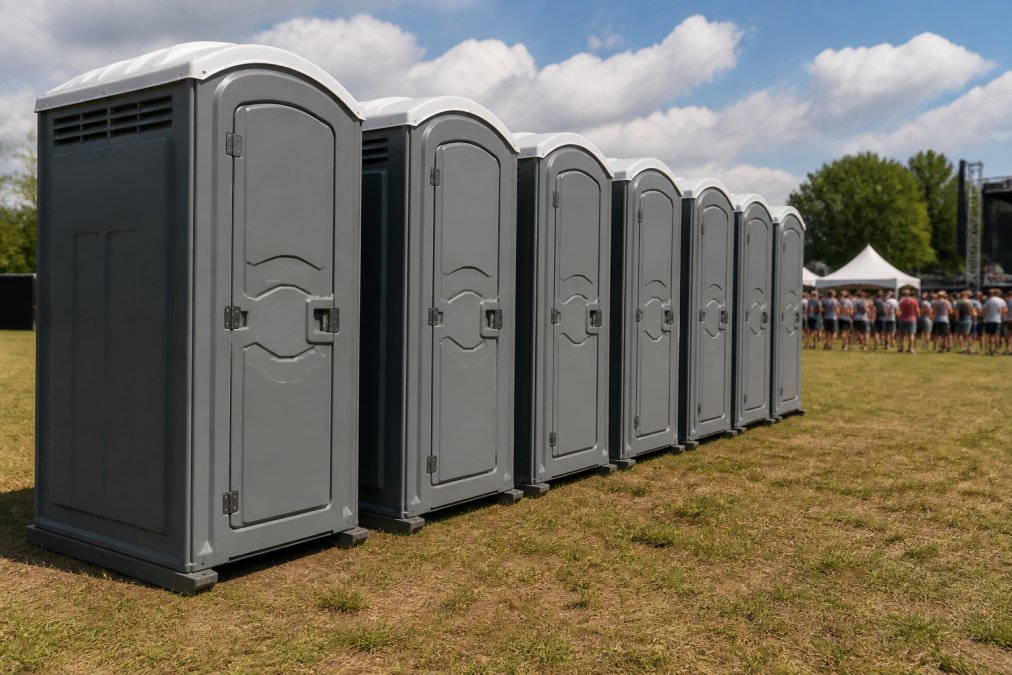
Standard portable toilets are the workhorse of outdoor events. These self-contained units feature a waste tank holding roughly 60 gallons and a chemical additive system that controls odor between service intervals. They require no water supply or electricity, making them the most flexible option for remote festival sites.
Flushable and Luxury Restroom Trailers
Flushable units and luxury restroom trailers use a fresh water tank for flushing and a separate black water holding tank for waste, requiring a water source for refills and a service plan for gray water and sewage removal. Restroom trailers offer running water sinks, lighting, and climate control, which is why wedding planners and upscale event organizers prefer them.
Composting Toilets for Eco-Friendly Events
Composting toilets represent the growing eco-friendly segment of festival sanitation. These units divert liquid and solid waste into separate chambers, using carbon material like sawdust or coconut coir to facilitate aerobic decomposition. Organizers choose them when the venue lacks dump station access or when sustainability goals prohibit chemical additives, though maintenance demands more staff attention.
Feature Comparison: What to Look For in Festival Toilets
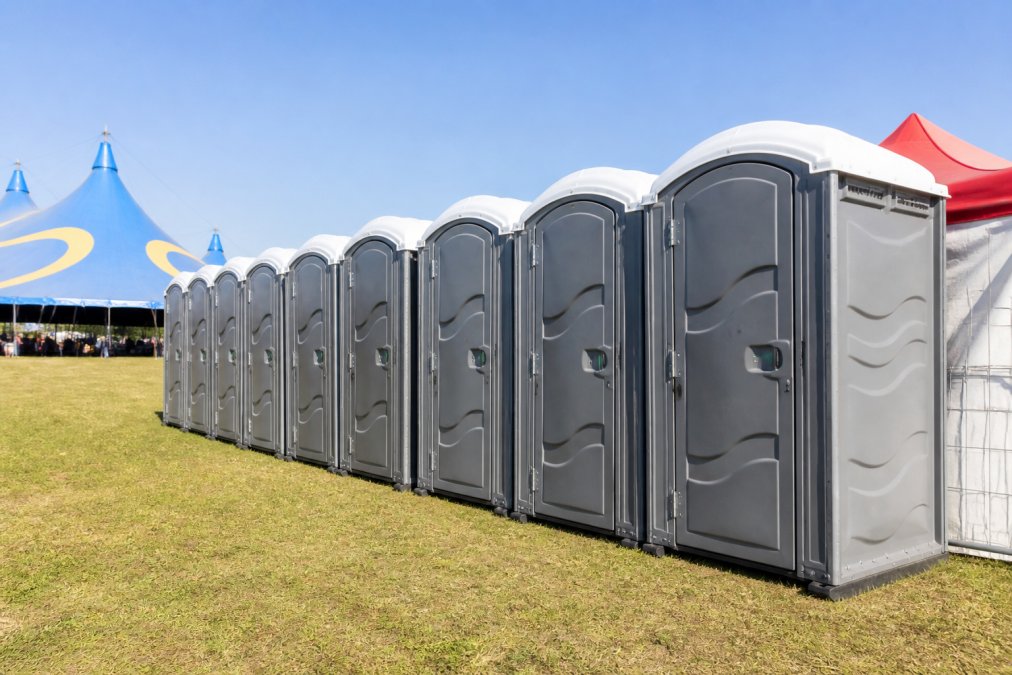
When evaluating portable toilets for your festival, prioritize five features: waste tank capacity, flush mechanism type, odor control system, weight and portability, and cleaning accessibility.
| Feature | Why It Matters | Best For |
|---|---|---|
| Waste tank capacity | Determines service frequency between pump-outs | Multi-day events with limited service access |
| Flush mechanism | Affects user experience and water demand | Weddings, VIP areas, upscale gatherings |
| Odor control | Chemical additives vs. ventilation vs. composting | Hot climates, high-traffic events |
| Weight and portability | Impacts delivery vehicle and setup effort | Remote sites, uneven terrain |
| Cleaning accessibility | Dictates how quickly staff can service units | High-usage events needing daily maintenance |
Waste tank capacity is the most critical specification. A standard unit with a 60-gallon holding tank serves roughly 200 uses before requiring service. Flush mechanisms range from foot-pump flushable cassettes to full plumbing systems in restroom trailers, while odor control relies on blue chemical additives in standard units or proper carbon-to-nitrogen ratios and ventilation in composting systems.
Top Picks for Different Festival Scenarios
Best for Multi-Day Camping Festivals
For multi-day camping festivals, prioritize waste tank capacity and service access. A standard portable toilet with a large holding tank minimizes daily pump-outs, essential when service trucks must navigate crowded campsites.
Best for One-Day Outdoor Events and Weddings
One-day events and weddings call for flushable restroom trailers or high-end portable units with hand washing stations. Guest comfort is the primary concern, and a flushing toilet with running water dramatically improves the experience.
How to Prepare for Portable Toilet Delivery
Preparing for portable toilet delivery at a festival requires more than clearing a path for the truck. A multi-day festival has unique logistical constraints affecting where and how units are placed, serviced, and secured.
Site Access and Ground Conditions
Start by identifying a level, dry area that can support the weight of a fully loaded service truck. The delivery vehicle needs a clearance path of roughly 12 feet wide and 14 feet of vertical space. Clear the placement zone of debris and confirm the ground is firm enough to prevent units from sinking after rain.
Placement Strategy for Crowd Flow and Service
Distribute units in small banks of 4-6 across the festival grounds rather than concentrating them in one central location. Place units near high-traffic zones like food vendors and main stages, but maintain a buffer of at least 50 feet from dining areas. For camping areas, position units on the perimeter of the campsite grid so service trucks can access them without driving over tent stakes or guy lines.
Security and Theft Prevention
Festival environments present a unique risk: theft and vandalism. Portable toilets are sometimes stolen or moved during large events, especially in remote areas. Secure each unit with a heavy-duty lock or chain to a fixed anchor point. Many organizers also mark units with UV paint or a unique identifier. Ask your provider whether their units come with built-in locking mechanisms or if you need to supply your own.
Service Scheduling Around Peak Usage
Delivery is not a one-time event. For a multi-day festival, schedule service around peak usage times, typically Saturday mid-morning and evening hours. Coordinate pump-outs during off-peak hours, such as early morning before gates open, and confirm the service truck has a dedicated access lane that does not cross the main festival thoroughfare.
Festival-Specific Privacy and Screening
One angle most general guides miss is privacy. At a festival, portable toilets are often placed in open fields with no natural screening, and attendees consistently report a lack of privacy as a top complaint. Pair each bank of units with a privacy screen or a pop-up canopy with sidewalls, a low-cost addition that dramatically improves the user experience.
Using a Portable Toilet Rental Calculator for Your Event
A portable toilet rental calculator helps event organizers estimate how many units they need based on attendance, event duration, and service frequency. The general formula starts with one standard unit per 50 guests for a four-hour event.
For a full weekend camping festival, plan for one unit per 25-30 attendees, since each person will use the restroom 3-5 times daily. For a single-day wedding with 75 guests, two to three units typically suffice if catering and bar service extend the event past six hours.
ADA Portable Restroom Requirements for Public Events
ADA portable restroom requirements for public events in the United States mandate that a certain percentage of units be accessible to individuals with disabilities. The Department of Justice ADA Standards require that at least one portable toilet be accessible whenever portable units are provided at a public event. For events with multiple banks of units, each cluster must include an accessible option.
An ADA-compliant portable restroom must have a door opening at least 32 inches wide, interior floor space of at least 60 inches in diameter for wheelchair turning, and grab bars on the side and rear walls. The unit must also feature a sink or hand sanitizer mounted at an accessible height. Event organizers should position these units on firm, level ground with an accessible route from the main event area.
Waste Disposal, Odor Control, and Festival Logistics
Waste disposal and odor control are the operational backbone of any festival sanitation plan. The rules differ significantly between a permanent campground and a temporary festival site, and understanding where waste can legally go is the difference between a smooth event and a public health violation.
Legal Disposal: Festival Sites vs. Campgrounds
A permanent campground typically has a designated dump station on-site, and your rental provider will know how to access it. A festival site, however, is often a temporary venue, a fairground, a private field, or a public park. In these cases, there is rarely a permanent dump station. The waste from standard portable toilets and flushable trailers must be pumped out by a licensed hauler and taken to an approved treatment facility. It is illegal to discharge black water or chemical toilet waste onto the ground, into a storm drain, or into a surface water source. The EPA guidelines on sewage handling recommend consulting local health departments about disposal regulations, and many county health departments require a permit for events with more than a certain number of attendees. Check with the local health department or the venue's management office well in advance to confirm whether a permit is required and what documentation the hauler must provide.
The Ethics of Composting at a Festival
Composting toilets present a different disposal challenge. The solid output is not raw sewage; it is a compostable material. However, the EPA guidelines on sewage handling classify human waste as a pathogen risk, and most state regulations require that composted human waste be processed to a specific temperature and time threshold before it can be used as a soil amendment. At a temporary festival site, you cannot simply bury the output or leave it for the landowner. You need a plan to either haul the compost off-site to a permitted facility or work with a local composting operation that accepts human waste. Many eco-friendly festival organizers partner with a composting service that provides the units and handles the end-of-event removal, ensuring the material is processed legally.
Odor Control in High-Density, Multi-Day Settings
Odor control fails when service intervals lag behind usage. A festival with 1,000 daily attendees generating 3,000-5,000 uses needs daily chemical service and waste pump-out, not just a weekend-end cleanup. Standard blue formaldehyde-based additives are effective but have a strong smell, while enzyme-based or bio-active additives are less odorous and break down waste more thoroughly, though they cost more. For composting toilets, odor control relies on maintaining the correct carbon-to-nitrogen ratio, with staff adding sawdust or coconut coir after each use and keeping the ventilation fan functional.
Festival-Specific Waste Management Plan
A robust waste management plan includes more than the toilets themselves. Staff should check units twice daily during multi-day events, restocking toilet paper and hand sanitizer while noting which units need more frequent pump-outs. Gray water from hand washing stations and black water from flushable toilets must be disposed of at an approved dump station, never poured on the ground.
Which Portable Toilet Is Right for Your Festival?
The right portable toilet for your festival balances guest comfort, environmental impact, and operational cost. Multi-day camping festivals need high-capacity standard units with daily service. Single-day weddings and corporate events justify the higher cost of flushable restroom trailers.
Before you commit, ask your sanitation provider about delivery logistics, service frequency, and waste disposal procedures. Patriot Solutions offers clean portable restrooms, fast delivery, and dependable local service across the Delta, Utah area. Whether you need a single ADA-compliant unit for a backyard wedding or a fleet of standard toilets for a weekend festival, confirm your dates early and prepare your site for delivery.
Choosing the best portable toilets for outdoor festivals requires thinking beyond the unit itself to the full sanitation cycle: delivery access, service intervals, waste disposal, and guest experience. The most successful events treat restroom planning as a core logistics function, not an afterthought. Patriot Solutions delivers clean, high-quality portable restrooms with fast, dependable service. Get started with Patriot Solutions and secure reliable sanitation for your next festival.
Frequently Asked Questions
How many portable toilets do I need for an outdoor festival?
A standard rule for event planning is one portable toilet per 50 guests for a four-hour event. For multi-day festivals, you need more units to handle continuous use. Use a portable toilet rental calculator that factors in attendance, event duration, and alcohol consumption, which increases restroom visits by up to 30%. For a full weekend camping festival, plan on one unit per 20 to 30 attendees to keep lines short and maintain hygiene.
Are ADA-compliant portable toilets required for outdoor events?
Yes, ADA portable restroom requirements apply to public events under the Americans with Disabilities Act. At least 5% of your portable toilet units must be ADA-compliant, and they must be placed on accessible routes with firm, stable surfaces. These units are larger, have grab bars, and feature lower seats. Check with your event venue and local authorities to confirm specific compliance needs for your festival setup.
What is the difference between standard and luxury portable restrooms?
Standard portable toilets are basic units with a waste tank and minimal features, suitable for construction sites or short events. Luxury restroom trailers offer flushing toilets, running water sinks, mirrors, lighting, and climate control. They are serviced more frequently and provide a significantly better guest experience. For upscale festivals, weddings, or corporate events, luxury trailers are the preferred choice, though they cost more than standard units.
How do I prepare for portable toilet delivery at an event site?
Clear the delivery area of obstacles and ensure the ground is level and firm enough to support the weight of the units and service trucks. Mark the planned locations for each restroom so drivers know exactly where to place them. Confirm that access roads have at least 14 feet of clearance for delivery vehicles. Communicate your site plan with your rental provider in advance to ensure smooth setup and servicing throughout your event.
What is the best portable toilet option for a multi-day festival?
For multi-day festivals, opt for units with larger waste tanks (60 gallons or more) to reduce the frequency of pumping. Flushable units with a separate fresh water supply improve the user experience significantly. Composting toilets are a good eco-friendly choice since they produce no black water and require less frequent emptying. Consider a mix of standard units, accessible units, and a few luxury trailers to accommodate all attendees comfortably.