 ultimate-guide
Portable Restroom Service for Rural Farms: A Complete Guide
Table of Contents
- Why Portable Restroom Service Matters for Agricultural Operations
- OSHA Field Sanitation Standards for Farms: What You Must Know
- Types of Portable Restrooms Suited for Farm Work
- Long-Term Porta Potty Rental Costs and Budget Planning
- Portable Restroom Maintenance Schedule and Service Frequency
- Placement, Accessibility, and Site Logistics
- Environmental Impact and Waste Disposal Protocols
- How to Choose a Portable Restroom Service Provider
Last Updated: August 26, 2026
Why Portable Restroom Service Matters for Agricultural Operations
Agricultural work demands infrastructure most industries take for granted. When crews work in fields far from permanent facilities, the absence of sanitation creates real problems: lost productivity, health risks, regulatory violations, and worker dissatisfaction. A portable restroom service for rural farms isn't a luxury, it's a compliance requirement and an operational necessity.
Farm workers spend 8-12 hour shifts in remote locations where the nearest building might be miles away (osha.gov). Without proper sanitation facilities, crews become less efficient, health incidents increase, and you expose your operation to serious legal liability. According to OSHA guidance on agricultural worker health, employers are responsible for providing sanitary facilities that meet specific standards. This isn't optional guidance, it's a regulatory obligation with real penalties for non-compliance. At Patriot Solutions, we understand that reliable portable restroom service for rural farms solves multiple problems simultaneously: it keeps your crew healthy, maintains regulatory compliance, and demonstrates that you take worker welfare seriously.
The right portable restroom service provider handles the complexity so you don't have to. They manage placement logistics, maintenance schedules, waste disposal protocols, and regulatory documentation.
OSHA Field Sanitation Standards for Farms: What You Must Know
The OSHA Field Sanitation Standard (FSS) establishes mandatory requirements for agricultural operations employing 11 or more workers. These regulations exist because agricultural workers face unique exposure risks in outdoor environments where traditional sanitation infrastructure doesn't exist.
The Field Sanitation Standard requires employers to provide potable water, handwashing facilities, toilet facilities, and waste disposal systems. Toilet facilities must be sanitary, accessible, and maintained at specific ratios based on crew size. Specifically, operations must provide at least one toilet facility for every 20 workers, or fraction thereof. Handwashing stations must be located within 100 feet of toilet facilities and equipped with potable water, soap, and single-use towels.
These aren't suggestions. Violations carry penalties that exceed the cost of proper portable restroom service. According to OSHA Field Sanitation Standard requirements, non-compliance can result in citations and fines. Compliance documentation matters as much as the physical facilities. You must maintain records showing that facilities meet FSS standards, that maintenance occurs on schedule, and that waste disposal follows environmental protocols. A professional portable restroom service provider handles this documentation, creating an audit trail that protects your operation if regulators inspect.
Types of Portable Restrooms Suited for Farm Work
Agricultural operations require different portable restroom configurations than construction sites or events. Farm work demands durability, accessibility for crews in work clothes, and maintenance protocols that fit seasonal schedules.
Standard Portable Toilets
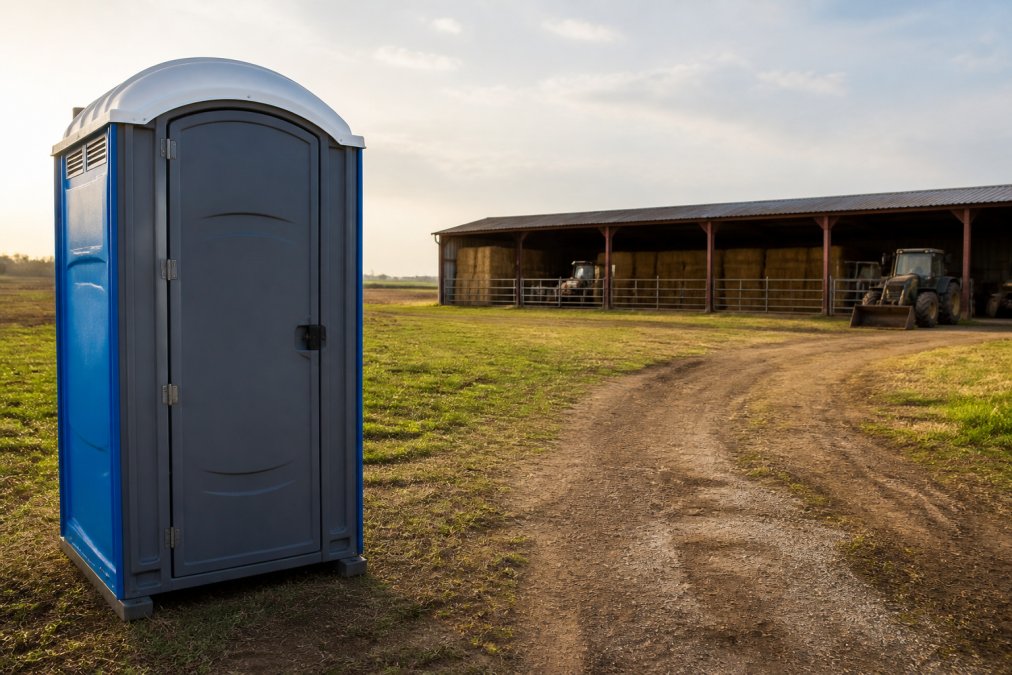
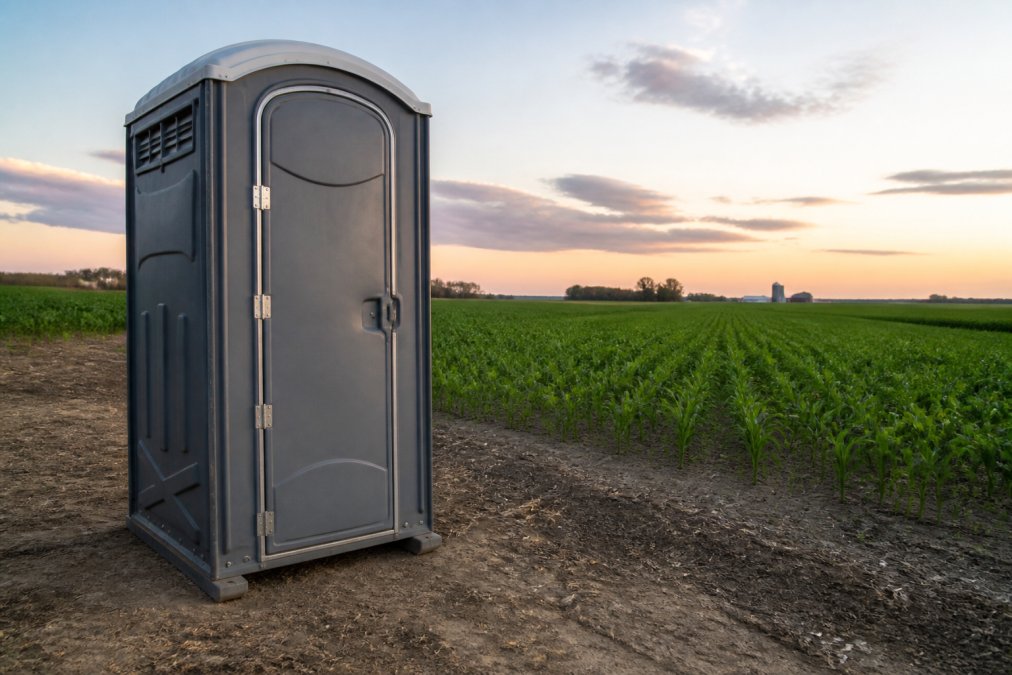
Standard portable toilets represent the most common choice for farm operations. These self-contained units sit on solid ground and require minimal installation. They feature a holding tank, ventilation system, and interior space designed for individual use. Standard units work well for operations with 10-30 workers and moderate usage duration.
The advantage of standard portable toilets is simplicity. They require no water hookup, minimal site preparation, and straightforward maintenance. For farms with seasonal crews, standard units offer flexibility without long-term commitment. Standard units do have limitations. They're not ideal for operations with very large crews, extended durations, or high-traffic scenarios. In peak harvest periods with 50+ workers, standard units can't handle the volume efficiently. Additionally, standard units provide only toilet facilities, they don't include handwashing stations, which the FSS requires as separate equipment.
Trailer-Mounted Restroom Units
Trailer-mounted restroom units represent a step up in capacity and amenities. These mobile facilities mount on trailers and can include multiple stalls, handwashing stations, and sometimes shower facilities. They're designed for operations with larger crews or extended durations where standard portable toilets would require excessive servicing.
Trailer-mounted units offer several advantages for agricultural operations. Multiple stalls reduce wait times and bottlenecks during peak usage periods. Some configurations include separate handwashing stations with potable water, meeting FSS requirements in a single unit. Trailers provide better weather protection than standard units, which matters in regions with heavy rain or intense sun exposure.
The trade-off is cost and logistics. Trailer-mounted units require level ground, adequate space, and potentially utility connections. For farms with 40+ workers or crews working extended seasons, trailer-mounted units often deliver better value than renting multiple standard units.
Handwashing Stations and Accessory Equipment
Handwashing stations are not optional, they're a regulatory requirement under the Field Sanitation Standard. These units must provide potable water, soap, and single-use towels within 100 feet of toilet facilities.
Standalone handwashing units come in several configurations. Portable handwashing units feature foot-pump operation or automatic sensors, reducing cross-contamination. Some models include hot water heating, which improves hygiene compliance during cold weather. Accessory equipment extends portable restroom functionality, including waste receptacles, paper towel dispensers, and hand sanitizer stations.
The best portable restroom service for rural farms coordinates all these elements, delivering toilets, handwashing stations, and accessory equipment positioned to meet FSS requirements and optimize crew workflow.
Long-Term Porta Potty Rental Costs and Budget Planning
Portable restroom service for rural farms involves multiple cost factors. Understanding these components helps you budget accurately and compare provider options effectively.
Rental costs vary based on unit type, service frequency, duration, and location. Standard portable toilets cost less than trailer-mounted units. Service frequency affects pricing; weekly maintenance costs less per month than twice-weekly service, but high-traffic operations may require more frequent servicing. Distance and accessibility affect delivery and service costs. Rural locations may require longer travel time for service providers, which can increase pricing.
Waste disposal costs represent a significant component of total expenses. Holding tank capacity, usage volume, and disposal protocols determine how frequently units require pumping. High-usage operations may need twice-weekly service, while lower-usage situations might manage with monthly maintenance.
Water supply and handwashing station maintenance add to operational expenses. If your site lacks potable water access, providers must deliver water for handwashing stations. Seasonal variation affects rental economics. Many agricultural operations need intensive sanitation during harvest periods but minimal facilities during off-seasons. A flexible rental arrangement that scales up and down with crew size optimizes budget efficiency.
Portable Restroom Maintenance Schedule and Service Frequency
Regular maintenance determines whether portable restroom facilities remain compliant and hygienic. Standard portable toilets typically require servicing every 7-14 days during active agricultural operations. High-traffic situations may need twice-weekly service. Lower-usage periods might extend to monthly service, though this depends on specific operational demands.
Each service visit includes pumping the holding tank, cleaning and sanitizing interior surfaces, restocking supplies, and inspecting for damage or maintenance issues. Professional providers document each service, creating the audit trail that FSS compliance requires. This documentation protects your operation if regulators inspect.
Handwashing station maintenance follows a similar schedule. These units require regular water refilling, soap restocking, and towel replenishment. In high-traffic situations, handwashing stations may need daily attention.
Environmental protocols govern waste disposal. Waste from agricultural operations must reach approved treatment facilities. Professional providers handle this compliance requirement, ensuring waste goes to proper facilities rather than being illegally dumped. This protects your operation from environmental liability.
The maintenance schedule should include seasonal adjustments. During peak harvest periods, increase service frequency to maintain hygiene standards. During off-seasons, reduce frequency to match lower usage levels. Flexible providers accommodate these seasonal variations without penalizing you for variable demand.
Placement, Accessibility, and Site Logistics
Where you position portable restroom facilities dramatically affects crew productivity and regulatory compliance. The Field Sanitation Standard requires that toilet facilities be accessible to workers without unreasonable travel time. In practice, this means positioning units within reasonable walking distance of work areas, typically 100-200 feet depending on terrain and field layout.
Accessibility extends beyond distance. Units must be positioned on level, stable ground that accommodates the equipment's weight and footprint. Muddy or soft ground can destabilize units and create safety hazards. Drainage considerations matter; you don't want units positioned where rainwater collects or where waste disposal creates environmental issues.
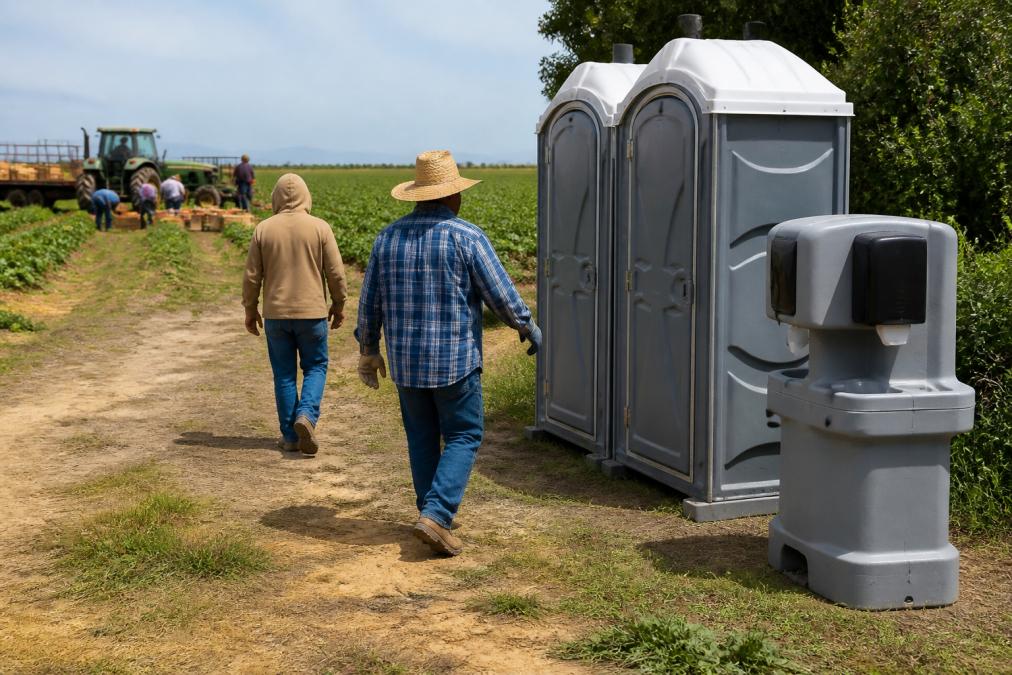
Site logistics involve coordinating multiple elements. Toilet facilities must position within 100 feet of handwashing stations. Both must be accessible to all crew members regardless of mobility limitations. Pathways to facilities should be clear and safe, particularly in low-light conditions or during weather events.
Vehicle access for service providers requires consideration. Units need regular maintenance and pumping, which requires service vehicles to reach the location. Sites with poor road access or limited parking create challenges for service providers and may increase costs. Discuss site logistics with your provider during planning.
Seasonal changes affect optimal placement. During different crop growth stages, work areas may shift. A portable restroom service provider familiar with agricultural operations understands these dynamics and can help reposition units as work patterns change throughout the season.
Environmental Impact and Waste Disposal Protocols
Portable restroom service for rural farms involves environmental responsibilities that extend beyond the immediate sanitation function. Proper waste management protects groundwater, complies with environmental regulations, and demonstrates responsible stewardship of agricultural land.
Waste from portable restrooms contains biological material and chemical treatments used to manage odor and decomposition. This waste cannot be disposed of in standard landfills or through unauthorized dumping. It must reach approved wastewater treatment facilities equipped to handle biological waste. Professional providers maintain relationships with licensed treatment facilities and document all waste disposal, creating an audit trail that protects your operation.
Water conservation represents another environmental consideration. Handwashing stations and portable toilet operations consume potable water. In water-scarce regions, water consumption becomes a significant operational cost and environmental concern. Some providers offer water-recycling systems or low-flow fixtures that reduce consumption without compromising hygiene standards.
Portable restroom units themselves have environmental footprints. Older units may leak or fail, contaminating soil and groundwater. Professional providers maintain equipment to prevent leaks and replace units that can't meet environmental standards. Regular inspection and maintenance prevent environmental incidents that create liability for your operation.
The most environmentally responsible approach involves right-sizing facilities to minimize waste generation. Properly sized systems that match actual crew requirements minimize environmental impact while maintaining compliance.
How to Choose a Portable Restroom Service Provider
Selecting the right provider determines whether your sanitation infrastructure supports compliance, maintains crew welfare, and operates within budget.
Regulatory Knowledge and Compliance Support
The provider should demonstrate understanding of OSHA Field Sanitation Standards and other relevant regulations. They should explain what compliance requires, help you document compliance, and maintain records that protect your operation. Ask potential providers directly about FSS requirements; their response reveals whether they understand agricultural sanitation obligations.
Service Reliability in Rural Areas
Rural operations depend on providers who reliably reach remote locations. Ask about service response times, backup equipment availability, and contingency plans if primary units fail. Patriot Solutions operates in rural areas and understands the logistics challenges that affect service delivery. Ask for references from other agricultural operations in your region.
Maintenance and Cleaning Standards
Visit a provider's facility if possible, or request photos of their equipment. Well-maintained units indicate that the provider takes hygiene seriously. Ask about cleaning protocols, chemical treatments used, and maintenance frequency.
Flexibility for Seasonal Variation
Agricultural operations have highly variable sanitation needs. Providers should offer flexible arrangements that accommodate seasonal crew changes without penalizing you for variable demand. Ask whether they offer seasonal contracts and how they handle mid-season adjustments.
Transparent Pricing and Cost Structure
Understand what costs include and what generates additional fees. Ask about delivery charges, service frequency costs, waste disposal fees, and any other expenses. Transparent providers clearly explain pricing structures.
Communication and Responsiveness
You'll interact with your provider regularly throughout the season. Assess their responsiveness during initial conversations. Do they answer questions clearly? Do they seem to understand your specific operational needs?
Portable restroom service for rural farms addresses a fundamental operational need that most industries overlook until it becomes a crisis. The right provider transforms sanitation from a compliance headache into a seamless operational function. Patriot Solutions delivers clean equipment, fast delivery, and dependable local service that keeps your crew healthy, maintains regulatory compliance, and demonstrates that you take worker welfare seriously. Contact Patriot Solutions to discuss your specific sanitation needs and receive a customized recommendation for your agricultural operation.
Frequently Asked Questions
How many portable toilets are required for farm workers per OSHA standards?
OSHA's Field Sanitation Standard requires one toilet for every 20 workers or fewer. For handwashing, you need one station per 20 workers. The exact requirement depends on your crew size and work duration. Seasonal operations may need temporary increases during peak harvest periods. Consult OSHA regulations or contact a service provider familiar with agricultural hygiene standards to ensure your farm meets all compliance requirements.
What is included in a portable restroom maintenance schedule for long-term farm rentals?
Standard maintenance includes regular pumping, waste removal, restocking of supplies, and sanitization. For long-term porta potty rental arrangements, service frequency typically ranges from weekly to bi-weekly depending on crew size and usage. Services should include cleaning the interior, checking for damage, refilling handwashing stations, and ensuring proper functioning of all fixtures. Discuss specific maintenance protocols with your provider to match your farm's operational schedule.
How do I know if a portable restroom service provider will actually show up when scheduled?
Ask for references from other agricultural operations or construction managers in your area who use their services. Request a written service agreement that specifies pickup and delivery dates, service frequency, and what happens if they miss a scheduled maintenance visit. Local providers familiar with rural sites typically have better response times. Confirm their coverage area includes your farm location and ask about their backup plan if a vehicle breaks down during peak season.
What factors affect the cost of portable restroom service for seasonal farm operations?
Pricing depends on crew size, rental duration, service frequency, equipment type, and distance from the provider's base. Seasonal operations that scale up and down throughout the year should discuss flexible rental agreements. Long-term arrangements often offer better rates than short-term rentals. Contact Patriot Solutions or your local provider for a customized quote based on your specific operational needs and timeline.
This article was written using GrandRanker