 ultimate-guide
Temporary Street Occupancy Permits for Construction Explained
Quick Summary
A street occupancy permit is the authorization a city or county issues when construction work, equipment, debris containers or materials need to occupy public right-of-way for a set period. Without one, placing a dumpster on the curb or closing a lane is generally treated as unauthorized use of public property.
- The permit is triggered by physical occupancy of public space, not by the size of the job.
- Confirm whether you need an occupancy, no-parking, traffic control or combined permit before applying.
- Submit the application, site plan and traffic control plan early, since lead times often run several business days to weeks.
- A paid application is not the same as an issued permit; wait for the issued document before mobilizing.
- Work outside the approved traffic control plan is a common enforcement finding, so request revisions before moving barricades or equipment.
Table of Contents
- What a Temporary Street Occupancy Permit Covers
- When Construction Work Requires a Street Occupancy Permit
- Street Occupancy Permit Application Steps and Documents
- Building a Construction Traffic Control Plan
- Temporary No-Parking Permits for Construction Projects
- Understanding Street Occupancy Permit Fees
- Extensions, Changes, and Enforcement Risks
- Scheduling Your Permit Request Before Work Begins
- Frequently Asked Questions
What a Temporary Street Occupancy Permit Covers
Last Updated: October 30, 2026
A temporary street occupancy permit is the authorization a city or county issues when construction work, equipment, debris containers or materials need to occupy a public right-of-way for a set period.
The permit is usually issued by the local public works, transportation or engineering department, and each jurisdiction sets its own name for it. Some call it a street use permit, others a roadway occupancy permit or a right-of-way permit.
Street Occupancy Versus Temporary No-Parking Permits
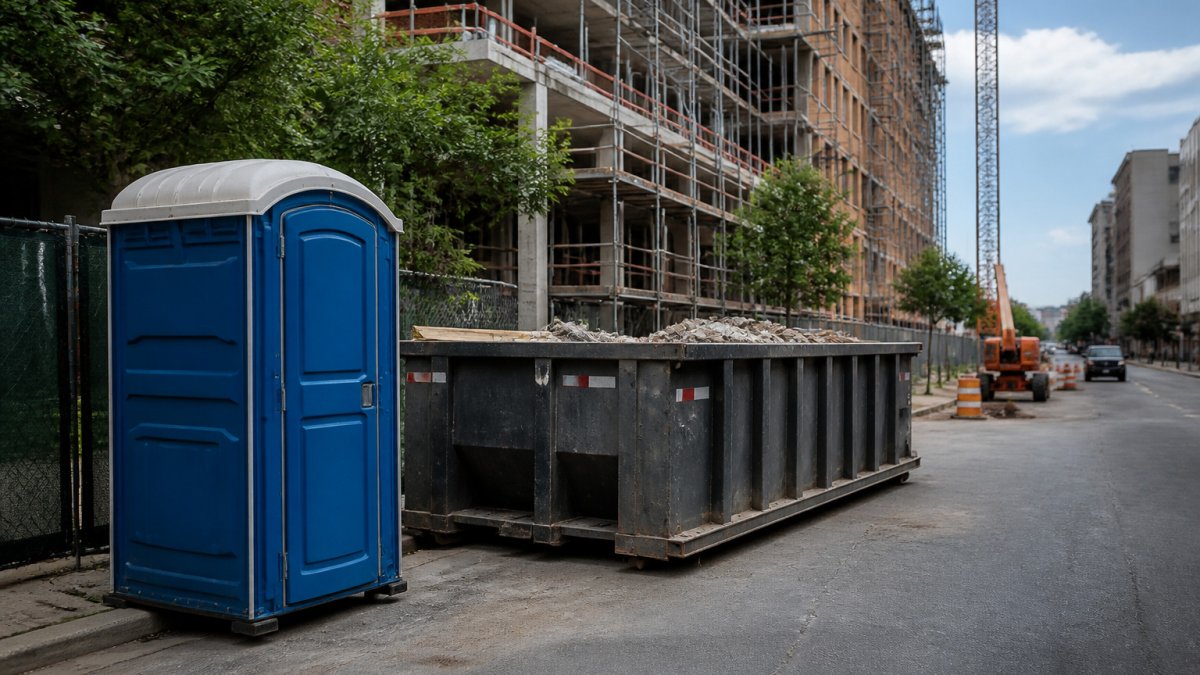
These two permits are often confused, and the distinction affects both cost and timing. A street occupancy permit covers the physical use of public space by your project, such as a dumpster, storage pod, scaffolding, a crane or materials stacked on a sidewalk. For roll-off dumpster rentals for construction projects in Delta and Central Utah, see Roll-Off Dumpsters in Delta, Utah.
Activities That Typically Require a Permit
Most jurisdictions require authorization for work that places anything on or closes public space. Common examples include:
- Roll-off dumpsters, debris boxes and storage pods placed on a street or sidewalk
- Lane closures, sidewalk closures or partial road closures
- Construction equipment, cranes, lifts and scaffolding in the public right-of-way
Work entirely inside a private property line generally does not need a street permit, though it may need other approvals.
When Construction Work Requires a Street Occupancy Permit
A permit is required whenever your project uses or restricts public space, even briefly. The trigger is physical occupancy, not the size of the job.
Some projects need an occupancy permit even when they never leave the property. Equipment that swings over a sidewalk, or a materials drop that spills onto the right-of-way, can count as occupancy. Ask the permitting office before assuming a placement is exempt.
Street Occupancy Permit Application Steps and Documents
The process generally follows the same sequence across jurisdictions, though the forms, portals and timelines differ. What separates a smooth approval from a stalled one is usually the quality of the documents, not the application itself.
- Confirm the permit type. Ask whether you need an occupancy permit, a no-parking permit, a traffic control permit or a combination. Some offices issue a single right-of-way permit that bundles all three; others require separate applications to separate divisions.
- Map the exact space. Note the street address, the length of curb or sidewalk affected, the number of travel lanes impacted and whether a bus stop, loading zone, fire hydrant or accessible parking space falls inside the footprint. Reviewers check these first because they trigger additional approvals.
- Prepare the site plan and traffic control plan. Most offices require a scaled sketch showing equipment placement, dumpster dimensions, pedestrian routes and the width of the clear path left for foot traffic.
- Submit the application online or in person. Many cities route applications through an online portal or a permit service center; larger projects may be routed to a right-of-way or engineering review desk.
- Pay the fee and wait for approval. Approval times vary, and the permit is usually not valid until you receive the issued document, a paid application is not the same as an issued permit.
- Display the permit on site. Keep a copy available for inspectors and post it where the permit conditions require.
Application Checklist and Supporting Documents
The list below reflects the documents most often requested across jurisdictions; confirm the exact list with the issuing office before you submit.
- Completed application form with project address, legal description and requested work dates
- Site plan or sketch, drawn to scale, showing equipment, dumpsters, materials, fencing and pedestrian routes
- Traffic control plan for any lane, sidewalk or shoulder impact, including signage, cones, barricades and flagger positions
Lead Times and Scheduling
Application lead times often range from several business days to a few weeks, depending on the scope and whether a traffic review is needed.
A practical timeline that works across most jurisdictions:
- Four to six weeks out: confirm the permit type, gather insurance and licenses, and draft the site and traffic control plans.
- Three to four weeks out: submit the application and pay the fee.
- Two weeks out: respond to reviewer comments and revise plans if needed.
If your project also needs utility, excavation, building or traffic approvals, sequence them so the street occupancy permit is not the last item holding up mobilization.
The table below summarises the application steps and their timing, as described in the article.
| Step | What to do | Timing |
|---|---|---|
| Confirm the permit type | Ask whether you need an occupancy, no-parking, traffic control or combined permit | Before submitting |
| Map the exact space | Note address, curb or sidewalk length, lanes affected and nearby hydrants or bus stops | Before submitting |
| Prepare site and traffic control plans | Provide a scaled sketch and traffic control plan | Before submitting |
| Submit the application | Apply online or in person, through a portal or service center | Submit early |
| Pay the fee and wait for approval | Approval is complete only when the issued permit is received | Several business days to a few weeks |
| Display the permit on site | Keep a copy available for inspectors and post it where required | Once issued, during work |
Building a Construction Traffic Control Plan
A traffic control plan describes how you will keep vehicles and pedestrians safe around the work zone. For practical guidance on loading and managing dumpsters on a jobsite, see Tips for Loading Construction Dumpsters Efficiently.
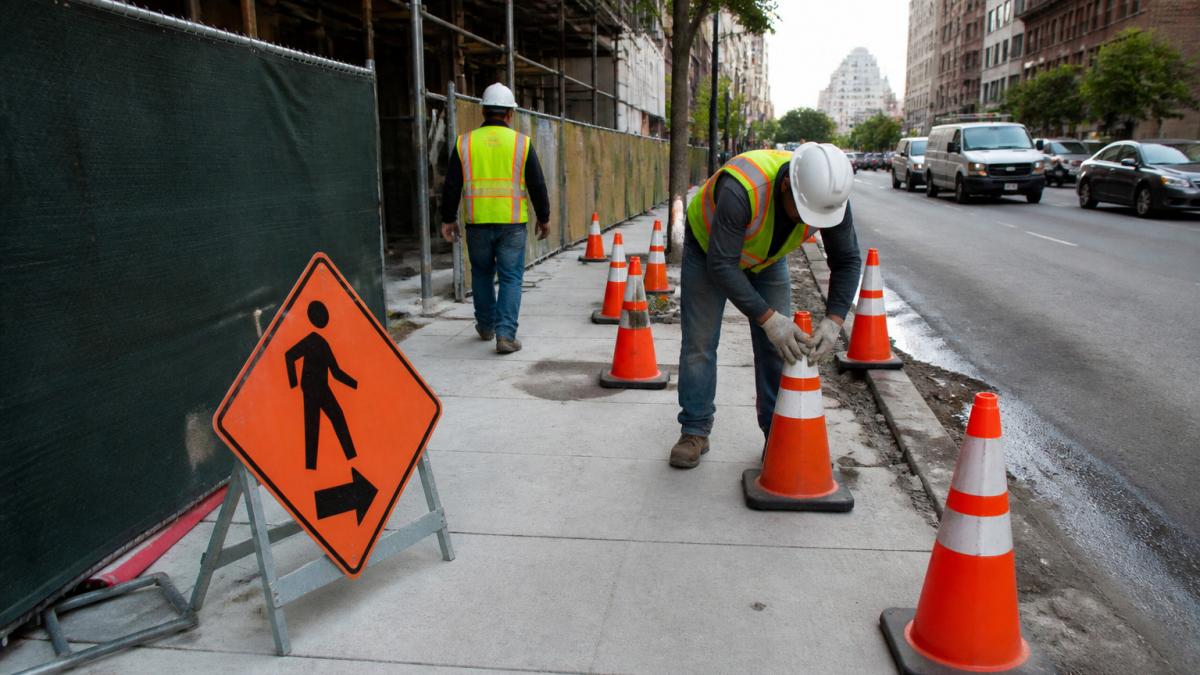
The practical standard is simple: a pedestrian should be able to travel the same route they used before the work started, with the same level of safety, and a driver should be able to understand the work zone without stopping to figure it out.
Pedestrian Access and Accessible Routes
Plan for pedestrian access as carefully as vehicle access. Accessible routes, clear sidewalk width and safe crossings are frequently required conditions of approval. Reviewers commonly look for:
- A continuous accessible route around the work zone, with a clear width that meets the office's minimum and a firm, stable surface
- Temporary curb ramps or plates where the sidewalk is removed or the grade changes
- Protected walkways with barricades or fencing separating pedestrians from equipment, excavations and traffic
If the only available detour crosses a street, the plan should show where pedestrians will cross and how they will be protected. A detour that forces pedestrians into a travel lane without protection is a common reason a plan is rejected.
Signage, Barricades and Work-Zone Layout
A workable plan shows the layout in sequence from the driver's point of view:
- Advance warning well before the work zone, so drivers can change lanes or slow down
- Transition area with cones or drums tapering traffic away from the work space
- Buffer space between traffic and workers
Signs should be legible, mounted at the height the office requires, and removed or covered when the work is not active. Barricades should be reflective and positioned so they do not themselves become a hazard.
Assigning Responsibility and Daily Inspection
Assign someone to inspect the zone daily so cones, barricades and signs stay in place. The plan should name that person and describe what they check: sign condition, cone placement, pedestrian route clearance, lighting and equipment position. A daily log is useful if an inspector asks what was checked and when.
Coordinating With Other Approvals
Traffic control often overlaps with other approvals. A lane closure on a state route may need state transportation review in addition to the local permit. A sidewalk closure near a school or transit stop may need coordination with the school district or transit agency. Ask the issuing office early which other agencies review the plan, and build their timelines into your schedule.
Temporary No-Parking Permits for Construction Projects
A temporary no-parking permit clears curb space so equipment or a dumpster has room to sit, and so trucks can load without being blocked. Jurisdictions usually require you to post no-parking signs in advance, sometimes 24 to 72 hours before the restriction starts. Remove the signs promptly when the work ends, because lingering restrictions generate complaints and can result in fines.
Understanding Street Occupancy Permit Fees
Fees vary widely by jurisdiction, by the amount of space used and by the duration of the permit. Some offices charge a flat application fee, while others charge daily or weekly rates for occupied space. Pricing depends on the quantity of space, the dates of work and whether traffic control is involved, so check the issuing office's current fee schedule rather than relying on estimates.
Extensions, Changes, and Enforcement Risks
Plans change, and most jurisdictions have a process for extending a permit, altering its dates or changing the space you occupy.
Enforcement is typically handled by public works inspectors, code officers or police. Violations often include unpermitted dumpsters, blocked sidewalks and missing signage. Keeping your permit, insurance certificate and traffic plan on site is the simplest way to resolve an inspection quickly.
Scheduling Your Permit Request Before Work Begins
Start the permit process as soon as your project schedule is firm, not the week before delivery. Confirm lead times with the issuing office, build in margin for review and inspection, and coordinate with your hauler, equipment provider and crew. To plan delivery alongside your street permit timeline, contact Patriot Solutions through its website for current availability and a quote.
Frequently Asked Questions
What is a temporary street occupancy permit for construction?
A temporary street occupancy permit authorizes a contractor to use part of a public street, sidewalk, or right-of-way for construction activity such as equipment staging, material storage, a dumpster, or a lane closure. It is issued by the local jurisdiction that owns the roadway, and it sets the approved location, work dates, and traffic control requirements. Permit names and rules vary by city and county, so confirm the exact permit type with the office that controls the road before you schedule work.
When does construction work require a street occupancy permit?
Most jurisdictions require a permit when construction work places anything on a public street, sidewalk, or parking lane, or when it closes or narrows a lane. Common triggers include placing a roll-off dumpster in the street, staging materials on the curb, running equipment that blocks traffic, and closing a sidewalk for a pedestrian detour. Work that stays entirely on private property usually does not need one, but confirm with the local permitting office.
What is the difference between a street occupancy permit and a temporary no-parking permit?
A street occupancy permit covers the physical use of the right-of-way, such as materials, equipment, or a closure. A temporary no-parking permit reserves curb space so vehicles cannot park there during a set window, which is often needed alongside occupancy for crane picks or large deliveries. Some jurisdictions issue both under one application, while others handle them separately, so ask which permit covers each activity on your schedule.
How do I apply for a street occupancy permit application?
Most cities accept street occupancy permit applications online, by mail, or in person at a public works or transportation office. Prepare a site plan showing the exact area, the work dates, and the traffic control approach, then submit the application with the required fee. Reviewers commonly request revisions, so build in time for corrections. Starting the request early reduces the risk of delays that push back your construction schedule.
What documents are typically needed for a street occupancy permit application?
Typical supporting documents include a site or location map, a description of the work and equipment, proposed work dates and hours, a certificate of insurance naming the jurisdiction as additional insured, and a construction traffic control plan. Some jurisdictions also require a contractor license number, a bond, or property owner authorization. Requirements differ, so use the application checklist from the permitting office and attach every item listed to avoid a rejected submission.
How long does it take to get a street occupancy permit?
Processing times vary by jurisdiction, workload, and how complete the application is. Simple requests for a dumpster or short sidewalk closure may be processed within several business days, while closures on arterial roads or requests that need engineering review can take several weeks. Submit well ahead of your planned start date and confirm the current processing time with the permitting office.
How long can a construction project occupy a street?
The permitted duration depends on the scope of the work and the jurisdiction's rules. Permits are often issued for a defined period, and extensions usually require a written request before the original expiration date. Work that runs past the approved dates without an extension can lead to fines or removal of equipment, so track your permit end date against your project schedule.
What happens if construction work blocks a street without a permit?
Working in a public right-of-way without a permit can result in stop-work orders, fines, and orders to remove equipment or materials. Unpermitted closures also create liability if pedestrians or drivers are injured. Local enforcement may be triggered by a complaint, an inspection, or a traffic incident, so obtain the proper permit before any equipment or materials are placed in the street.