 ultimate-guide
Portable Toilet Service for Rural Areas
Table of Contents
- Why Portable Toilet Service for Rural Areas Differs from Urban Delivery
- Portable Toilet Rental Cost: What Affects Pricing in Remote Locations
- Placement, Ground Stability, and Site Assessment for Rural Sanitation
- OSHA Sanitation Standards for Remote Sites and Compliance
- Portable Restroom Maintenance Schedule and Service Frequency
- Waste Disposal and Environmental Responsibility in Rural Operations
- Flexible Scheduling and Emergency Response for Portable Toilet Service
Last Updated: August 23, 2026
Why Portable Toilet Service for Rural Areas Differs from Urban Delivery
Serving rural communities with portable sanitation requires a fundamentally different approach than urban logistics. Distance, road conditions, site accessibility, and population density create challenges that urban providers rarely encounter. Urban routes can service 15-20 units per day along predictable streets. Rural operations might service 4-6 units across 50 miles of varied terrain, affecting scheduling, equipment selection, and cost structure.
At Patriot Solutions, we've built our portable toilet service for rural areas specifically around the realities of remote locations. Rural sanitation isn't just urban service delivered farther away, it's a distinct service category with its own logistics, equipment needs, and operational standards.
Portable Toilet Rental Cost: What Affects Pricing in Remote Locations
Pricing for a portable toilet service for rural areas reflects the real costs of rural operations. Distance, access difficulty, service frequency, and equipment type all influence what you'll pay.
The primary cost drivers are travel distance and terrain. A site 30 miles from the service hub costs more than one 5 miles away due to fuel, labor time, and vehicle wear. Unpaved roads, seasonal weather impacts, and difficult terrain add further costs. Service frequency directly affects your total cost, weekly service costs less per visit than twice-weekly, but you need sufficient capacity between visits. Most rural operations find that weekly or bi-weekly service matches their actual needs, though seasonal variation is common.
Equipment selection impacts pricing as well. A basic portable toilet costs less than a restroom trailer with hand-wash stations and climate control. Event organizers often find that upgrading to a restroom trailer improves guest experience and justifies the higher cost. Construction sites typically use standard portable toilets unless ADA compliance requires accessible units.
For current pricing on portable toilet rental and service options, contact Patriot Solutions directly for a quote based on your specific location, usage needs, and timeline. Pricing depends on quantity, dates, delivery distance, and service frequency, so a personalized estimate is the only way to get accurate numbers for your project.
Placement, Ground Stability, and Site Assessment for Rural Sanitation
Proper placement of portable toilets determines whether service runs smoothly or creates operational headaches. Rural sites present specific challenges: uneven terrain, seasonal ground conditions, limited flat areas, and proximity to water sources. Site assessment before delivery prevents placement failures that can damage equipment or create safety hazards.
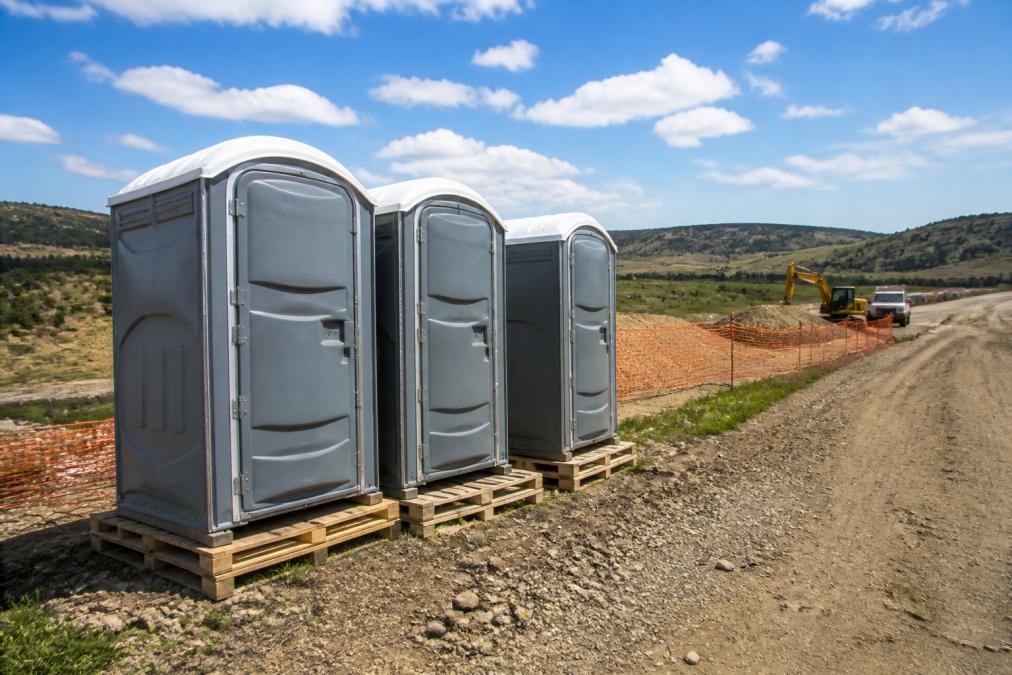
Ground stability is non-negotiable. Portable toilets weigh 800-1,200 pounds when full (osha.gov). Soft ground, clay, or areas prone to pooling water cause units to settle unevenly. Before placing units, assess the ground. Hard-packed earth, gravel, or concrete pads work well. Soft soil, sand, or wet ground require preparation: laying wooden pallets, gravel base, or concrete pads to distribute weight and prevent sinking.
Slope and drainage matter more in rural areas. Position units on level ground or use shims to level them. Ensure water drains away from the unit; pooling water around the base indicates poor drainage. Leave at least 3-4 feet on all sides of each unit for service vehicle access and technician movement.
Position units at least 50 feet from wells, streams, or groundwater intake areas to prevent contamination. This is both a practical consideration and a regulatory requirement in most jurisdictions.
OSHA Sanitation Standards for Remote Sites and Compliance
Portable toilet requirements for construction sites are governed by OSHA standards, which apply regardless of location. Rural sites must meet the same sanitation standards as urban construction sites.
OSHA regulations require one toilet per 20 workers, or one per 10 workers if the site has no other sanitation facilities (osha.gov). Facilities must be accessible, maintained in sanitary condition, and serviced regularly to prevent overflow. Toilets must be stocked with toilet paper and hand-washing supplies. Hand-wash stations must have running water, soap, and paper towels. In remote locations where water supply is limited, portable hand-wash stations with onboard water tanks are the practical solution.
Toilets must be pumped out when the waste level reaches three-quarters full, or at minimum once per week, whichever comes first (osha.gov). Documentation of pump-out dates is required for compliance verification. ADA-compliant units are required if your site has workers with disabilities.
Portable Restroom Maintenance Schedule and Service Frequency
A consistent maintenance schedule prevents operational failures and keeps your portable toilet service for rural areas running smoothly. The right frequency depends on usage volume, weather, and site conditions.
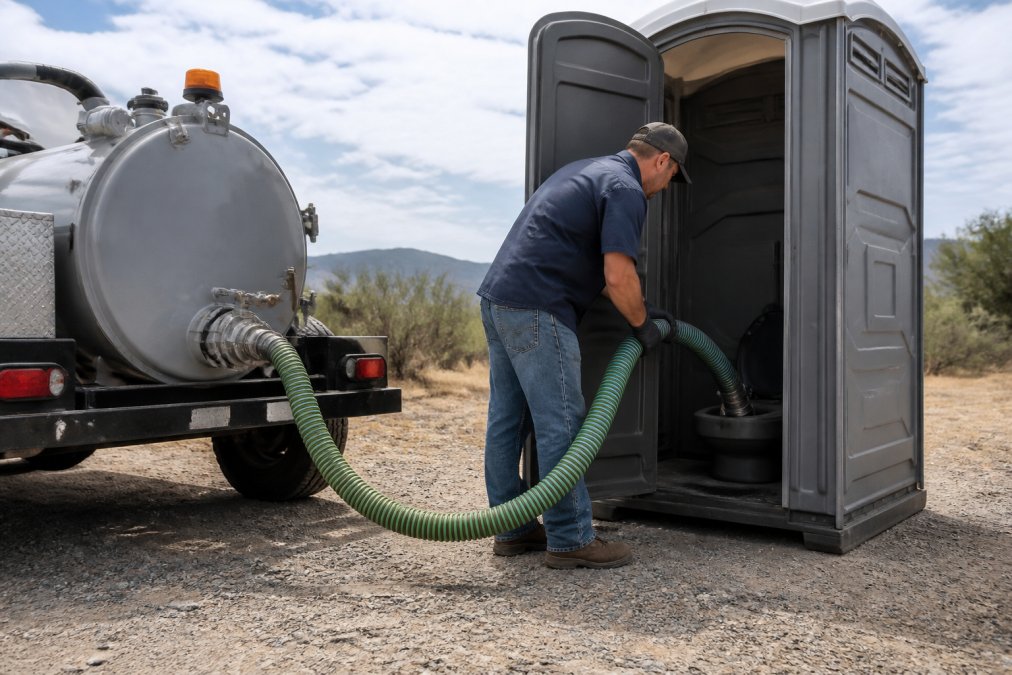
Weekly service is the standard for most rural construction sites and events. For sites with 10-20 workers, weekly service typically prevents overflow. For smaller crews (under 10 people), bi-weekly service may suffice if usage is light. High-usage sites require more frequent service, agricultural operations with seasonal crews during harvest or construction sites in peak phases may need twice-weekly service.
Seasonal adjustments are necessary in rural areas. Winter weather can make access difficult. Spring runoff or heavy rain may increase drainage problems. Summer heat increases odor and bacterial activity, sometimes requiring more frequent service. Plan ahead for seasonal changes rather than reacting to problems.
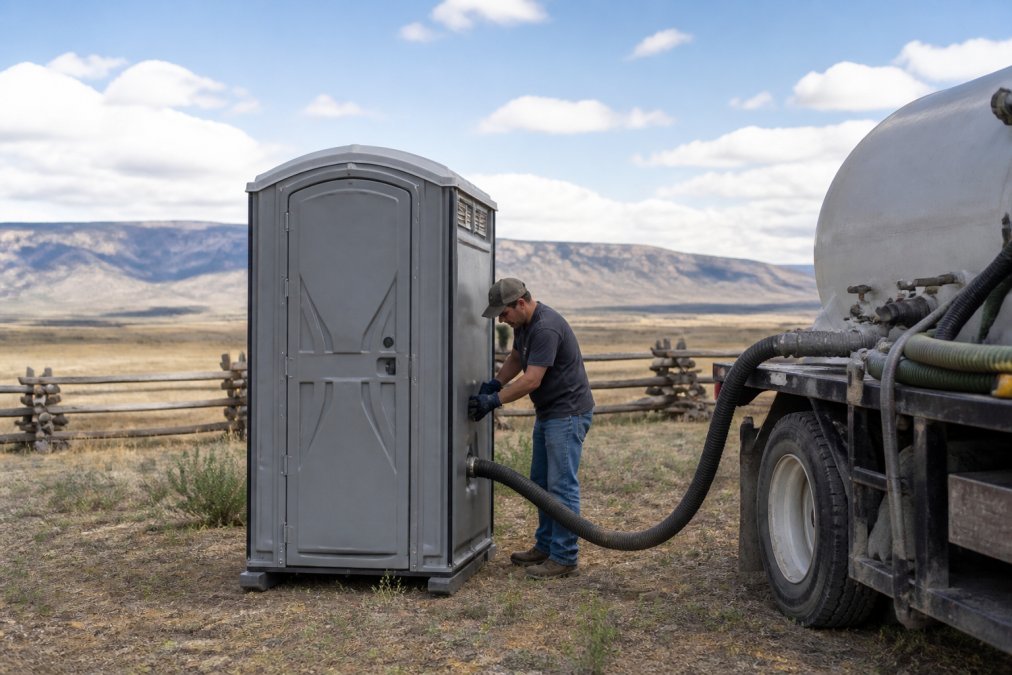
Maintenance tasks beyond pumping include restocking toilet paper, hand-wash supplies, and deodorizing treatments. Emergency service availability matters in rural areas, if a unit overflows or fails, response time is longer than in urban areas.
Waste Disposal and Environmental Responsibility in Rural Operations
Proper waste disposal is both a regulatory requirement and an environmental responsibility. All waste must be transported to an approved treatment facility, septic system, or municipal sewage system. In rural areas, this often means longer transport distances.
Environmental impact depends partly on site conditions. Rural areas with shallow groundwater require extra care to prevent contamination. Sites near water sources need greater separation distances and more frequent servicing. Understanding your site's environmental context informs your service choices.
Waste treatment facilities in rural areas vary. Some counties have centralized treatment plants; others use smaller regional facilities. Patriot Solutions manages relationships with approved facilities in our service areas, ensuring waste is properly treated regardless of location. Verify your provider uses licensed disposal facilities and maintains proper documentation.
Flexible Scheduling and Emergency Response for Portable Toilet Service
Rural operations often face unpredictable schedules and changing conditions. Your portable toilet service for rural areas needs to accommodate this reality without excessive charges or service failures.
Standard schedules work for predictable operations, but rural projects often encounter delays due to weather, equipment failures, or unexpected crew changes. A provider who can adjust service dates quickly without penalties prevents budget surprises. Emergency response capability is critical, if a unit fails or overflows, response time matters. When selecting a provider, ask about emergency response times and whether they charge premium rates for emergency calls.
Seasonal variations require planning. Agricultural operations with seasonal crews need to scale up during peak labor periods and down during off-seasons. Flexible service agreements that allow schedule adjustments without excessive penalties accommodate these realities. Long-term leases for ongoing operations often provide better rates than short-term rentals, especially for rural locations where distance affects pricing.
Reliable sanitation is non-negotiable for rural operations, but finding a provider who understands rural logistics isn't always straightforward. Patriot Solutions specializes in portable toilet service for rural areas, with equipment designed for remote sites and service schedules built around the realities of rural operations. We deliver clean, well-maintained units on your timeline, handle waste disposal responsibly, and respond quickly when issues arise. For construction sites, agricultural operations, or events in rural locations, contact Patriot Solutions to discuss your sanitation needs and get a service plan tailored to your project.
Frequently Asked Questions
How often should portable toilets be serviced in remote locations?
Service frequency depends on usage volume and site conditions. Most rural construction sites require weekly or bi-weekly service for standard units. High-traffic events may need twice-weekly visits. Remote terrain and weather can extend travel time, so schedule service proactively rather than reactively. Coordinate with your provider about realistic access windows and backup plans for weather delays.
What factors affect portable toilet rental cost in rural areas?
Distance from service hubs, delivery frequency, terrain accessibility, and unit quantity all influence pricing. Rural sites often incur higher delivery fees due to longer travel times. Seasonal demand, equipment availability, and contract length also factor in. Request a detailed quote that breaks down delivery, service, and any rural surcharges so you understand what drives your total cost.
What are OSHA sanitation standards for remote sites?
OSHA requires one portable toilet for every 20 workers on construction sites, with separate facilities for men and women when crews exceed 10 people. Units must be within a 5-minute walk from work areas and positioned on stable, level ground. Handwashing stations must be available nearby. Remote sites must maintain these standards despite distance challenges, failure to comply results in citations and fines.
Can portable toilets be serviced on private rural property?
Yes, portable toilets can be serviced on private property with proper access roads or terrain suitable for service vehicles. Verify that your property has adequate ground stability and vehicle access before ordering. Some rural locations with poor roads or extreme terrain may require specialized equipment or additional fees. Discuss site conditions with your provider during the initial assessment.
This article was written using GrandRanker