 ultimate-guide
Managing Hazardous Waste on Construction Sites
Table of Contents
- What Counts as Hazardous Waste on a Construction Site
- EPA Hazardous Waste Generator Requirements
- Hazardous Waste Labeling Requirements
- How to Build a Construction Waste Management Plan Template
- Storage, Handling, and Disposal Procedures
- Common Mistakes and How to Avoid Penalties
- Frequently Asked Questions
Last Updated: September 12, 2026
What Counts as Hazardous Waste on a Construction Site
Hazardous waste is any discarded material that poses a substantial threat to human health or the environment because of its chemical, physical, or biological properties (the EPA). On a construction site, managing hazardous waste on construction sites means identifying which leftover materials, containers, and cleanup residues fall under federal rules before they leave your property. This guide breaks down what counts, how to label it, and how to build a plan that keeps your crew and your budget out of trouble.
The stakes are simple: misclassify a waste stream, and you're exposed to fines, stop-work orders, and cleanup liability that follows the project for years. Most contractors don't get caught by the exotic stuff. They get caught by the ordinary things nobody thought twice about.
Common Hazardous Materials Found on Job Sites
The materials that trip up most crews are the ones used every day:
- Solvent-based paints, thinners, and adhesives left over in partially used cans
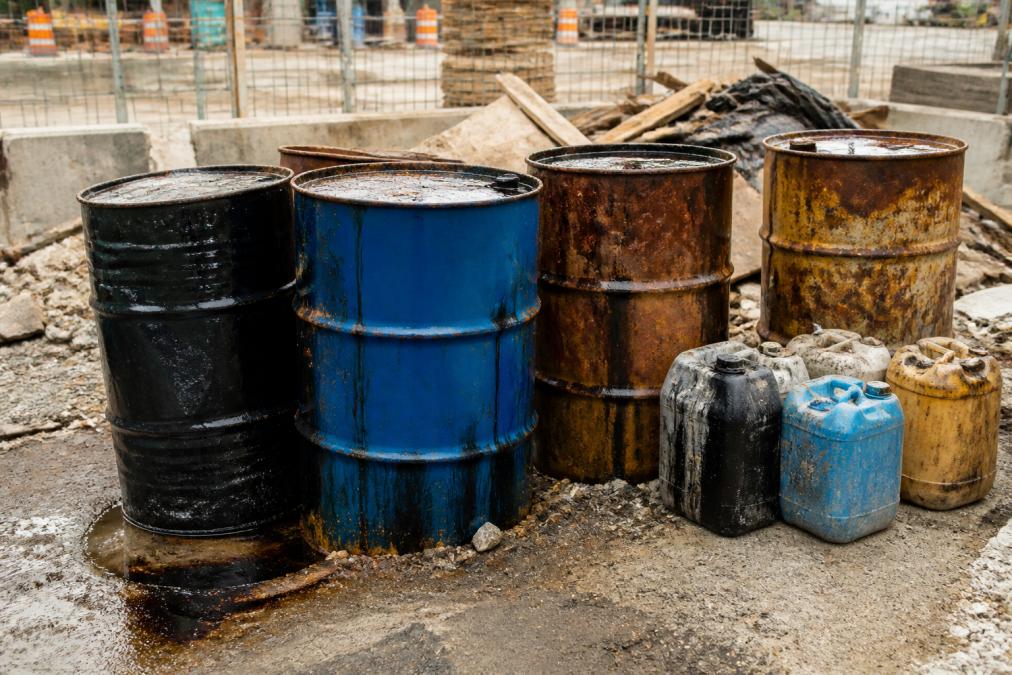
- Used oil, hydraulic fluid, and fuel filters from equipment maintenance
- Lead-based paint debris from pre-1978 structures
- Asbestos-containing materials in older insulation, tile, and siding
- Batteries, fluorescent lamps, and mercury switches from demolition
- Unused or spilled pesticides and wood preservatives
A common mistake is treating "a little bit left in the can" as trash. That small quantity still carries the same disposal obligations as a full drum.
Universal Waste vs. Hazardous Waste
Universal waste is a category of widely generated hazardous waste that federal rules allow you to manage under a simplified set of requirements (the EPA). It includes batteries, pesticides, mercury-containing equipment, and lamps. The distinction matters because universal waste rules are less demanding than full hazardous waste rules, but they are not a free pass.
Hazardous waste, by contrast, meets specific characteristics (ignitability, corrosivity, reactivity, toxicity) or appears on the official EPA waste lists. If you're unsure which bucket a material falls into, treat it as hazardous waste until you can confirm otherwise. The conservative call is almost always the cheaper one.
EPA Hazardous Waste Generator Requirements
Under the EPA hazardous waste generator requirements, your site's obligations depend on how much hazardous waste you generate in a calendar month. The EPA sets three generator categories, and each carries different rules for accumulation time, container management, and reporting.
Generator Categories and What They Mean for Your Site
Very Small Quantity Generator (VSQG): Generates the least waste and faces the lightest requirements, but still must ensure waste goes to a facility authorized to handle it.
Small Quantity Generator (SQG): Must meet more detailed standards, including accumulation time limits, personnel training, and emergency preparedness.
Large Quantity Generator (LQG): Faces the full set of requirements, including biennial reporting and formal contingency planning.
The exact thresholds and accumulation limits are set by federal regulation and can change, so confirm current figures against the EPA hazardous waste generator regulations before you rely on a number for compliance decisions. The practical takeaway: know your category, because it determines how long you can store waste and what paperwork you owe.
Hazardous Waste Labeling Requirements
Hazardous waste labeling requirements exist so that anyone handling a container knows exactly what's inside and what to do with it. Federal rules require containers to be marked with the words "Hazardous Waste," the accumulation start date, and the specific hazard or waste code that applies.
Get the labeling wrong and you create real danger: a worker who doesn't know a drum contains ignitable solvent may store it next to a heat source. Missing labels also fail inspection instantly, because inspectors look at labels first.
A workable labeling routine:
- Mark each container the moment waste is first added, not at the end of the day
- Include the accumulation start date so you can prove compliance with storage limits
- Apply the correct waste code for the material
- Keep labels legible and replace any that fade, smear, or peel
Standardize your labels across the whole site. When every container follows the same format, new workers can read them without a briefing.
How to Build a Construction Waste Management Plan Template
A construction waste management plan template is a written document that maps how your site will identify, store, transport, and dispose of every waste stream it generates. The plan is your defense during an inspection and your instruction manual for the crew.
Key Sections Every Plan Should Include
- Waste identification: Which materials are expected and how each is classified
- Generator category: Your site's category and the accumulation limits that follow
- Storage procedures: Where containers live, how they're labeled, and containment measures
- Handling and transport: Who moves waste, and the manifests required
- Disposal vendors: Who hauls it and where it goes
- Training and roles: Who is responsible for what, and how often crews are trained
- Emergency response: What to do if a container leaks or spills
Keep it specific to your site. A generic template copied from another project won't match your waste streams and won't hold up when it matters.
Storage, Handling, and Disposal Procedures
Storage starts with containment. Keep hazardous waste in closed, compatible containers in a designated area with secondary containment to catch leaks. Separate incompatible materials so a single spill doesn't turn into a chemical reaction.
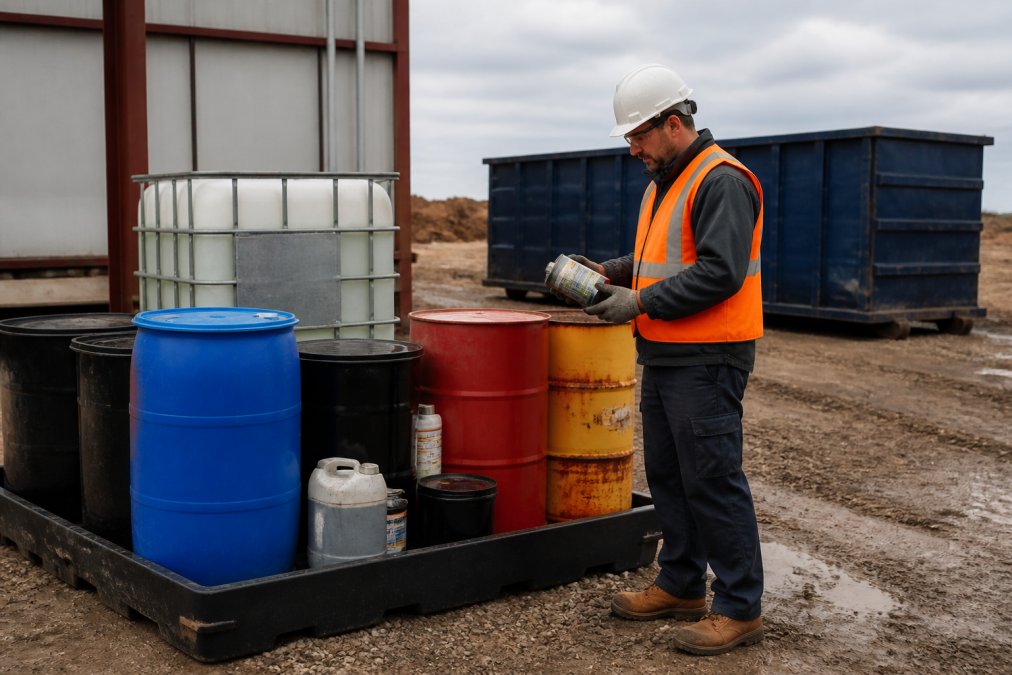
Handling follows a simple rule: trained people only. Every worker who touches hazardous waste should know the material, the protective equipment required, and the spill response steps. Disposal means using a licensed transporter and a facility permitted to accept the waste, with a manifest that tracks it from your site to its final destination.
Here's a quick reference for the most common streams:
| Waste Stream | Typical Storage | Disposal Route |
|---|---|---|
| Solvent-based paint | Closed, labeled cans | Licensed hazardous waste hauler |
| Used oil | Sealed drum, secondary containment | Oil recycler |
| Lead paint debris | Covered container, labeled | Permitted hazardous waste facility |
| Batteries and lamps | Universal waste container | Universal waste handler |
| Asbestos materials | Sealed, labeled, contained | Permitted asbestos disposal site |
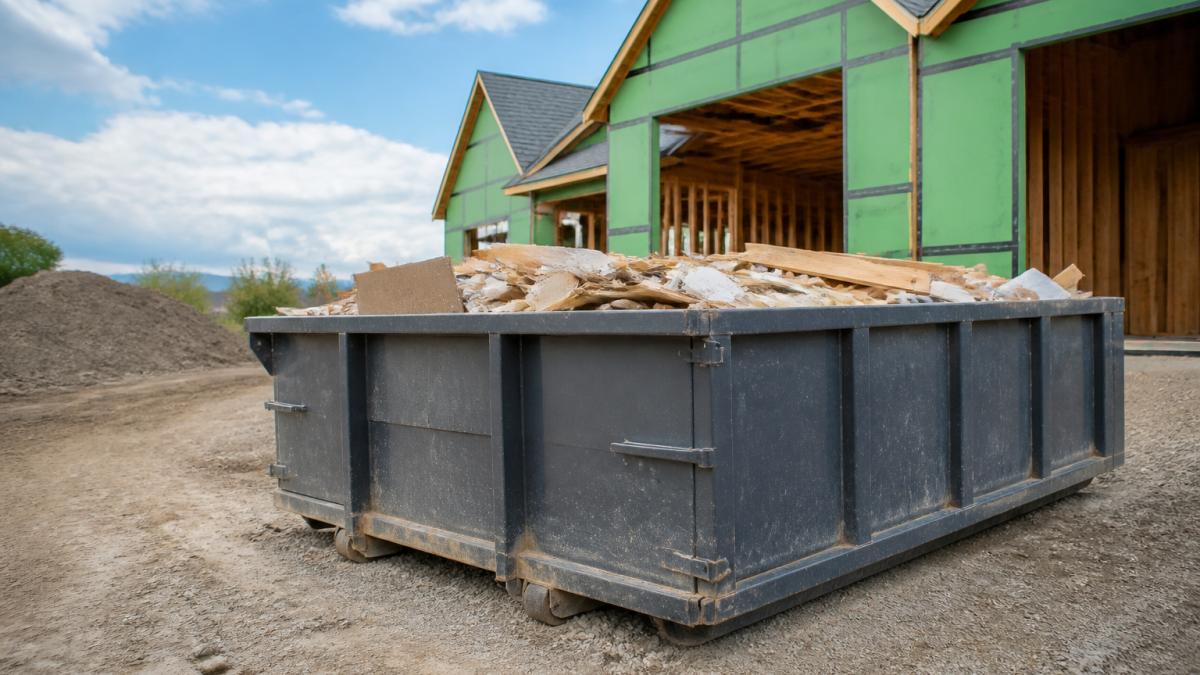
The roll-off dumpster handles your general construction debris, not your hazardous streams. Mixing the two contaminates the whole load and can turn a routine pickup into a regulated disposal event. That's where a dependable local hauler earns their keep.
Common Mistakes and How to Avoid Penalties
The penalties rarely come from a single dramatic error. They come from small habits that compound.
- Guessing at classification. When in doubt, treat material as hazardous until confirmed. Misclassifying to save a disposal fee costs far more when it's caught.
- Ignoring accumulation dates. Every day past your limit is a violation. Log the start date the moment a container is opened.
- Skipping training. Untrained workers mishandle waste, and their mistakes become your citations.
- Mixing streams. One contaminated load can reclassify an entire dumpster and trigger a costly cleanup.
- Losing the paperwork. Manifests and labels are your proof of compliance. Keep them organized and retrievable.
If managing all of this feels like a second job, that's because it is. Patriot Solutions supports construction managers across the area with roll-off dumpsters for general debris and portable restrooms for crews. Reach out to confirm service for your project's location and timeline.
Frequently Asked Questions
What are the common types of hazardous waste found on construction sites?
Construction sites generate several hazardous waste streams. Solvents, paints, and adhesives contain flammable or toxic chemicals. Used oil and fuel filters from equipment maintenance are regulated. Lead-based paint debris from older building demolition requires special handling. Aerosol cans, fluorescent bulbs, and batteries qualify as universal waste. Each type has specific storage, labeling, and disposal rules under EPA hazardous waste regulations, so sorting materials correctly at the point of generation saves time and prevents costly violations.
How long can a construction site store hazardous waste before disposal?
The EPA allows accumulation for a limited time depending on your generator category. Large quantity generators can store waste up to 90 days. Small quantity generators have 180 days, and satellite accumulation areas allow up to 55 gallons of hazardous waste or one quart of liquid acute hazardous waste per container. Once a container hits that limit, you have three days to move it to your main accumulation area. Exceeding these timelines triggers penalties, so track dates carefully.
What are the penalties for improper hazardous waste disposal on construction projects?
The EPA can fine construction sites thousands of dollars per day per violation for improper hazardous waste disposal. Penalties increase for repeat offenses, and criminal charges are possible when violations are knowing or willful. Beyond federal fines, state agencies can impose additional penalties, and cleanup costs fall on the responsible party. A solid construction waste management plan template helps you document compliance and avoid these risks before they start.
How do you properly label hazardous waste containers at a job site?
Every hazardous waste container needs the words 'Hazardous Waste' clearly marked, along with the generator's name, address, and EPA identification number. Include the accumulation start date and the specific hazard characteristics, such as flammable, corrosive, reactive, or toxic. Labels must be legible and visible from the front. When you move waste off site, a uniform hazardous waste manifest tracks it from generation to final disposal. Following hazardous waste labeling requirements keeps your site inspection-ready.
Managing hazardous waste on a construction site is a discipline problem more than a knowledge problem. Most crews know the rules exist; the failure is in the daily habits of labeling, dating, and training. Patriot Solutions helps you handle the part of site management that shouldn't be improvised, with clean equipment, fast delivery, and dependable local service. Get started with Patriot Solutions and keep your project moving without the compliance surprises.