 how-to
How to Avoid Dumpster Overage Fees: A Practical Guide
Table of Contents
- What Are Dumpster Overage Fees and Why They Matter
- Understanding Dumpster Weight Limits Explained
- How to Load a Dumpster Efficiently
- What Items Are Prohibited in Roll-Off Dumpsters
- Choosing the Right Dumpster Size for Your Project
- Smart Scheduling and Service Frequency Strategies
- How to Dispute Overage Charges on Your Invoice
- Conclusion
Last Updated: August 22, 2026
What Are Dumpster Overage Fees and Why They Matter
Dumpster overage fees are charges you incur when your rental exceeds the weight limit, volume capacity, or prohibited item restrictions outlined in your rental agreement. These surcharges can add hundreds of dollars to what you expected to pay, transforming a straightforward project expense into an unwelcome surprise on your final invoice.
Understanding how overage fees work is essential because they're not always transparent upfront. Most rental companies quote a base price for a specific dumpster size with a certain weight allowance. What many customers don't realize is that the weight limit isn't just about the container's physical capacity, it's about what the disposal site can accept and the truck's payload limits. When you exceed that threshold, the tipping fees and surcharges compound quickly.
The real cost of ignoring overage fees goes beyond money. Projects get delayed when containers fill faster than expected, crews waste time reorganizing loads, and disputes over billing create friction with your rental provider. Construction managers and homeowners alike can be caught off guard by these charges because they didn't understand the relationship between material density, load distribution, and final billing.
The good news: avoiding dumpster overage fees is entirely within your control. It requires understanding your weight limits, knowing what materials trigger extra charges, and loading strategically. This guide walks you through the exact steps to keep your project on budget.
Understanding Dumpster Weight Limits Explained
How Weight Allowances Work
Every dumpster rental comes with a weight allowance, typically measured in tons. A standard 20-yard roll-off container might have a 10-ton allowance included in the base rental price. This means you can dispose of up to 10 tons of material without additional charges. Anything beyond that triggers a per-ton overage fee.
The weight allowance isn't arbitrary. It's determined by three factors: the truck's legal payload capacity, the disposal site's receiving limits, and the rental company's operational costs. When you load a dumpster, you're not just filling a box, you're loading a truck that will haul that material to a landfill or recycling facility. Regulatory limits on vehicle weight mean the truck can only carry so much before exceeding legal highway limits.
This is where many people get confused. A dumpster might physically hold 15 cubic yards of material, but if that material is heavy (like concrete or wet soil), you'll hit the weight limit long before the container is full. Conversely, light materials like cardboard or packing peanuts might fill the container without approaching the weight threshold.
Calculating Your Debris Density
Debris density, the weight of material per cubic yard, is the hidden variable that determines whether you'll face overage charges. Understanding density helps you predict costs before renting.
Common materials vary dramatically in weight. One cubic yard of concrete weighs approximately 1.5 tons (usgs.gov). One cubic yard of drywall weighs roughly 0.5 tons (the EPA). One cubic yard of mixed household junk might weigh only 0.3 tons. The difference means you could fit five times more household junk than concrete in the same physical space.
To estimate your project's density, list the materials you're disposing of and research their typical weight per cubic yard. If you're demolishing a bathroom, you'll have drywall (light), tile (heavy), and plumbing fixtures (moderate). If you're clearing a yard, you'll have branches (light), soil (heavy), and sod (moderate). Add up the volumes of each material type, multiply by density, and you get a realistic weight projection.
Here's a practical approach: if your project involves heavy materials like concrete, brick, asphalt, or wet soil, request a larger dumpster size or a higher weight allowance. The incremental cost of upgrading is far less than paying overage fees. If your project is mostly light materials like drywall, cardboard, or vegetation, you can often fit more volume into a smaller container without hitting weight limits.
How to Load a Dumpster Efficiently
Step 1: Plan Your Load Distribution
Before you throw anything in, map out your strategy. Sketch the dumpster's interior dimensions and visualize where heavy items will go. The most efficient loads place heavy materials at the bottom and lighter items on top, this maximizes the weight capacity while preventing the container from becoming top-heavy or unstable.
Start by removing any large, bulky items that take up space without adding much weight. These items should go in first, positioned strategically to use the dumpster's full footprint. Then layer in moderate-weight materials. Save the heaviest items for the bottom or middle sections where they won't shift during transport.
This approach serves two purposes: it prevents wasted space and it distributes weight evenly, which keeps the load stable and within legal limits. An unbalanced load, one that's heavily weighted to one side, can cause the truck to lean during transport, creating safety hazards and potentially violating weight distribution regulations.
Step 2: Break Down Bulky Items
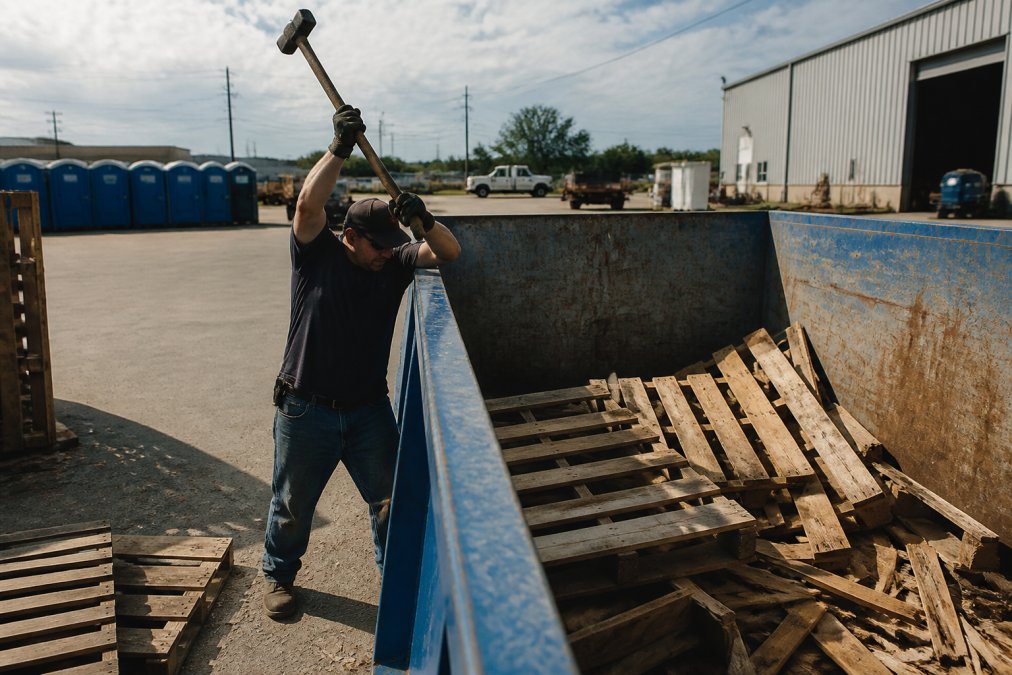
Large items like furniture, pallets, and appliances consume enormous amounts of space relative to their actual weight. Breaking them down before loading is the single most effective way to avoid overage fees.
A wooden pallet that's intact takes up 4 cubic feet of space. Disassembled, the same pallet takes up 1 cubic foot. A sofa occupies 30+ cubic feet whole; cut it into sections and you're down to 10 cubic feet. The weight doesn't change, but the space efficiency improves dramatically.
Use a reciprocating saw, sledgehammer, or pry bar to disassemble items. Remove doors from cabinets and appliances. Flatten cardboard boxes. Cut drywall sheets into halves or thirds. Coil hoses and cables. These small actions compound across a full dumpster load, often freeing up enough space to avoid renting an additional container.
Step 3: Compact and Level Your Load
As you fill the dumpster, periodically compact the load by stepping on lighter materials or using a sledgehammer on bulky items. This isn't just about making room, it's about preventing the load from settling during transport, which can cause shifting and potential spillage.
Level the top surface as you approach capacity. An uneven, peaked load is unstable and suggests wasted space. A level, compact load indicates you've maximized the container's utility. Walk around the perimeter and look for gaps where lighter materials can be wedged in.
This final step is where many people leave money on the table. Spending 15 minutes compacting and leveling can free up enough space to eliminate the need for a second container or reduce overage charges significantly.
What Items Are Prohibited in Roll-Off Dumpsters
Hazardous Materials and Safety Concerns
Certain materials cannot go into standard roll-off dumpsters because they pose environmental or safety risks. These prohibitions are enforced by landfills and recycling facilities, not just rental companies, so violations can result in steep fines beyond overage charges.
Hazardous materials include paint, solvents, batteries, fluorescent bulbs, asbestos, refrigerants, and anything containing mercury or lead (the EPA). Propane tanks, ammunition, and compressed gas cylinders are absolute no-goes. Motor oil, antifreeze, and other automotive fluids must be disposed of separately. Electronics like computers, televisions, and monitors often require specialized recycling.
The reason these items are prohibited is simple: they can't be safely transported or processed at standard disposal facilities. Paint can leak and contaminate soil. Batteries can catch fire in the truck or at the landfill. Refrigerants damage the ozone layer. Asbestos fibers are carcinogenic. Disposing of these materials through the proper channels, hazardous waste collection centers, e-waste recyclers, or specialized disposal services, takes extra time but protects both you and the environment.

Heavy Materials That Trigger Overage Charges
Beyond prohibited items, certain legal materials are so dense that they consume your weight allowance rapidly. These materials deserve special attention when budgeting.
Concrete and asphalt are the heaviest common disposal items, roughly 1.5 tons per cubic yard. A single cubic yard of concrete equals 15% of a typical 10-ton allowance. If you're doing a driveway removal or foundation demolition, you'll exhaust your weight limit with surprisingly little volume. Brick and stone are similarly dense, ranging from 1.2 to 1.5 tons per cubic yard.
Soil and dirt are deceptively heavy, especially when wet. Dry soil weighs about 1.3 tons per cubic yard; wet soil can exceed 1.5 tons. If you're excavating for landscaping or grading work, soil disposal costs can spiral quickly.
Metal is another heavy category. Scrap metal weighs 2 to 3 tons per cubic yard depending on the type. If your project involves removing metal roofing, gutters, or structural steel, expect weight charges unless you arrange separate metal recycling.
The strategy here is clear: if your project involves these materials, either request a dumpster with a higher weight allowance upfront, or arrange separate disposal for heavy materials. Many recycling centers accept concrete, metal, and soil at lower rates than landfill tipping fees, and you avoid overage charges entirely.
Choosing the Right Dumpster Size for Your Project
Selecting the correct dumpster size is the foundation of avoiding overage fees. Too small, and you'll overflow or exceed weight limits. Too large, and you're paying for unused capacity.
Dumpster sizes are measured in cubic yards: 10, 15, 20, 30, and 40 yards are standard options. A 10-yard container is roughly the size of a compact car and suits small residential cleanouts. A 20-yard container is the workhorse for most renovation projects and small demolitions. A 30-yard container handles larger demolitions and major cleanouts. A 40-yard container is typically reserved for commercial construction debris.
To choose correctly, estimate both volume and weight. List all materials you're disposing of, research their density, and calculate total weight. If your estimate is 8 tons of mixed household junk, a 10-ton allowance on a 20-yard dumpster is appropriate. If your estimate is 12 tons of concrete, you need either a dumpster with a 15-ton allowance or a second container.
Don't guess. Call your rental provider, like Patriot Solutions, and discuss your specific project. Explain the materials, the volume estimate, and the timeline. A reliable provider will recommend the right size and weight allowance based on your actual needs, not just the lowest-priced option.
Smart Scheduling and Service Frequency Strategies
Timing and frequency decisions directly impact overage fees. A rushed project that requires a single large dumpster might cost more in overages than a phased approach with multiple smaller rentals.
If your project spans multiple weeks, consider scheduling two separate rentals rather than one large one. A renovation might generate drywall and flooring debris in week one, then plumbing and electrical waste in week two. Splitting these into two rentals keeps each load within weight limits and prevents the need for an oversized container.
Service frequency also matters. If you're generating debris continuously, like a demolition crew removing materials daily, request more frequent pickups. A provider can swap out a full container with an empty one, keeping your weight total manageable across multiple trips. This costs more in pickup fees but often costs less than overage charges on a single overloaded container.
Coordinate with your contractor or project team about waste generation timing. If drywall removal happens on day three and concrete cutting happens on day five, you can time your dumpster rental to align with the heaviest debris periods. This prevents the scenario where you're holding a dumpster for two weeks waiting for heavy materials, then scrambling when they arrive.
How to Dispute Overage Charges on Your Invoice
Despite best efforts, overage charges sometimes appear on your final invoice. Before paying, review the charges and understand the calculation.
Request an itemized breakdown from your rental company. Ask for the weight ticket from the disposal site, which documents the exact tonnage. Compare this to your rental agreement's weight allowance and the per-ton overage rate. Math errors happen, and rental companies should be able to justify every charge.
If the weight seems incorrect, ask questions. Did the truck driver weigh the container empty and full? Was the scale calibrated? Were multiple loads combined under one invoice? Legitimate disputes can be resolved by requesting a re-weigh or verification from the disposal site.
If you believe you were charged incorrectly, for example, if you specifically requested a higher weight allowance that wasn't reflected in the invoice, escalate the issue. Document your conversation with the rental company, including dates, names, and what was agreed. A reputable provider prioritizes resolving disputes fairly and will work with you to correct billing errors.
Prevention is always better than dispute resolution. Before signing a rental agreement, confirm the weight allowance in writing. Ask about the per-ton overage rate. Understand what happens if you exceed the limit. Clear communication upfront prevents misunderstandings later.
Dumpster overage fees are avoidable when you understand weight limits, plan your load strategically, and choose the right container size. The key is treating your dumpster rental as a managed resource, not an afterthought. Work with a dependable provider like Patriot Solutions who can guide you through weight allowances, material restrictions, and scheduling options. Get a clear estimate upfront, ask questions about your specific materials, and confirm every detail in writing. With these steps, you'll keep your project on budget and your dumpster rental stress-free.
Frequently Asked Questions
Q: What is a dumpster overage fee?
A: A dumpster overage fee is a surcharge you pay when your rental exceeds the weight limit or cubic yard capacity included in your rental agreement. Most dumpster rentals include a specific tonnage allowance, typically 2 to 8 tons depending on container size. If your debris weighs more than this limit, the waste management company charges an additional fee per ton. This applies to construction debris, household junk, and other waste streams. Always review your rental agreement to understand your included weight limit before loading.
Q: How can I estimate the weight of my debris before loading?
A: Weigh individual items or categories of debris when possible. Heavy materials like concrete, dirt, and shingles weigh significantly more than wood or drywall. Concrete averages 150 pounds per cubic foot, while asphalt shingles run about 2.5 tons per 1,000 square feet. For household junk, estimate by counting items and researching typical weights. When in doubt, ask your rental provider for density estimates. Breaking down bulky items also helps you visualize how much space and weight you're actually dealing with before the dumpster arrives.
Q: What items make a dumpster heavier and trigger overage fees?
A: Heavy materials that quickly exceed weight limits include concrete, dirt, asphalt, rocks, and roofing shingles. Metals, appliances, and wet materials (which retain moisture weight) also add up fast. Prohibited items like batteries and paint cans are often charged separately if discovered. Load distribution matters too, concentrating heavy materials in one spot can trigger overloading concerns even if total weight seems acceptable. Knowing which debris types are dense helps you plan multiple hauls or choose a larger container size upfront, avoiding surprise charges.
Q: Can I reduce overage fees by scheduling a second pickup?
A: Yes. If your project generates more debris than your initial rental allows, requesting an additional pickup or a second dumpster is often cheaper than paying per-ton overage fees. Service frequency is flexible with most providers, you can schedule multiple hauls throughout your project. This strategy works especially well for long renovation projects or demolition jobs where debris accumulates over weeks. Contact your rental company early to discuss your project timeline and ask about multi-haul pricing, which may cost less than overage surcharges on a single container.
This article was written using GrandRanker