 blog
How to Load a Dumpster to Maximize Space and Save Money
Last Updated: November 6, 2026
Quick Summary
To load a dumpster efficiently, break down bulky items first, then load flat and heavy materials on the bottom to build a stable base. Layer the remaining debris, fill gaps with smaller pieces, and keep the load level and below the walls.
- Flatten every cardboard box and separate sofa frames and cushions before loading.
- Load flat, heavy items like boards and pallets first to create a stable base.
- Fill gaps between larger pieces with small debris after each layer.
- Keep the load at or below the top edge of the walls to avoid refused pickup.
- Spread weight across the full floor rather than loading against the door.
Table of Contents
- Why Loading Order Decides How Much Your Dumpster Holds
- How to Load a Dumpster: A Step-by-Step Plan
- How to Load a Roll-Off Dumpster Safely
- Matching Your Loading Plan to the Debris Type
- How to Estimate Remaining Capacity and Load Weight
- What Not to Put in a Dumpster
- What to Do When a Dumpster Is Full
- Booking a Roll-Off Dumpster That Fits Your Project
- Frequently Asked Questions
Why Loading Order Decides How Much Your Dumpster Holds
Most people treat a roll-off dumpster like a giant trash can. Toss it in, close the door, call for pickup. That approach costs you money.
A dumpster is a fixed volume. Load it loose and you might fill only 60% before debris piles past the walls.
The core idea: efficient loading is about managing three things at once. Weight, space, and safety. Get the order right and all three fall into place.
How to Load a Dumpster: A Step-by-Step Plan
Good loading follows a simple sequence: break it down, load heavy and flat first, then layer and fill. This plan works for construction debris, renovation waste, and household cleanups alike.
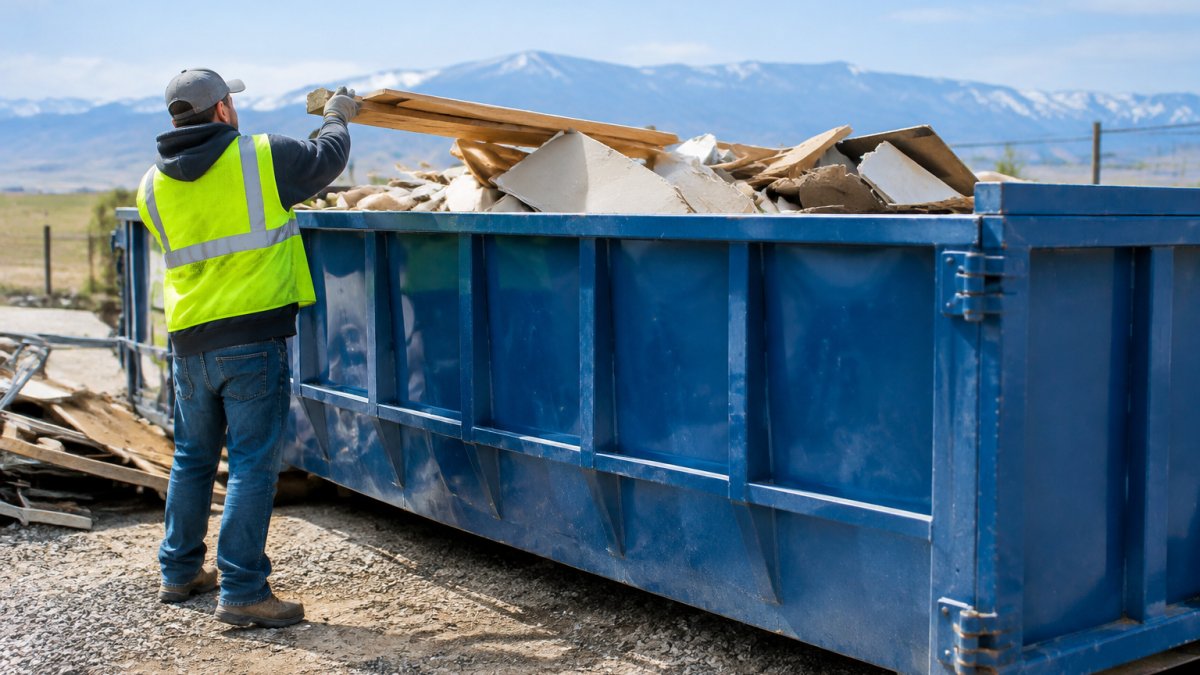
For a deeper walkthrough on handling construction debris specifically, our guide on tips for loading construction dumpsters efficiently covers the site-level details.
Step 1: Break Down Bulky Items Before They Go In
Bulky items eat space faster than anything else. A whole sofa takes up a third of a small container; broken into frame, cushions, and fabric, it fits in a corner.
So break things down before they go in:
- Furniture: Remove legs, take apart frames, separate cushions
- Cardboard boxes: Flatten every one. A flattened box takes a fraction of the space
- Wooden boards and pallets: Cut or snap long pieces to fit
If you're dealing with concrete or other heavy masonry, our article on tips for breaking up concrete for disposal walks through the safest way to reduce it.
Step 2: Load Flat and Heavy Materials First
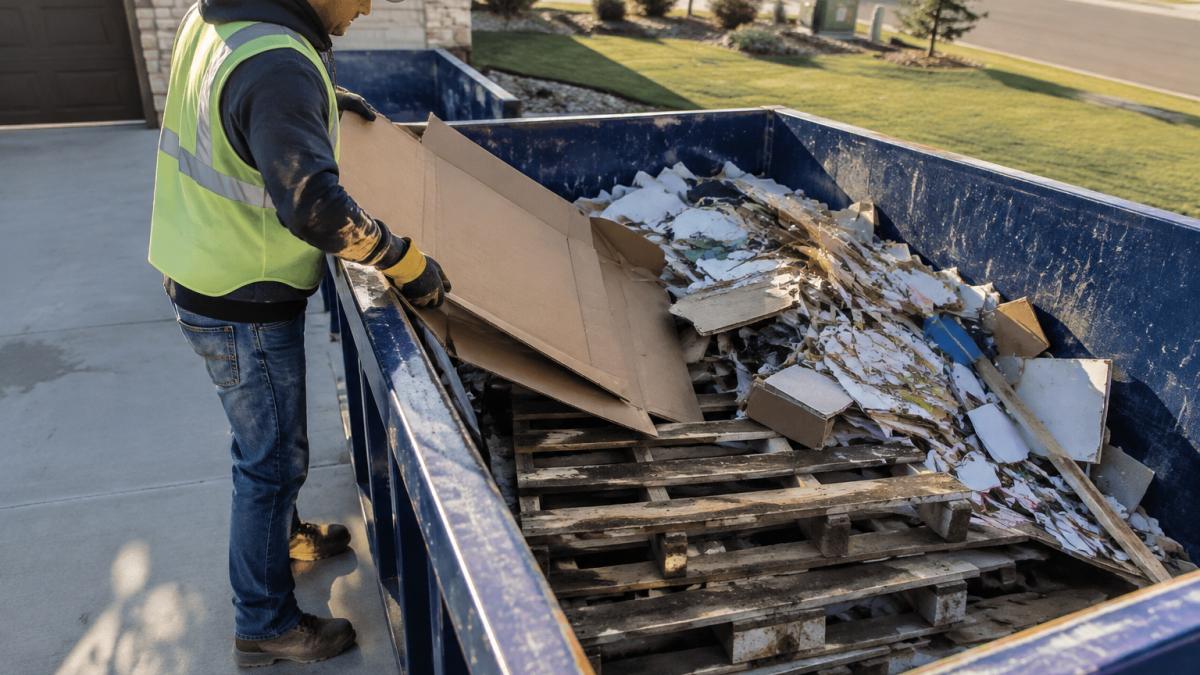
The bottom of the dumpster belongs to flat, heavy items. Think wooden boards, pallets, large flat materials, and broken-down furniture frames.
Why? Flat materials create a stable base that won't shift during transport, and heavy items at the bottom keep the load balanced when the container gets lifted onto the truck.
Watch out: Never pile heavy items on top of lighter debris.
Step 3: Layer Debris and Fill the Gaps
Now you build up. Load in layers, alternating heavier and lighter materials. After each layer, walk the perimeter and fill empty spaces with smaller items.
- Tuck small debris into gaps between larger pieces
- Compact loose materials as you go
- Keep the load level as it rises
Filling gaps is where you save the most space. A container loaded with attention to gaps holds noticeably more than a loose pile.
Follow this sequence to get the most usable space out of a single container.
| Step | What to do |
|---|---|
| 1 | Break down bulky items like furniture, boxes, pallets, and masonry |
| 2 | Load flat and heavy materials first to build a stable base |
| 3 | Layer debris, fill gaps, and keep the load level |
How to Load a Roll-Off Dumpster Safely
Safety is not separate from efficiency. A safe load is a well-balanced load, and a well-balanced load hauls more. Here is how to load a roll-off dumpster safely:
- Keep weight under the limit. Every dumpster has a rated weight limit. Overloading risks damage to the container and the truck, and it can mean extra charges.
- Distribute weight evenly. Load across the full floor, not in one corner. An unbalanced load is dangerous to lift.
- Wear gloves and boots. Construction debris has nails, sharp edges, and splinters.
One common mistake is loading right up against the door and leaving the far end empty. Spread the load from the start.
Matching Your Loading Plan to the Debris Type
No single loading plan fits every job. The debris you're throwing away determines how you break it down, where it goes, and when stacking becomes unsafe. Use the guidance below as a starting point, then adjust for your mix.
Renovation and Demolition Debris
Renovation waste is usually a mix of heavy chunks and lightweight scrap, which makes layering essential.
- Drywall: Break sheets into manageable pieces and stack them flat near the bottom, spread across the floor rather than in one corner.
- Insulation: Bag or bundle loose insulation before it goes in. Loose fiberglass blows out during transport and creates air pockets.
- Cabinets and countertops: Remove doors and drawers first, then lay cabinet boxes flat. Stack countertop pieces flat and low.
Furniture and Bulky Household Items
Bulky items are the biggest space wasters because they trap air.
- Sofas and upholstered chairs: Remove cushions and separate the frame. Stack frames flat and tuck cushions into gaps.
- Mattresses and box springs: Difficult to compact and often banned in some areas. Confirm with your hauler; if accepted, lay them flat at the bottom and cut them down if permitted.
- Doors: Remove hardware and lay doors flat. Stacking doors on edge invites tipping.
Yard Waste and Organic Debris
Yard waste is lightweight but voluminous, so it compacts well if handled correctly.
- Branches and limbs: Cut to fit the container length and lay them flat. Long branches bridge across the container and create large voids underneath.
- Leaves and grass: Bag or bundle them, then use the bags to fill gaps between heavier items.
- Stumps and root balls: Dense and heavy. Keep them low and limit how many go in, since they can push a load toward its weight limit quickly.
Concrete, Masonry, and Roofing Shingles
These materials are dense and can hit a weight limit long before the container looks full.
Get Started Today →
- Concrete and brick: Break into chunks no larger than what one person can lift safely, and load them low and evenly. Never stack concrete above the container walls.
- Roofing shingles: Shingles are heavier than they look. Load them flat in layers and keep the load spread across the floor.
- Tiles: Break into smaller pieces and mix with lighter debris to avoid a dense, unbalanced bottom layer.
Long Lumber and Pipe
Long pieces are the most common cause of bridging, where material spans the container and leaves empty space beneath.
- Cut lumber and pipe to fit the container's interior length whenever possible.
- If you can't cut it, lay pieces flat and parallel to the walls, then fill the space beneath and between them with smaller debris.
- Never stack long pieces on top of a loose pile; they can shift and create an unstable load.
Mixed Loads
Most real jobs are mixed loads. Layer by density: dense, heavy material at the bottom, medium-weight in the middle, lightweight or bulky on top. After each layer, walk the perimeter and fill gaps with smaller pieces. If you're unsure whether an item is accepted, ask your hauler before it goes in the container.
How to Estimate Remaining Capacity and Load Weight
Judging how full a dumpster is takes practice, but you can get close with a few simple checks. The goal is to avoid two costly mistakes: overfilling the container so debris sits above the walls, and hitting the weight limit while the container still looks half empty.
Estimating Volume
Volume is about how much of the container's interior is actually filled with debris rather than air.
- Use the fill line. Keep the load at or below the top edge of the walls. Debris above the rim can blow out, block the tarp, or be refused at pickup.
- Estimate by eye in quarters. Picture the container divided into four horizontal layers. A load that looks full at the top but has large voids underneath may only be 60% to 70% of capacity.
- Check the corners and the far end. These are the first places people leave empty. If the far end is still open, you have more room than the pile height suggests.
Estimating Weight
Weight is the harder number to judge and the most common source of surprise charges. Dense materials like concrete, dirt, tile, and shingles can push a container to its rated limit while it still looks half full.
- Know the rated limit. Every roll-off container has a weight limit set by the hauler. Ask for it before you start loading, especially for dense debris.
- Estimate by material type. As a rough guide, a cubic yard of concrete or dirt weighs far more than a cubic yard of household clutter or yard waste. If your load is mostly dense material, assume you will hit the weight limit before the volume limit.
- Weigh the heavy stuff first. If you're loading concrete, tile, or shingles, load those items first and estimate their weight before adding lighter debris on top. That way you know how much weight capacity remains.
A Practical Capacity Check
Before you call for pickup, do a quick walkaround:
- Confirm the load is at or below the top edge of the walls.
- Check that the far end and corners are filled, not just the area near the door.
- Estimate whether the material is mostly dense or mostly lightweight.
- If the load is dense and the container looks more than half full, assume you're near the weight limit and confirm with your hauler before adding more.
Watch out: weight limits are the most common source of surprise fees. If you're loading dense material, stop and estimate before you keep going. A quick call to your hauler to confirm the rated limit and any overage charges is cheaper than an extra haul.
What Not to Put in a Dumpster
Some items don't belong in a roll-off dumpster, no matter how much space you have left. Putting them in can mean fines, refused pickup, or harm to the people handling the waste.
Keep these out:
- Hazardous waste: paint, solvents, chemicals, motor oil
- Batteries and electronics: many have special disposal rules (the EPA)
- Tires: usually banned from standard containers
Rules vary by location and by the hauler. Ask before you load. A quick question up front saves a refused pickup later.
What to Do When a Dumpster Is Full
When the container is full, stop loading. Piling above the walls doesn't create more capacity. It creates a safety problem and can lead to a rejected pickup.
Here's what to do:
- Level the load. Spread the top so nothing sits above the rim.
- Check the weight. If you're near the limit, don't add more.
- Schedule pickup. Call as soon as you're close to full so the swap happens on your timeline.
- Order a second container if the job isn't done. A swap-out keeps the project moving.
Planning pickup access matters too. Make sure the truck can reach the container and that nothing is parked in the way.
Booking a Roll-Off Dumpster That Fits Your Project
The right container size makes loading easier from the start. Too small and you'll order a second one.
Sizing depends on your project:
- Small cleanouts and backyard renovations: a smaller container usually covers it
- Kitchen or bath remodels: size up from the smallest option
- Construction and demolition: match the container to your debris volume and weight
Pricing depends on container size, delivery distance, and how long you keep it. You can reserve a roll-off dumpster for your project when you're ready.
Patriot Solutions provides clean equipment and dependable local service in the Delta area, with fast delivery.
Frequently Asked Questions
What is the most efficient way to load a dumpster?
Start with large, flat materials like wooden boards and plywood laid across the bottom, then place heavy items on top of them. Break down furniture and flatten every cardboard box before it goes in. Load in layers rather than tossing debris in loose piles, and fill the gaps between bulky items with smaller pieces. This approach uses the full height and depth of the container instead of wasting space on air pockets, so you get more debris in before the pickup.
What shouldn't you put in a dumpster?
Keep hazardous and regulated items out of any roll-off container. That includes paint, solvents, motor oil, batteries, tires, propane tanks, and electronics with lithium batteries. Appliances containing refrigerant, such as refrigerators and air conditioners, usually need separate handling too. Mattresses and tires often carry extra fees or are banned outright. Ask your provider for the full prohibited list before you start loading, because putting the wrong item in can trigger fees or a rejected pickup.
Should you break down furniture before putting it in a dumpster?
Yes. A whole sofa or dresser eats up space that several bags of debris could use. Remove cushions, unscrew legs, and knock apart wooden frames so the pieces stack flat. Metal frames and springs can go in the heavy layer at the bottom. Breaking items down also makes them easier and safer to lift, which lowers the risk of back strain on your crew during a renovation or cleanout.
How do you keep debris from sticking up above the dumpster?
Never load above the top rail of the container walls. Once the debris reaches the rim, stop and check whether you can rearrange items to settle them lower. Push down compressible material like cardboard and bagged waste, then add smaller pieces into the gaps. If the load still sits high, it is time to schedule a pickup or swap rather than piling more on. Overfilled containers are unsafe to transport and can be refused at pickup.
Loading a dumpster well is a skill, and it pays off on every job. Break down bulky items, load heavy and flat first, layer the rest, and keep the weight in check. That's how you get the most from every container and avoid the cost of a second one.
Get started with Patriot Solutions and keep your project moving with clean roll-off dumpsters, fast delivery, and dependable local service that shows up when we say we will.