 blog
blog
Dumpster Rental: Worth It for Spring Cleaning?
Table of Contents
- Dumpster Rental vs. Junk Removal Service: Which Fits Spring Cleaning?
- When Renting a Dumpster for Spring Cleaning Pays Off
- Dumpster Rental Size Guide for Household Cleanouts
- What Can You Put in a Roll-Off Dumpster?
- The Real Costs: Rental Fees vs. Multiple Dump Trips
- Permits, HOA Rules, and Driveway Protection
- Sustainable Disposal: Recycling and Waste Diversion
- Frequently Asked Questions
Last Updated: September 25, 2026
Dumpster Rental vs. Junk Removal Service: Which Fits Spring Cleaning?
Short answer: a dumpster rental makes sense when you have a lot of heavy debris and time to fill it. Junk removal wins when you want the mess gone in one afternoon.
So is renting a dumpster worth it for spring cleaning? For most whole-home cleanouts, yes. You pay for capacity, not labor, and you control the pace.
Dumpster rental is the practice of parking a roll-off container at your property for a set number of days so you can fill it on your own schedule. Junk removal is a service where a crew hauls your items away for you, usually in a single visit.
We drop roll-off dumpsters across the Delta area for exactly this kind of project. Here's how to pick between the two.
| Factor | Dumpster Rental | Junk Removal Service |
|---|---|---|
| You do the loading | Yes | No |
| Best for heavy debris | Yes | Limited |
| Best for one-day cleanouts | No | Yes |
| You control the timeline | Yes | No |
| Rental duration | Multi-day | Single visit |
| Sorting for recycling | Easier | Harder |
When Renting a Dumpster for Spring Cleaning Pays Off
A roll-off dumpster pays off when the pile is big, heavy, or slow to build. Think garage clear-outs, attic purges, and yard debris from a full weekend of work.
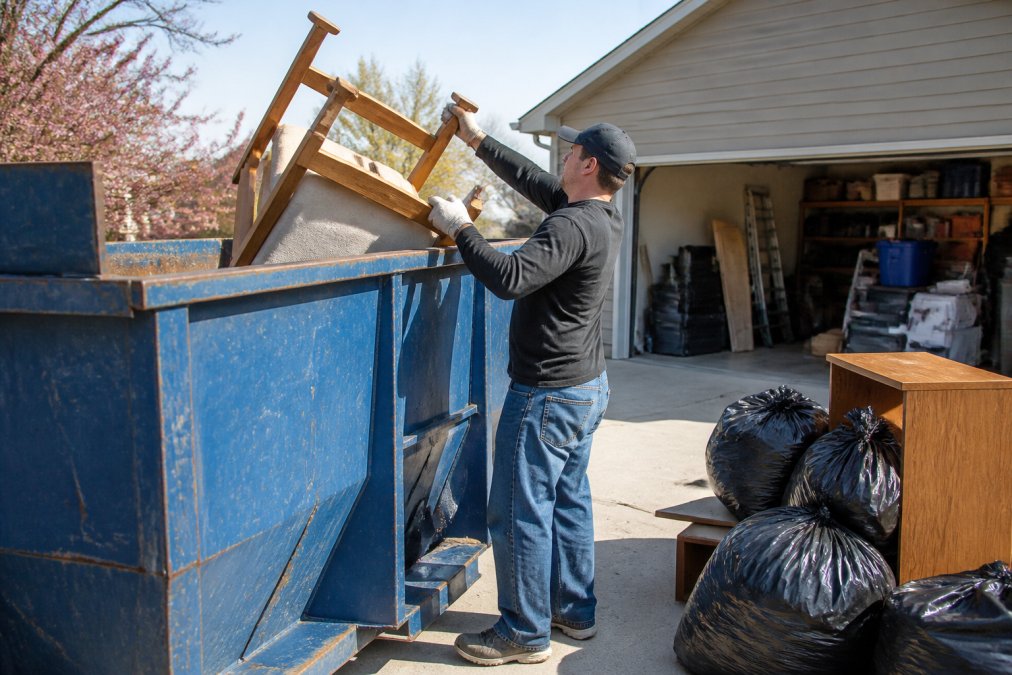
The math is simple. Junk removal crews charge for labor and truck space. A dumpster charges for capacity and time.
If you can lift, carry, and sort the junk yourself, you keep more of your budget. You also avoid the awkward moment when a crew quotes a higher price after seeing the pile.
Three signs a dumpster is the better call:
- You have more than a truckload of debris
- The load includes heavy items like concrete or old appliances
- You want to work across several weekends
Dumpster Rental Size Guide for Household Cleanouts
Picking the right size saves money and avoids overage charges. Most spring cleanouts fit in one of three sizes.
Cubic yardage is the unit that matters here. A 10-yard dumpster holds roughly three pickup truck loads. A 20-yard holds about six. A 30-yard handles a full home cleanout.
| Size | Holds (approx.) | Best For |
|---|---|---|
| 10-yard | 3 pickup loads | Single room, small garage |
| 20-yard | 6 pickup loads | Whole-home cleanout |
| 30-yard | 9 pickup loads | Renovation or estate cleanout |
A common mistake is ordering too small. The second trip costs more than sizing up from the start.
For most homes in Delta, Fillmore, and Hinckley, a 20-yard container covers a standard spring cleanout.
What Can You Put in a Roll-Off Dumpster?
Most household clutter is fine. Furniture, bagged trash, yard waste, old clothing, cardboard, and non-freon appliances all go in without a second thought.
The prohibited items list (and why each one is banned)
Liquids and household chemicals
- Paint, stain, varnish, solvents, thinners
- Motor oil, antifreeze, brake fluid
- Pesticides, herbicides, fertilizers
- Pool chemicals, cleaning agents
Why: Liquids leak, contaminate other loads, and can react with each other in the truck. They fall under household hazardous waste (HHW) rules and must go to a designated collection event or facility.
Tires and automotive waste
- Tires (whole or shredded)
- Car batteries
- Gas tanks, propane cylinders
Refrigerant-containing appliances
- Refrigerators, freezers, air conditioners, dehumidifiers
Electronics
- Televisions, monitors, computers, printers, cell phones
Medical and sharps waste
- Needles, syringes, lancets
- Unused medications
- Contaminated bandages
Construction and hazardous materials
- Asbestos, lead paint chips, treated lumber
- Railroad ties, creosote-treated wood
- Fluorescent bulbs and ballasts
What happens if you sneak it in
A rejected load is the best-case outcome. Worse outcomes include:
- A re-handling or contamination fee added to your invoice
- The hauler refusing to pick up the container until you remove the item yourself
- Fines from your state or local environmental agency if hazardous material is traced back to you
Where to take the stuff you can't dump
- HHW events: Most counties run free or low-cost collection days in spring and fall. Check your county's solid waste department website.
- Retail take-back: Auto parts stores accept used oil and batteries. Big-box electronics retailers accept e-waste. Some paint retailers accept leftover paint.
- Municipal drop-offs: Many cities operate year-round HHW facilities for residents.
- Scrap metal yards: Old appliances, water heaters, and metal furniture often earn a small payout instead of a disposal fee.
The Real Costs: Rental Fees vs. Multiple Dump Trips
Here's where the cost-benefit math gets interesting. Rental pricing varies by size, rental duration, and location, so there's no single number to quote, but you can build a realistic estimate in about five minutes.
The four cost buckets on each side
DIY dump trips:
- Disposal fee at the gate (varies widely by facility and by material, many landfills and transfer stations publish a per-ton or per-load rate on their website)
- Fuel for each round trip
- Vehicle wear and tear (brakes, tires, suspension on a loaded trailer or truck bed)
- Your time, loading, driving, waiting in line, unloading
Dumpster rental:
- Flat rate for the container, sized to your project
- Included tonnage allowance (most haulers bundle a set weight, then charge per ton over that)
- Rental period (typically a set number of days; extra days usually billed daily)
- Possible add-ons: street permit, mattress or appliance surcharges, overage weight
A simple way to compare
Count your loads first. Walk through the house and estimate how many pickup-truck loads of debris you actually have. Then run both columns:
| Line item | DIY trips | Dumpster rental |
|---|---|---|
| Number of loads | Your estimate | 1 container |
| Disposal cost | Per-load fee × loads | Included in flat rate |
| Fuel | Round-trip miles × loads | One delivery, one pickup |
| Time | Half a day per trip | Spread across rental days |
| Vehicle wear | Accumulates per trip | None |
| Permit | Not usually required | Only if placed on street |
The hidden costs nobody quotes
Time is the biggest line item. A single run to the landfill can eat half a day once you count loading, driving, and waiting in line. Multiply that by five trips and you've spent a full work week on disposal.
Permits, HOA Rules, and Driveway Protection
Where you park the dumpster matters as much as what you put in it. Most driveways are fine. Streets often are not.
That's a small step that protects a costly surface.
Sustainable Disposal: Recycling and Waste Diversion
A dumpster doesn't have to mean everything goes to the landfill. Sorting before you load keeps usable items in circulation.
Separate your load into four piles:
- Donate: furniture, clothing, working appliances
- Recycle: cardboard, metal, clean glass
- Reuse: tools, building materials, garden items
- Trash: everything else
Frequently Asked Questions
What are common dumpster rental mistakes to avoid?
The most frequent mistakes are ordering a dumpster that is too small, overloading it past the weight limit, and tossing prohibited items like paint or tires. Renters also forget to check HOA rules or permit requirements before delivery. Confirm the weight allowance, keep heavy debris like concrete out unless approved, and ask the provider what is banned so you avoid overage charges.
Is renting a dumpster worth it for small projects?
For a single-room cleanout or a few bags of trash, curbside pickup or a junk removal service usually costs less. A dumpster rental makes sense when you have bulky items, multiple rooms, or a renovation producing debris that will not fit in regular trash bins. Compare the rental fee plus disposal against the number of dump trips you would otherwise make.
What items are prohibited in a residential dumpster rental?
Most roll-off dumpsters ban hazardous materials such as paint, solvents, motor oil, batteries, and propane tanks. Tires, mattresses, and appliances often carry extra fees or are refused entirely. Yard waste and concrete may be restricted depending on the provider. Ask for a prohibited items list before you book so you can set those aside for a separate disposal route.
How do I choose the right dumpster size for spring cleaning?
A 10-yard dumpster handles a single-room cleanout or a small garage purge. A 15-yard fits a moderate basement or attic cleanout. A 20-yard works for whole-home decluttering or a small renovation. Estimate your debris volume, then size up if you are unsure. It is cheaper to rent one larger unit than to pay for a second delivery.
Spring cleaning always looks smaller on paper than it does in the driveway. The right container turns a month of dump runs into one tidy project. Patriot Solutions delivers clean roll-off dumpsters with fast, dependable local service, plus portable restrooms if your cleanup turns into an outdoor gathering. Get started with Patriot Solutions and clear the clutter in one pass.