 blog
Cost-Saving Tips for Home Renovation Waste Removal
Table of Contents
- Plan Your Renovation Waste Before Work Begins
- Understanding Dumpster Rental Cost and What Drives It
- Choose the Right Roll-Off Dumpster Sizes for Your Project
- Dumpster Rental Fees to Avoid: Hidden Charges Explained
- Recycling Construction Materials to Reduce Disposal Volume
- Separate, Donate, and Resale Strategies That Save Money
- Coordinate With Your Contractor to Control Waste Removal Costs
- Frequently Asked Questions
Last Updated: October 17, 2026
Plan Your Renovation Waste Before Work Begins
The biggest mistake homeowners make is starting a renovation without knowing what they'll throw away, ending up with debris piled everywhere and paying premium rates for scrambling mid-project.
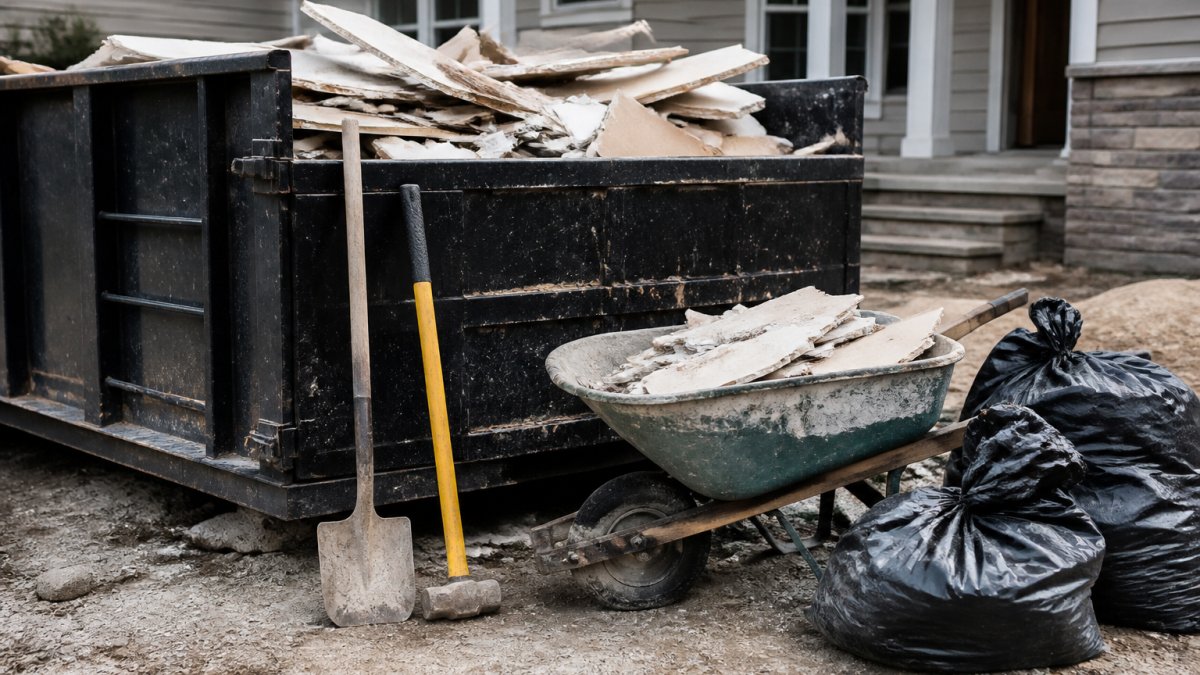
Before your contractor swings a hammer, you need a clear picture of your renovation waste removal: what materials come out, how much volume, and what can be recycled or donated.
Here's what to do first:
- Walk through the space and identify what's being removed (drywall, flooring, cabinets, fixtures)
- Estimate the volume, measure rooms and multiply by depth of debris
- Separate materials mentally: wood, metal, concrete, general trash, hazardous items
- Check local disposal rules for your area (some materials require special handling)
- Get quotes from disposal providers before work starts, not during
The cost of renovation waste removal depends on what you throw away and how you dispose of it. Dumpster rental, junk removal, and DIY hauling each have different economics, so understand them before work begins.
Understanding Dumpster Rental Cost and What Drives It
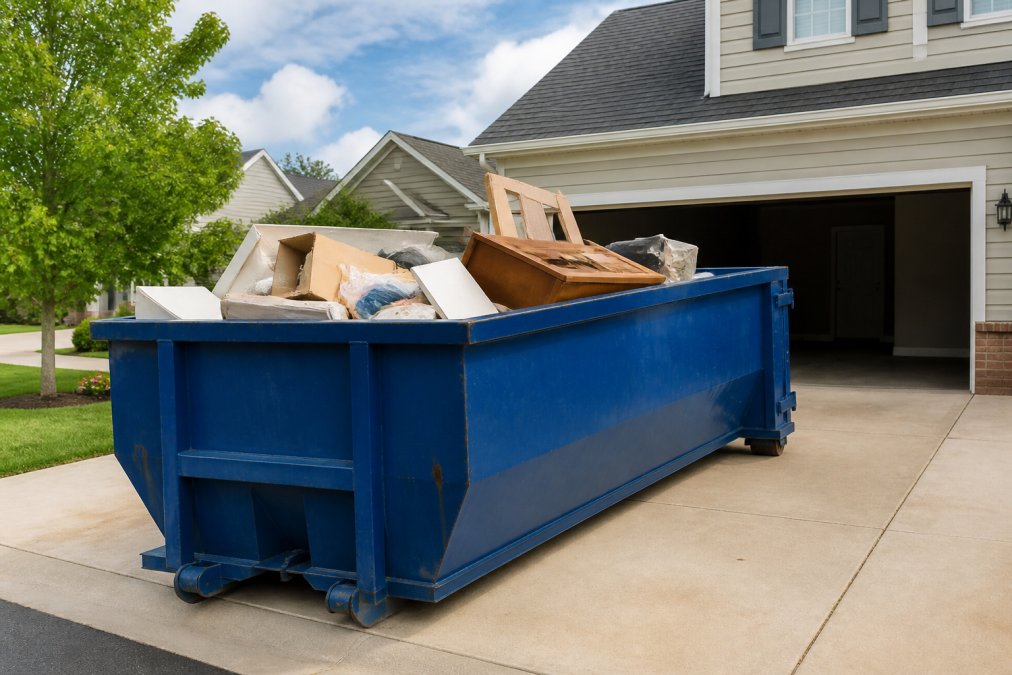
A roll-off dumpster rental is straightforward: a large metal container delivered to your property, filled during your project, then picked up and hauled away. The cost depends on three main factors: dumpster size, rental duration, and what you put inside.
Pricing varies by location, season, and local fees. A one-week rental costs less than a four-week one, though the per-day rate drops the longer you rent. Standard construction debris costs less to dispose of than mixed loads with hazardous materials or appliances.
Hidden fees are where homeowners get surprised. Here are the real cost drivers:
- Delivery and pickup fees (sometimes bundled, sometimes separate)
- Overage charges if you exceed weight limits
- Fees for prohibited items (appliances, electronics, hazardous waste)
- Landfill or disposal surcharges based on local waste management
- Fuel surcharges if you're far from the disposal facility
- Permit fees if you need to place the dumpster on the street
Ask directly about each of these when you call for a quote.
A bigger dumpster means a higher rental fee, but undersizing means overage charges or a second rental. Getting the size right saves money.
Choose the Right Roll-Off Dumpster Sizes for Your Project
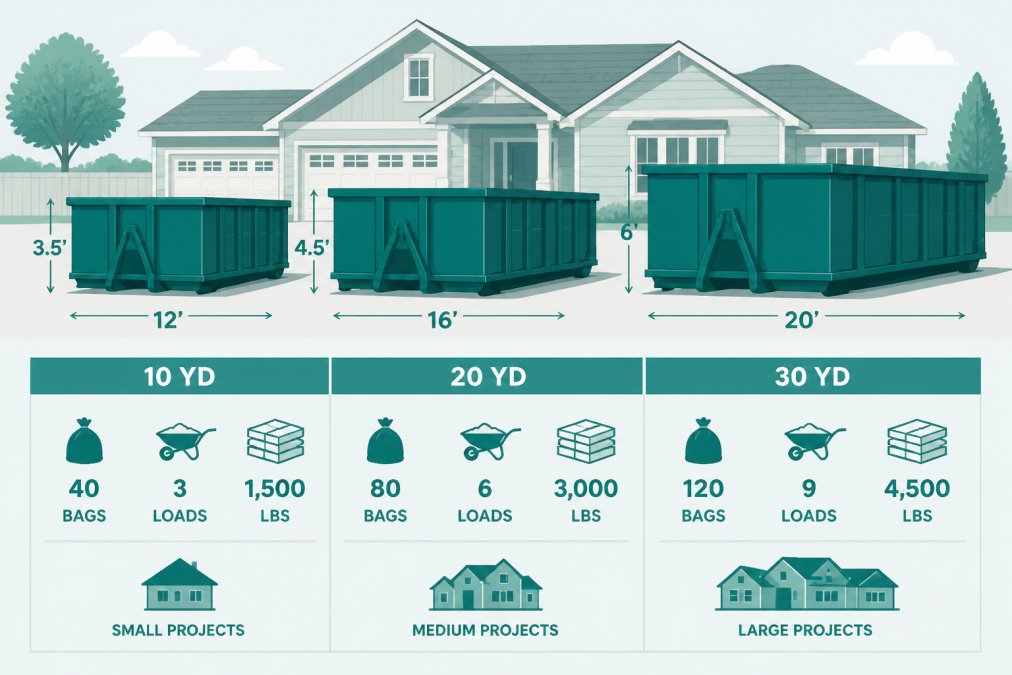
Roll-off dumpsters come in standard sizes: 10, 15, 20, and 30 cubic yards. Most residential renovations use 15 or 20. The hard part is estimating how much debris your project will actually produce before the first dumpster is delivered.
Start With a Volume Estimate, Not a Guess
A cubic yard is 3 feet by 3 feet by 3 feet, or 27 cubic feet, roughly the volume of a standard kitchen stove plus the counter beside it. Once you can picture that, you can estimate debris room by room.
Use this simple checklist before you call for quotes:
- Measure the demolition footprint. For each room, multiply length by width in feet. A 10-by-12-foot bathroom is 120 square feet.
- Assign a debris depth. Light tear-out (cabinet and fixture removal, one layer of flooring) runs about 3 to 6 inches deep. Medium tear-out (drywall, flooring, and trim) runs about 6 to 12 inches. Full gut (studs, subfloor, tub, and tile) can run 12 to 24 inches or more.
- Convert to cubic yards. Multiply square feet by depth in feet, then divide by 27. A 120-square-foot bathroom with 12 inches of debris is 120 cubic feet, or about 4.4 cubic yards. Add 20 to 30 percent for bulking, because demolished debris does not pack as tightly as the original material.
- Add bulky items separately. A bathtub, appliance, or large cabinet run can consume a cubic yard or more on its own because of empty space around it.
- Round up to the nearest standard size. A 4.4-cubic-yard estimate with bulking becomes roughly 5.5 to 5.7 cubic yards, which fits comfortably in a 10-yard dumpster with room for the unexpected.
Homeowners typically underestimate by 30 to 50 percent on first gut renovations because they count visible material, not what's behind it. Opening a wall often reveals old insulation, lath, or a second layer of flooring.
Match Size to Project Type
- 10 cubic yards: Small bathroom remodel, kitchen cabinet replacement, minor flooring work. Holds about 3-4 tons of debris.
- 15 cubic yards: Medium kitchen or bathroom renovation, room addition prep. Holds about 4-5 tons.
- 20 cubic yards: Full kitchen or bathroom gut renovation, whole-room demolition, deck removal. Holds about 6-8 tons.
- 30 cubic yards: Major renovations, whole-house remodeling, significant demolition. Holds about 9-12 tons.
The Cost Trade-Off Between Sizes
When in doubt, go up one size. Overfilling costs more in overage fees than renting a slightly larger container, and a second pickup typically costs more than the price difference between adjacent sizes.
Your contractor can usually estimate dumpster size from project scope. Ask directly: "What size dumpster should we rent, and how many cubic yards of debris do you expect?" Most experienced contractors have a clear answer; if they're unsure, that's a red flag.
Dumpster Rental Fees to Avoid: Hidden Charges Explained
Overage fees are the most common surprise.
Prohibited item fees hit when you throw in something the facility won't accept.
Street permit fees apply if your dumpster sits on a public street. Some municipalities require permits; others don't. Ask your provider if permits are needed and who pays.
Fuel surcharges vary by location and fuel prices, and rural areas often pay more because the disposal facility is farther away. Ask upfront.
Delivery and pickup fees should be clear before you book. Some providers bundle these into the daily rate; others charge separately.
Late return fees apply if you keep the dumpster longer than your rental period.
The best way to avoid these fees is simple: ask.
Recycling Construction Materials to Reduce Disposal Volume
Recycling construction materials saves money by reducing what goes into the dumpster. Less volume means a smaller dumpster, shorter rental period, or both.
Wood is the easiest material to recycle. Framing lumber, flooring, trim, and pallets all have value.
Metal is valuable. Copper pipes, steel framing, aluminum trim, and fixtures are worth money at scrap yards, with copper especially high.
Drywall can be recycled at facilities that accept it, though not everywhere, so check local options first.
Concrete and masonry can be crushed and reused as aggregate for new concrete or road base.
Appliances and fixtures have resale value if they're in working condition.
Separating recyclables takes time but reduces dumpster costs.
Separate, Donate, and Resale Strategies That Save Money
Donation is the easiest way to handle reusable items. Habitat for Humanity ReStore accepts building materials, fixtures, and appliances in good condition. Goodwill and other charities accept furniture and fixtures.
Resale platforms like Facebook Marketplace, Craigslist, and OfferUp let you sell directly to buyers.
Salvage yards specialize in architectural materials. Old doors, windows, hardware, trim, and fixtures appeal to restoration contractors and homeowners doing period-accurate work. Salvage yards usually handle pickup, so you don't have to haul items yourself.
Separation requires planning. Designate a staging area on your property where reusable items go instead of the dumpster.
The economics depend on item value and effort. Selling quality kitchen cabinets for $500 takes an hour; donating five boxes of hardware to Habitat ReStore takes 30 minutes and costs nothing.
Coordinate With Your Contractor to Control Waste Removal Costs
Your contractor's approach to demolition and removal directly affects waste volume and disposal costs. A contractor who carefully removes reusable items reduces what goes in the dumpster. One who demolishes everything creates maximum waste. The difference between those two approaches can be the difference between one dumpster and three.
Put Waste Responsibilities in Writing
Vague contracts lead to disputes and unexpected costs. Before signing, make sure the written agreement answers these questions explicitly:
- Who arranges the dumpster? The contractor, you, or a third-party hauler. If the contractor arranges it, ask whether the rental is marked up.
- Who pays for the dumpster, delivery, pickup, overage, and prohibited-item fees? A common pattern is that the contractor bundles a disposal allowance into the bid and bills overages back to the homeowner. Get the allowance number in writing.
- Who sorts debris on-site? Mixed loads cost more to dispose of than separated loads. Specify whether the crew separates wood, metal, concrete, and general trash, or dumps everything together.
- What happens to reusable materials? If you want cabinets, fixtures, or hardwood set aside, say so in the contract. Otherwise the default is the dumpster.
- What is the debris removal timeline? A dumpster that sits on-site for six weeks instead of two costs you four extra weeks of rental.
Understand How Disposal Is Priced in the Bid
Some contractors include waste removal in their bid; others charge separately. A contractor who charges separately should give a clear estimate broken down by dumpster size, rental duration, and expected tonnage. If they won't, that's a red flag.
Ask whether the bid uses a fixed disposal allowance or a pass-through cost. A fixed allowance protects you from overages up to that amount but may leave you paying for the contractor's underestimate. A pass-through cost is transparent but exposes you to every overage. Neither is wrong, but you need to know which one you are signing.
Use the Contractor's Recycling Relationships
Ask if your contractor has relationships with recycling centers or salvage yards. Experienced contractors know where to send specific materials, reducing disposal costs for both of you. Ask during the bid walkthrough, not after demolition starts.
Manage the Timeline to Manage the Rental
Timing matters. Efficient contractors minimize rental duration by planning removal carefully, scheduling pickups around demolition phases, and not letting a half-full container sit idle for weeks. Weekly check-ins keep things on track, and if the dumpster fills faster than expected, you can arrange a second one or accelerate pickup before overage fees hit.
Frequently Asked Questions
How can I estimate how much renovation waste my project will produce?
Start by listing what you're removing: flooring, drywall, cabinets, fixtures. Measure the square footage of affected areas. A kitchen remodel typically produces 5-10 cubic yards; a bathroom, 2-4 cubic yards. Add 20% buffer for unexpected debris. Ask your contractor for waste estimates based on similar projects. This prevents oversizing (wasted money) or undersizing (overage fees). Patriot Solutions can help you match your estimate to the right dumpster size.
What dumpster rental fees to avoid should I watch for?
Common hidden fees include overage charges when debris exceeds weight limits, prohibited material surcharges (appliances, hazardous waste), extension fees for keeping the dumpster longer than agreed, and delivery/pickup charges not included in the base quote. Ask your provider upfront for a full fee breakdown. Confirm what materials are included and what costs extra. Get the terms in writing before signing.
Is renting a dumpster cheaper than making multiple trips to the landfill myself?
For large renovations, a dumpster rental usually costs less overall. Multiple landfill trips mean fuel, vehicle wear, time, and often per-load tipping fees that add up fast. A single dumpster rental consolidates everything into one pickup, saving labor and transportation. For small jobs (under 1 cubic yard), DIY hauling might be cheaper, but for anything larger, dumpster rental is more economical and far less time-consuming.
How can I save money on renovation waste removal through material separation?
Separate recyclables (metal, wood, drywall) from general debris. Many recycling facilities charge lower fees or accept materials free, while mixed waste goes to the landfill at higher cost. Donate usable fixtures, cabinets, and doors to resale shops or nonprofits instead of throwing them away. Salvage and sell valuable items online. By diverting materials from the dumpster, you reduce the volume you rent, lowering your overall waste removal cost.