 blog
blog
Is Renting a Porta Potty Worth It for Small Jobs?
Table of Contents
- The Real Cost of Skipping a Porta Potty on a Small Job
- Rental vs Buying a Porta Potty for Contractors
- What Is the Average Cost of a Porta Potty Rental Per Week?
- OSHA Portable Toilet Requirements for Construction Sites
- How One Unit Changes Job Site Productivity and Man-Hour Efficiency
- Sanitation Compliance for Small Sites and Alternative Solutions
- A Simple ROI Check for Your Small Job
- Frequently Asked Questions
Last Updated: September 20, 2026
The Real Cost of Skipping a Porta Potty on a Small Job
For a contractor asking whether is renting a porta potty worth it for small jobs, the honest answer is usually yes: the alternative costs more than the rental ever will. A crew walking off site to find a restroom burns billable hours, and an inspector who finds no facilities on a permitted job can stall the project. This guide from Patriot Solutions breaks down the real math so you can decide in five minutes.
Most advice online is written for people starting a rental business, not for the contractor running a three-week remodel.
When a Small Job Becomes a Compliance Problem
A porta potty stops being optional the moment a job crosses from casual labor into regulated construction. Once you pull a permit, hire employees, or work on a site with multiple trades, sanitation moves from a convenience to a requirement. The OSHA sanitation standards for construction require employers to provide accessible toilet facilities for workers, and those rules apply whether you have 40 people on site or four.
The threshold most contractors miss is employee count, not project size.
Rental vs Buying a Porta Potty for Contractors
Buying a portable toilet rarely makes sense for a single small job, but the decision deserves real numbers. A new standard chemical toilet typically costs several hundred to just over a thousand dollars depending on size and features. Ownership carries ongoing costs rental bundles away: pumping, deodorizer, cleaning supplies, storage, transport, and repairs.
Upfront Cost, Storage, and Maintenance Compared
Here's how the two options stack up on the factors that actually matter for a small operation.
| Factor | Renting | Buying |
|---|---|---|
| Upfront cost | Low, pay per service period | Several hundred to over a thousand dollars per unit |
| Storage | None, unit leaves when the job ends | You need secure, accessible space year-round |
| Pumping and disposal | Included in the service agreement | You arrange and pay for every pump-out |
| Cleaning and deodorizing | Provider handles it | You handle it, including supplies |
| Transport | Provider delivers and picks up | You tow or haul it yourself |
| Insurance and liability | Generally covered by the provider's policy | Your responsibility |
| Winterizing | Not your problem | You must drain and prep it in cold months |
| Best for | One-off or short jobs | Year-round crews with steady utilization |
The Hidden Costs of Ownership
The purchase price is the smallest part of owning a portable toilet. The recurring costs surprise first-time buyers:
- Pumping and disposal: Every unit needs periodic pump-outs, paid per service. An idle unit means paying for service you're not using.
- Storage: A unit takes real space. Without a yard or lot, you're renting storage, which erodes the savings.
- Transport: Moving a unit to and from each job requires a truck or trailer plus the labor to load, haul, and position it.
- Cleaning and supplies: Deodorizer, toilet paper, and cleaning chemicals are consumables you now buy in bulk.
- Insurance and liability: A unit you own and place on a client's property is your liability, not a rental company's.
- Winterizing: In cold markets, units must be drained and prepped or they crack and freeze.
The Break-Even Question
Renting keeps overhead predictable. Buying turns a small sanitation need into equipment you must insure, store, and service. For most small jobs, the rental agreement is the cleaner call.
What Is the Average Cost of a Porta Potty Rental Per Week?
A standard single-unit rental typically lands in the low hundreds of dollars per week. The range is wide because the weekly rate is a bundle, not a single price. Once you know what's inside, you can compare quotes apples to apples instead of chasing the lowest sticker.
A typical weekly rate includes four things:
- Delivery and pickup of the unit to and from your site
- One unit (standard chemical toilet, not a trailer)
- A set number of service visits, usually one pump-out and rinse per week for a standard rental
- Deodorizer and toilet paper restocked at each service visit
What Drives the Weekly Price Up or Down
Several factors move the weekly number, and understanding them lets you negotiate:
- Service frequency: A standard rental includes one service visit per week. Heavy use, a framing crew of six, a hot-weather build, often needs two, which adds to the rate. Ask what a second visit costs before you sign.
- Rental duration: Monthly terms usually carry a lower per-week effective rate than a one-week rental. If your job runs three weeks, ask whether a monthly rate beats three weekly rates, it often does.
- Delivery distance: Providers typically include delivery within a set radius of their yard. Beyond that, expect a mileage or trip charge each way. Rural sites pay more.
- Site accessibility: A unit craned over a fence, walked down a slope, or placed where no truck can reach adds labor and time to delivery and every service visit.
- Season and demand: Spring through early fall is peak season for weddings, festivals, and construction. Supply tightens and rates firm up. Booking early beats calling the week of.
- Unit type: A standard chemical toilet is cheapest. Deluxe units with a sink, hand sanitizer, and interior light cost more. Restroom trailers, flushing toilets, running water, climate control, cost multiples of a standard unit and are usually reserved for events, not job sites.
How to Compare Two Quotes Without Getting Burned
Because these variables swing widely by region and season, the only reliable price is a quote for your specific job.
OSHA Portable Toilet Requirements for Construction Sites
OSHA portable toilet requirements for construction center on one rule: employers must provide accessible sanitary facilities for workers. The standard doesn't fix a number of units per worker; it sets the obligation to provide them and keep them sanitary, scaling with your crew and job length.
How One Unit Changes Job Site Productivity and Man-Hour Efficiency
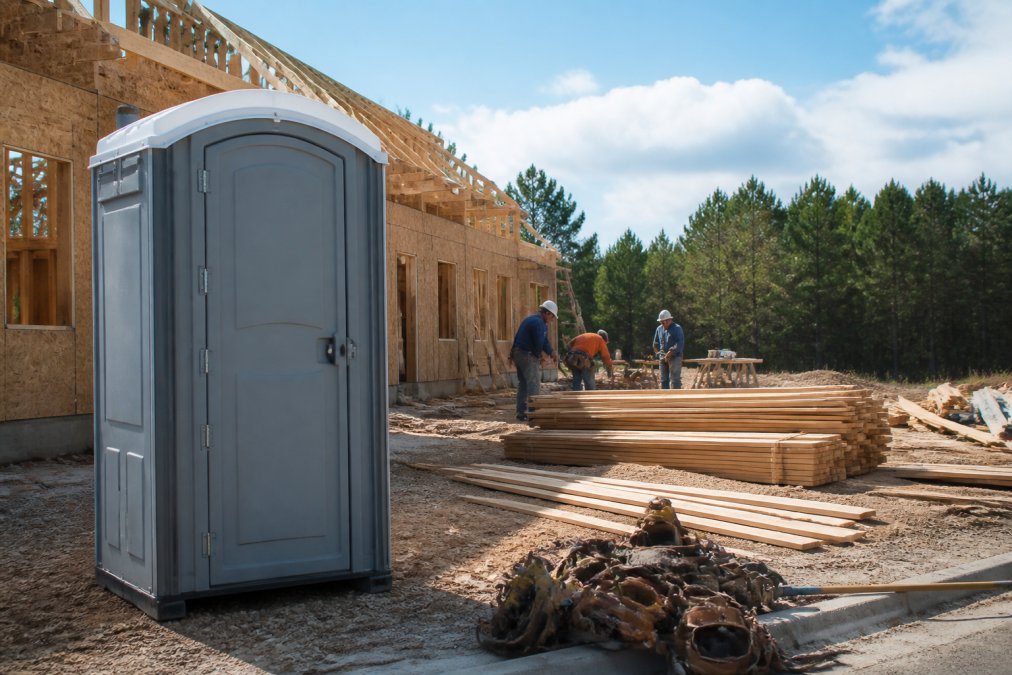
A porta potty on site is a productivity tool disguised as a bathroom. Every trip off site for a restroom costs travel time that comes straight out of your man-hour efficiency, and on a small crew those minutes add up fast across a multi-week job.
Sanitation Compliance for Small Sites and Alternative Solutions
Small sites often fall into a gray zone where the rules are lighter but the practical need is the same. Sanitation compliance for small sites means meeting the basic standard without overbuying: one unit and a sensible service schedule covers most small residential and light commercial jobs.
A Simple ROI Check for Your Small Job
Here's a quick way to decide if renting is worth it, using your own numbers, no spreadsheet, just four inputs.
- Crew size: How many people are on site per day?
- Job length: How many days will the job run?
- Off-site time per person, per day: Estimate the minutes lost to bathroom runs.
- Your labor rate: What an hour of crew time costs you.
Frequently Asked Questions
Is it cheaper to buy a portable toilet than to rent one for small jobs?
Buying a unit typically involves an upfront cost, plus you handle pumping, deodorizing agents, and storage between jobs. Renting spreads that cost across the project and includes service. For a one-time or short job, a porta potty rental usually costs less than buying because you skip the capital expenditure and maintenance. If you run crews year-round, buying may eventually pay off, but you still need a pumping service.
Does a porta potty rental improve worker productivity?
It can. When workers have to drive to a gas station or use a nearby business, that time adds up across a crew and a full day. A unit on site cuts those trips to minutes. That is man-hour efficiency you can measure: fewer off-site breaks means more time on the tools. For small jobs where every hour counts, the productivity gain often offsets part of the weekly rental fee.
What are the OSHA requirements for sanitation on small job sites?
OSHA's sanitation standard (29 CFR 1926.51) requires employers to provide accessible toilets for workers. The rule sets a minimum of one toilet for 20 or fewer employees, with more required as crew size grows. The units must be kept sanitary and in working order. Even a small crew of three or four needs at least one unit, so skipping a porta potty rental can put you out of compliance.
How many portable toilets are required for a small construction crew?
OSHA guidance calls for one toilet per 20 or fewer workers. A crew of five needs at least one unit; a crew of 15 still fits under that threshold. If the job runs more than a few days or the crew grows, add a second unit to avoid lines and keep hygiene standards up. For mixed crews or longer projects, one unit per 10 workers is a safer target.
Small jobs are exactly where sanitation decisions get rushed, and that's where the cost of getting it wrong shows up. Patriot Solutions provides clean equipment and dependable local service for portable restrooms and roll-off dumpsters, with fast delivery and reliable pickups you can schedule around your project. Get started with Patriot Solutions and keep your crew on site, compliant, and productive from day one.