 how-to
Tips for Breaking Up Concrete for Disposal
Last Updated: October 23, 2026
Quick Summary
Breaking up concrete starts with reading the slab: measure thickness at an exposed edge, check for wire mesh or rebar, and confirm buried utilities are marked before you swing. Match the tool to the job, score cut lines first, and work from edges in a grid to keep pieces liftable. Plan disposal by weight, since concrete weighs about 150 pounds per cubic foot.
- A 4-inch slab is standard for patios and walkways; driveways often run thicker.
- Score the slab along cut lines with a masonry blade before swinging for cleaner breaks.
- Mark grid lines roughly two feet apart and lift chunks under 50 pounds.
- A 10 x 10 foot slab at 4 inches thick weighs about 5,000 pounds.
- Clean concrete without trash usually costs less to drop off at recycling facilities.
Table of Contents
- Start With a Plan: Slab Size, Thickness, and Reinforcement
- Tools for Breaking Concrete: Matching the Tool to the Job
- How to Break Up Reinforced Concrete Without Wrecking Your Tools
- Working the Slab: Edges, Grid Patterns, and Manageable Pieces
- How to Estimate Concrete Weight Before You Haul It
- How to Dispose of Broken Concrete: Recycling, Drop-Off, and Dumpsters
- Safety Checklist for Concrete Demolition
- Frequently Asked Questions
Start With a Plan: Slab Size, Thickness, and Reinforcement
Breaking up concrete is the controlled demolition of a slab into pieces small enough to lift, load, and haul away. Before you pick up a sledgehammer, read the slab.
Reading the Slab Before You Swing
Walk the slab and answer three questions first.
- How thick is it? A four-inch slab is standard for patios and walkways. Driveways and basement slabs often run thicker.
- Is it reinforced? Look for rust stains, exposed mesh at cracks, or a test hole. Reinforced concrete holds together and fights every strike.
- What sits nearby? Utilities, gas lines, and fence posts all change your approach.
A quick test hole at an edge tells you more than an hour of guessing. Dig under the edge and measure the slab thickness with a tape. If you hit wire mesh or rebar, plan for extra cutting time.
Tools for Breaking Concrete: Matching the Tool to the Job
The right tool for breaking concrete depends on slab thickness, reinforcement, access, and volume. Choose by the job, not by what is already in the garage. The decision guide below is built around the four variables that actually change the answer.
The Four Variables That Pick the Tool
- Thickness. Measure at an exposed edge with a tape. A 4-inch slab is standard for patios and walkways; driveways and basement slabs often run thicker.
- Reinforcement. Rust stains, exposed mesh at cracks, or a test hole tell you whether wire mesh or rebar is present. Reinforced concrete holds together and fights every strike.
- Access and clearance. Tight side yards, fences, and overhead lines rule out large powered equipment. Hand tools win where a breaker cannot fit or swing.
- Volume and timeline. A single small pad is a hand-tool job. A full driveway is a production job that justifies a rental.
Tool Selection by Slab Size, Thickness, and Reinforcement
| Job Profile | Best First Choice | Why | Watch-Outs |
|---|---|---|---|
| Small pad or walkway, up to 4 inches, unreinforced | Sledgehammer (8-10 lb) plus a pry bar | Lowest cost, no rental, easy control | Fatigue; striking the same spot too long |
| 4-6 inches, light mesh, clean edges | Masonry drill bit and wedges, or a small electric breaker | Quieter, more controlled cracks | Slower on large areas |
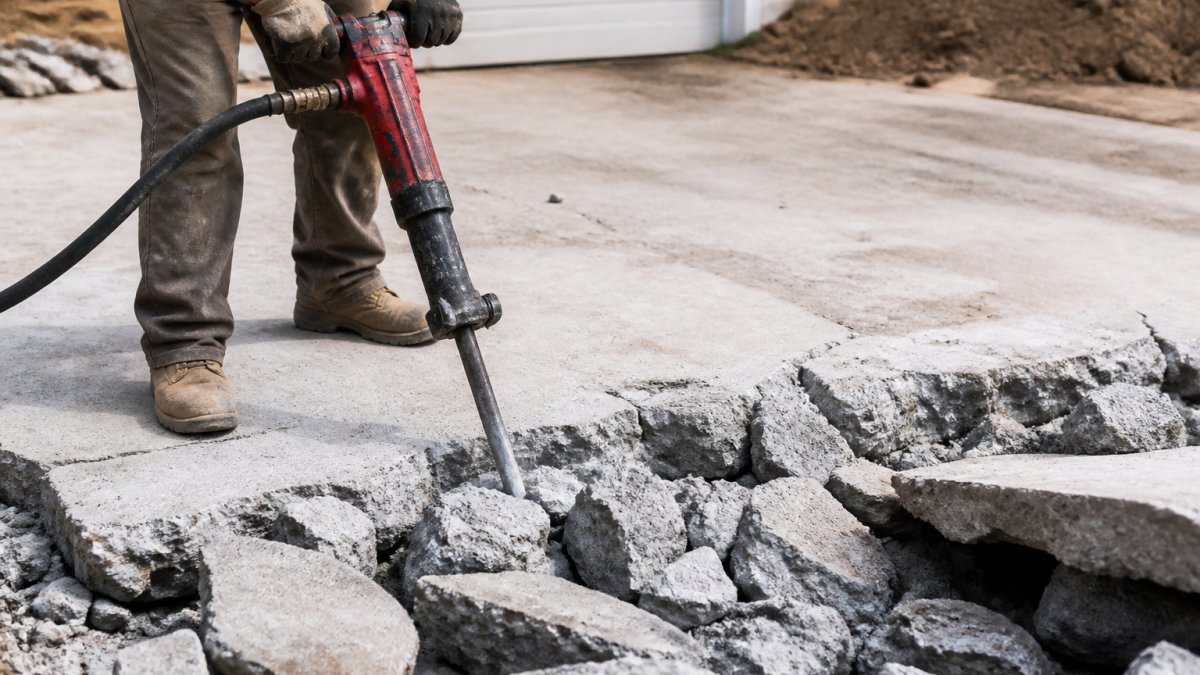
| 4 inches and up, large area, unreinforced | Jackhammer or electric demolition hammer | Volume production | Weight and vibration; needs power |
| 6 inches and up, reinforced | Powered breaker plus a cut-off saw | Cuts rebar instead of fighting it | Rental cost; blade wear |
| Tight access or finished surfaces nearby | Hand tools and a masonry saw for scoring | Precision over speed | Slower overall |
A sledgehammer works fine on a 4-inch slab. It struggles badly on thick concrete. Match the tool to the slab and you save your back and your blades.
Hand Tools vs. Powered Breakers: The Honest Split
Hand tools win on thin slabs, small areas, and tight spaces. Powered breakers win on thick concrete, reinforced slabs, and volume. The trade-off is simple: hand tools cost less and give more control; powered tools cost more per day but cut labor hours sharply on larger jobs.
Rental vs. Buy vs. Hire a Pro
- Rent when the job is a one-time slab and the rental day rate is less than the labor hours you would spend swinging by hand.
- Buy only if you expect repeat concrete work; storage and maintenance are real costs.
- Hire a pro when the slab is heavily reinforced, sits against a structure, or the volume makes hauling the bigger problem than breaking.
Before you rent, confirm the breaker's power requirement and whether the rental includes bits, chisels, and hearing protection. Ask about the daily and weekly rate and the damage waiver, because breaker bits wear quickly in reinforced concrete.
How to Break Up Reinforced Concrete Without Wrecking Your Tools
Reinforced concrete is a different animal. The rebar and mesh hold the slab together, so brute force alone wastes time and dulls bits. Cut the metal, don't fight it.
Follow this order:
- Expose the reinforcement. Break the concrete around the rebar first.
- Cut the rebar. Use a reciprocating saw with a metal blade or a cut-off saw.
- Separate the sections. With the metal cut, the concrete breaks free.
- Watch for spring-back. Cut rebar can snap back under load.
Rent a cut-off saw for heavy rebar. It pays for itself in saved blades and time.
Working the Slab: Edges, Grid Patterns, and Manageable Pieces
Start at the edges. A slab has no weak point in the middle, so create one. Break the first chunk free at an exposed edge, then work inward.
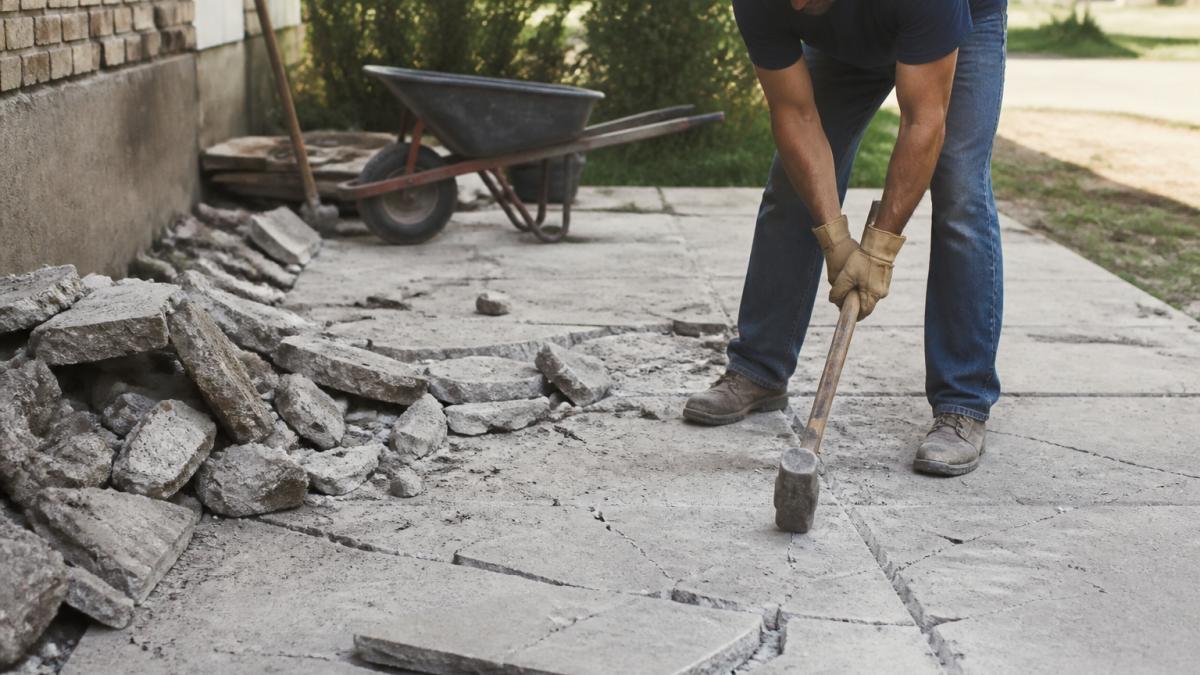
Next, outline a grid. Mark lines roughly two feet apart across the slab. Work methodically along each line, striking in a steady rhythm.
- Strike near edges, not dead center
- Lift chunks under 50 pounds
- Keep your feet clear of falling pieces
Work from one side to the other. Random swinging creates unpredictable breaks and tired arms.
How to Estimate Concrete Weight Before You Haul It
Concrete weight planning starts with volume. A solid cubic foot of concrete weighs about 150 pounds. A four-inch slab covers 3 cubic feet per square foot of surface, so each square foot weighs roughly 50 pounds.
Do the math before you rent anything:
- Measure length × width × thickness in feet
- Multiply to get cubic feet
- Multiply by 150 for total pounds
A 10 × 10 foot slab at four inches thick works out to about 5,000 pounds. That number decides your truck, your trailer, and your dumpster size. Once you know the weight and volume, what size dumpster for backyard cleanup becomes an easy call.
How to Dispose of Broken Concrete: Recycling, Drop-Off, and Dumpsters
Concrete disposal has more options than most people realize, and the cheapest route depends on how clean the load is, how heavy it is, and what local facilities accept. Broken concrete is heavy, but it is also recyclable. Many facilities crush it into base material or pea gravel.
Know Your Weight and Volume Before You Call
Concrete weight planning starts with volume. A solid cubic foot of concrete weighs about 150 pounds. A 4-inch slab covers about 3 cubic feet per square foot of surface, so each square foot weighs roughly 50 pounds.
- Measure length × width × thickness in feet.
- Multiply to get cubic feet.
- Multiply by 150 for total pounds.
A 10 × 10 foot slab at 4 inches thick works out to about 5,000 pounds. That number decides your truck, your trailer, and your dumpster size. Once you know the weight and volume, what size dumpster for backyard cleanup becomes an easy call.
The Four Main Disposal Routes
- Concrete recycling centers. Often the cheapest option for clean loads. They typically accept broken concrete, asphalt, and brick, and may reject loads mixed with soil, trash, or rebar.
- Transfer stations and landfills. Convenient but usually charge by weight. Ask about minimum charges and whether concrete is accepted separately from household waste.
- Curbside or city dumpsters. Check local rules first; concrete often is not allowed because of weight and damage to collection equipment.
How Disposal Fees Usually Work
Most facilities price concrete disposal in one of three ways:
- Per ton. Common at landfills and transfer stations. Ask for the minimum charge and the per-ton rate above it.
- Flat rate per load. Common at recycling yards for clean concrete within a size limit.
- Dumpster rental plus weight overage. You pay a flat rental and a per-ton charge above the included allowance.
Compare hauling it yourself, renting a dumpster, and hiring a hauler on total cost, not just the sticker price. Hauling yourself saves the rental fee but costs fuel, time, and wear on your vehicle. A dumpster saves trips but adds a weight allowance to manage. A hauler costs the most but removes the labor.
Questions to Ask Every Facility
Call ahead and ask these questions before you load:
- What are your hours and do you require an appointment?
- What is the maximum piece size you accept?
- Do you accept rebar, wire mesh, or rebar embedded in concrete?
Clean concrete without trash usually costs less to drop off. Mixing concrete with household trash can trigger overage fees or a rejected load. Keep concrete loads clean and separate.
Preparing Concrete for Recycling or Reuse
Separate concrete from soil, asphalt, and metal before you load. Cut or knock rebar free where facilities require it. Keep pieces under the facility's size limit, and do not mix in treated wood, drywall, or household waste.
For a full walkthrough, see how to dispose of concrete debris in a roll off dumpster. If you are local, we also cover roll-off dumpsters with sizing and delivery details. And if you are weighing options, here is why you need a dumpster for demolition debris instead of hauling by hand.
Safety Checklist for Concrete Demolition
Run this checklist before every session.
- Safety glasses and a dust mask on
- Gloves and steel-toe boots worn
- Utilities marked and confirmed
- Work area cleared of bystanders
Place your disposal container away from the swing zone and any overhead lines. Our guide to dumpster placement for safety covers the details. Concrete dust is a real hazard, so wet the rubble down to keep dust down. Follow OSHA's silica dust guidance for respiratory protection. For load limits and disposal rules, check EPA's construction and demolition debris resources.
Frequently Asked Questions
What tools are best for breaking up a concrete slab?
For a four-inch slab, a sledgehammer and pry bar handle most of the work. Thicker concrete or reinforced slabs call for a jackhammer or powered breaker. A masonry drill bit helps you score edges and create weak points. Match the tool to slab thickness and reinforcement: hand tools for thin, unreinforced slabs, powered equipment for anything thick or tied with rebar.
How small should concrete pieces be for disposal?
Aim for chunks you can lift and load without strain, roughly 12 to 18 inches across and under about 50 pounds each. Smaller pieces load faster and pack tighter in a dumpster or truck bed. Break larger chunks down with a sledgehammer once they are free of the slab. Keep pieces uniform so they stack predictably and do not shift during transport.
Can broken concrete go in general waste?
Rarely. Many transfer stations and landfills restrict or surcharge concrete because it is heavy and recyclable. Check your local disposal options first: concrete recycling facilities and drop-off sites often accept broken concrete, sometimes free. A dedicated dumpster for heavy debris is the safer route for larger jobs. Never mix concrete with household trash.
How do you estimate the weight of broken concrete?
Concrete weighs roughly 150 pounds per cubic foot. Multiply slab length by width by thickness in feet to get cubic feet, then multiply by 150. A 10 by 10 foot slab at four inches thick works out to about 33 cubic feet, or roughly 5,000 pounds. That weight determines whether you need a dumpster, a trailer, or multiple trips.
Breaking up concrete for disposal rewards planning over muscle. Read the slab, match your tool, work a grid, and plan the haul before the first swing. Patriot Solutions supplies clean roll-off dumpsters with fast, dependable local delivery, so the debris leaves your site in one trip. Get started with Patriot Solutions and clear your slab without the second-guessing.