 how-to
Dumpster Placement for Safety: Choosing the Right Spot
Table of Contents
- Why Dumpster Placement Is a Safety Decision, Not a Convenience One
- Roll-Off Dumpster Surface Requirements: What the Ground Has to Handle
- Dumpster Delivery Clearance Space: What the Truck Needs to Reach You
- Preventing Property Damage From Dumpsters: Driveways, Lawns, and Concrete
- The Site Planning Checklist: Utilities, Permits, and Seasonal Ground Conditions
- Liability and Insurance: Who Pays When Placement Goes Wrong
- Conclusion
- Frequently Asked Questions
Last Updated: September 27, 2026
Why Dumpster Placement Is a Safety Decision, Not a Convenience One
Choosing the right dumpster placement for safety starts with one hard truth: the spot that saves you ten minutes of hauling is often the spot that costs you thousands in repairs. Dumpster placement is a safety decision because every choice about position, surface, and clearance affects people, property, and your schedule. This guide breaks down what the ground must handle, what the truck needs to reach you, and how to plan a spot that holds up from delivery to pickup.
The Real Cost of a Bad Spot
A bad spot rarely fails loudly. It fails slowly: cracked asphalt, a rutted lawn, a scraped garage door, or a driver who can't get close enough to drop the container. Many contractors find that damage repair and delayed pickups cost far more than the original rental. The fix is planning, not luck.
Roll-Off Dumpster Surface Requirements: What the Ground Has to Handle
Roll-off dumpster surface requirements come down to one thing: the ground has to carry the full weight of the container plus its load without shifting, cracking, or sinking. A roll-off dumpster is a heavy steel box, and once it's full of debris, that weight concentrates on a surprisingly small footprint, the two steel rails running the length of the container.
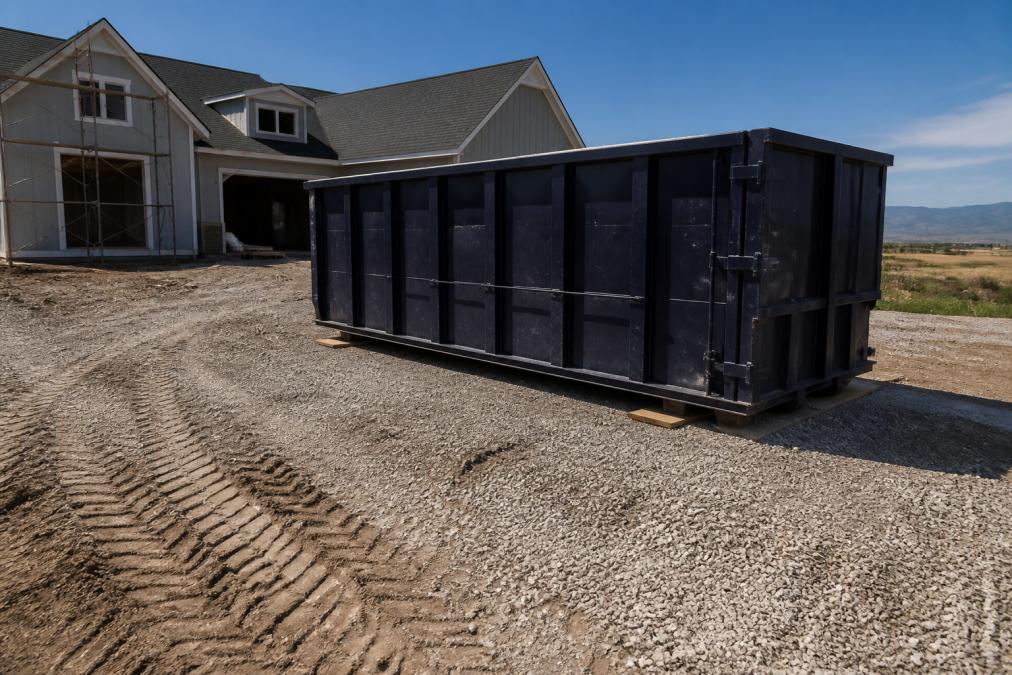
What a load-bearing surface looks like in practice:
- Asphalt or concrete: Best choice when in good condition, no cracks, no soft edges, no hollow spots under the slab. Asphalt softens in summer heat and can rut under rail pressure (Publication Details - Pavements).
- Gravel or crushed stone: Works if compacted and level. Loose fill or fresh gravel will shift and let a rail sink.
- Plywood or boards: The standard fix over driveways to spread rail load and protect the surface finish.
- Bare soil or turf: Risky after rain, and usually the source of the worst damage. Turf offers almost no load-bearing value once saturated.
Surface Protection Techniques That Actually Work
Most placement guides say "use a flat surface" and stop there. The practical technique is weight distribution: lay down material that spreads the rail load over a wider area before the container lands.
- Plywood sheets: Use thick exterior-grade plywood (commonly 3/4 inch) laid under and slightly wider than each rail. Plywood spreads the load and protects the driveway finish from scratches and gouges. Butt the sheets tightly so a rail can't drop into a gap.
- Lumber or cribbing: Heavy timbers or 4x4 cribbing under the rails add stiffness and lift the container slightly off the surface, which helps on asphalt in warm weather.
- Steel plates: Where the load is very heavy or the surface is marginal, steel plates distribute load better than wood, though they're harder to source and move.
- Gravel pad: For unpaved sites, a compacted pad of crushed stone a few inches deep gives the rails something firm to sit on and drains better than bare soil.
When the Ground Isn't Ready
If the ground isn't ready, don't guess. A common mistake is choosing a spot by eye instead of checking it after rain or after heavy equipment has crossed it. Wet soil loses stability fast, and a container that sinks on one corner can be impossible to pull cleanly. Check the spot the day before delivery, and add boards or a gravel pad if there's any doubt.
Seasonal Ground Behavior
Ground conditions change with the seasons, and the surface that held fine in July can fail in March. In wet months, soil softens and the water table rises, so a pad that was firm can sink under rail load. In winter, frost can create a hard crust over a soft pocket, and snow hides both the surface and the clearance area.
Dumpster Delivery Clearance Space: What the Truck Needs to Reach You
Dumpster delivery clearance space is the room the truck needs to approach, lift, and set the container without hitting anything. The driver backs in, raises the bed, and slides the container off. If the approach is tight, the whole delivery can fail before it starts.
Plan for these clearances:
- Overhead clearance: Check for power lines, tree limbs, and awnings before you pick the spot.
- Side clearance: Leave room so the truck isn't scraping fences, walls, or parked cars.
- Straight approach: A straight shot beats a tight turn every time.
- Firm path: The truck is heavy, so the route in must be as solid as the pad itself.
Preventing Property Damage From Dumpsters: Driveways, Lawns, and Concrete
Preventing property damage from dumpsters starts with weight distribution. All that load rests on a small area, so the pressure on your driveway, lawn, or concrete can be far higher than you'd expect. Protect the surface before the container lands, not after.
- Driveways: Lay plywood or boards under the rails to spread the load and protect the finish.
- Lawns: Avoid turf entirely if you can. If you can't, expect ruts and plan to reseed.
- Concrete: Old or cracked slabs can fail under load. Boards help, but a sound slab matters more.
- Curbs: Never let the container or truck rest on a curb edge.
The Site Planning Checklist: Utilities, Permits, and Seasonal Ground Conditions
A site inspection before delivery catches the problems that cause damage, delays, and fines. Run through this list and mark each item off before you confirm the spot.
- Call 811 before you dig or drive stakes near the pad (811 Before You Dig)
- Confirm no underground utility lines run under the spot
- Check local permit rules for street or sidewalk placement
- Measure the dumpster footprint and mark it clearly
- Verify overhead obstructions are clear
- Inspect the surface after the last rain
- Confirm the truck can approach and turn
- Note any seasonal ground issues
Seasonal Placement Considerations
Ground conditions change with the seasons, and so should your spot. In wet months, soil softens and a pad that held fine in summer can sink. In winter, frost and snow hide the surface and shrink your clearance area. Frozen ground can also hide soft spots underneath. Re-check the spot before every delivery rather than trusting last season's plan.
Liability and Insurance: Who Pays When Placement Goes Wrong
Liability usually lands on whoever chose the spot. If a container damages a driveway, cracks a curb, sinks into a lawn, or blocks a right-of-way, the property owner or the contractor who placed it often carries the cost. Many policies treat placement as the renter's responsibility, not the hauler's, the hauler delivered to the spot you designated, so the decision about where it went is typically yours.
Where the Responsibility Usually Falls
- Property owner: If you own the property and chose the spot, damage to your own driveway, lawn, or slab is generally your cost, and your homeowner's or commercial property policy may or may not cover it depending on the cause and your deductible.
- Contractor or renter: If you're a contractor placing a container on a client's property, you may be responsible for damage to the client's surface, and your general liability policy is the relevant coverage. Many general liability policies exclude damage to property in your care, custody, or control, so read the exclusions before assuming you're covered.
- Hauler: If the driver damages something through negligent operation, hitting a garage, clipping a fence, dropping the container off the pad, that's typically the hauler's liability. If the damage is caused by an unsuitable spot you chose, it usually isn't.
- Utility damage: If a container or the truck's weight damages an underground line, the cost can be significant, and responsibility often turns on whether the spot was marked and whether 811 was called before work began.
What Actually Protects You
The cheapest protection is a documented site plan. Before delivery:
- Photograph the spot from several angles, including the surface, the approach, and any nearby structures or utilities.
- Note the surface condition in writing, cracks, soft spots, previous damage, so you have a baseline.
- Keep the 811 ticket or locate confirmation if any digging or staking was involved.
- Confirm the spot in writing with the hauler if there's any ambiguity about who chose it.
- Check your policy for exclusions on property in your care, custody, or control before you assume damage is covered.
When to Move the Spot Instead of Risking It
If the only available spot is over a utility easement, on a cracked slab, or on a slope, the right call is often to move the container rather than accept the risk. A slightly longer haul is cheaper than a cracked driveway, a severed line, or a denied insurance claim. When in doubt, ask the hauler to walk the site with you before delivery, most will, and it's the cheapest insurance you can buy.
Conclusion
Getting dumpster placement right takes planning, not luck, and the stakes are higher than most people expect. Patriot Solutions makes it simpler with clean equipment, fast delivery, and dependable local service across the Delta area. Get started with Patriot Solutions and put your project on solid ground.
Frequently Asked Questions
What are the surface requirements for roll-off dumpster placement?
The surface needs to be flat, firm, and load-bearing. Concrete and compacted gravel work best. Asphalt can crack under a loaded dumpster in warm weather, so use plywood under the rails. Grass and soft dirt are risky because the weight can shift the dumpster or sink the truck. Check the ground before delivery day, and move the spot if it flexes underfoot.
How much clearance is needed for a roll-off dumpster delivery?
Plan for a truck roughly 10 feet wide and 30 feet long, plus room to tilt the bed and slide the container off. Keep the path free of low branches and power lines, and leave at least 10 to 15 feet of overhead clearance. The dumpster itself needs a few feet of open space on all sides for safe loading.
Can a dumpster be placed on a public street or sidewalk?
Sometimes, but you usually need a permit from your local government first. Street placement can block traffic, storm drains, or pedestrian paths, and some areas ban it outright. If a permit is required, post it where the driver can see it. Curbside placement on private property is often simpler, but confirm the rules before delivery day.
What are the risks of placing a dumpster on soft ground or grass?
A loaded roll-off dumpster can weigh several tons. On soft ground, it can sink, tip, or shift, which puts workers at risk and makes pickup harder. The delivery truck itself can get stuck, tearing up the lawn and delaying your schedule. Use plywood or steel plates to spread the weight, or pick a paved spot instead.
Occupational Safety and Health Administration guidance on workplace safety
Call 811 before you dig
U.S. Environmental Protection Agency guidance on construction and demolition debris