 How-to
7 Steps to Calculate Your Dumpster Permit Costs
Last Updated: November 6, 2026
Quick Summary
A dumpster permit usually costs nothing on a private driveway but can run several hundred dollars on a public street or curb lane. The total depends on local fees, placement, and how many days the container stays, so calculate it with your city's fee schedule for dumpster permit costs.
- A private driveway or yard usually needs no permit, while a street or curb lane usually does.
- Total permit cost equals the application fee plus the daily or weekly fee times the number of days, plus renewal charges.
- Permit fees vary by city and county, so confirm the current fee schedule with the local permitting agency.
- Placing a dumpster on a street without a permit can lead to fines and forced removal.
- Ask for a written rental quote that itemizes delivery, haul-away, weight limits, and permit responsibility.
Table of Contents
Figuring out how much a dumpster permit costs starts with a simpler question: do you need one at all? Homeowners and contractors often ask the same questions about this. The answer depends almost entirely on where the dumpster sits. A container on your own private driveway usually needs no permit. A container on a public street, sidewalk, or curb lane usually does.
Permit rules are set locally, so the exact requirement varies by city and county. Some jurisdictions require a permit for any placement in the public right-of-way. Others only require one for placements that block traffic, a parking space, or a sidewalk. Check with your local public works or transportation department before you schedule delivery.
Common placements and what they usually mean:
- Private driveway or yard: Often no permit required, though some cities limit how long a container can stay.
- Street or curb lane: Usually requires a right-of-way permit.
- Sidewalk or parking space: Typically requires a permit and may require traffic control.
- HOA or rental property: Check private rules, which may be stricter than city rules.
Watch out: placing a dumpster on a street without a permit can lead to fines and a forced removal. Confirm the rule before the truck arrives.
U.S. Department of Transportation guidance on work zones and right-of-way use
Gather the Details Your Permit Cost Depends On
Before you can estimate dumpster permit costs, you need a few facts about your project. Most local fee schedules are built from the same inputs, so collecting them first saves time later.
Write down these details:
- Exact placement address and type: Driveway, street, sidewalk, or parking space.
- Dumpster size: Common roll-off sizes are measured in cubic yards, such as 10, 20, or 30 yards.
- Rental length: How many days the container will stay on the property or street.
- Project type: Renovation, roofing, demolition, or general cleanup.
- Property owner information: Some applications ask for the owner or contractor name.
A larger container or a longer stay often increases the permit cost, because cities charge for the space the container takes up over time. A short rental on a quiet side street generally costs less than a long rental in a busy downtown lane.
EPA guidance on construction and demolition debris management
Find the Local Permit Fee Schedule for Your Placement
Permit fees are not standard across the country. Each city or county publishes its own fee schedule, often on the public works or transportation department website. Look for terms like "right-of-way permit," "street-use fee," or "temporary obstruction permit."
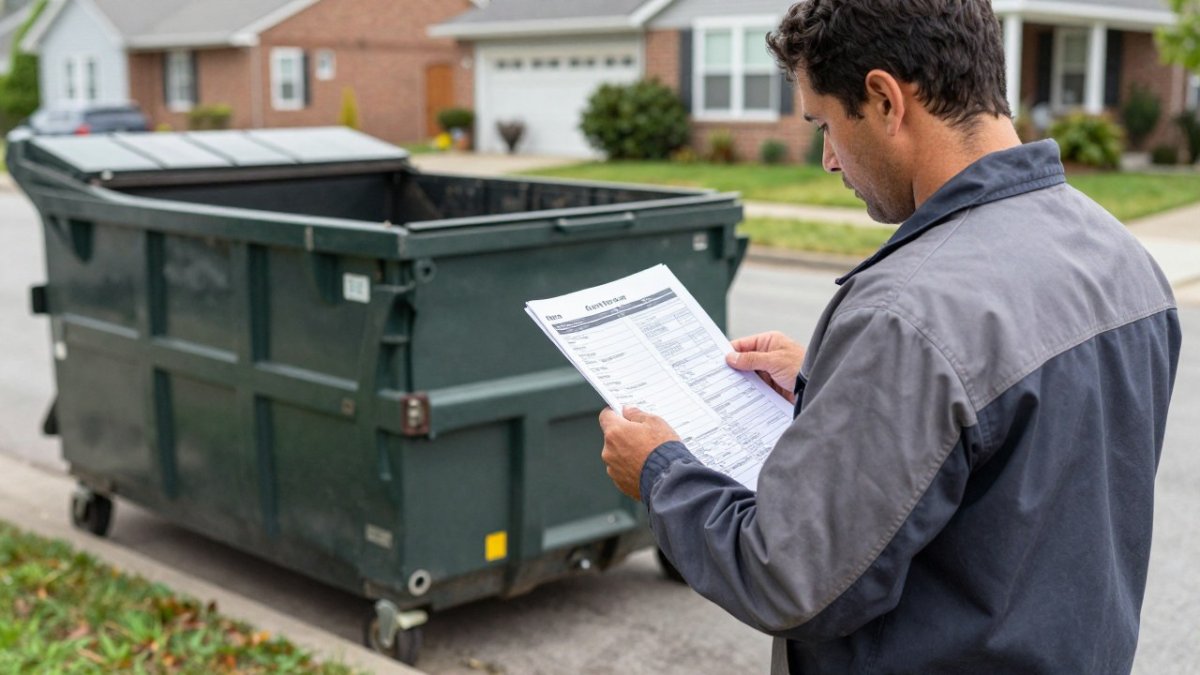
A homeowner reviewing a printed city fee schedule next to a roll-off dumpster at the curb is a good visual reminder to pull the official document. Don't rely on a rental company's estimate alone. Confirm the number with the agency that issues the permit.
When you read a fee schedule, check for:
- A base application fee
- A per-day or per-week street-use fee
- Any administrative or renewal charge
- Whether fees differ for residential and commercial projects
Note the date on the schedule. Fees change, and a page that is several years old may no longer reflect current charges.
Calculate the Total Permit Cost Step by Step
Once you have the fee schedule, you can build a simple calculation. Most permit costs follow this pattern:
Total permit cost = Application fee + (Daily or weekly fee × number of days) + Renewal or administrative fees
Work through it like this:
- Add the one-time application fee.
- Multiply the per-day or per-week street-use fee by the number of days you need.
- If your rental runs past the initial permit period, add the renewal fee for each extra period.
- Add any administrative or processing charges listed on the schedule.
- Round up slightly to cover small surprises, and keep the total in your budget notes.
Keep the math in a spreadsheet so you can change the rental length and see the new total fast.
Work Through Two Placement Scenarios
Seeing the formula applied makes it easier to plan. These examples use placeholder numbers, so replace them with your city's real figures.
Scenario 1: Driveway placement. A homeowner keeps a 20-yard container on a private driveway for 14 days. If the city requires no permit for private property, the permit cost is $0. The main expense becomes the rental itself.
Scenario 2: Street placement. The same container sits in the curb lane for 14 days. Suppose the schedule lists a $50 application fee plus a $10 daily street-use fee. The calculation is $50 + ($10 × 14) = $190 for the permit alone.
Compare the two results. A small change in placement can change the permit cost from zero to several hundred dollars.
Account for Permit Duration and Renewal Fees
Many permits cover a fixed number of days, often 7 or 14. If your project runs longer, you may need a renewal. Renewal fees can add up quickly on a long project, so ask about them before you book.
Ask the permitting office these questions:
- How many days does the base permit cover?
- What does a renewal cost, and how long does it last?
- Is there a penalty if the container stays past the permit date?
Build a small buffer into your schedule. Finishing early is almost always cheaper than paying for an extra renewal.
Request a Written Quote Before You Book Your Dumpster
Permit fees are only one part of the total. A rental quote should show the container price, delivery, haul-away, weight allowance, and any extra charges for overweight loads or prohibited materials. Ask for a written quote that lists each line item, and compare it with the permit total you calculated.
Patriot Solutions provides roll-off dumpsters for construction, cleanup, and property projects. Pricing depends on container size, rental length, and delivery location, so visit our website or contact us for a quote specific to your project.
Quote checklist:
- Container size and rental length confirmed
- Delivery and pickup fees itemized
- Weight limit and overage rate stated
- Permit responsibility clarified (who applies and pays)
- Total including permit estimated in writing
Frequently Asked Questions
Do I need a permit for a dumpster in my driveway? Usually not, because a private driveway is private property. Some cities have rules limiting how long a container can stay, so check local code.
How long does a dumpster permit last? It depends on the jurisdiction. Many base permits cover a set number of days, with renewals available for longer projects.
Who applies for the dumpster permit? Often the property owner or the rental company, depending on local rules. Ask your rental provider who handles the application.
Frequently Asked Questions
Do you need a permit for a dumpster in your driveway?
In many cases, no. A dumpster placed entirely on private property, such as a driveway, usually does not need a street-use permit. However, some cities and towns still require a permit or a zoning or right-of-way check for containers on private land, especially for longer rental periods. Check with your local public works or building department before the delivery date. Asking this question first can prevent a fine and a forced relocation of the container.
How much does a permit for a dumpster on the street cost?
Street permit fees are set by each city and can vary widely. Other jurisdictions may charge a flat fee, a daily rate, or nothing at all. Use the fee schedule for your specific city, and confirm whether the figure is per unit, per day, or per permit period before you add it to your budget.
How long does a dumpster permit last?
Permit duration depends on your local ordinance and the permit type you receive. Many cities issue street permits for a fixed number of days, and extensions usually carry a renewal or administrative fee. If your project runs longer than the permit period, request the extension before the original permit expires to avoid penalties. Ask the issuing office for the exact expiration date printed on your permit.
Does a dumpster rental company obtain the permit for you?
Some rental providers apply for street permits on your behalf, while others leave the application to you. Ask your provider directly whether permit handling is included, and whether the permit fee is part of the quoted price or billed separately. Even when the provider applies, the permit is typically issued in your name or the property owner's name, so you should confirm the details yourself.