 ultimate-guide
Portable Toilet Service Frequency for Events: A 2026 Guide
Table of Contents
- Factors That Determine Portable Toilet Service Frequency
- How Many Porta Potties for 100 Guests
- OSHA Portable Toilet Requirements and Compliance
- Service Schedules for Multi-Day Events
- Environmental Impact and Responsible Disposal
- Creating Your Service Frequency Plan
- Common Mistakes in Portable Toilet Planning
- Frequently Asked Questions
Last Updated: September 2, 2026
Factors That Determine Portable Toilet Service Frequency
The frequency at which portable toilets need servicing depends on several interconnected variables. Getting this wrong creates two problems: either you're paying for unnecessary service visits, or you're dealing with overflowing units and unhappy guests. Understanding what drives demand on your specific site is essential.
Event Duration and Attendee Count
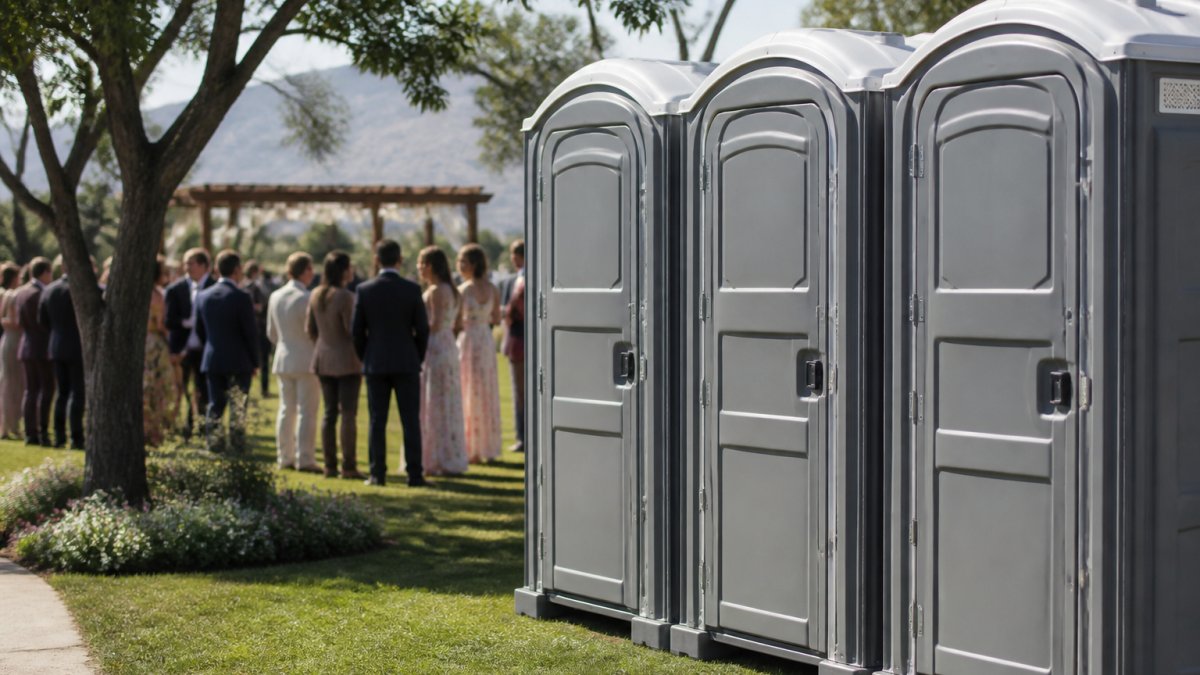
The most obvious factor is how many people will use the facilities and for how long. A 4-hour wedding reception with 100 guests has fundamentally different servicing needs than a 3-day music festival with 500 attendees. Usage patterns vary dramatically by event type, a dinner reception sees peak usage before and after meals, while a construction site experiences steadier demand throughout the working day.
Event duration determines whether you need service during the event or only before and after. A half-day event might require one pre-event setup and one post-event pump-out. A multi-day festival needs active servicing throughout to maintain sanitation standards.
Usage Patterns and Peak Hours
Not all attendees use facilities at the same rate. A corporate conference where people are seated has lower per-person usage than a festival where attendees are actively moving around. Alcohol consumption increases usage frequency. Temperature affects usage, hot weather drives more restroom visits than cool weather.
Wedding receptions typically see peak usage in the first two hours after guests arrive, then again during the reception. Construction sites experience heaviest usage during mid-morning and mid-afternoon breaks. Understanding your event's rhythm helps you schedule service at the right times rather than on a rigid schedule.
Weather and Site Conditions
Rain, snow, and extreme heat affect both usage rates and servicing logistics. Heavy rain increases restroom usage and can make site access difficult for service vehicles. Muddy conditions around units create sanitation challenges and require more frequent cleaning.
Hot weather accelerates bacterial growth and odor issues, often requiring more frequent servicing. Wind direction matters, positioning units upwind from gathering areas reduces odor complaints. Site topography affects drainage and how long units can operate before requiring service.
How Many Porta Potties for 100 Guests
A standard industry approach starts with one unit per 100 guests for low-traffic events, then adjusts upward based on specific conditions.
Calculating Units Based on Event Type
Different events generate different usage intensity. A 4-hour cocktail reception with 100 guests typically needs 1-2 units. The same 100 people at a 12-hour festival needs 3-4 units because usage is spread across a longer timeframe and more varied activities increase restroom visits.
Wedding receptions and corporate events generally fall on the lower end of usage intensity. Construction sites fall on the higher end, workers use facilities regularly throughout the day, and you need units accessible from multiple work zones.
A practical formula: (total attendees ÷ 100) = base units, then add 1 unit for every 4 hours of event duration beyond the first 4 hours. For a 100-person, 8-hour event, that's 1 base unit plus 1 additional unit = 2 units minimum.
Adjusting for High-Traffic Events
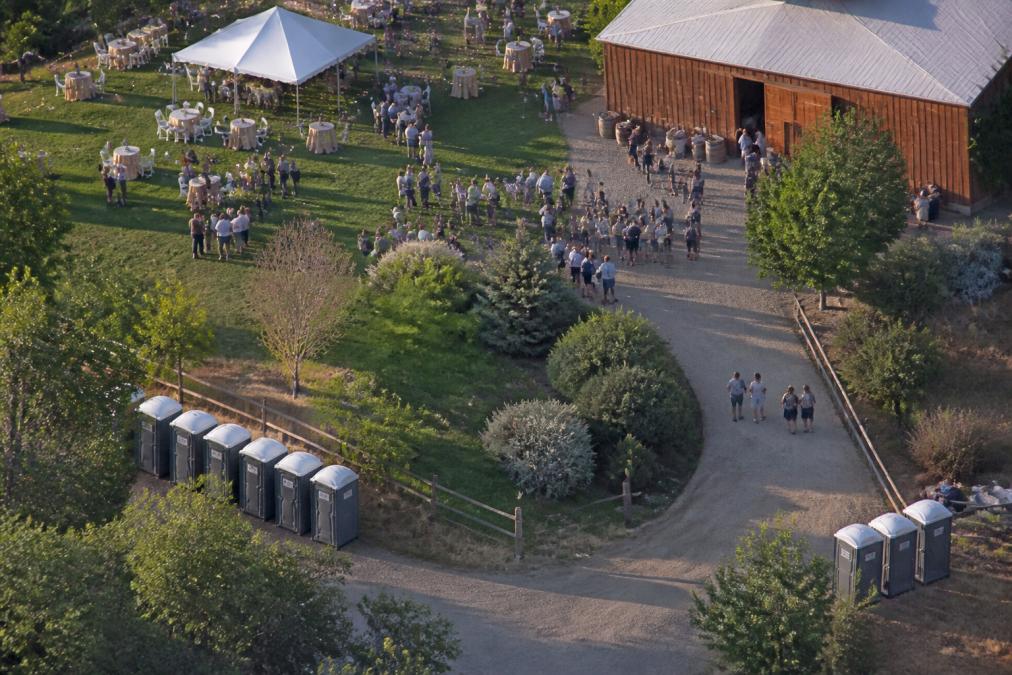
Festivals, concerts, and outdoor markets need more aggressive unit allocation. A 500-person festival might need 6-8 units rather than the base calculation of 5 units. Spreading units across the venue reduces wait times and improves user experience.
Accessibility requirements also increase unit needs. The Americans with Disabilities Act requires that accessible units be available and functional, which typically means adding 1 ADA unit per 50 standard units at minimum.
OSHA Portable Toilet Requirements and Compliance
Portable toilet standards in the United States are governed by OSHA regulations and state health departments. Understanding these requirements protects your event from liability and ensures user safety.
Sanitation and Maintenance Standards
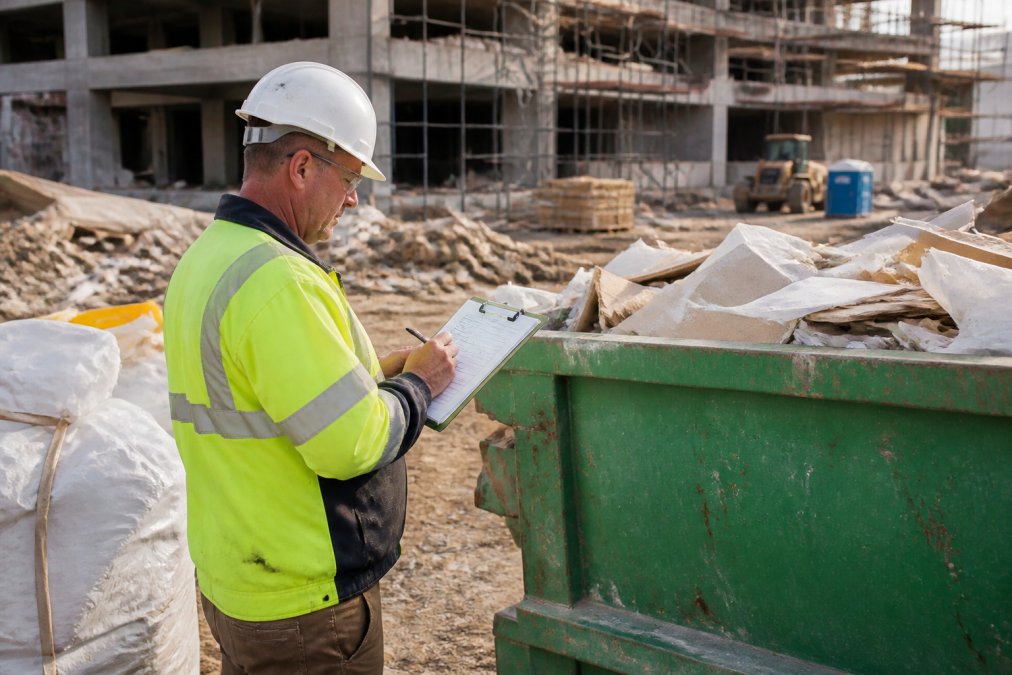
OSHA requires that portable toilets be maintained in a sanitary condition through regular servicing, waste removal, cleaning, and restocking of supplies (osha.gov). For construction sites specifically, OSHA's sanitation standards mandate that toilets be provided within 200 feet of work areas and kept clean and in good working order.
Waste tank capacity must be adequate for expected usage. Overfilled units that aren't serviced promptly create health hazards and violate sanitation standards. Handwashing facilities are required at or near portable toilets on construction sites, as sanitation depends on users being able to clean their hands after restroom use.
Accessibility Requirements
The ADA requires that accessible portable toilets be available at public events and construction sites. An accessible unit must have a door wide enough for wheelchair access, interior space for maneuvering, grab bars, and appropriate seat height.
Accessible units must be positioned on level ground with a firm, slip-resistant surface and clear paths to them. For events, plan for at least 5-10% of units to be ADA-compliant, though specific requirements vary by state and local jurisdiction.
Service Schedules for Multi-Day Events
Multi-day events require active maintenance throughout the event, not just pre-event setup and post-event cleanup.
Daily Servicing During Events
During a multi-day event, portable toilets should be serviced at least once daily, typically overnight or early morning before attendees arrive. High-traffic events benefit from mid-day servicing as well. A music festival running from 10 AM to midnight might need service at 2-3 AM and again at 10 AM.
Schedule service during off-peak hours to minimize user impact while maintaining sanitation standards. Weather affects servicing logistics, schedule service before weather deteriorates, and discuss contingency plans with your provider.
Post-Event Cleanup and Final Maintenance
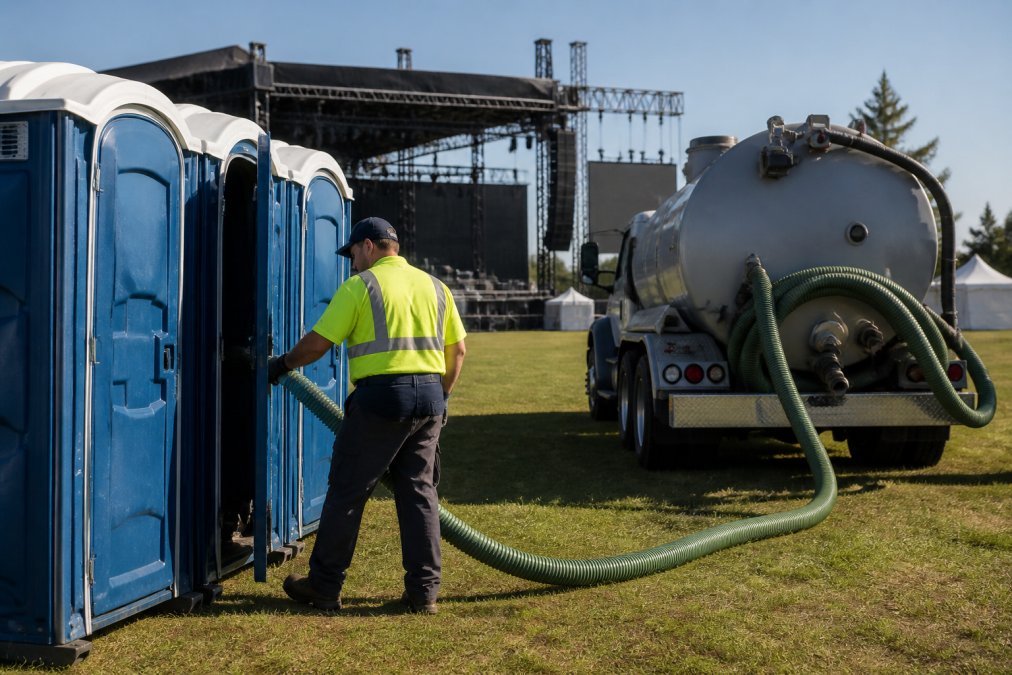
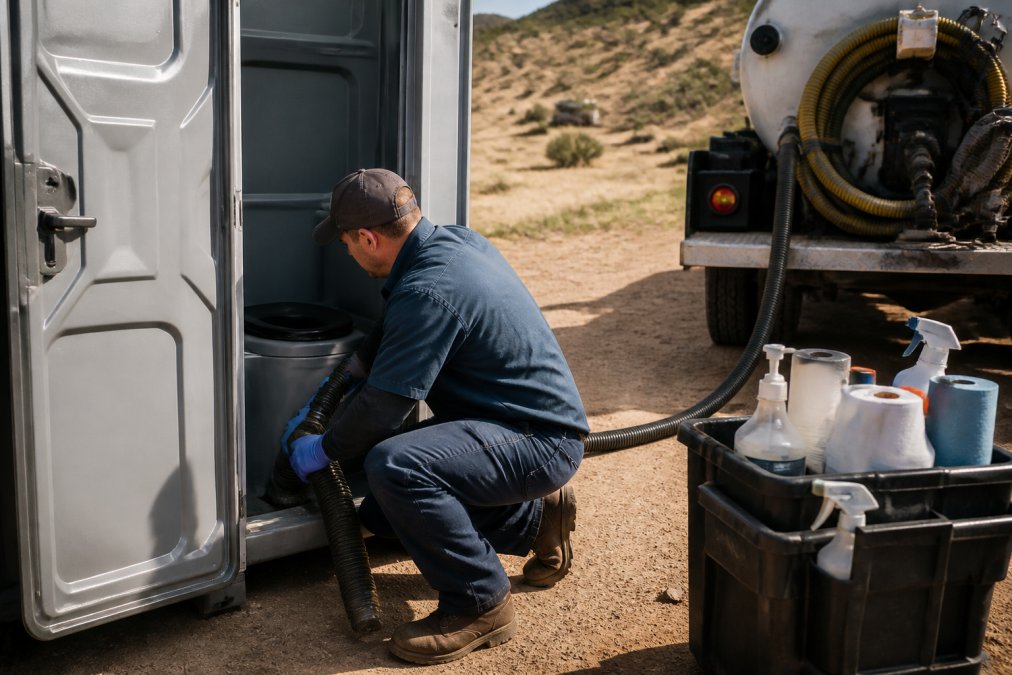
The final service visit after your event is as important as initial setup. A thorough post-event pump-out and cleaning ensures units are ready for the next rental and prevents odor or pest issues. Final cleanup should include full tank pumping, interior cleaning and sanitization, restocking of supplies, and inspection for damage.
Environmental Impact and Responsible Disposal
Waste from portable toilets requires proper treatment and disposal. Chemical treatment breaks down waste and controls odor, but those chemicals must be handled responsibly to avoid environmental contamination.
Waste is typically transported to a municipal wastewater treatment facility, where it's processed along with other sewage. Improper disposal creates serious environmental and health hazards. Responsible service providers use licensed disposal facilities and maintain records of waste disposal. Modern chemical additives are less harsh on the environment than older products, and eco-friendly options are available through most major rental providers.
Creating Your Service Frequency Plan
Developing a service frequency plan requires systematically assessing your situation and making intentional decisions about timing and placement.
Step 1: Assess Your Event Scope
Document the basics: total expected attendees, event duration, event type, and site conditions. Consider factors beyond headcount, will attendees be seated or moving around? Will there be alcohol service? What's the weather forecast? Are there accessibility requirements?
For construction sites and agricultural operations, assess the number of workers, their work schedule, and whether multiple shifts will use the same units.
Step 2: Determine Optimal Unit Placement
Strategic placement reduces wait times and improves user experience. Distribute units across the venue rather than clustering them in one area. For construction sites, position units within 200 feet of work areas as required by OSHA.
Consider sight lines and accessibility. Clear signage helps direct traffic. For multi-day events, consider whether you'll need to relocate units as the event progresses.
Step 3: Schedule Servicing Around Peak Usage
Schedule service visits to avoid peak usage windows when possible. For a wedding reception peaking in the first two hours, schedule service before guests arrive and after the reception ends. For multi-day events, schedule daily service during off-peak hours, typically overnight or very early morning.
Build in flexibility for weather delays, unexpected attendance surges, or equipment issues. Document your service schedule and share it with event staff.
Common Mistakes in Portable Toilet Planning
The biggest mistake is calculating unit quantity based on industry rules without adjusting for your specific event. A formula that works for corporate events doesn't work for festivals.
Poor unit placement is another frequent error. Clustering all units in one area creates bottlenecks and makes it look like you don't have enough facilities. Spreading units across your venue improves the user experience.
Failing to schedule service during off-peak times, underestimating accessibility requirements, and not communicating with your service provider about specific needs also create problems. A good provider will use information about your event type, expected attendance, and site conditions to recommend appropriate service schedules rather than applying a one-size-fits-all approach.
Planning portable toilet service frequency requires balancing attendee count, event duration, usage patterns, site conditions, and regulatory requirements. The right service frequency keeps your facilities clean and functional without paying for unnecessary visits. At Patriot Solutions, we work with event organizers and construction managers to develop service plans tailored to specific needs. Our team assesses your event scope, recommends appropriate unit quantities and placement, and schedules servicing around peak usage times. Contact Patriot Solutions to discuss your event requirements and get a customized service plan that fits your timeline and budget.
Frequently Asked Questions
Q: How often should a porta potty be serviced during an event?
A: Service frequency depends on attendee count, event duration, and usage patterns. For most events, daily servicing during the event is standard. High-traffic events may require more frequent servicing during peak usage times. A professional rental provider will assess your specific event and recommend an appropriate schedule to maintain sanitation and user experience.
Q: How many porta potties do I need for 100 guests?
A: A general guideline is one portable toilet unit per 50-75 guests for standard events, which means 2-3 units for 100 people. However, this varies based on event type: weddings typically need fewer units than festivals or construction sites. For events serving alcohol, consider adding one additional unit. Always consult with your rental provider to account for your specific event duration and attendee demographics.
Q: What are OSHA's requirements for portable toilet maintenance?
A: OSHA requires portable toilets at construction sites to meet specific sanitation standards: one toilet per 20 workers, regular cleaning and servicing, proper waste disposal, and hand-washing facilities. For events, local health codes typically apply rather than OSHA rules. All portable restrooms must be regularly maintained, sanitized, and emptied to prevent overflow and ensure hygiene compliance.
Q: What factors influence how often portable toilets need servicing?
A: Key factors include attendee count, event duration, weather conditions, waste tank capacity, and peak usage hours. High-traffic events, warm weather, and longer durations all increase servicing frequency. Alcohol consumption raises usage rates. Site accessibility affects how quickly a service provider can reach units. A thorough site assessment helps determine the optimal service interval for your specific event.
Q: What's included in a standard portable toilet service visit?
A: Standard service includes waste tank pumping, interior and exterior cleaning, sanitization, restocking supplies (toilet paper, hand sanitizer), and inspection for damage. Some providers offer additional services like deodorizing treatments and chemical replenishment. The scope depends on your service agreement and frequency. Discuss specifics with your rental provider to ensure your expectations align.
Q: How does weather affect portable toilet servicing schedules?
A: Cold weather can slow waste breakdown and reduce tank capacity efficiency, requiring more frequent servicing. Heavy rain may limit service vehicle access to the site, necessitating adjusted scheduling. Hot weather increases odor and bacterial growth, also requiring more frequent maintenance. A rental provider familiar with local conditions will adjust schedules to account for seasonal challenges and site conditions.
This article was written using GrandRanker