 how-to
How Many Portable Toilets for an Outdoor Wedding?
Table of Contents
- How Many Portable Toilets for a Wedding: A Step-by-Step Calculation
- How Event Duration Affects Portable Toilet Needs
- Restroom Trailer vs Portable Toilets for a Wedding: Which Fits Your Reception?
- Accessibility and Inclusive Restroom Planning for Every Guest
- Peak-Demand Timing: When Your Restrooms Will Be Busiest
- Portable Restroom Planning Checklist: Service, Placement, and Contingency
- Conclusion
- Frequently Asked Questions
Last Updated: October 6, 2026
How Many Portable Toilets for a Wedding: A Step-by-Step Calculation
The short answer: plan on one portable toilet per 50 guests for a four-hour reception, then add units for alcohol, meals, and extra hours. Calculating restroom needs for outdoor wedding receptions comes down to guest count, event length, and bar service.
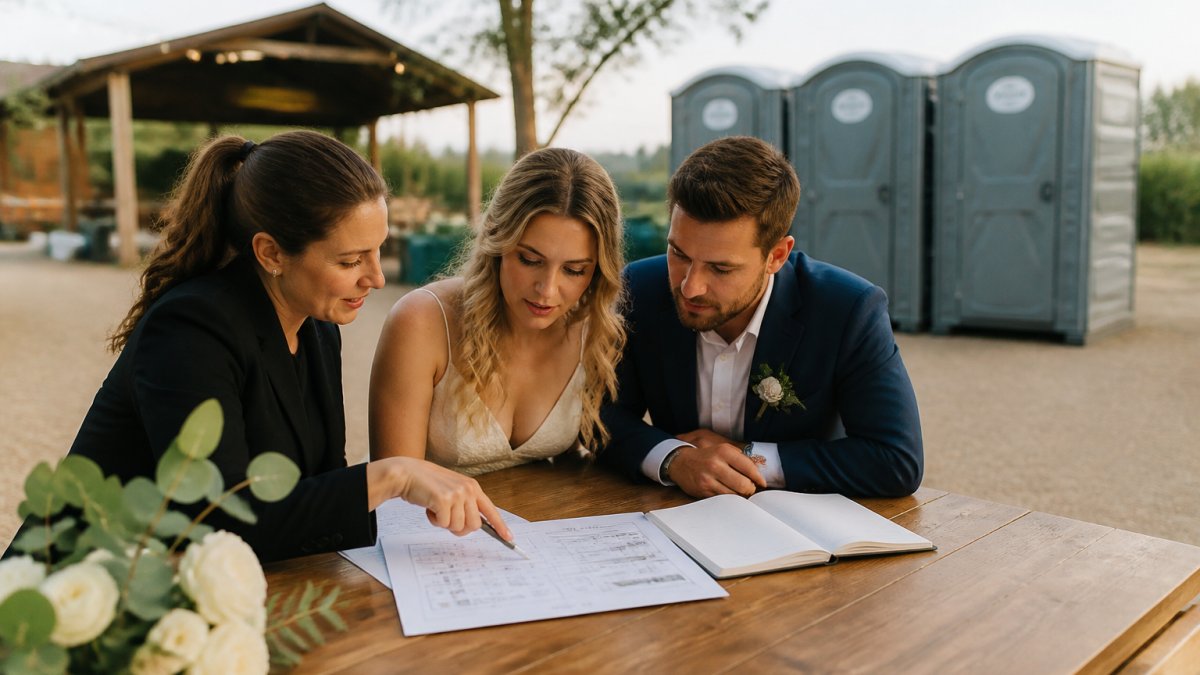
The Formula Behind the Ratio
Every restroom estimate starts with the same three inputs. Write them down before you call a vendor:
- Confirmed guest count, your final RSVP number, not your invite list.
- Reception length in hours, from the first guest arrival to the last guest departure.
- Service level, dry event, beer and wine, or full hosted bar, plus whether you serve a plated meal.
From there, the working formula is:
Base units = guest count ÷ 50
Then apply adjustments, each expressed as a whole unit so you are never rounding down:
- Alcohol: add 1 unit per 50 guests when you serve beer, wine, or cocktails.
- Full meal: add 1 unit when you serve a plated or buffet dinner.
- Duration: add 1 unit for every two hours beyond the four-hour baseline.
- Large guest list: add 1 unit for every 25 guests beyond 200.
Round the final total up to the next whole unit. A half unit is not a unit you can rent.
Step 1: Count Your Guests and Identify Peak Attendance
Start with your final RSVP count, not your invite list. For a wedding, roughly 80 to 85 percent of invited guests typically attend, so build your plan around the confirmed number.
Then think about peak attendance. Guests arrive in waves and leave early. The busiest window is usually the middle two hours of the reception, and that is the number your restrooms must handle.
Step 2: Apply the Base Ratio and Adjust for Alcohol and Meal Service
The base ratio is one unit per 50 guests for a four-hour event. From there, adjust upward:
- Add one unit for every 50 guests when you serve alcohol
- Add one unit if you serve a full plated meal
- Add one unit for events over six hours
- Add one unit for every 25 guests beyond 200
Step 3: Work Two Examples End to End
Example A, 150 guests, four hours, hosted bar, plated dinner.
- Base: 150 ÷ 50 = 3 units
- Alcohol: 150 ÷ 50 = 3 units added
- Plated meal: 1 unit added
- Duration: no adjustment at four hours
Example B, 150 guests, four hours, dry reception, cake and punch only.
- Base: 150 ÷ 50 = 3 units
- Alcohol: none
- Meal: none
- Duration: no adjustment
The same guest count produces a four-unit swing based on bar and meal service alone. That is why a flat "one per 50" rule undercounts almost every full-service wedding.
Example C, 250 guests, six hours, hosted bar, buffet dinner.
- Base: 250 ÷ 50 = 5 units
- Alcohol: 250 ÷ 50 = 5 units added
- Meal: 1 unit added
- Duration: 1 unit added for the two hours past baseline
Step 4: Sanity-Check the Total Against Your Setup
A unit count only works if your chosen configuration can deliver it. Three single-stall portable units and one three-stall restroom trailer both serve roughly the same number of guests per hour, but they feel very different to your guests and they cost very differently. Before you lock the number, confirm:
- How many stalls each unit or trailer actually provides
- Whether the vendor counts a hand-wash station as a separate rental
- Whether your venue's indoor restrooms are part of the plan or off-limits
How Event Duration Affects Portable Toilet Needs
A four-hour event is the baseline. Anything longer needs more units, because each restroom gets used more times before it is serviced.
Here is how duration changes the math:
| Event Length | Base Ratio | Add for Alcohol | Add for Meals |
|---|---|---|---|
| Up to 4 hours | 1 per 50 guests | +1 unit per 50 | +1 unit |
| 4 to 8 hours | 1 per 40 guests | +1 unit per 40 | +1 to 2 units |
| Over 8 hours | 1 per 30 guests | +1 unit per 30 | +2 units |
A four-to-eight-hour event with bar service is a common wedding setup, and it often needs one more unit than first estimated.
Restroom Trailer vs Portable Toilets for a Wedding: Which Fits Your Reception?
A restroom trailer fits weddings with 100 or more guests, a formal meal, and a higher budget. Standard portable toilets fit smaller weddings, tight budgets, and rural sites where a trailer cannot park.
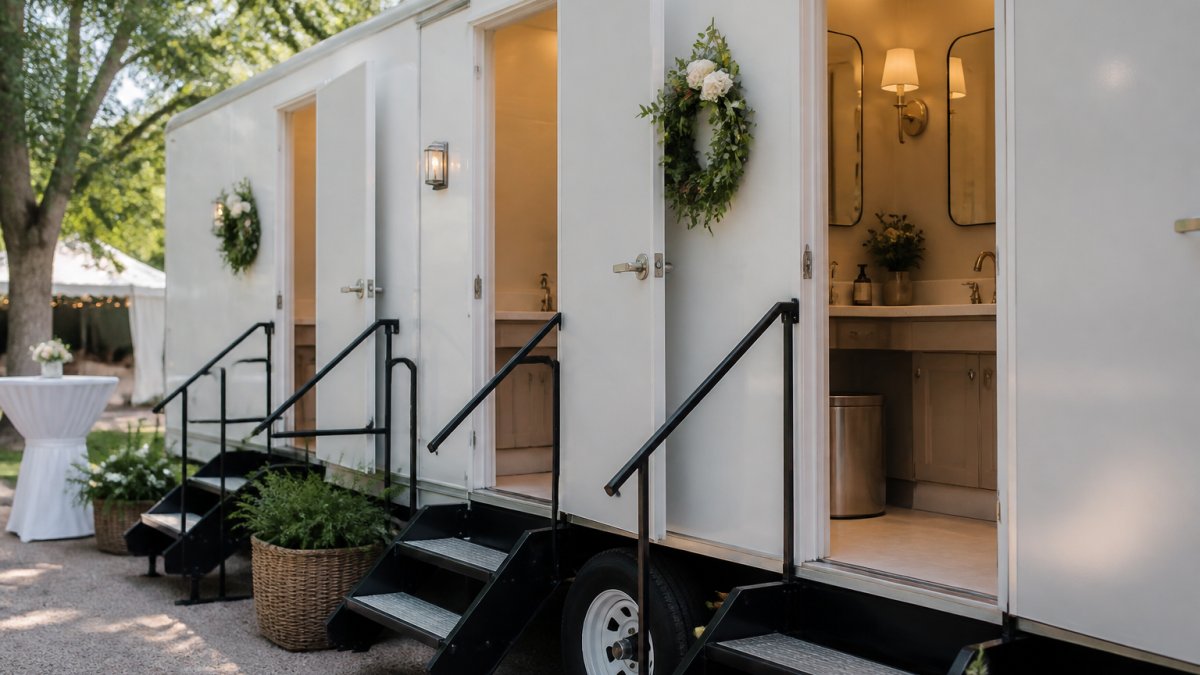
The trade-off is comfort versus cost and access. Trailers offer running water, lighting, and climate control. Standard units are simpler, lighter, and easier to place on uneven ground.
CDC guidance on handwashing at events notes that hand hygiene matters most where food and drink are served, which is worth weighing when you choose between basic units and a trailer with sinks.
Translating Guest Count into a Configuration
Ratios tell you how much capacity you need. Configurations tell you how to buy it. Here is how the same guest count looks across three common setups:
| Guest Count | Single Portable Units | Restroom Trailer | Venue Restrooms + Overflow |
|---|---|---|---|
| Under 50 | 1-2 units | Usually overkill | Often sufficient alone |
| 50-100 | 2-3 units | 1 two-stall trailer | Venue restrooms + 1 unit |
| 100-200 | 4-6 units | 1 four-stall trailer | Venue restrooms + 2-3 units |
| 200-300 | 8-12 units | 2 trailers or 1 large trailer | Venue restrooms + 4-6 units |
These are starting points, not fixed packages. A trailer with four stalls moves guests through faster than four single units because it has one entrance, one line, and running water at each sink. That efficiency matters most during peak windows.
When Portable Toilets Still Make Sense
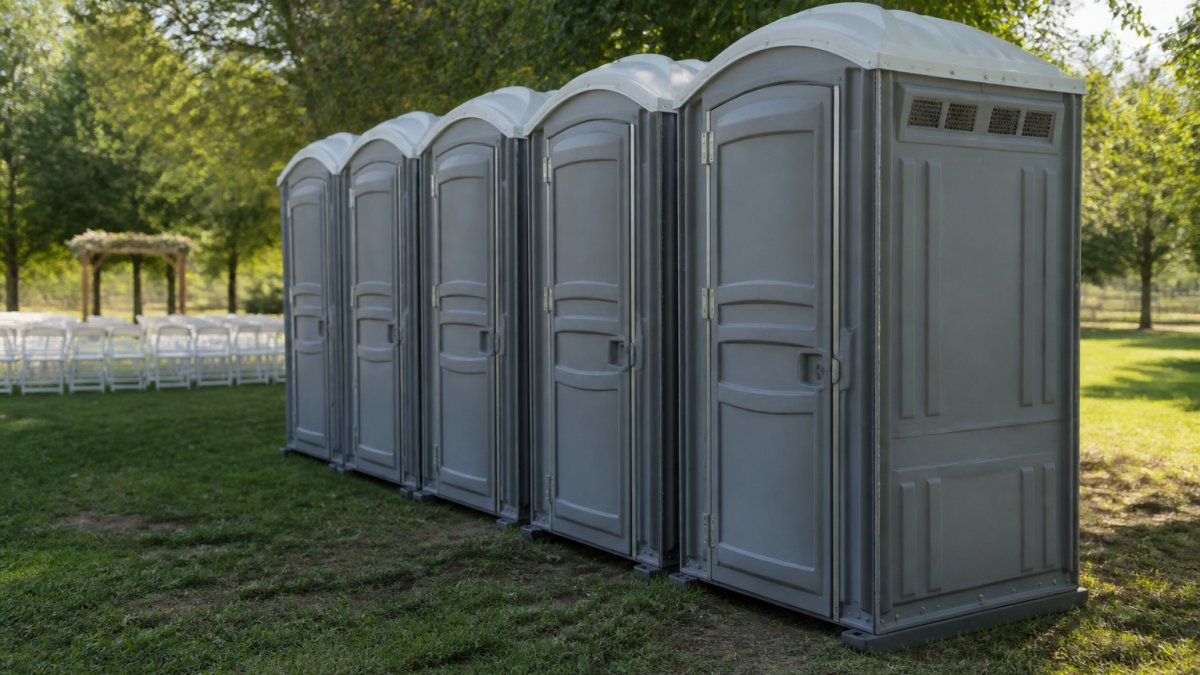
Standard units work well for backyard weddings, smaller guest lists, and sites with limited space or power. They are also the practical pick when your venue is a field, a farm, or a property with no paved access.
Many couples mix the two: a trailer for the main guest area and one or two standard units placed farther out for overflow.
When a Trailer Is Worth the Upgrade
A trailer earns its cost when three conditions line up: a guest list over 100, a reception longer than four hours, and a hosted bar. Under those conditions, the trailer's sinks, lighting, and climate control reduce the number of guests who leave the line frustrated, and the single entrance keeps traffic organized.
Trailers also solve a problem single units cannot: they give guests a place to wash hands with running water, which matters when you are serving food and drinks all evening.
What to Confirm Before You Choose
- Stall count, not unit count. Ask the vendor how many stalls each trailer provides.
- Power and water needs. Trailers typically need a power source and a water hookup or onboard tank.
- Access and surface. Confirm the trailer can reach its spot on firm, level ground.
- Service plan. Trailers hold more waste than single units, but they still need servicing on long events.
- Backup plan. Ask what happens if a trailer fails mid-event and whether a spare unit can be dispatched.
Accessibility and Inclusive Restroom Planning for Every Guest
At least one restroom should be ADA-accessible, and it should sit on firm, level ground with a clear path from the reception area.
Plan for guests who need extra room, a handrail, or a shorter walk. Place the accessible unit closest to the seating and lighting.
- Keep the path at least 36 inches wide
- Use a hard surface or matting, not loose gravel
- Add lighting if the reception runs past dusk
- Keep the accessible unit unlocked and clearly marked
ADA standards for accessible design sets the dimensions that matter here, including door width and turning space inside the unit.
Peak-Demand Timing: When Your Restrooms Will Be Busiest
Restroom demand spikes at three points: right after the meal is served, during toasts and speeches, and once the dancing starts. Plan your service and placement around those windows.
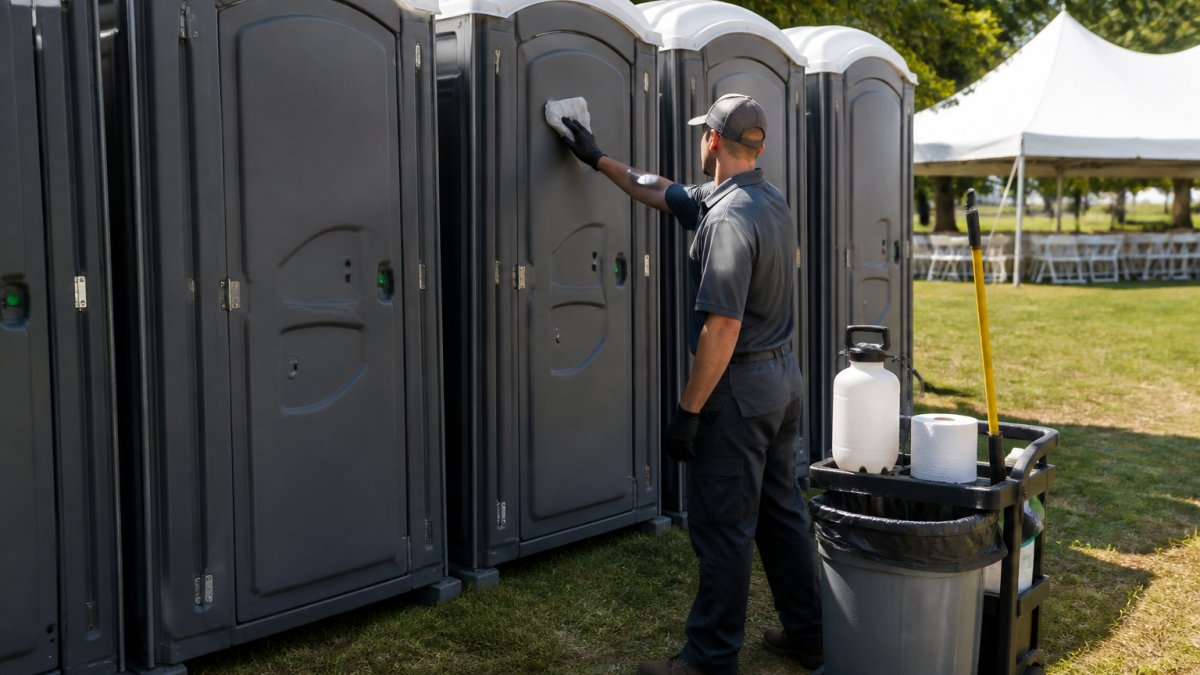
If you can, schedule a mid-event service check before the dancing peak. That keeps units clean when traffic is heaviest.
Portable Restroom Planning Checklist: Service, Placement, and Contingency
A good plan covers where units go, when they get serviced, and what happens if something goes wrong. Work through this checklist before you book.
Placement and Setup
- Put units within 200 feet of the reception area
- Screen them from the head table and photo spots
- Keep them downwind of food service
- Confirm a level, firm surface for each unit
- Check access for the service truck
Service Schedule and Contingency Planning
- Book a mid-event service for events over four hours
- Confirm the pickup window for the next morning
- Ask what happens if a unit needs emergency service
- Keep a backup unit in the plan for larger weddings
Conclusion
Getting the count right takes a few minutes of math, but it saves a lot of stress on the day. Most couples underestimate how much alcohol and event length change the total.
Patriot Solutions provides clean portable restrooms and restroom trailers with fast, dependable local service. Our team helps you size the order, places units where they work, and handles service so you can focus on the celebration.
Frequently Asked Questions
How many portable toilets do I need for 100 wedding guests?
For a 100-guest wedding lasting four hours with light alcohol service, plan for at least two standard portable toilets. If your reception runs longer or includes a full bar, add one more unit. A good rule of thumb is one toilet per 50 guests for the first four hours, then one additional unit for every extra 50 guests or every two additional hours. Always round up rather than down, because running out of restrooms is one problem you cannot fix mid-reception.
How does event duration affect portable toilet needs?
Duration changes the math because use accumulates over time. A four-hour reception might need one unit per 50 guests, but an eight-hour event with dinner, dancing, and a bar can push that ratio closer to one unit per 35 to 40 guests. As the event stretches past four hours, add roughly 15 to 20 percent more capacity. If your timeline includes a long cocktail hour before dinner, count that time too, since guests will still need restroom access.
Should I rent a restroom trailer or portable toilets for a wedding?
Restroom trailers offer running water, mirrors, and climate control, which many couples prefer for a formal outdoor wedding. They cost more and need a water and power hookup. Standard portable toilets cost less, require no hookups, and work well for casual or rustic receptions. Some couples use a mix: a trailer for the main guest area and a few standard units placed farther out for overflow. Decide based on your budget, venue setup, and how much guest comfort matters to you.
What factors besides guest count affect wedding restroom needs?
Guest count is the starting point, but alcohol service, meal timing, event length, and the number of usable indoor restrooms all shift the calculation. A full bar can increase demand by 20 to 30 percent. If your venue already has indoor restrooms, subtract those from your total need. Also think about accessibility: at least one unit should be ADA-compliant. Peak times like after dinner and during speeches may require extra capacity even if the overall ratio looks fine.