 how-to
Portable Restroom Sanitation Requirements for Events in Hinckley
Table of Contents
- Portable Restroom Sanitation Requirements for Events in Hinckley
- How Many Porta Potties for an Event in Hinckley?
- Event Restroom Sanitation Checklist for Hinckley Organizers
- Portable Restroom Servicing Frequency During Events
- Accessible Portable Restrooms for Events: ADA Compliance
- Handwashing Stations and Hand Sanitizer Requirements
- Hinckley Permitting and Placement Rules for Portable Restrooms
- Conclusion
- Frequently Asked Questions
Last Updated: October 9, 2026
Portable Restroom Sanitation Requirements for Events in Hinckley
Portable restroom sanitation requirements for events in Hinckley come down to four things: enough units for your guest count, clean and working fixtures, handwashing access, and a servicing plan that holds up all day.
Patriot Solutions handles portable restrooms and roll-off dumpsters for the Delta area, including Hinckley.
How Many Porta Potties for an Event in Hinckley?
The common starting point is one toilet per 50 guests for a four-hour event, then add units for longer hours, alcohol service, and food.
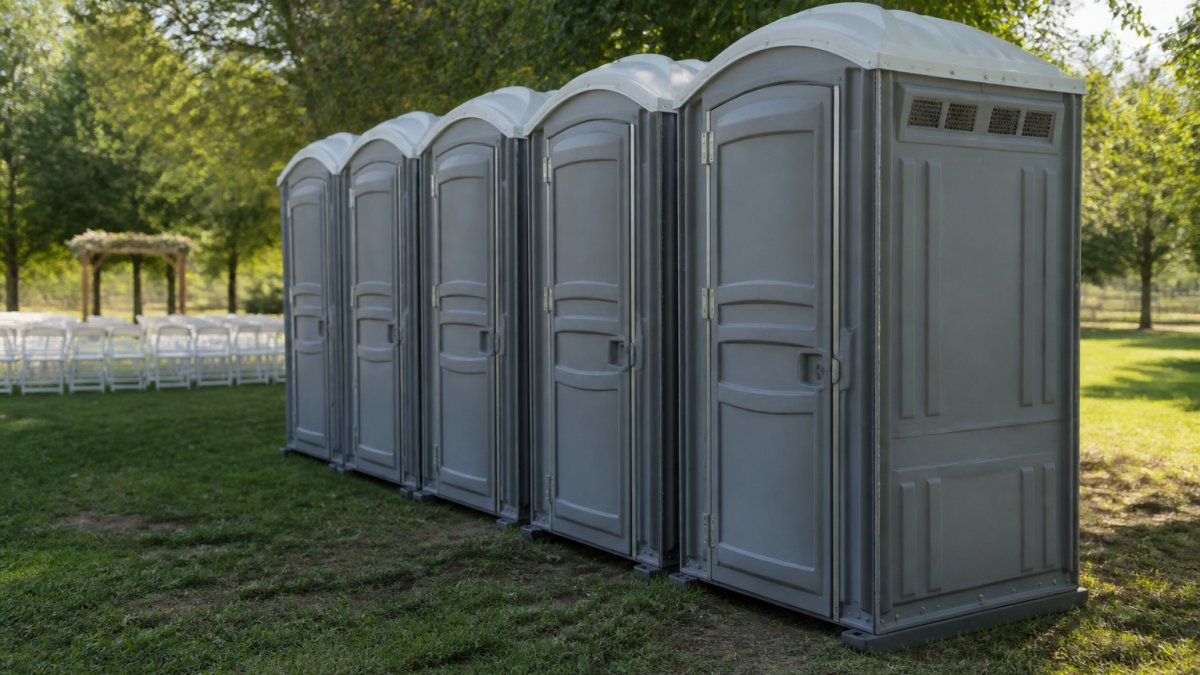
A portable toilet is a self-contained, movable restroom unit with its own waste tank, ventilation, and toilet paper supply.
For a backyard wedding of 75 people, two to three units is a sensible start; for a 300-person festival, six or more, plus handwashing.
Toilet-to-Guest Ratios by Event Type
Different events push restroom demand in different directions. A seated dinner moves slower than a beer festival.
| Event Type | Starting Ratio | Example: 200 Guests |
|---|---|---|
| Short event, no alcohol | 1 per 50 guests | 4 units |
| Event with alcohol | 1 per 40 guests | 5 units |
| Full-day festival | 1 per 35 guests | 6 units |
| Event with food service | Add 1-2 units | 5-6 units |
Adjusting Quantities for Event Duration and Alcohol Service
Event duration and alcohol service are the two biggest multipliers. A four-hour event is the baseline.
Alcohol is the bigger factor. Drinking increases restroom use and shortens how long people linger.
Food service matters too: outdoor kitchens and vendors draw more traffic, and health rules often require handwashing near where food is handled. Plan for extra handwashing stations, not just toilets.
Event Restroom Sanitation Checklist for Hinckley Organizers
A good sanitation plan covers delivery, setup, stocking, and cleanup. Use this checklist before event day.
- Confirm unit count against guest count, hours, and alcohol
- Verify each unit is cleaned and sanitized before delivery
- Check toilet paper, hand sanitizer, and ventilation in every unit
The most common mistake is ordering units but skipping the servicing plan. A clean unit at 9 a.m. is a problem by 3 p.m. if nobody returns to restock and pump it.
Portable Restroom Servicing Frequency During Events
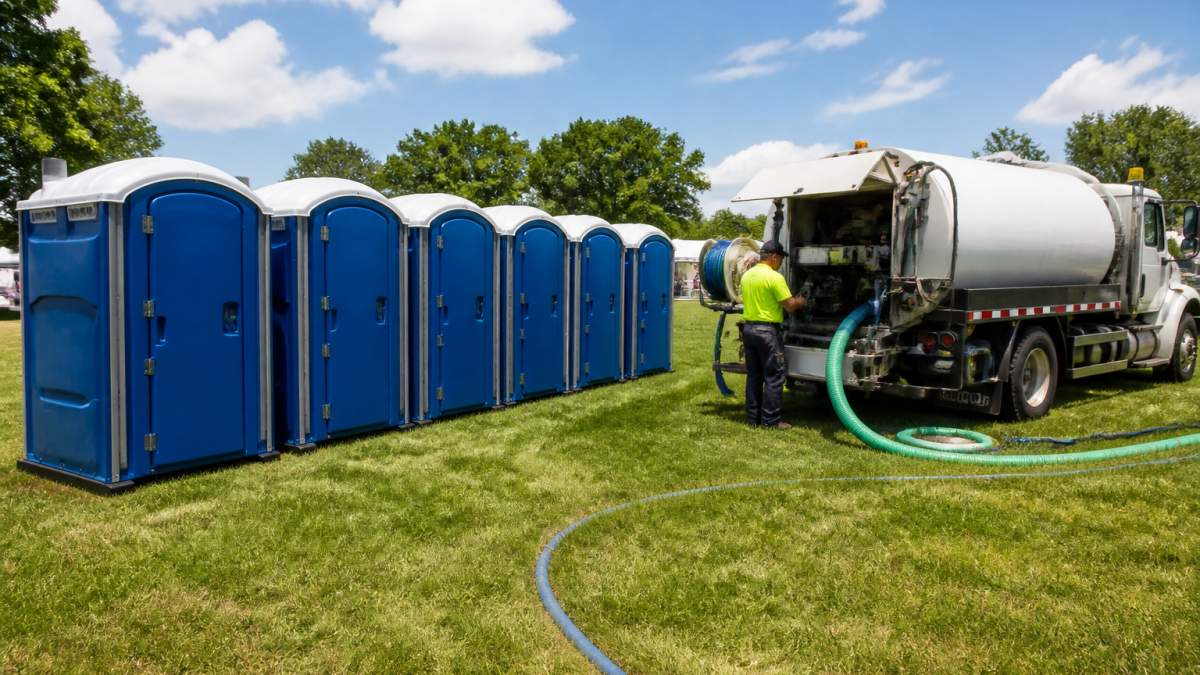
Servicing frequency is where most event sanitation plans quietly fall apart. A working schedule must account for guest count, event length, temperature, alcohol service, and each unit's holding capacity.
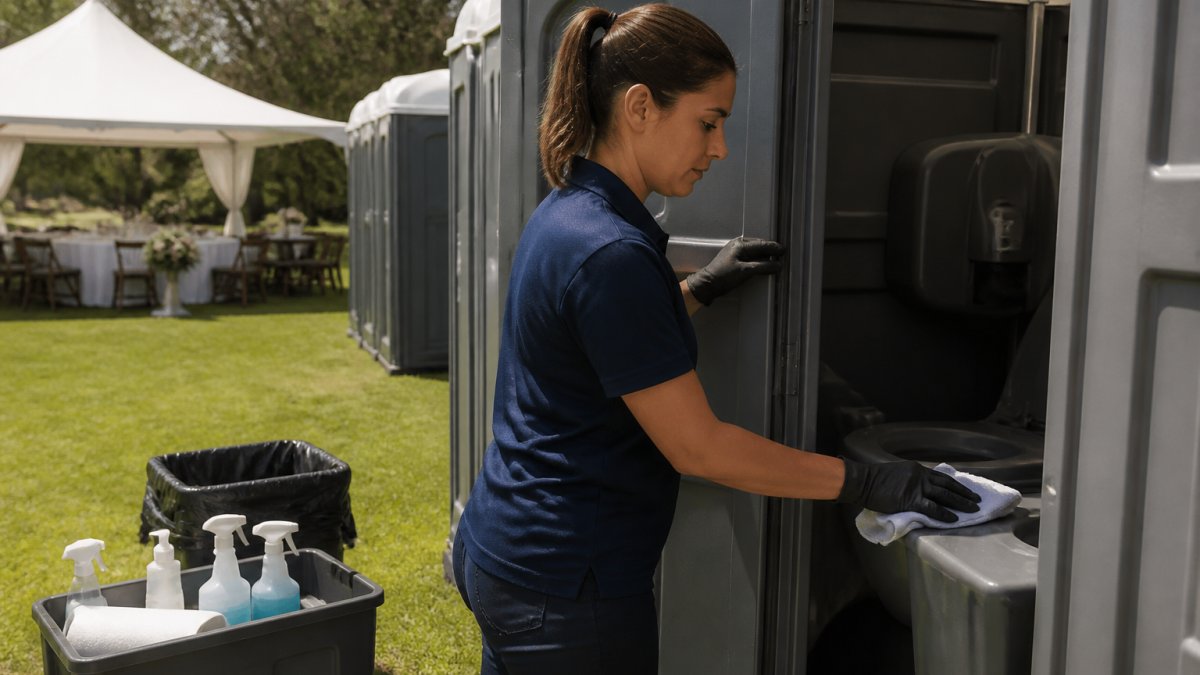
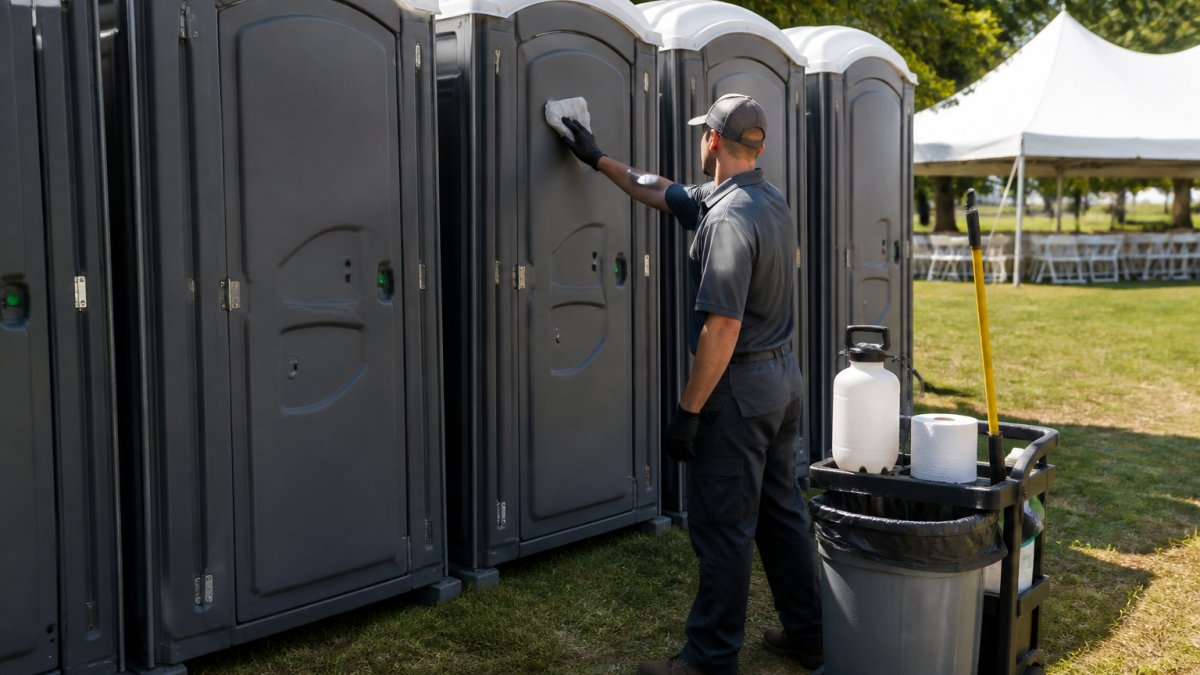
A service visit means pumping the waste tank, restocking toilet paper and hand sanitizer, wiping high-touch surfaces (door handle, seat, urinal, dispenser), and checking ventilation and deodorizer. For heavy-use events, that may need to happen every four to six hours.
How to Build a Servicing Schedule
Start with three inputs:
- Peak occupancy, not total attendance. If 300 people attend but 200 are on site at once, size and service for 200.
- Event length, the four-hour mark is the baseline. Past that, waste volume and paper use climb faster than most organizers expect.
- Conditions, heat above roughly 85°F accelerates odor and waste breakdown; alcohol service increases per-guest use; food vendors add handwashing demand.
| Event Length | Peak Guests | Service Visits | Notes |
|---|---|---|---|
| Up to 4 hours | Under 100 | 1 (before event) | Standard pre-service is enough |
| 4-8 hours | 100-300 | 2 (before + mid) | Mid-event visit around hour 4 |
| 8+ hours | 300+ | Every 4-6 hours | Add units or add visits, not both blindly |
| Multi-day | Any | Daily + mid-day | Overnight pump-out prevents morning odor |
Adjusting for Heat, Alcohol, and Heavy Use
- Hot weather: Shorten the interval by roughly one hour for every 10°F above 85°F, a unit normally serviced at hour six may need attention at hour four.
- Alcohol service: Service at the midpoint of the drinking window, not the event. If beer and wine are served 5-9 p.m., the visit belongs around 7 p.m.
- Food vendors: Handwashing stations near food prep need restocking more often than toilets, check them at every service visit and at peak meal times.
What a Service Visit Should Actually Include
A restock-only visit is not a service visit. Ask your provider to confirm each of these:
- Pump the waste tank and check the fill level
- Restock toilet paper and hand sanitizer
- Wipe the seat, door handle, and dispenser
Waste Handling and Spill Response
Servicing also covers what happens when something goes wrong. A spill-response kit, absorbent material, gloves, disinfectant, and a sealable waste bag, should be on site for every event with portable restrooms, kept near the service access point, not locked in an office.
For waste removal, confirm with your provider where pumped waste goes and how it is handled. Never dump waste near storm drains, ditches, or surface water.
A Simple Rule of Thumb
If you cannot answer "who is servicing these units, and when" before the event starts, you do not have a servicing plan. Write the schedule down, share it with your provider, and put a name and phone number next to each visit.
Accessible Portable Restrooms for Events: ADA Compliance
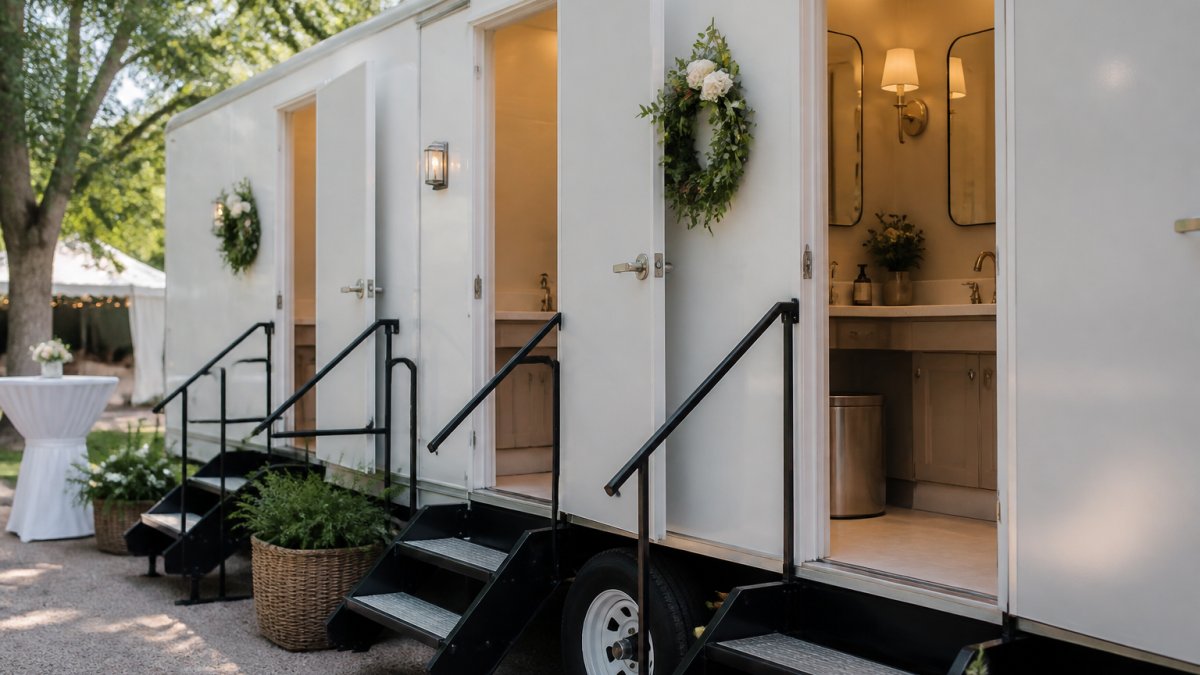
Accessible portable restrooms are required at most public events under the Americans with Disabilities Act, which sets design standards including a wider door, grab bars, and enough interior space for a wheelchair to turn.
The rule of thumb: at least one accessible unit per cluster, and always at least one on site. The ADA Standards for Accessible Design spell out the specific dimensions and features an accessible unit must have.
An ADA-compliant restroom is built to those standards, not just a standard unit with a wider door. If you are unsure whether a unit qualifies, ask before you book.
Accessible units also need a firm, level path, a wheelchair cannot cross mud or gravel, so place them on stable ground and keep the route clear.
Handwashing Stations and Hand Sanitizer Requirements
Handwashing access is a health requirement, not a nice-to-have. The FDA Food Code sets the baseline for handwashing where food is handled.
For general guests, hand sanitizer in each unit is the minimum. For food vendors and outdoor kitchens, provide a dedicated handwashing station with soap and running water.
Plan for:
- Hand sanitizer dispensers inside every unit
- At least one handwashing station per food vendor
- Extra stations near high-traffic areas
Hand sanitation is the detail guests notice most after toilet paper. A unit with no sanitizer feels unclean even when it is not.
Hinckley Permitting and Placement Rules for Portable Restrooms
Permitting catches organizers off guard because there is no single national permit for portable restrooms. Requirements come from a mix of state plumbing code, county or city health departments, and event-specific rules tied to the venue or public land use.
Who Actually Regulates Portable Restrooms at Events
Three layers typically apply:
- State plumbing code, sets the fixture ratios and sanitation standards portable units are measured against; in Minnesota, it is the baseline reference for temporary toilet facilities.
- Local health department, issues permits for temporary food events and often for temporary sanitation at public gatherings, and usually inspects food vendors and handwashing stations.
- Venue or land authority, for parks, fairgrounds, or city property, the parks department or city clerk may have separate placement and access rules.
Because more than one place is named Hinckley, first confirm which jurisdiction your event sits in, the city or county issuing your event permit is the one whose sanitation rules apply. Call that office and ask two questions: (1) does my event require a temporary sanitation permit, and (2) are there placement or setback rules for portable restrooms?
What Local Offices Typically Ask For
When a health department reviews a temporary event sanitation plan, common requests include:
- Total expected attendance and peak occupancy
- Number and type of portable restrooms (standard, ADA-accessible, handwash stations)
- A site map showing unit placement relative to food, seating, and exits
Placement Rules That Apply Almost Everywhere
Even without a formal placement rule, these practices keep you out of trouble:
- Distance from food: Keep restrooms at least 50 feet from food handling, with handwashing stations closer to the food.
- Distance from water: Avoid storm drains, ditches, creeks, or wells; a 50-foot setback from surface water is a common local expectation.
- Firm, level ground: Mud, slopes, and soft turf cause tipping and make servicing difficult.
Public Land and Park Events
On public land, expect an additional layer: parks departments often require a site plan, proof of insurance, and a named sanitation provider before approval, and some require same-day removal. Confirm removal timing when you book, because leaving units overnight on public property can trigger a violation.
Construction Sites Are Different
If you are planning sanitation for a job site rather than a public event, the rules shift. OSHA requires employers to provide accessible sanitary facilities based on worker count, and those requirements are separate from event permitting. The OSHA sanitation standards cover the employer obligations.
A Note on ADA-Accessible Units
Accessible portable restrooms are required at most public events under the Americans with Disabilities Act. The ADA Standards for Accessible Design spell out the dimensions and features an accessible unit must have, wider door, grab bars, and enough interior space for a wheelchair to turn. Plan at least one accessible unit per cluster, and always at least one on site, with a firm, level route to reach it.
Conclusion
Getting sanitation right takes planning, not luck. Confirm your unit count, build a servicing schedule, and check local rules before the big day.
Patriot Solutions provides clean, high-quality portable restrooms and roll-off dumpsters with fast, dependable local service for events and job sites around Delta. Get started with Patriot Solutions.
Frequently Asked Questions
How many porta potties do I need for a 200-guest event in Hinckley?
For a 200-guest event lasting four hours without alcohol, plan for at least three standard portable restrooms based on the one-toilet-per-75-guests guideline. If alcohol is served, increase that to four or five units because alcohol consumption raises restroom demand significantly. Events lasting longer than four hours also require additional units. Always confirm final counts with your rental provider, since venue layout and attendee demographics can shift the math.
Do I need a permit to place portable restrooms at an event in Hinckley?
Permit requirements vary by jurisdiction and event type. Large public gatherings, events on public property, or those requiring temporary use permits may need approval from local authorities. Small private gatherings on private property often do not. Contact the appropriate city or county office before your event to confirm whether a permit is needed and what documentation they require. Your portable restroom provider can often guide you on typical local requirements.
How often should portable restrooms be serviced during an event?
For a one-day event with normal attendance, one pre-event servicing is usually enough. Events lasting multiple days, those with high attendance, or events serving alcohol typically need daily servicing. A servicing visit includes pumping waste, restocking toilet paper and hand sanitizer, and cleaning surfaces. For large festivals, mid-event servicing may be necessary. Discuss your event details with your provider to set a schedule that keeps units sanitary throughout.
Are accessible portable restrooms required at events?
Under the Americans with Disabilities Act (ADA), events open to the public must provide accessible restroom options. A common approach is to ensure at least one accessible unit for every cluster of portable restrooms, or a minimum of one accessible unit per event. Accessible units are wider, include grab bars, and have a ground-level entry. If your event is private and not open to the public, ADA rules may not apply, but providing an accessible option is still recommended for guest comfort.