 comparison
Luxury Restroom Trailer vs Porta Potty for Intimate Events
Table of Contents
- Luxury Restroom Trailer vs Porta Potty: What's the Real Difference?
- Luxury Portable Toilet Features That Change the Guest Experience
- How Many Porta Potties for a Wedding or Intimate Event?
- Portable Restroom Rental Cost: What Drives the Price
- Site Requirements: Power, Water, and Placement Logistics
- Vendor Vetting: What to Ask Before You Book
- Conclusion: Choosing the Right Sanitation for Your Event
- Frequently Asked Questions
Last Updated: October 2, 2026
Luxury Restroom Trailer vs Porta Potty: What's the Real Difference?
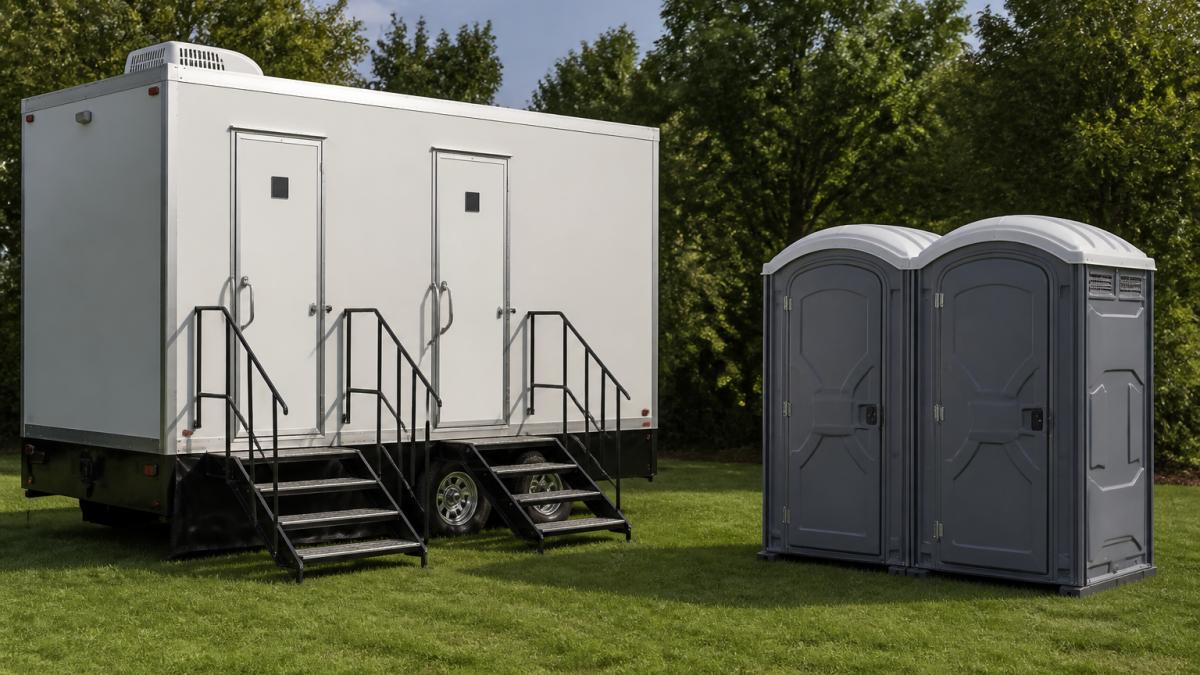
Choosing between a luxury restroom trailer vs porta potty for intimate events comes down to one question: how much does guest comfort matter to your event's success?
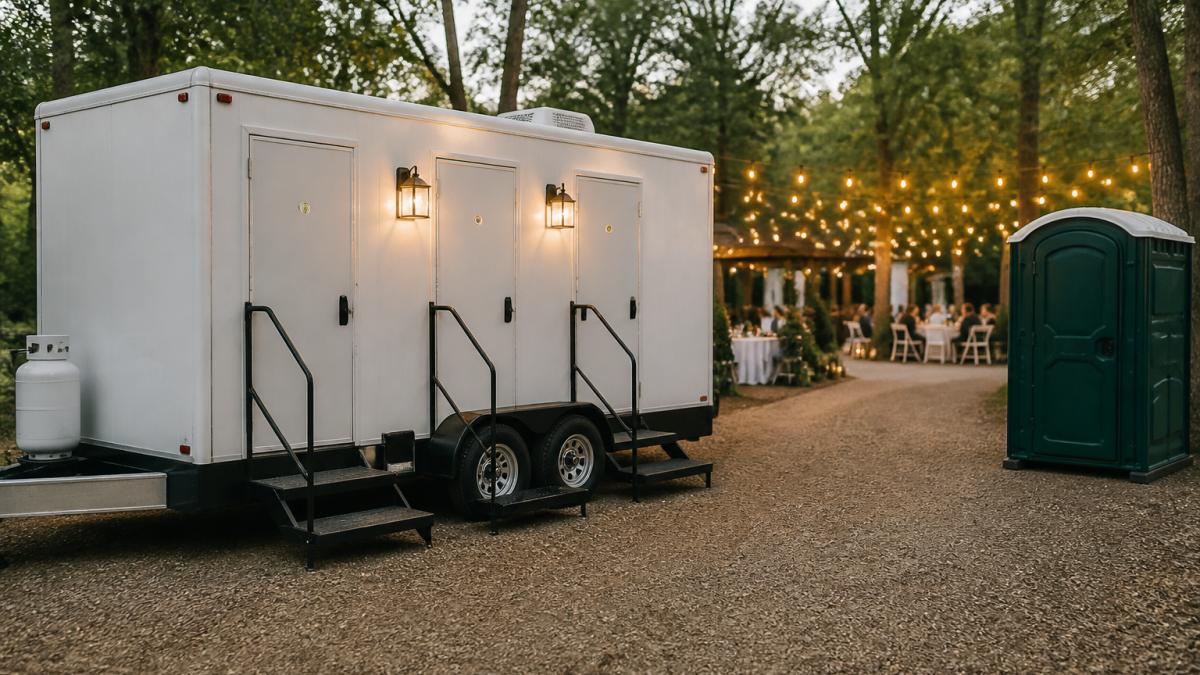
For a 75-person backyard wedding, that gap becomes the deciding factor. Guests remember the bathroom.
Here's what most guides get wrong: they frame this as a simple budget call. It isn't. Site access, power, water, and guest count all shape which option is even possible at your venue.
| Factor | Luxury Restroom Trailer | Standard Porta Potty |
|---|---|---|
| Toilets | Flushable, porcelain-style | Vault, no flush |
| Running water | Yes, sinks and vanity | No, hand sanitizer only |
| Climate control | Heated and cooled | None |
| Power needed | Yes, generator or outlet | None |
| Setup space | Large, needs tow vehicle access | Small, hand placement |
| Best for | Weddings, upscale events | Construction, short events |
Luxury Portable Toilet Features That Change the Guest Experience
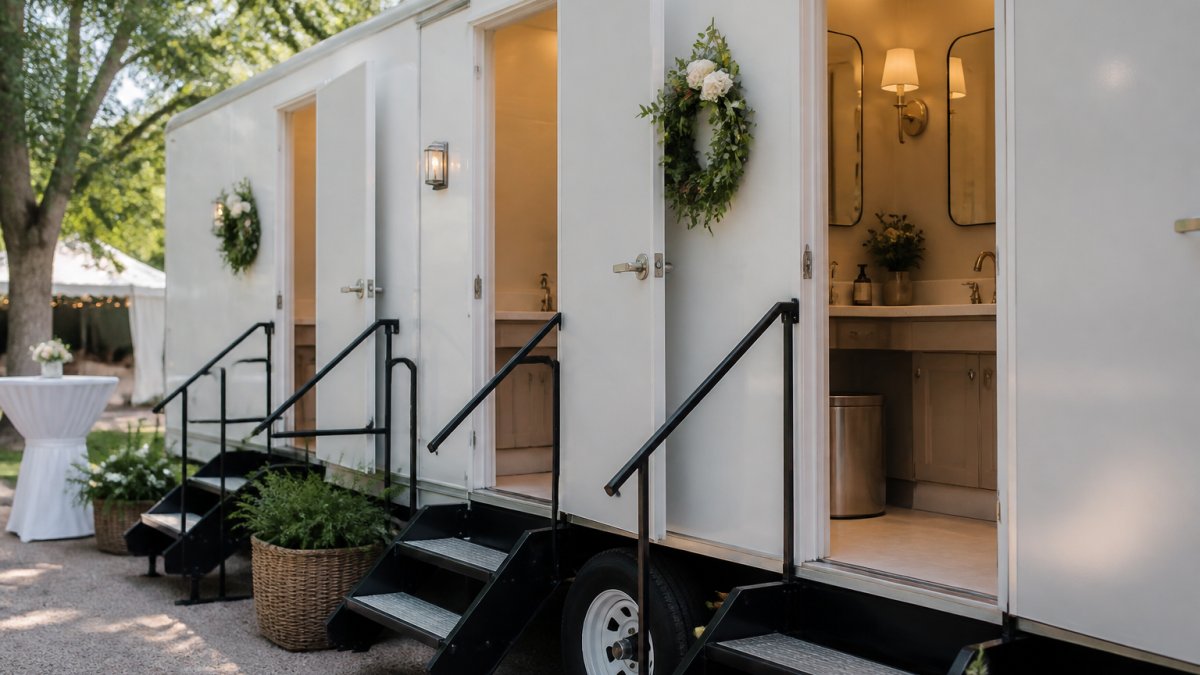
Luxury portable toilet features are what separate a trailer from a plastic unit, and the difference shows up in how guests behave. People linger, freshen up, and stop complaining. That matters at an intimate event where every guest notices everything.
Interior Comfort and Amenities
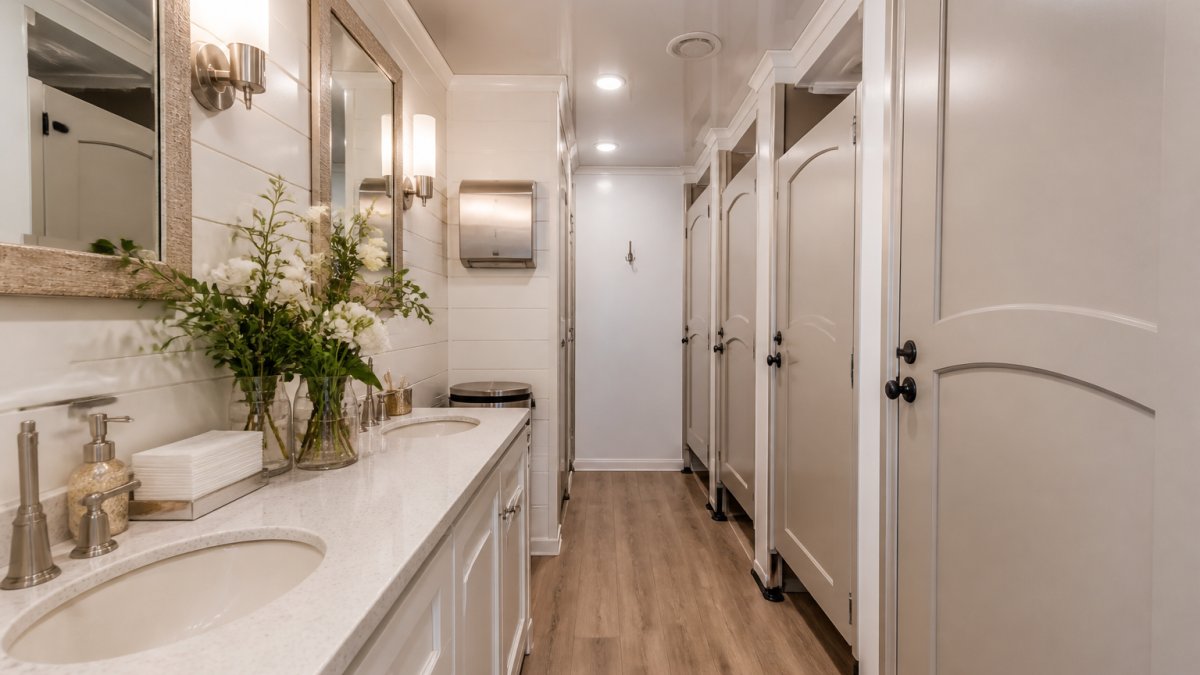
A well-outfitted trailer feels like a real bathroom, not a portable one. Expect flushable toilets connected to a waste tank, running water at a sink, vanity mirrors, and interior lighting that runs off a small generator or a venue outlet.
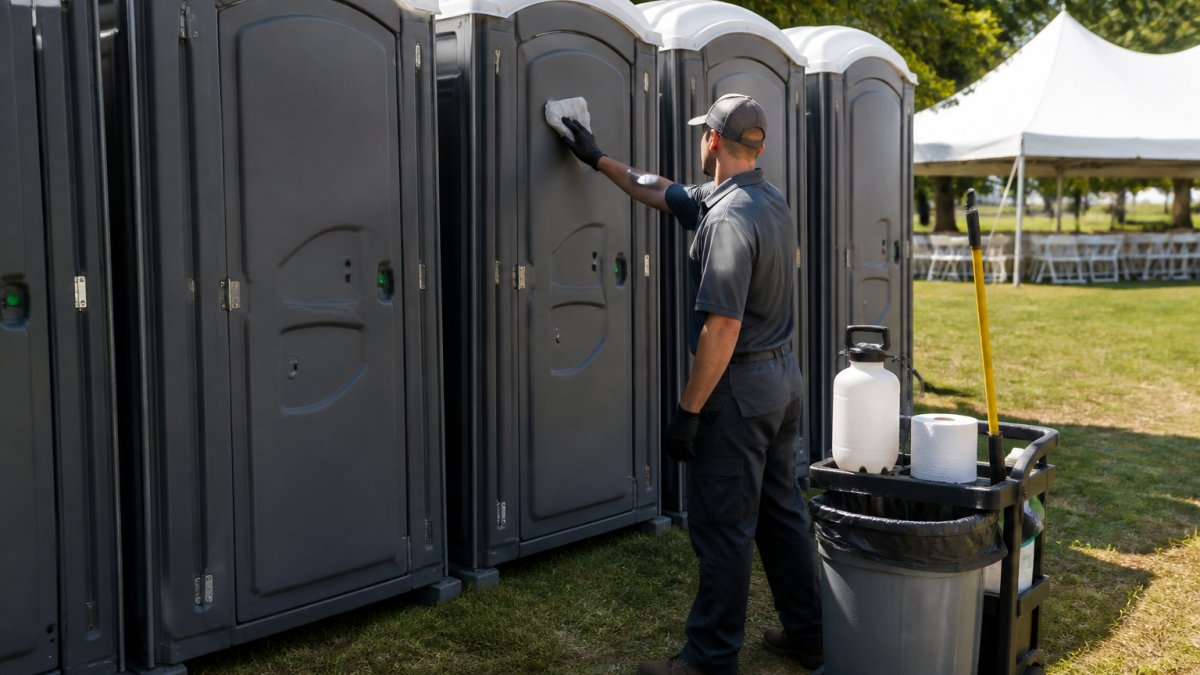
The practical effect is simple: guests use the facility without dread. A standard porta potty offers none of this. It's a vault with a seat and a vent. For a casual backyard gathering, that's fine.
How Many Porta Potties for a Wedding or Intimate Event?
A common planning rule is one restroom unit per 50 guests for a four-hour event, with more units added for longer events or where alcohol is served.
Guest count drives everything. So does rental duration. A two-hour reception needs less capacity than a six-hour celebration with a cocktail hour.
For an intimate wedding, one luxury trailer with two or three stalls often handles the whole guest list comfortably.
Portable Restroom Rental Cost: What Drives the Price
Portable restroom rental cost depends on quantity, rental duration, delivery distance, and the type of unit you choose. A luxury trailer costs more than a standard porta potty because it carries plumbing, power needs, and a higher level of finish.
Several factors move the number:
- Unit type: trailers cost more than standard units
- Rental duration: multi-day events add to the total
- Delivery and setup: rural or hard-to-reach sites add logistics
- Service visits: pump-outs and restocking add cost over long events
- Accessories: lighting, climate control, and sinks raise the base rate
Pricing genuinely depends on your event. The honest answer is to request a quote with your guest count, dates, and site details. That gives you a real number instead of a guess.
U.S. Environmental Protection Agency guidance on portable sanitation and waste handling
Site Requirements: Power, Water, and Placement Logistics
Site requirements are where most event plans fall apart, and this is the part rental blogs skip. A trailer needs a level surface, vehicle access for delivery, and a power source. A standard porta potty needs only a flat spot near the event. The difference is not cosmetic, it is a set of technical specs you need to confirm before you sign a contract.
Power: Voltage, Amperage, and Cord Length
Most luxury restroom trailers run on standard 110-120V household current, but the amperage draw is what matters. A two-stall trailer with lighting, exhaust fans, and a small water heater typically pulls 15-30 amps; larger units with air conditioning can draw 30-50 amps and may require a 240V connection or a dedicated circuit.
Ask your provider three specific questions:
- What amperage does the trailer draw at peak? If the answer is above 20 amps, you need a dedicated circuit or a generator rated for that load.
- How long is the power cord? Most trailers ship with a 25-50 foot cord. If your outlet is farther away, you need an extension cord rated for the amperage, not a household-grade cord.
- Is a generator included or rented separately? A generator sized for a 30-amp trailer is typically a 7,000-10,000 watt unit. Confirm who supplies fuel and who monitors it during the event.
If your venue has no power nearby, plan for a generator. Place it at least 20 feet from the trailer and from guest areas to keep noise and exhaust away from the event.
Water: Fresh Tank Capacity and Pressure
Many trailers carry their own fresh water tank, which means no hookup is required, but you still need to confirm capacity. A typical two-stall trailer holds 100-200 gallons of fresh water, enough for roughly 100-200 flushes depending on the toilet type. For a 75-person, four-hour event, that is usually sufficient.
If you plan to connect to a venue spigot instead of using the onboard tank, confirm two things: water pressure (most trailers need 30-50 PSI; too low and the flush weakens, too high and you risk line damage) and hose length (a standard garden hose is 25-50 feet; longer runs reduce pressure).
Waste: Tank Capacity and Pump-Out Timing
Sewage disposal is handled by the rental provider through pump-out service. A typical trailer waste tank holds 100-200 gallons. Ask how often the provider plans to pump out during your event, for a four-hour event with 75 guests, one mid-event or post-event pump-out is common; for a multi-day event, daily service is typical. Confirm whether pump-out is included in the quote or billed separately.
Placement: Distance, Surface, and Access
Placement matters as much as hookups. Keep units away from food service and guest seating, a common guideline is at least 50 feet from the catering area, but close enough that guests can find them easily. The surface must be level; a trailer on a slope can cause tank and plumbing issues. Delivery requires vehicle access: a tow vehicle plus trailer needs a clear path at least 10-12 feet wide and overhead clearance of at least 12 feet.
U.S. Environmental Protection Agency guidance on portable sanitation and waste handling
Accessibility and ADA Compliance
ADA-compliant restrooms are not optional for public and many private events. The Americans with Disabilities Act sets accessibility standards for restrooms, including an accessible route, adequate interior space, and grab bars.
Ask your provider directly whether they offer an ADA-compliant trailer or unit. Not every fleet includes one, and retrofitting after delivery is not possible. For weddings and community gatherings, an accessible option signals that you planned for every guest.
ADA Standards for Accessible Design, U.S. Department of Justice
Vendor Vetting: What to Ask Before You Book
Vendor vetting separates a smooth event from a stressful one. The questions below go beyond the basics to surface hidden fees, maintenance gaps, and failure plans, the details that decide whether your rental is a non-issue or a crisis.
Pricing and Fees
- Is the quote all-inclusive? Ask specifically about delivery, setup, pump-out, restocking, and pickup. A low base rate often hides a $150-$300 delivery fee or a per-service pump-out charge.
- What triggers a surcharge? Rural addresses, stairs, soft ground, and after-hours delivery are common add-ons. Get the threshold in writing.
- Is there a damage deposit? Confirm the amount, what counts as damage, and how it is refunded.
- What is the cancellation policy? Weather, venue changes, and guest-count shifts happen. Know the refund window before you pay.
Service and Maintenance
- What is your maintenance schedule during the event? A provider should commit to a mid-event check for multi-hour or multi-day rentals, not just a drop-off and pickup.
- How do you handle pump-outs and odor control? Ask how often the waste tank is serviced and what deodorizing products are used. Some providers use formaldehyde-based chemicals; others use enzyme or eco-friendly treatments. If sustainability matters to you, ask which they use.
- What happens if a unit fails mid-event? The answer should be a backup unit or a technician on call, not a promise to 'figure it out.'
Logistics and Capability
- Do you service my location, including rural addresses? Confirm the delivery radius and any distance fees.
- How fast can you deliver and set up equipment? Setup typically takes 30-60 minutes for a trailer; confirm the window and whether it fits your venue's access hours.
- Do you offer an ADA-compliant unit? If yes, confirm it is available on your date, not just in the fleet.
- What are the power and water requirements? A provider who cannot answer this precisely is not the right provider.
- Are you insured? Ask for a certificate of insurance. A legitimate operator carries liability coverage.
- Can you provide references from past events? Ask for two or three recent events similar in size and setting to yours.
This is where dependable local service matters. We provide clean equipment and fast delivery for events and projects in the area, so you get a provider who answers the phone and shows up.
Conclusion: Choosing the Right Sanitation for Your Event
The right choice comes down to your guests and your venue. A luxury restroom trailer fits weddings, upscale gatherings, and any event where comfort is part of the experience.
If you're planning an intimate event and want guests to feel taken care of, we offer clean equipment, fast delivery, and dependable local service to match your guest count and site.
Frequently Asked Questions
How much does a luxury restroom trailer rental cost compared to a standard porta potty?
Pricing depends on the number of units, rental duration, delivery distance, and required features like climate control or running water. Standard porta potties cost significantly less per unit, while luxury restroom trailers with flushing toilets, vanity mirrors, and interior lighting carry a higher rental rate. Patriot Solutions can provide a custom quote based on your event size and site requirements.
How many porta potties do I need for 50 to 100 guests at an intimate event?
A common rule is one restroom unit per 50 guests for a four-hour event. For 50 guests, two standard units or one luxury restroom trailer with two stalls works well. For 100 guests, plan for at least two to three units depending on event length and whether alcohol is served. Multi-day events or those with food service may need additional units.
Do luxury restroom trailers require a water hookup and power source?
Most luxury restroom trailers need a standard garden hose connection for running water and a 110-volt power source for interior lighting, climate control, and exhaust fans. Some models have onboard fresh water tanks and generators, which adds flexibility for remote sites. Confirm power and water access with your venue before booking, and ask your rental provider about self-contained options.
Are luxury restroom trailers ADA compliant?
Many luxury restroom trailers offer ADA-compliant models with wheelchair-accessible entries, grab bars, and spacious interiors. ADA compliance ensures guests with mobility needs can use the facilities comfortably. When booking, specify that you need an ADA-accessible unit, and verify the trailer meets the 2010 ADA Standards for Accessible Design. Patriot Solutions can advise on ADA options for your event.