 how-to
Portable Toilet Maintenance Schedule for Long-Term Projects
Table of Contents
- Why a Portable Toilet Maintenance Schedule Matters on Long-Term Projects
- Portable Toilet Service Frequency: How Usage Determines Your Schedule
- How Often Should a Porta Potty Be Cleaned: Daily and Weekly Tasks
- Portable Toilet Cleaning and Restocking: Your On-Site Responsibilities
- Building Your Portable Restroom Maintenance Checklist
- Seasonal and Site-Change Adjustments to Your Schedule
- Tracking Maintenance and Preventing Service Gaps
- Frequently Asked Questions
Last Updated: October 10, 2026
Why a Portable Toilet Maintenance Schedule Matters on Long-Term Projects
A portable toilet maintenance schedule for long-term projects is the difference between a site that runs smoothly and one that becomes a sanitation nightmare. Construction sites, event venues, and farm operations that last weeks or months need a plan, not just a rental agreement.
Here's the reality: portable restrooms get heavy use. Without a structured schedule, units deteriorate quickly. Supplies run out at the worst times. Waste tanks overflow. Odor problems spiral. Your crew loses productivity waiting for service or dealing with unsanitary conditions.
The ones who succeeded weren't the ones with the fanciest equipment, they were the ones who tracked their needs, communicated clearly with their service provider, and adjusted their schedule as conditions changed.
A maintenance schedule does three things: it prevents emergencies, keeps costs predictable, and ensures your team has what they need when they need it. This guide walks you through building one that actually works for your project.
Portable Toilet Service Frequency: How Usage Determines Your Schedule
Service frequency depends entirely on how many people use the unit and how hard they use it. A portable toilet maintenance schedule isn't one-size-fits-all. A site with five workers needs something completely different from one with fifty.
The key is matching service intervals to actual demand. Too frequent and you're paying for service you don't need. Too infrequent and you're inviting problems. Here's how to calibrate:
Light-Use Sites (Under 10 Workers)
Light-use sites can often run on weekly service. A small crew, think a residential renovation, a small event, or a farm with minimal seasonal staff, generates manageable waste volumes.
Weekly service means the unit gets pumped, cleaned, and restocked once every seven days. For most light-use scenarios, this rhythm prevents overflow while keeping costs reasonable. The tank capacity stays well below critical levels. Odor remains manageable. Supplies last the full week.
One important caveat: "light use" assumes normal bathroom habits. A site where workers are on-site for eight hours or less per day fits this category. If your crew works longer shifts or uses the unit more frequently than typical, move up to twice-weekly service.
Medium-Use Sites (10-50 Workers)
Medium-use sites typically need twice-weekly service. A construction crew of 20 workers, a weekend wedding with 100 guests across two units, or a farm operation with rotating seasonal crews falls into this range.
Twice-weekly service, usually Monday and Thursday, or Tuesday and Friday, keeps tanks from filling too quickly while maintaining hygiene standards. Supplies get restocked more frequently, reducing the chance of running out mid-week. This schedule also catches problems earlier: if a unit shows damage or wear, your service team spots it before it becomes critical.
The math is straightforward: more people means more waste. More waste means more frequent servicing. Twice weekly is the sweet spot for most medium-use operations.
High-Use Sites (50+ Workers)
High-use sites need service at least twice weekly, often three times weekly. A large construction site with 75 workers, a major event, or a farm with a full seasonal crew generates significant daily demand.
Some high-use sites run daily service during peak periods. This is especially true for sites where workers are on-site for ten-hour shifts or longer. Daily service keeps the tank from ever reaching capacity, prevents odor issues, and ensures supplies are always fresh.
High-use sites also benefit from multiple units rather than relying on one. Two units serviced twice weekly often works better than one unit serviced daily, it reduces bottlenecks and gives your crew more options.
How Often Should a Porta Potty Be Cleaned: Daily and Weekly Tasks
Your portable toilet maintenance schedule includes tasks your team handles on-site and tasks your service provider handles during visits. Splitting responsibility keeps the unit functional between professional service calls.
Daily Inspection and Spot Cleaning
Daily inspection takes ten minutes. Walk around the unit. Check that the door opens and closes properly. Look for visible damage, cracks, or leaks. Confirm the toilet paper dispenser has stock. Check that hand sanitizer is available.
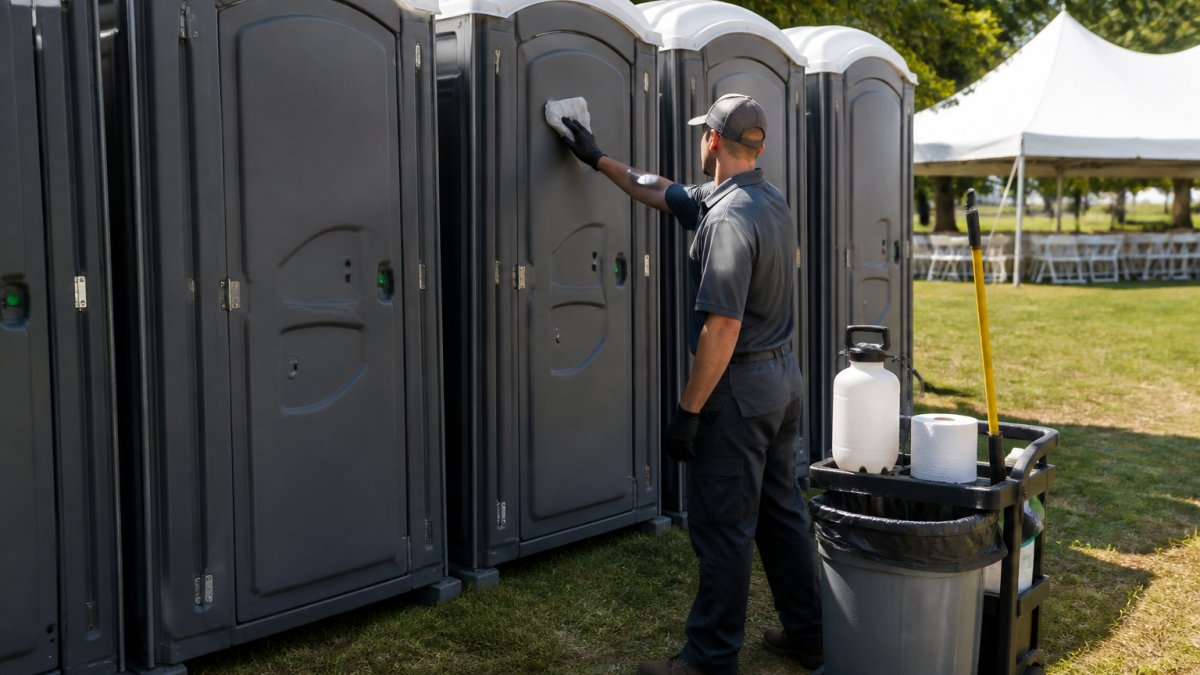
Spot cleaning happens daily too. Wipe down high-touch surfaces, the door handle, the lock, the sink faucet if your unit has one, with disinfectant spray or antibacterial wipes. Empty the trash bin if it's more than halfway full. These small tasks prevent odor buildup and keep the unit presentable.
If you notice a problem during daily inspection, a cracked seat, a broken door latch, a leak, document it and report it to your service provider immediately. Catching issues early prevents them from getting worse.
Weekly Deep Cleaning and Restocking
Weekly deep cleaning goes beyond spot cleaning. This is typically what your service provider does during scheduled visits, but understanding the process helps you recognize quality service.
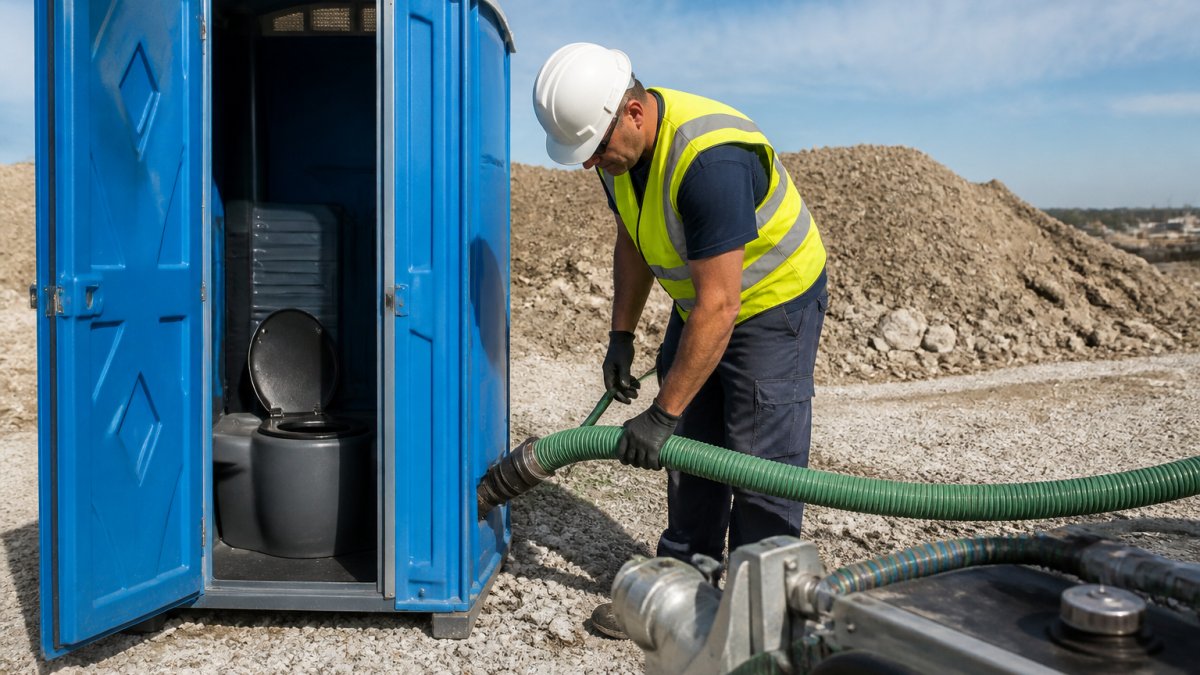
Professional cleaning includes pumping the waste tank, high-pressure washing the interior and exterior, disinfecting all surfaces with approved sanitizers, and replacing or refilling supplies. The toilet seat, urinal (if present), and floor get thorough attention.
Your crew should also do a weekly restocking check between service visits. Confirm that toilet paper is stocked adequately. Check hand sanitizer levels. Verify that any air freshener or deodorizer dispensers are working. If supplies are running low before the next scheduled service, request an interim supply delivery or plan a service visit sooner.
Portable Toilet Cleaning and Restocking: Your On-Site Responsibilities
Your team's daily and weekly responsibilities keep the unit functional between professional service calls. This isn't optional, it's the difference between a usable facility and one that deteriorates rapidly.
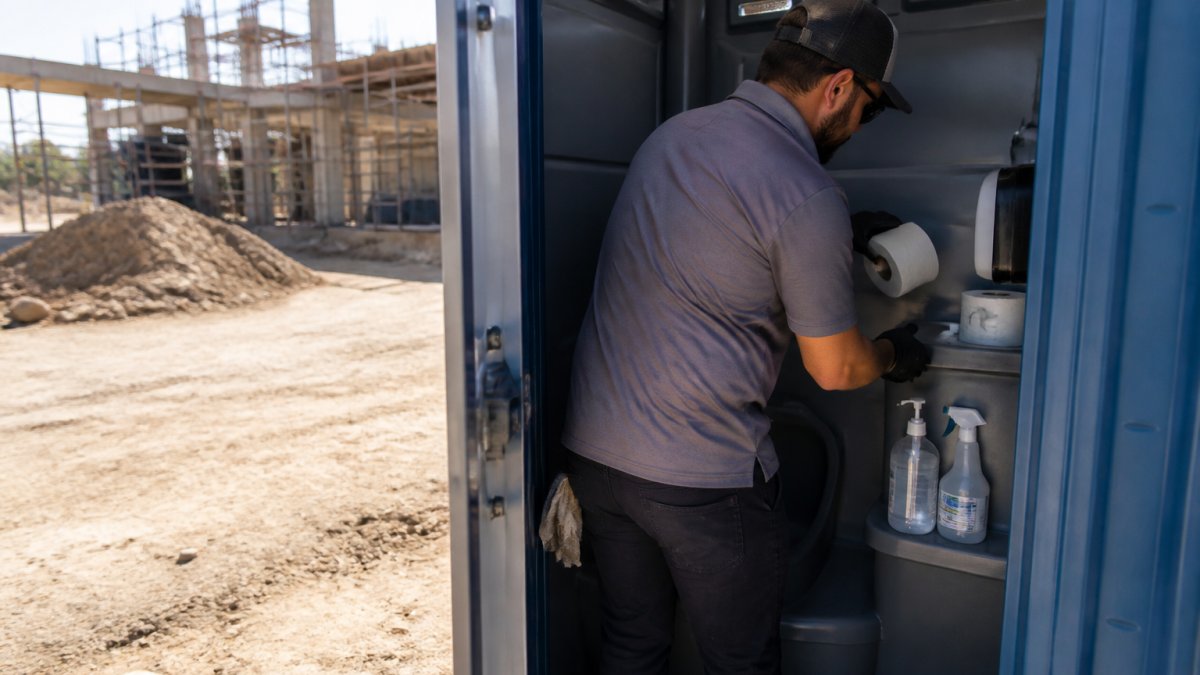
Restocking is straightforward. Toilet paper, hand soap, and hand sanitizer are the essentials. Most portable restroom rentals include initial stock, but ongoing supply is your responsibility unless you've negotiated otherwise with your provider.
High-touch surface cleaning prevents the spread of germs and reduces odor. The door handle, lock, and any grab bars should be wiped down daily with disinfectant.
Trash management matters. If your unit has a trash bin, empty it when it's full or at the end of each workday. Overflowing trash creates odor and attracts pests.
Document what you're doing. A simple checklist posted inside the unit, "Daily: wipe surfaces, check supplies, empty trash", reminds your crew and creates a record.
Building Your Portable Restroom Maintenance Checklist
A maintenance checklist is your operational blueprint. It specifies what gets checked, when, and by whom. Without one, tasks slip through cracks and problems accumulate.
Pre-Delivery Inspection
Before the unit arrives, walk the delivery site. Confirm the location is level and accessible. Check that the ground can support the unit's weight without sinking or shifting. Verify that the location is convenient for your crew but not in the main work area where it creates a bottleneck.
When the unit arrives, inspect it before signing off. Open the door and look inside. The interior should be clean and dry. Check that the seat is intact, the lock works, and toilet paper and hand sanitizer are stocked. Look for any visible cracks, damage, or signs of wear. If something is wrong, flag it immediately and request a replacement unit.
Document the unit's condition with photos if possible. This protects you if damage occurs during your rental period, you'll have proof it wasn't caused by your crew.
Weekly Service Checklist
Your weekly checklist should track:
- Tank pumping and waste removal
- Interior and exterior cleaning
- Surface disinfection
- Toilet paper and hand sanitizer restocking
- Any damage or repairs needed
- Odor control treatment application
Ask your service provider to initial or sign off on this checklist during each visit. This creates accountability and gives you a record of service history. If a problem develops, you can review the checklist to see when it was last addressed.
Monthly Review and Escalation
Once a month, step back and evaluate. Is the service frequency adequate? Are supplies lasting the full interval between service visits? Is the unit holding up physically, or are repairs needed?
If usage has increased, more workers on site, longer shifts, or unexpected demand, adjust your service schedule. Don't wait for a crisis. If the tank is filling faster than expected, move to more frequent service now.
If the unit is showing wear, cracks, loose hinges, fading, document it and request repairs or replacement. A minor issue now becomes a major problem later if ignored.
Seasonal and Site-Change Adjustments to Your Schedule
Long-term projects rarely stay static. Weather changes. Crew size fluctuates. Site conditions evolve. Your portable toilet maintenance schedule needs to adapt.
Cold weather affects waste tank performance. In freezing conditions, waste can solidify or freeze, making pumping difficult. If your project runs through winter, discuss cold-weather protocols with your service provider. Some providers use heated units or special additives for winter operation.
Hot weather increases odor and bacterial growth. Summer projects may need more frequent service or additional odor control treatments. Weekly service might shift to twice weekly if temperatures spike.
Crew size changes require adjustment too. If you're ramping up from ten workers to thirty, your service schedule needs to change immediately. Don't wait until the tank is overflowing. Contact your provider and increase frequency before demand exceeds capacity.
Site changes matter as well. If you're moving the unit to a new location within the project, verify the new spot is accessible and level.
Tracking Maintenance and Preventing Service Gaps
A maintenance log is your insurance against forgotten service dates and missed escalations. It doesn't need to be complicated, a simple spreadsheet or printed calendar works fine.
Track:
- Scheduled service dates
- Actual service dates (when the provider actually showed up)
- Any supplies restocked
- Problems reported and resolved
- Crew members responsible for daily checks
Review this log weekly. If a scheduled service date approaches and you haven't confirmed it with your provider, reach out. Gaps happen when communication breaks down. A quick call or email prevents surprises.
If your provider misses a scheduled service date, document it and follow up immediately. If you're working with a provider and service becomes inconsistent, that's a red flag worth addressing directly or switching providers.
Keep records for the duration of your project and beyond. If questions arise later about sanitation or site conditions, your maintenance log is documentation that you took the issue seriously.
A portable toilet maintenance schedule for long-term projects isn't just about keeping the unit clean, it's about keeping your site running.
Frequently Asked Questions
How often should a portable toilet be serviced on a long-term project?
Service frequency depends on workforce size and usage. Light-use sites (under 10 workers) typically need weekly service; medium-use sites (10-50 workers) need 2-3 times per week; high-use sites (50+ workers) need daily or every-other-day service. Your portable toilet maintenance schedule should adjust as site conditions change. Patriot Solutions can help you establish the right cadence based on your crew size and project timeline.
What should be included in a portable toilet maintenance checklist?
Your portable restroom maintenance checklist should cover daily inspections (supply levels, cleanliness, overflow signs), weekly deep cleaning and restocking (disinfection, high-touch surface sanitizing, waste tank pumping readiness), and monthly reviews of unit condition and usage trends. Document each service visit and flag any damage, leaks, or odor issues immediately. A written log prevents missed visits and creates accountability across your team.
How often should a porta potty be cleaned and restocked?
Daily spot cleaning and restocking of toilet paper and hand sanitizer keeps units presentable between service visits. Weekly deep cleaning with antibacterial spray and high-pressure washing removes buildup and odor. On high-traffic sites, you may need additional mid-week restocking. The portable toilet cleaning and restocking rhythm depends on your site's workforce and usage; Patriot Solutions adjusts your service schedule to match actual demand.
What do you do if a portable toilet is overflowing or not serviced on schedule?
First, stop use immediately and post a notice. Contact your service provider right away, delays in waste removal and tank servicing create health hazards and site shutdowns. Maintain a maintenance log with service dates and any issues. If your provider misses pickups or fails to respond, escalate to management and request a replacement unit. Patriot Solutions prioritizes on-time service to keep your project moving without interruption.