 how-to
How Long Does Construction Waste Management Take?
Table of Contents
- How Long Does Construction Waste Management Take? A Realistic Timeline
- Construction Waste Management Plan Requirements That Affect Your Timeline
- How to Calculate Construction Waste Volume Before You Order a Dumpster
- Roll-Off Dumpster Rental Duration: How Long You Actually Need One
- Permits, Regulatory Delays, and Disposal Facility Rules That Slow Things Down
- Step-by-Step Project Timeline Calculator for Debris Removal
- Frequently Asked Questions
Last Updated: September 16, 2026
How Long Does Construction Waste Management Take? A Realistic Timeline
Construction waste management typically takes one to four weeks for a residential renovation and four to twelve weeks for larger commercial builds, though permitting and disposal facility approvals can stretch either timeline. At Patriot Solutions, we provide essential sanitation services to site managers across Millard County.

Typical Timeframes by Project Size
Small renovations and household cleanups usually wrap up waste removal in one to two weeks. Mid-size commercial projects run three to six weeks. Large demolition jobs can take eight weeks or more once you account for material recovery and regulatory reporting.
| Project Type | Planning Phase | Active Hauling | Final Disposal & Reporting | Total Timeline |
|---|---|---|---|---|
| Backyard renovation | 2-3 days | 1 week | 2-3 days | 1.5-2 weeks |
| Residential demolition | 1 week | 2-3 weeks | 1 week | 4-5 weeks |
| Commercial buildout | 2-3 weeks | 4-8 weeks | 1-2 weeks | 7-13 weeks |
| Infrastructure project | 4-6 weeks | 8-16 weeks | 2-4 weeks | 14-26 weeks |
Construction Waste Management Plan Requirements That Affect Your Timeline
A construction waste management plan identifies the types and estimated quantities of debris your project will generate, plus your disposal and diversion methods. Many jurisdictions require one before issuing a demolition or building permit, and preparing it adds three to ten business days, but the real time cost is the review cycle, not the writing.
What the Plan Must Contain (and Which Items Cause Delays)
A complete plan typically includes:
- A waste stream analysis listing each material type (concrete, wood, drywall, metal, asphalt shingles, cardboard)
- Estimated quantities by weight or volume for each stream
- The disposal and recycling facilities you intend to use, by name and address
- Projected diversion rate if the project has sustainability or green-building goals
- Handling procedures for any hazardous or special waste (asbestos, lead paint, treated lumber, solvents)
- A named responsible party for on-site sorting and recordkeeping
Two items routinely add days. First, the facility list: reviewers check that each named facility is permitted to accept your materials, and one that doesn't accept, say, mixed drywall sends the plan back for correction. Second, the hazardous-waste section: a pre-1980 structure may require an environmental assessment or asbestos survey before the plan is accepted, and scheduling that survey is often the longest single item in the planning phase.
The Review Cycle Is Where the Days Go
Plan review is not a single event:
- Submittal, you file the plan with the permit application or as a separate attachment.
- Completeness check, the reviewer confirms every required field is present. Incomplete submittals are returned without substantive review, which restarts the clock.
- Technical review, the reviewer verifies facility eligibility, quantity estimates, and diversion math.
- Corrections and resubmittal, if anything is flagged, you correct and resubmit, and the review queue restarts.
- Approval and permit issuance, the plan is stamped and the underlying permit can be issued.
Each correction cycle commonly adds three to seven business days, so a plan flagged twice can consume three weeks before a single dumpster is ordered. This is the most under-reported delay in construction waste management, and why experienced site managers submit the plan as early as the design phase allows.
How to Compress the Plan Phase
- Call your intended disposal facilities before you write the plan. Confirm in writing that they accept your material mix and diversion requirements; naming a facility that doesn't is the most common cause of a correction cycle.
- Order any required environmental or asbestos survey first. It is a prerequisite for the hazardous-waste section and cannot be rushed by resubmitting paperwork.
- Over-document quantities. Reviewers rarely reject a plan for detail; they frequently reject one for vague estimates.
- Keep the facility list short and verified. One confirmed facility clears review faster than three unconfirmed options.
For reference on how the Environmental Protection Agency frames sustainable debris management, see EPA guidance on construction and demolition debris.
How Plan Requirements Change by Project Scale
The plan's time cost scales with project complexity, not just square footage:
| Project Scale | Typical Plan Complexity | Planning-Phase Time |
|---|---|---|
| Single-room renovation | Material list, one facility, no diversion goal | 2-4 business days |
| Whole-home renovation | Full waste stream analysis, 1-2 facilities, possible asbestos survey | 5-10 business days |
| Commercial buildout | Detailed quantities, diversion target, multiple facilities | 2-4 weeks |
| Demolition or infrastructure | Environmental assessment, hazardous-waste plan, phased facility schedule | 4-6 weeks |
The Unique Angle Most Guides Miss
The plan is not paperwork that happens before the timeline; it is the timeline's first phase, and its duration is set by review cycles you do not control. Treat it as a critical-path item with a two-to-six-week buffer for commercial work, and start it once your design is firm enough to estimate debris volume.
How to Calculate Construction Waste Volume Before You Order a Dumpster
Construction waste volume is calculated by estimating debris weight per square foot of project area, then converting that figure to cubic yards to match dumpster sizing. Getting this wrong is the fastest way to add a week of delays.
Here's the working method:
- Measure your project's square footage
- Multiply by a debris factor: light renovation (10-20 lb/sq ft), moderate demolition (60-100 lb/sq ft), heavy demolition (150+ lb/sq ft)
- Divide total weight by the density of your primary material (mixed debris averages 300-500 lb per cubic yard)
- Round up to the nearest standard dumpster size
Roll-Off Dumpster Rental Duration: How Long You Actually Need One
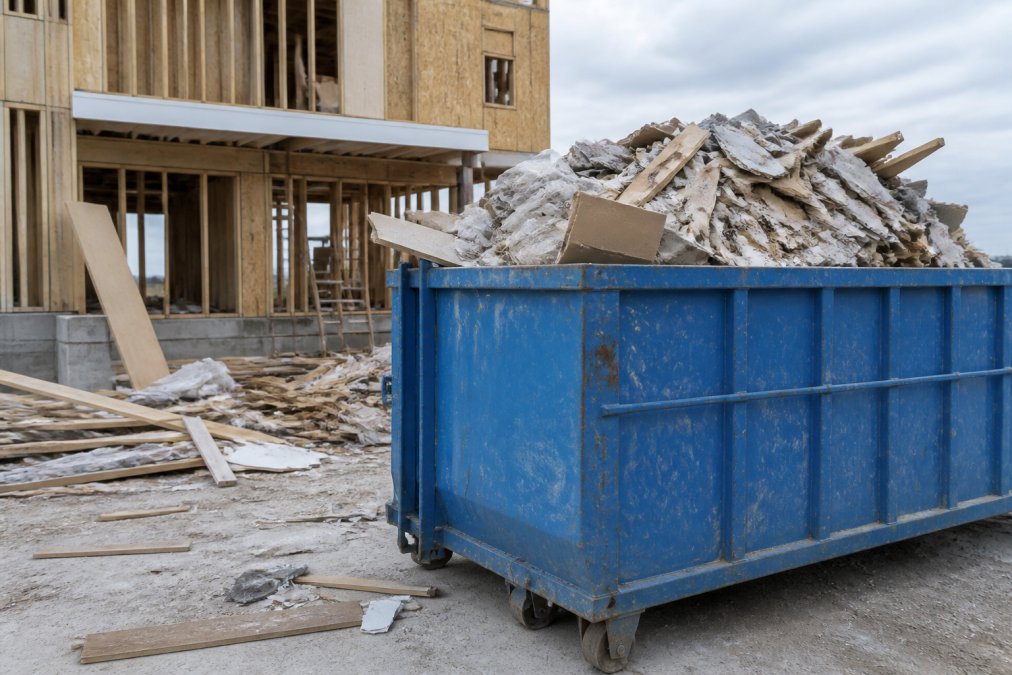
Standard roll-off dumpster rental duration runs seven to fourteen days, with most residential projects needing one to two weeks and commercial projects three to four weeks per dumpster. Extensions are usually available but billed daily.
Permits, Regulatory Delays, and Disposal Facility Rules That Slow Things Down
Permit processing time is the biggest variable in construction waste management, and the one most schedule estimates ignore. What's useful is knowing which bottlenecks add days, how many, and how to route around them.
1. Permit Backlog and Review Queue Position
Demolition and debris-disposal permits are reviewed in the order received, and queue depth varies by jurisdiction and season. Two patterns drive most of the variance:
- Seasonal load. Permit offices see application spikes in spring and early summer as construction season opens. A plan submitted in April can wait noticeably longer than the same plan submitted in January.
- Staffing and scope thresholds. Larger demolitions and any project touching regulated materials move to a different, slower review track than a simple residential teardown.
2. Inspection Scheduling
Many jurisdictions require an inspection before, during, or after debris removal, confirming hazardous materials were abated, or verifying that diversion was performed. Inspection scheduling is a separate queue from permit review and commonly adds 3-10 business days between request and visit. The trap is sequencing: requesting the inspection only after demolition is complete adds that wait to the back end instead of overlapping it with other work.
3. Waste Characterization and Load Rejection
Disposal facilities enforce waste characterization requirements, so you must document what is in each load before it arrives. Loads that fail get turned away, and you pay hauling twice, once out, once back. A rejected load typically adds one to three days while material is re-sorted, re-documented, and re-hauled.
The most common rejection triggers are:
- Hazardous materials mixed into general debris (paint, solvents, asbestos-containing material, treated lumber)
- Loads exceeding the facility's permitted material list
- Missing or incomplete characterization paperwork
- Contaminated recyclable streams (for example, drywall mixed with general trash)
4. Regulatory Reporting Deadlines
Regulatory oversight does not end at disposal. Many projects require reporting on diversion rates, disposal volumes, and material recovery outcomes, and some jurisdictions tie final permit closeout or certificate of occupancy to those reports. Reporting is fast with clean records, a few business days, but reconstructing disposal records after the fact takes far longer.
5. Facility Operating Constraints
Disposal and recycling facilities have their own clocks. Common constraints that add time:
- Limited hours or appointment-only drop-off for certain material streams
- Daily volume caps that push your haul to the next available slot
- Seasonal closures or reduced schedules at some recycling facilities
- Distance and turnaround time, a facility 90 minutes away effectively costs you a full day per haul once you account for loading, travel, and unloading
How These Delays Stack (and How to Overlap Them)
| Delay Factor | Typical Added Time | Can It Overlap? |
|---|---|---|
| Permit review | 5-20 business days | Partially, submit early, work design in parallel |
| Inspection scheduling | 3-10 business days | Yes, request before demolition completes |
| Load rejection | 1-3 days per incident | Preventable with pre-sorting |
| Reporting | 2-5 days if records are clean | Yes, collect tickets daily |
| Facility constraints | 1-3 days per haul | Yes, book slots in advance |
For details on federal requirements around hazardous waste identification, consult EPA hazardous waste identification guidance.
Step-by-Step Project Timeline Calculator for Debris Removal
Phase 1: Planning and Permitting
- Waste audit and volume calculation: 2-5 days
- Waste management plan preparation: 3-10 days
- Permit application and review: 5-20 business days
- Subtotal: 10-35 days
Phase 2: Equipment and Scheduling
- Dumpster delivery lead time: 1-3 days
- Site preparation for container placement: 1 day
- Subtotal: 2-4 days
Phase 3: Active Debris Removal
- On-site debris removal and sorting: 1-3 weeks for residential, 4-8 weeks for commercial
- Hauling and disposal trips: 1-2 days per load
- Subtotal: 7-60 days
Phase 4: Closeout
- Final disposal and facility documentation: 2-5 days
- Regulatory reporting submission: 3-10 days
- Subtotal: 5-15 days
For broader context on national debris generation and management practices, see EPA construction and demolition debris data.
Frequently Asked Questions
Does waste management take construction waste?
Yes, most construction waste management services accept common debris like wood, drywall, concrete, roofing materials, and packaging. However, hazardous materials such as asbestos, lead paint, and certain chemicals require special handling and cannot go in a standard roll-off dumpster. Before you order, confirm what your hauler accepts and how they handle special waste. Patriot Solutions walks customers through acceptable materials so you avoid overage fees and compliance issues.
How long does it take to clear a construction site?
Site clearing typically takes one to three days for small residential projects and up to two weeks for larger commercial sites, depending on debris volume and accessibility. Factors include whether you need multiple dumpster swaps, permit approvals for hauling, and disposal facility hours. Scheduling pickups in advance and calculating waste volume accurately can cut a day or two off the process. Rural locations may add travel time to the estimate.
Do I need a permit for construction waste disposal?
Permit requirements vary by state, county, and project type. Many jurisdictions require a waste management plan as part of the building permit application, especially for demolition or renovation projects above a certain square footage. Some areas also require separate permits for hauling debris on public roads. Check with your local building department early because permit processing can add one to four weeks to your timeline. Your hauler can often help you understand local requirements.
What factors influence the duration of debris removal?
The biggest factors are total waste volume, number of dumpster swaps needed, permit processing time, disposal facility distance, and whether hazardous materials require separate handling. Weather and site access also matter. A project generating 10 cubic yards of debris with one dumpster and a clear permit takes far less time than a demolition producing 40 cubic yards across multiple hauls with regulatory reviews. Planning your construction waste management plan requirements upfront prevents most delays.