 how-to
How to Choose a Portable Toilet Rental Company
Table of Contents
- Assess Your Event or Project Requirements
- Estimate How Many Portable Toilets You Need
- Key Questions to Ask a Portable Toilet Rental Company
- Portable Toilet Rental Checklist for Vendor Comparison
- Portable Restroom Service Frequency and Maintenance
- Understanding Portable Toilet Rental Cost and Pricing
- Verify Service Reliability, Permits, and Local Coverage
- Frequently Asked Questions
Last Updated: October 13, 2026
Assess Your Event or Project Requirements
The first step in choosing a portable toilet rental company is understanding what your project demands.
Define the scope: how many people will use the facilities, how long the project runs, and the setting.
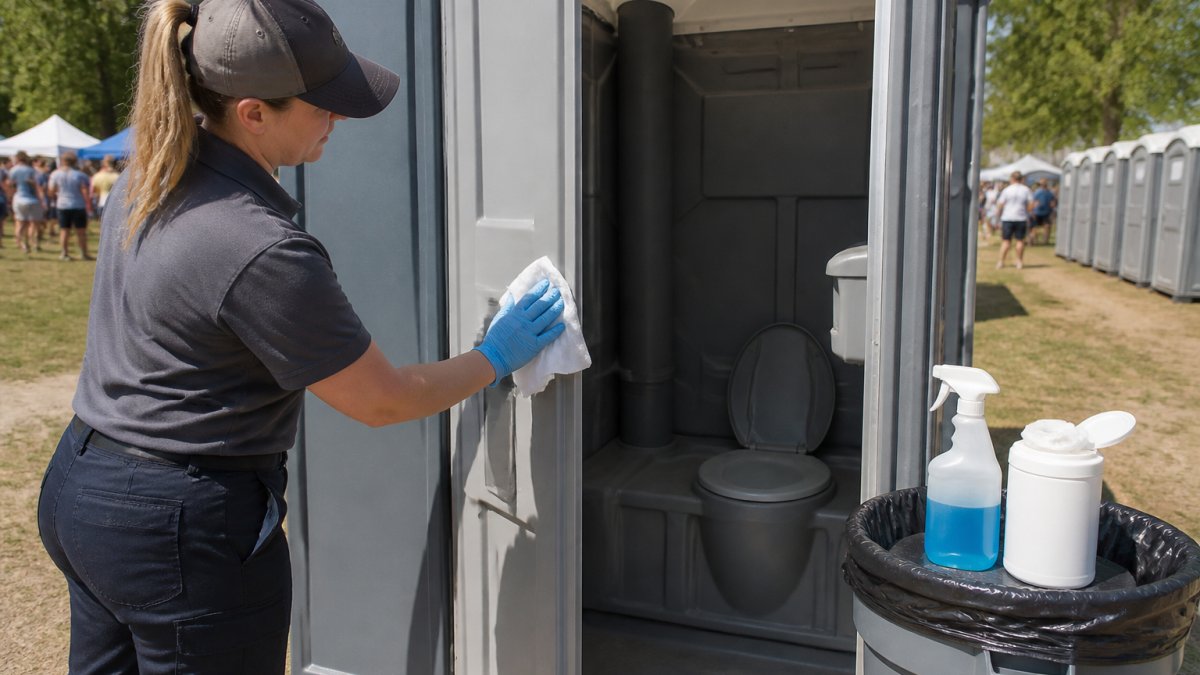
Consider the use case: farms have seasonal demand, construction sites need heavy-duty units, weddings want upscale equipment, and festivals need units positioned for easy access.
Document site conditions too: ground slope, truck access, and weather concerns like mud, snow, or extreme heat. These determine placement and servicing logistics.
Estimate How Many Portable Toilets You Need
Getting the unit count right prevents too few facilities (unhappy attendees or workers) or too many (wasted money).
For events, a common rule is one portable toilet per 50-75 people: a 75-person wedding needs one or two units, a 500-person festival six to eight.
For construction sites, crews of 10-20 people typically need one standard unit; sites with 50+ workers often need two to three units plus handwashing options.
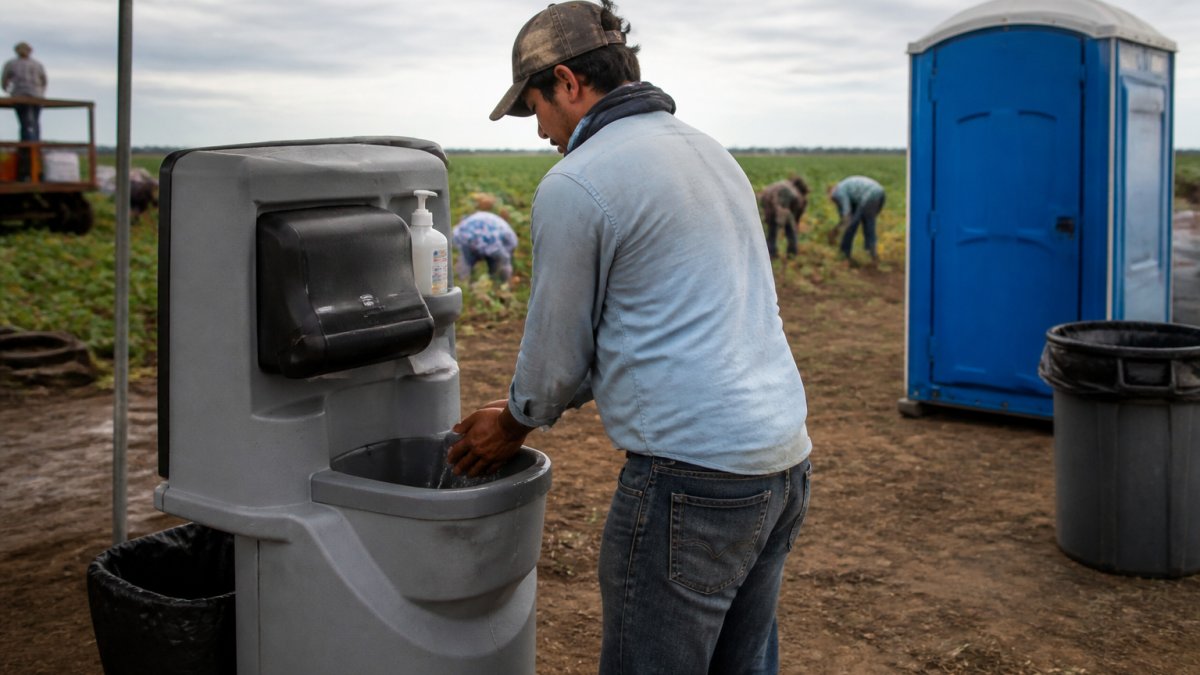
Agricultural operations face seasonal swings: a farm with 30 harvest workers might need three units, and none in the off-season.
Ask your rental operator for a recommendation based on your numbers.
Key Questions to Ask a Portable Toilet Rental Company
Before signing, ask these questions to separate reliable operators from those that cut corners.
Service and Maintenance:
- How often are units serviced, and what does servicing include (waste removal, cleaning, restocking)?
- How quickly can you respond to emergency maintenance or a mid-project malfunction?
Delivery and Placement:
- Can you deliver to my location, and how soon after ordering?
- Do you handle placement, and are there terrain or access limitations?
Equipment Quality:
- What condition are your portable restrooms in, and are they regularly cleaned and inspected?
- Do you offer upgraded models with handwashing stations or luxury trailers?
Pricing and Terms:
- What's included in the rental fee, and are delivery, pickup, or extra servicing charged separately?
- What happens if the project runs long, do you charge overage fees, and what triggers them?
Reliability and Coverage:
- How long have you operated in this area, and what's your on-time delivery record?
- Do you have local references from construction managers or event planners, and are you available weekends and holidays?
Permits and Compliance:
- Do you handle permits, and are your units compliant with local health and safety codes?
- Do you carry liability insurance?
These questions reveal whether a portable toilet rental company understands your needs and takes responsibility for reliability.
Portable Toilet Rental Checklist for Vendor Comparison
Most checklists stop at "clean or not clean," which won't protect you from a broker who resells your job or a contract that lets a provider skip service visits. Use the checklist below and keep every answer in writing.
Quote and Fee Comparison
Ask each provider for an itemized quote, not a lump sum. Line items to require:
| Line Item | Company A | Company B | Company C |
|---|---|---|---|
| Base rental fee per unit | $____ | $____ | $____ |
| Delivery charge (each way) | $____ | $____ | $____ |
| Pickup charge | $____ | $____ | $____ |
| Standard service visits included | ___ | ___ | ___ |
| Cost per extra service visit | $____ | $____ | $____ |
| Handwash station / upgrade fee | $____ | $____ | $____ |
| Overage fee per extra day | $____ | $____ | $____ |
| Fuel or mileage surcharge | $____ | $____ | $____ |
| Damage / missing-equipment fee | $____ | $____ | $____ |
| Cancellation window and fee | ___ days / $____ | ___ days / $____ | ___ days / $____ |
| Sales tax applied | Yes / No | Yes / No | Yes / No |
| Total quoted price | $____ | $____ | $____ |
If a provider won't put these numbers in writing before you sign, treat that as a disqualifier. A quote listing only a base fee is an opening bid, not a quote.
Service-Level Verification
Vague promises like "we service regularly" mean nothing. Get specifics:
- Cleaning frequency: How many service visits per week, and on which days?
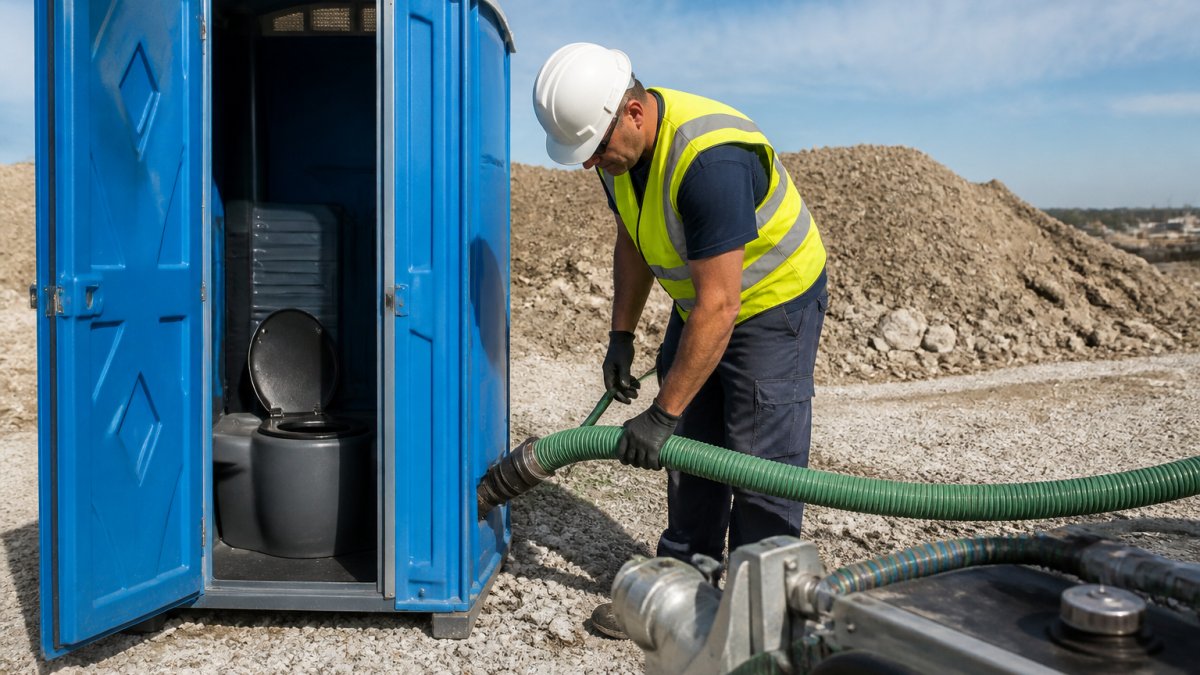
- What a service visit includes: Tank pump-out, interior wash, deodorizer, toilet paper, hand sanitizer, structural check.
- Emergency response window: If a unit fails on a Saturday, how many hours until someone is on site?
- Missed-service remedy: If a scheduled visit is skipped, is the visit credited, refunded, or rescheduled within 24 hours?
- After-hours contact: Is there a live phone number, or only a voicemail box?
- Proof of service: Will the driver leave a service tag or send a timestamped photo?
Contract and Broker Due Diligence
This is where most buyers get burned: the company that answers the phone isn't necessarily the one that shows up.
- Who is the named service operator on the contract? If it is not the company you are talking to, you are working with a broker.
- Will any part of the work be subcontracted? If yes, ask for the subcontractor's name and confirm they carry their own liability insurance.
- Where is the nearest yard or staging lot? A physical location within your service radius is a strong signal of local capacity.
- How many trucks and units does the provider own? A broker with no fleet cannot guarantee a delivery window during peak season.
- What are the termination terms? Can you cancel mid-project, and what is the notice period?
- What is the dispute process? Is there a written procedure for billing disagreements?
Insurance, Permits, and Compliance
- Certificate of insurance: Request a COI naming you or your organization as additional insured. Verify the policy is current.
- Placement permits: Confirm whether the provider pulls permits or whether that is your responsibility. In many jurisdictions, placement on public right-of-way requires a permit.
- Accessibility requirements: If your event is open to the public, ask whether the provider offers at least one ADA-compliant unit and how it will be placed.
- Health and safety codes: Ask the provider to confirm units meet applicable local sanitation requirements.
Reliability and Coverage
- Years operating in this service area.
- Three local references you can call, construction managers, event planners, or facility managers.
- On-time delivery record during the same season as your project.
- Weekend and holiday availability.
- Scalability: Can they add units mid-project, and at what lead time?
Fill this out for each provider. It converts sales talk into comparable facts and makes the final decision obvious.
Portable Restroom Service Frequency and Maintenance
Service frequency determines whether portable toilets stay sanitary, especially on longer projects.
Short events under 24 hours may need only pre-event cleaning and post-event pickup.
Ask your portable toilet rental company what standard service includes.
Some operators charge extra for additional services. Know what those are upfront. A company that surprises you with overage fees mid-project isn't reliable.
For projects longer than three weeks, confirm the service schedule in writing.
Weather affects service too. Heavy rain can prevent access to remote sites. Snow can delay delivery.
Understanding Portable Toilet Rental Cost and Pricing
Pricing varies by unit type, rental duration, distance from the provider's yard, and service frequency, but a fair quote follows a consistent structure. Knowing it lets you compare apples to apples.
What a Complete Quote Should Include
Ask every provider to break the quote into these lines:
- Base rental fee per unit, per rental period (daily, weekly, or monthly).
- Delivery and pickup, often charged each way, and often higher for rural or difficult-access sites.
- Service visits, either bundled into the base fee or billed per visit. Confirm which.
- Supplies, toilet paper, hand sanitizer, deodorizer. Usually included, but confirm.
- Upgrades, handwash stations, hand-sanitizer stands, ADA-compliant units, restroom trailers, lighting.
- Overage fees, the per-day or per-unit charge if your project runs long or you add equipment mid-rental.
- Fuel or mileage surcharge, common on rural deliveries; ask whether it is fixed or variable.
- Damage or missing-equipment fee, what counts as damage, and what the replacement cost is.
- Cancellation terms, how many days' notice before a fee applies, and what the fee is.
- Sales tax, confirm whether the quoted number includes it.
Total Cost of Ownership, Not Just Sticker Price
A lower base fee can cost more overall. Provider A quotes a low base fee but charges separately for delivery, pickup, and every service visit, so add-ons exceed the base fee by the end of a three-week project. Provider B quotes a higher base fee that bundles delivery, pickup, and weekly service, and the final invoice matches the quote.
Compare quotes by calculating the all-in cost for your exact project length and service schedule, not the headline number:
(Base fee × units × rental periods) + delivery + pickup + (service visits × cost per visit) + upgrades + estimated overage = total project cost
Fee Traps to Ask About Before You Sign
- Overage fees: "If my project runs two weeks longer, what is the total added cost?"
- Mid-project additions: "If I need one more unit next Tuesday, what is the cost and lead time?"
- Early pickup: "If I finish early, do I still pay for the full rental period?"
- Access failure: "If your truck cannot reach the site on delivery day, is there a dry-run fee?"
- Damage: "What is the replacement cost for a unit that is tipped over or vandalized?"
- Cancellation: "What is the cutoff for a full refund, and what is the fee after that?"
Why the Cheapest Quote Is Rarely the Best Value
The lowest bid usually reflects fewer service visits, older equipment, or a broker subcontracting to the lowest-cost hauler, each shows up later as complaints, emergency calls, or a mid-project invoice exceeding the original quote. A provider priced in the middle of your three quotes, with a complete itemized quote and verifiable local references, is typically safer.
A Quote-Comparison Checklist
Before you commit, confirm each provider has given you:
- Itemized quote with every line above filled in
- Written service schedule with days of the week
- Written overage, damage, and cancellation terms
- Confirmation of who pulls permits
- Certificate of insurance on file
- Three local references contacted
- Total all-in cost for your project length
If any box is blank, you don't yet have enough information to compare providers fairly.
Verify Service Reliability, Permits, and Local Coverage
Before finalizing your choice, verify that a portable toilet rental company actually serves your location and operates reliably.
Call their main office and ask if they service your area.
Ask about permit requirements. In many jurisdictions, portable toilets at events or construction sites require permits.
Verify insurance.
Check references. Ask for three recent local customers and call them directly:
- Did equipment arrive on time and in good condition?
- Did service visits happen as scheduled?
- Were there unexpected issues, and would you rent from them again?
A reliable portable toilet rental company has customers willing to recommend them. Reluctant or hard-to-get references are a warning sign.
Look for a brick-and-mortar presence.
Finally, ask about peak-season track record.
Frequently Asked Questions
What should I ask a portable toilet rental company before booking?
Ask about service frequency, delivery and pickup times, equipment types available, whether they provide handwashing stations, their response time for emergency service calls, insurance and liability coverage, and what happens if equipment fails during your rental period. Request references from other construction managers or event organizers in your area, and confirm they serve your specific location. Verify their pricing includes all fees upfront, no surprise overage charges.
How often should a portable toilet be serviced during a rental?
Standard service frequency depends on usage. Most providers recommend weekly servicing for typical events or small projects with 50-100 attendees or workers. High-traffic sites or large events may need twice-weekly or daily servicing. Ask your vendor to assess your specific situation and outline a cleaning schedule in writing. Regular servicing prevents odor, maintains hygiene, and ensures waste tanks don't overflow, critical for both comfort and compliance.
How do I know if a portable toilet rental company is reliable?
Check whether they have a brick-and-mortar location in your area, verify their response time for service calls, and ask for references from recent customers. Confirm they maintain a consistent schedule and have backup equipment if a unit fails. Request their cancellation and emergency service policies in writing. A reliable provider will give you a direct contact person, provide clear communication, and honor their pickup and delivery commitments without delays.
What factors affect portable toilet rental cost?
Rental cost depends on the number of units, rental duration, toilet type (standard vs. accessible), delivery distance, service frequency, and whether you need extras like handwashing stations or luxury restroom trailers. Ask for an itemized quote that breaks down each fee. Pricing varies by vendor and region, so request quotes from multiple providers and compare total cost over your rental period, not just per-unit rates.