 how-to
How to Hide Portable Toilets at Outdoor Weddings
Table of Contents
- Why Hiding Portable Toilets Matters for Guest Experience
- Step 1: Choose the Right Location and Create a Site Map
- Step 2: Install Physical Barriers and Privacy Screens
- Step 3: Add Camouflage With Greenery and Floral Arrangements
- Step 4: Upgrade to Luxury Restroom Trailers
- Step 5: Enhance Interior Aesthetics and Control Scent
- Step 6: Set Up Wayfinding Signage and Outdoor Wedding Bathroom Etiquette
- Step 7: Determine How Many Porta Potties for 100 Guests
- What Most Hosts Get Wrong
- Frequently Asked Questions
Last Updated: October 3, 2026
Why Hiding Portable Toilets Matters for Guest Experience
A portable restroom sitting in plain view can undo months of planning.
The good news: when you hide portable toilets at outdoor weddings, it takes planning, not a big budget. With the right layout, barriers, and greenery, most units disappear into the venue itself.
This guide walks through seven steps for planning outdoor facilities. We cover placement, privacy screens, decor, and the logistics most checklists skip, like servicing access and ADA compliance.
Step 1: Choose the Right Location and Create a Site Map
Start with a site map before you buy or rent anything. A simple sketch of the venue shows where guests walk, eat, and dance, and it reveals the best spot for restrooms.
Mark these on your map:
- Ceremony seating and reception tables
- Food and bar stations
- Parking and the entry path
Then pick a restroom spot that sits downwind of the dining area. Odors travel, and a light breeze can carry them straight across the buffet.
Distance, Privacy, and Servicing Access
Aim for a restroom location roughly 200 to 300 feet from the reception. That distance keeps units out of sight while staying walkable for guests in dress shoes.
Privacy matters too. Place units behind a barn, hedge, or slope so they face away from the party. Keep a separate path for service trucks so pump-out crews never cross the guest area.
Step 2: Install Physical Barriers and Privacy Screens
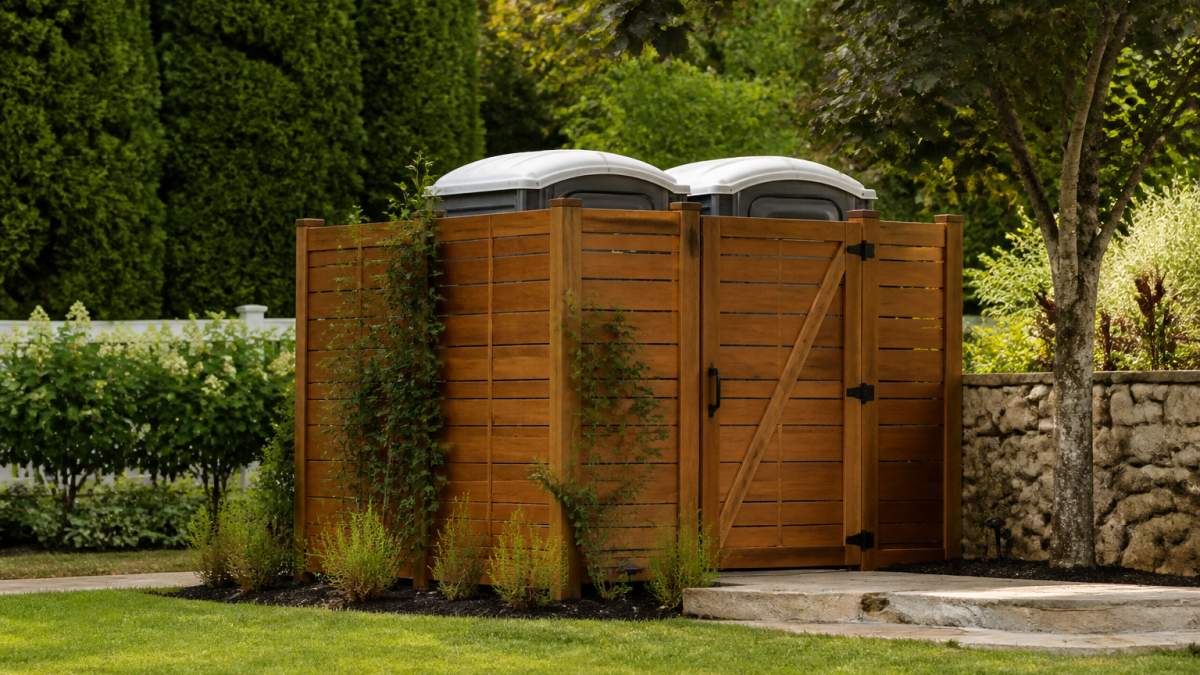
Physical barriers do the heavy lifting when you hide portable toilets. A solid screen blocks sight lines, adds style, and gives guests a sense of privacy.
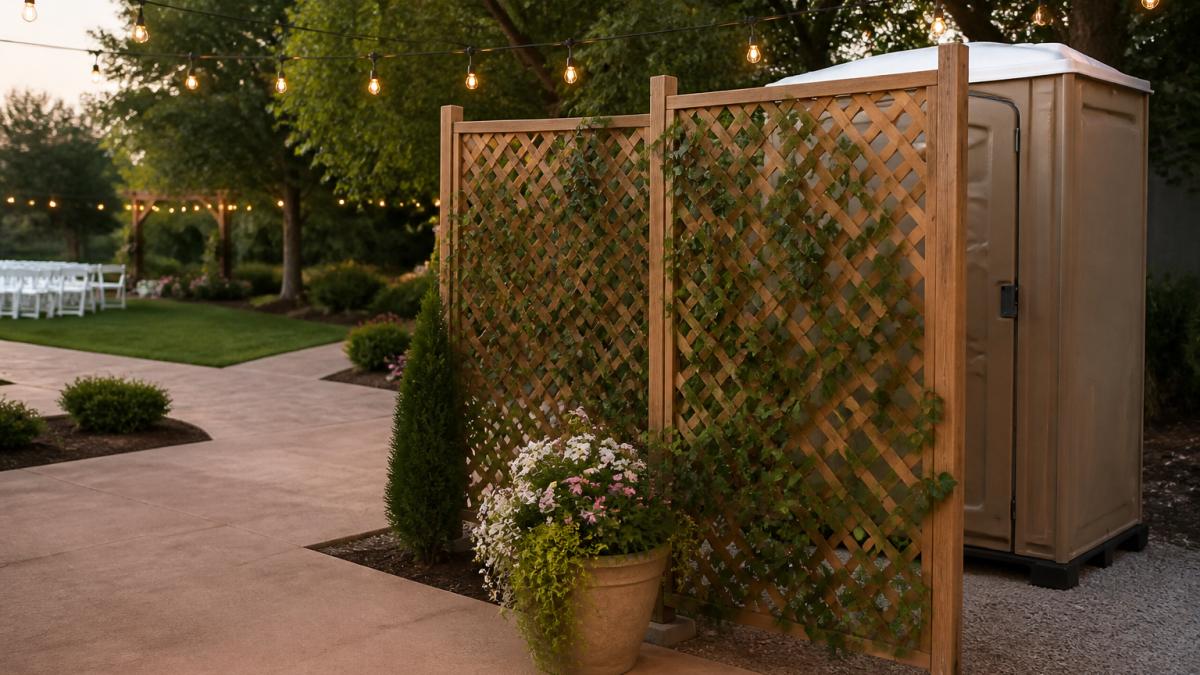
Lattice Fencing, Bamboo Mats, and Paneling Options
Different barriers fit different venues and budgets. Here is how the common options compare:
| Barrier Type | Best For | Setup Effort | Weather Resistance |
|---|---|---|---|
| Lattice fencing | Rustic and vineyard weddings | Moderate | Good with sealing |
| Bamboo mats | Quick, low-cost coverage | Low | Fair, needs backing |
| Wood paneling | Upscale, formal events | High | Excellent |
| Fabric draping | Fast decor integration | Low | Poor in wind |
Lattice fencing is a good pick for most outdoor weddings. It looks intentional, supports climbing vines, and stands up to a full day outside.
Bamboo mats work well as a fast, budget-friendly layer. Attach them to a frame so wind does not pull them loose.
Weather-proofing tip: Anchor every panel with stakes or weights. A screen that tips over mid-reception draws more attention than the restroom ever would.
Step 3: Add Camouflage With Greenery and Floral Arrangements
Greenery turns a plain barrier into part of the decor. Potted plants, hanging baskets, and floral arrangements soften hard edges and blend the restroom area into the venue.
Use these to cover gaps and corners:
- Tall potted grasses along the base of screens
- Climbing vines on lattice panels
- Hanging baskets on shepherd's hooks
Match the plants to your wedding palette. A rustic wedding with wildflowers calls for loose, natural groupings. A formal event looks better with structured planters and neat rows.
Step 4: Upgrade to Luxury Restroom Trailers
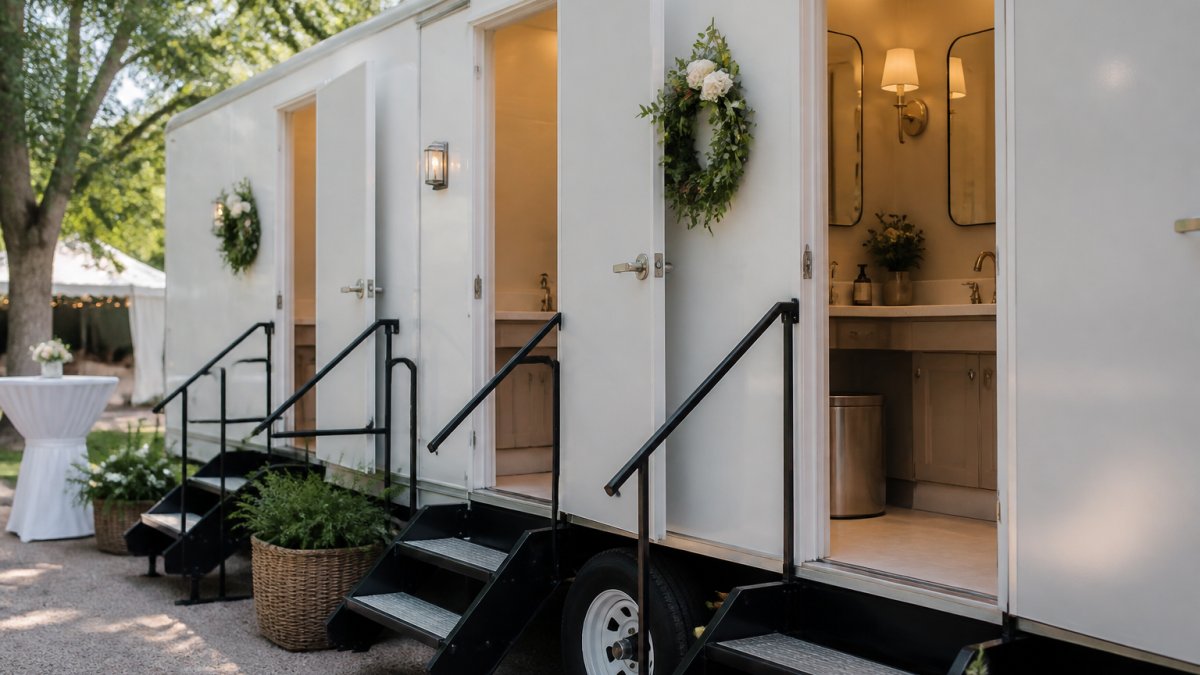
A luxury restroom trailer solves the hiding problem from the inside out. These units look like a small building, not a plastic box, so they blend into the venue with far less screening.
Trailers also change the guest experience. They offer flushing toilets, running water, mirrors, and climate control. Guests often mistake them for a permanent venue building.
For upscale events, a restroom trailer is worth the upgrade. You spend less on camouflage because the unit already looks the part.
Step 5: Enhance Interior Aesthetics and Control Scent
What guests see inside the unit matters as much as the outside. A clean interior with good lighting and scent control keeps the experience positive.
Simple upgrades that make a difference:
- Add ambient lighting or battery candles inside
- Place a small vase of flowers on the counter
- Stock hand sanitizer and quality soap
Scent control is the detail most hosts forget. Heat and heavy use make odors worse, so refresh the unit during the event if possible.
Step 6: Set Up Wayfinding Signage and Outdoor Wedding Bathroom Etiquette
Guests need to find the restroom without asking. Clear wayfinding signage guides them there and keeps the area tidy.
Good signage is simple:
- Use one sign style across the venue
- Point the way with arrows, not vague labels
- Place a sign at the main path junction
Outdoor wedding bathroom etiquette also matters. A few small touches keep things running smoothly. Add a basket of essentials inside, keep the path lit after dark, and post a small note asking guests to keep the space clean.
Step 7: Determine How Many Porta Potties for 100 Guests
Sizing the order is where aesthetics meet logistics. A common rule of thumb is one restroom unit per 50 guests for a four-hour event, so a 100-guest wedding needs at least two standard units.
Adjust the count for these factors:
- Events longer than four hours need more units (add roughly one unit per 50 guests for each additional two hours)
- Alcohol service increases restroom use, often by 20 to 30 percent
- Hot weather raises demand for both restrooms and hand-wash stations
For a 100-guest wedding with a bar and a five-hour reception, plan on three to four standard units plus one ADA-compliant unit, and add a hand-wash station near the food area.
Hiding Units Without Blocking Wheelchair Access
This is the step most guides skip. The Americans with Disabilities Act (ADA) sets accessibility expectations that apply to public accommodations, and many venues and rental contracts extend those standards to event restrooms. Even when a private backyard reception is not strictly covered, guests using wheelchairs, walkers, or canes still need a usable path, and a hidden restroom that fails that test is worse than an ugly one in plain sight.
Plan for these minimums when you place and screen the ADA unit:
- A firm, stable, slip-resistant surface from the guest path to the door, no loose gravel, mulch, or soft turf
- A route at least 36 inches wide, with 60 inches of turning space in front of the door
- A threshold no higher than about half an inch, with a ramp or beveled edge if the unit sits on a platform
How to Disguise an Accessible Unit Without Hiding the Path
The trick is to hide the unit, not the route to it. Keep the screening panels and greenery on the sides and rear of the ADA unit, and leave the front approach open and visible from the main guest path.
Signage matters more for the accessible unit than any other. Post a directional sign at the main path junction and a second sign at the unit itself, both in high-contrast lettering.
Skipping the ADA-compliant unit is a common mistake. At least one accessible restroom should be available, and it needs a clear, firm path to reach it. Confirm the path surface and width with your rental provider before the units are delivered.
Ask your rental company whether the ADA unit can be delivered first and placed on a plywood or matting pad.
What Most Hosts Get Wrong
The biggest mistake is treating restroom planning as an afterthought. Couples book the venue and the caterer first, then scramble for sanitation two weeks out. Plan restrooms at the same time you build the site map so you can match units to the venue, coordinate with vendors, and screen the area properly.
Vendor Coordination: The Step That Saves the Disguise
A beautiful screen is worthless if the pump-out crew has to drag a hose through the reception to reach the unit. The fix is a short, specific conversation with your rental provider before the layout is final. Ask these questions:
- How far can the service hose reach from the truck to the unit? Most standard hoses run 50 to 100 feet, and longer runs may need a transfer pump.
- Which side of the unit does the service port face? It should face the service path, not the guest area.
- What time will servicing happen? Mid-reception pump-outs are disruptive; schedule them before guests arrive or after the last dance.
Once you have those answers, design the disguise around the service route. A removable panel, a gate section, or a gap in the hedge lets the crew work without dismantling your decor. Tell your florist and lighting crew where the restrooms and service path sit so they do not route cables, place planters, or hang string lights across the access route.
Weather-Proofing the Disguise
Screens and wraps that look perfect at 2 p.m. can be flat on the ground by 8 p.m. Anchor every panel with stakes, sandbags, or weighted bases, and choose materials that tolerate wind and rain. Lattice and wood paneling hold up well; lightweight fabric draping does not. If rain is in the forecast, set the units on a gravel or matting pad so the approach does not turn to mud, and check that the ADA path stays firm and passable.
Budget: DIY vs. Professional Installation
Most couples fall into one of two patterns. A DIY approach uses rented or purchased lattice, bamboo, or fabric, plus potted plants and string lights, and typically costs a few hundred dollars in materials and a weekend of setup time.
Working with a local provider makes this easier. A good rental partner will help you size the order, plan the layout, confirm the service path, and keep the units serviced through the event.
Frequently Asked Questions
How do you make portable toilets look better at a wedding?
Start with a privacy screen made from lattice fencing, bamboo mats, or wooden paneling to block the units from view. Add potted greenery, floral arrangements, or sheer fabric draping to soften the look. String lights or lanterns around the enclosure help it blend with your decor. For the biggest visual upgrade, rent luxury restroom trailers with flushing toilets and finished interiors. These steps turn a basic portable toilet into something that fits your outdoor wedding venue.
Where should portable toilets be placed at an outdoor wedding?
Place them 100 to 200 feet from the reception area, far enough for privacy and odor control but close enough that guests can walk there easily. Position them downwind of dining and dancing areas. Make sure the spot allows servicing access so pump trucks can reach the units without crossing the guest area. A site map given to your rental provider helps confirm the placement works before the event day.
How many porta potties do I need for 100 guests?
For a 4-hour wedding reception with 100 guests, plan for at least 2 to 3 standard units. If alcohol is served, add one more unit. When you factor in the bridal party getting ready on-site and vendor staff, 3 to 4 units covers most outdoor weddings. Luxury restroom trailers with multiple stalls can serve the same crowd with fewer individual units, and they offer a more comfortable guest experience.
Can you decorate portable restrooms for a wedding?
Yes, and it makes a noticeable difference. Drape fabric or burlap around the exterior, add a small floral arrangement on a shelf or hook, and place a basket of essentials like hand sanitizer, lotion, and mints inside. Battery-operated candles or small LED lights improve the ambiance. For a rustic wedding, wood paneling and greenery work well. Just avoid anything that blocks vents or doors, and check with your rental provider before attaching items to the unit.
Planning an outdoor wedding means juggling a dozen details at once, and sanitation should not be the one that slips. Patriot Solutions offers clean portable restrooms and luxury restroom trailers with fast delivery and dependable local service for events across the Delta area. Our team helps you choose the right unit count, plan servicing access, and keep everything running smoothly from setup to teardown. Get started with Patriot Solutions and give your guests facilities they will never notice.