 how-to
Party Portable Toilet Rental: What to Consider
Table of Contents
- How Many Porta Potties for 100 Guests and Other Sizing Rules
- Portable Toilet Placement Best Practices for Your Event Footprint
- ADA Compliant Portable Restroom Requirements You Cannot Skip
- Rental Duration, Service Frequency, and Waste Disposal Fees
- Permits, Local Ordinances, and Weather-Proofing Your Setup
- Aesthetic Integration and Post-Event Cleanup Checklist
- Frequently Asked Questions
Last Updated: September 22, 2026
How Many Porta Potties for 100 Guests and Other Sizing Rules
The standard rule for portable toilet rental is one unit for every 50 guests at a four-hour event. That means 100 guests need at least two standard units, though most planners add a third to handle peak usage. The exact number depends on your guest count, event length, and whether alcohol is served.
This guide from Patriot Solutions covers what to consider when renting a portable toilet for a party, from sizing math to cleanup. Getting the count wrong is the mistake we see most often. Too few units means long lines and unhappy guests. Too many means wasted money.
The Standard Formula and When to Add More
Start with one unit per 50 guests for events under four hours. Then adjust:
- Add one unit for every two extra hours
- Add one unit if alcohol is served
- Add one unit for events with meals
- Add one unit for every 25 guests beyond 200
A 100-guest wedding with a bar and dinner typically needs three to four units.
Matching Unit Capacity to Peak Usage
Portable toilets handle roughly 50 uses before needing service. Most of those uses happen in short bursts, like during cocktail hour or right after dinner. A common mistake is counting total uses instead of peak-hour demand. If 60 people all need a restroom within 30 minutes, two units will not keep up.
Portable Toilet Placement Best Practices for Your Event Footprint
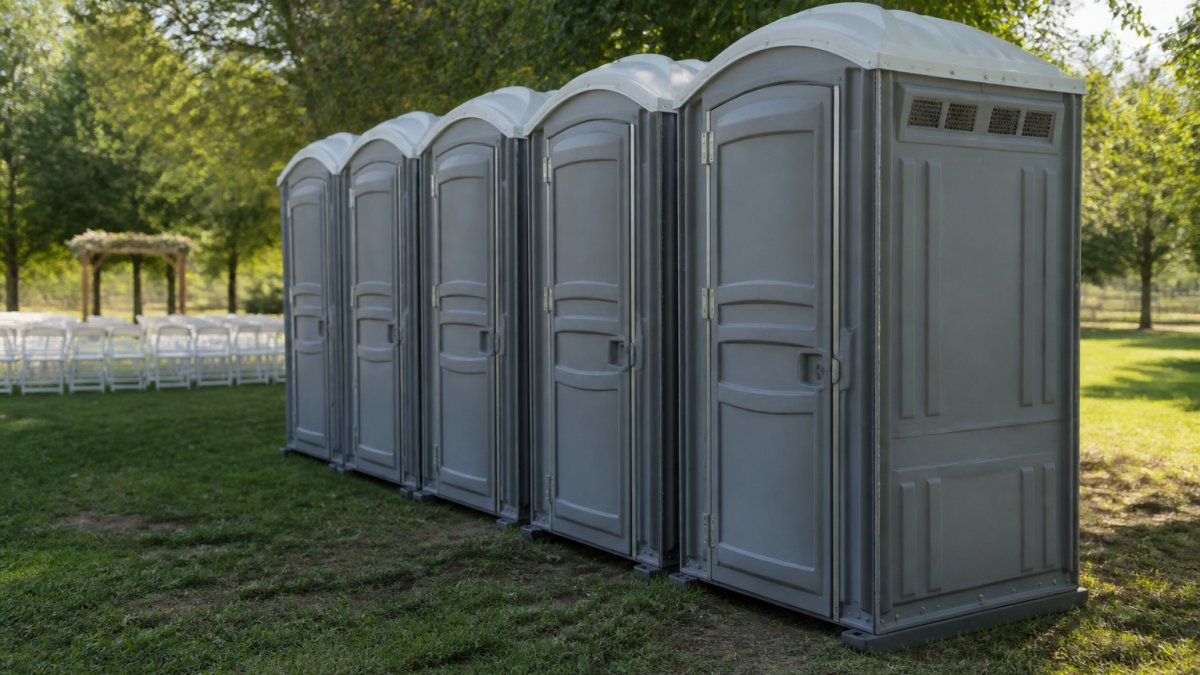
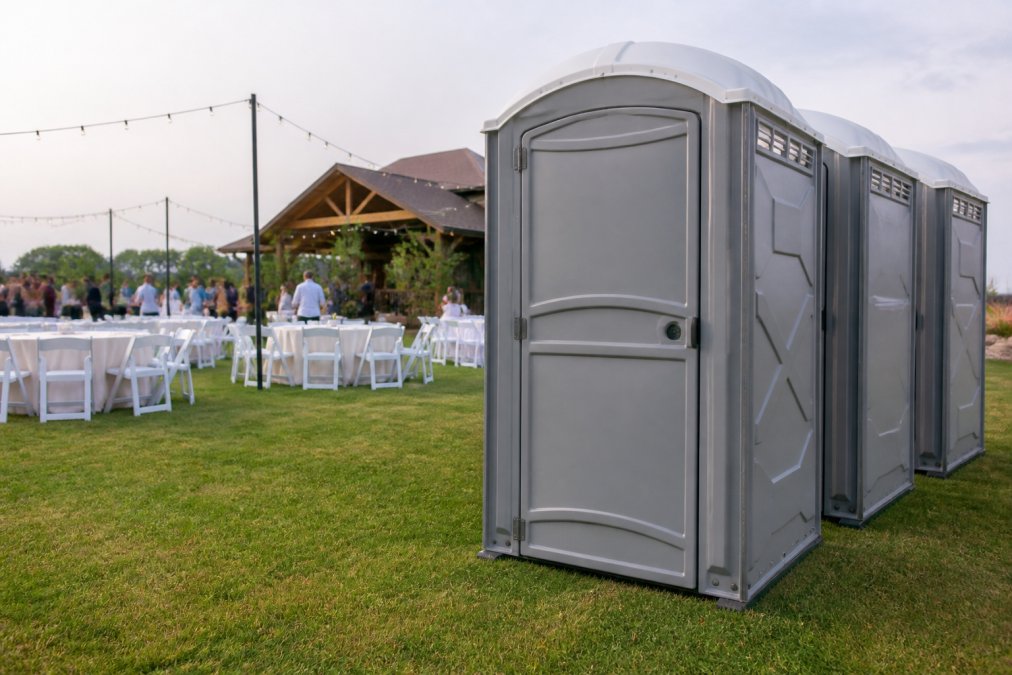
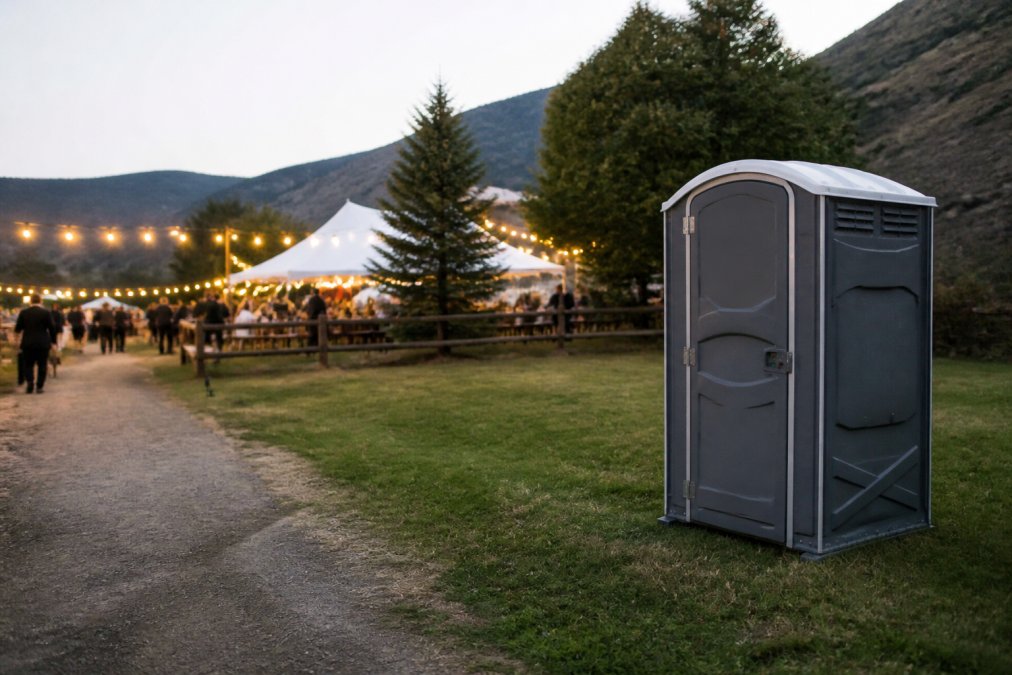
Place units on flat, stable ground within 200 feet of the main gathering area. Too close and guests smell them. Too far and they walk across your dance floor in muddy shoes. Aim for a spot that is visible but tucked behind a tent, hedge, or fence line.
Ground Stability, Site Accessibility, and Delivery Truck Access
The delivery truck needs a clear path at least 10 feet wide and 20 feet long. Soft ground after rain can sink a truck, so flag any wet spots before delivery day. Units must sit on level ground or they will tip when someone steps inside.
- Keep units off slopes and soft turf
- Clear low branches and overhead wires
- Mark the drop spot with cones or flags
- Leave room for the service truck to return
ADA Compliant Portable Restroom Requirements You Cannot Skip
ADA compliant portable restroom requirements are not optional for public events. Under the Americans with Disabilities Act standards for accessible design, at least 5% of your units must be wheelchair accessible. For a 100-guest party with three units, that means one accessible unit.
Accessible units need a wider door, a grab bar, and a flat path at least 36 inches wide leading to the door. They also cost more than standard units and take up more space. Many rental companies stock these units and can help you pick the right count.
Rental Duration, Service Frequency, and Waste Disposal Fees
A weekend rental usually runs Friday to Monday. Longer events need mid-rental service visits. Service frequency depends on guest count and how many days the units stay on site.
| Rental Length | Guests | Service Visits | What It Covers |
|---|---|---|---|
| 1 day | Under 100 | None | Standard pump-out after pickup |
| 2-3 days | 100-200 | 1 visit | Pump-out, chemical treatment, restock |
| 4-7 days | Any size | Every 2-3 days | Full service and holding tank check |
Waste disposal and sanitation fees are often billed separately from the base rental. Ask upfront whether the quote includes pumping, chemical treatment, and handwashing stations. A rental agreement that lists every fee in writing saves arguments later.
Permits, Local Ordinances, and Weather-Proofing Your Setup
Most towns require a permit for portable toilets placed on public property, sidewalks, or street right-of-way. Private property usually needs no permit, but rules vary by county, and some jurisdictions require a permit even on private land if the event is open to the public or exceeds a certain guest count. Check with your local planning or zoning office before you book.
How to Check Permits and Ordinances Before You Book
A quick pre-booking checklist saves the most headaches:
- Call the local planning or zoning office and ask whether a temporary use or right-of-way permit is required for your address
- Ask whether the permit covers the number of units, the placement location, and the rental duration
- Confirm whether the units must be screened, anchored, or set back a minimum distance from property lines
- Check any homeowners association (HOA) covenants, which often add rules stricter than the city's
- Ask your rental provider whether they pull permits themselves or whether that is on you
A common pattern is that the rental company handles the drop and pickup but leaves permitting to the host. Get that in writing in the rental agreement so there is no confusion on delivery day.
Weather-Proofing for Winter and Summer Events
Weather changes everything, and the adjustments differ by season.
Cold-weather events:
- Empty units are light and can tip in high winds, so anchor them or place them against a building
- Keep the path to the units shoveled and salted so guests do not slip
- Ask about winter-grade chemical treatment, which keeps waste from freezing in the holding tank
- Consider a heated restroom trailer if the event runs overnight or temperatures drop below freezing
Warm-weather events:
- Add shade so the interior does not turn into an oven; a simple canopy or placement under a tree helps
- Increase ventilation by propping doors or choosing units with vents
- Plan for more frequent service visits in heat, since odor control degrades faster
- Watch for soft ground after rain, which can sink a delivery truck or destabilize a unit
Aesthetic Integration and Post-Event Cleanup Checklist
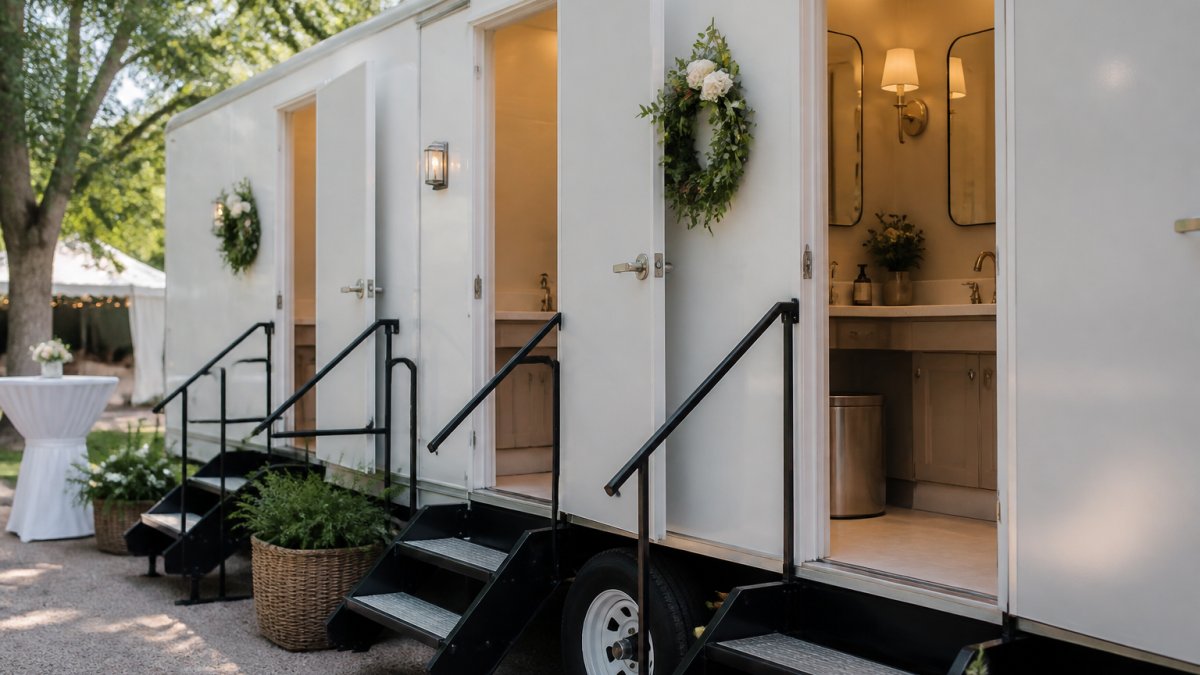
Restroom trailers and wrapped standard units blend into wedding and festival settings far better than plain plastic. A simple hedge, lattice screen, or fabric drape hides the units and keeps photos clean. This is the detail most planning guides skip, and it is the one guests notice.
Hiding and Decorating Units Without Breaking the Rental Agreement
Before you decorate, confirm what the rental agreement allows. Some providers prohibit attaching anything to the unit, while others permit removable wraps or freestanding screens.
- Use freestanding lattice panels, pipe-and-drape, or potted plants rather than adhesive decorations
- Match the screen or drape to your event palette so the units read as part of the design
- Place units downwind and behind a tent, hedge, or fence line so they are visible but tucked away
- Add a small sign or a chalkboard pointing guests to the restrooms so they are not wandering
- For upscale events, consider a restroom trailer with running water and lighting, which needs less disguising
Post-Event Cleanup Checklist
Use this checklist before the truck returns:
- Confirm all units are empty and ready for pickup
- Remove trash, decorations, and signage around the units
- Check the path for spills and hose it down
- Confirm the pickup window with your provider
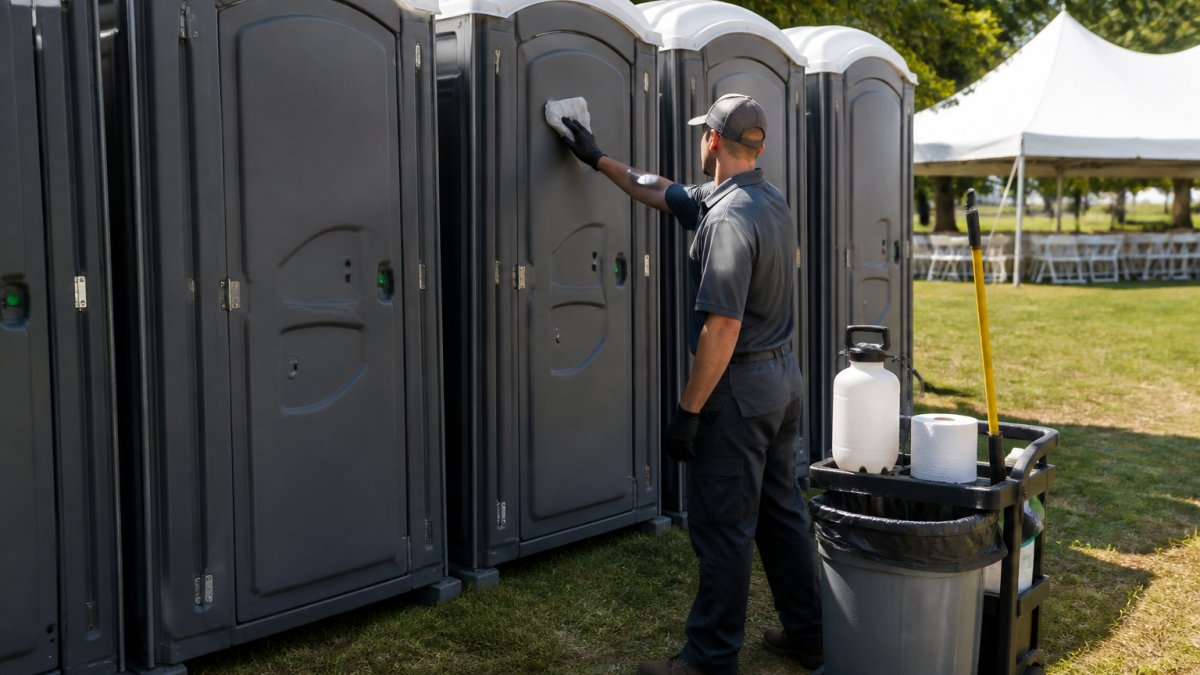
- Walk the site for strays: cups, napkins, and hand sanitizer bottles
- Verify the drop spot is clear of cones, flags, and any anchoring straps
- Take photos of the site condition in case of a damage dispute
For more on event sanitation planning, the Centers for Disease Control and Prevention guidance on handwashing and sanitation is a solid reference for hygiene standards at public gatherings.
Frequently Asked Questions
How many portable toilets do I need for 100 guests?
For a 4-hour party with 100 guests, plan on 2 standard units. If alcohol is served, add one more. For events longer than 6 hours, increase to 4 units. If you expect a large number of children or elderly guests, add an extra unit. A good rule is one porta potty per 50 guests for a basic event, then adjust up for duration, alcohol, and guest mix.
Where is the best place to position a portable toilet at a backyard event?
Place units on flat, stable ground at least 50 feet from food prep and dining areas, but no more than 200 feet from the main gathering spot. Keep them downwind of guest seating and provide a clear, well-lit path. Make sure the delivery truck can reach the spot without crossing lawns, septic fields, or tight gates. Also check that the unit does not block emergency exits or neighbor driveways.
Do I need to provide handwashing stations with my portable toilet rental?
Yes, handwashing stations are strongly recommended and often required by local health codes for events serving food. Even if not mandated, guests expect a way to wash hands after using the restroom. A basic hand sanitizer station may suffice for small backyard gatherings, but for larger parties or those with food service, rent a portable sink with soap and water. Confirm requirements with your local health department.
How much does it typically cost to rent a portable toilet for a party?
Pricing depends on quantity, rental duration, delivery distance, and service frequency. Standard units cost less than deluxe flushable models or restroom trailers. Additional fees may apply for delivery, pickup, extra servicing, and waste disposal. Patriot Solutions does not publish fixed prices because every event is different. Contact Patriot Solutions directly for a quote based on your guest count, location, and dates.
Planning a party takes enough work without worrying about restroom logistics. Patriot Solutions handles portable toilet rental and roll-off dumpsters for events and job sites across the Delta area, with clean equipment, fast delivery, and dependable local service. Get started with Patriot Solutions and cross sanitation off your planning list.