 how-to
Portable Restroom Sanitation Tips for Wedding Planners
Table of Contents
- Start With a Wedding Portable Restroom Checklist
- How Often to Service Portable Toilets at Events
- Portable Restroom Supplies for Weddings: What to Stock and Restock
- Wedding-Day Sanitation Schedule: Hour-by-Hour Planning
- Portable Restroom Attendant Checklist for the Reception
- Placement, Access, and Guest Comfort at Outdoor Venues
- Contingency Planning for Sanitation Failures
- Frequently Asked Questions
Last Updated: October 4, 2026
Start With a Wedding Portable Restroom Checklist
Portable restroom sanitation is the set of cleaning, servicing, and supply routines that keep rental units hygienic and odor-free throughout an event, and portable restroom sanitation is the difference between a guest quietly slipping away and a guest complaining to the couple.
This guide from Patriot Solutions covers the full sanitation workflow, from the first call with your rental provider to the final walkthrough.
Most planners focus on unit count. That is the easy part. The hard part is what happens between deliveries.
A common mistake is treating the drop-off as the finish line. In practice, the units need attention all day.
Pre-Booking Questions for Your Rental Provider
Ask these before you sign anything. The answers shape your whole sanitation plan.
- How many units does our guest count and event length require?
- What is included in a standard service visit?
- Do you offer attendants for the reception?
Get every answer in writing. Verbal promises vanish when the truck is late.
We recommend building a buffer into your order. A spare unit costs far less than an emergency delivery. The Centers for Disease Control and Prevention guidance on handwashing is a useful reference when you explain hygiene needs to clients.
Two Weeks Out: Confirming Delivery, Placement, and Access
Call the provider two weeks before the wedding. Confirm four things: date, time window, placement, and site access.
Walk the venue yourself. Check the ground. Soft soil after rain can sink a trailer. A narrow gate can block a truck entirely.
- Measure the gate width and turning radius
- Note any slopes, stairs, or gravel paths
- Mark the exact placement spot
Lock these details in writing and share them with the venue manager. One email prevents most day-of problems.
How Often to Service Portable Toilets at Events
The short answer: most weddings need a service visit every four to six hours, plus a full pump-out before and after the event.
Service frequency depends on three things: guest count, event duration, and unit type. A short ceremony with light use needs less. A full reception with dinner and dancing needs more.
Here is how we think about it in practice.
Guest-Count and Service-Frequency Math
Use this simple framework to plan service visits.
| Guest Count | Event Length | Recommended Units | Service Frequency |
|---|---|---|---|
| Up to 50 | 4 hours | 2 | Once mid-event |
| 50-100 | 6 hours | 3-4 | Every 4-5 hours |
| 100-200 | 8 hours | 5-6 | Every 4 hours |
| 200+ | 8+ hours | 8+ | Every 3-4 hours, plus attendant |
Add one unit for every 25 guests beyond your estimate. Alcohol service raises usage significantly.
Portable Restroom Supplies for Weddings: What to Stock and Restock
Supplies run out quietly. A guest finds an empty soap dispenser and says nothing. They just remember it.
Stock each unit with the basics, then keep a restock kit on site.
- Toilet paper (two rolls per unit minimum)
- Hand soap and hand sanitizer
- Paper towels
Keep the restock kit near the units but out of guest view.
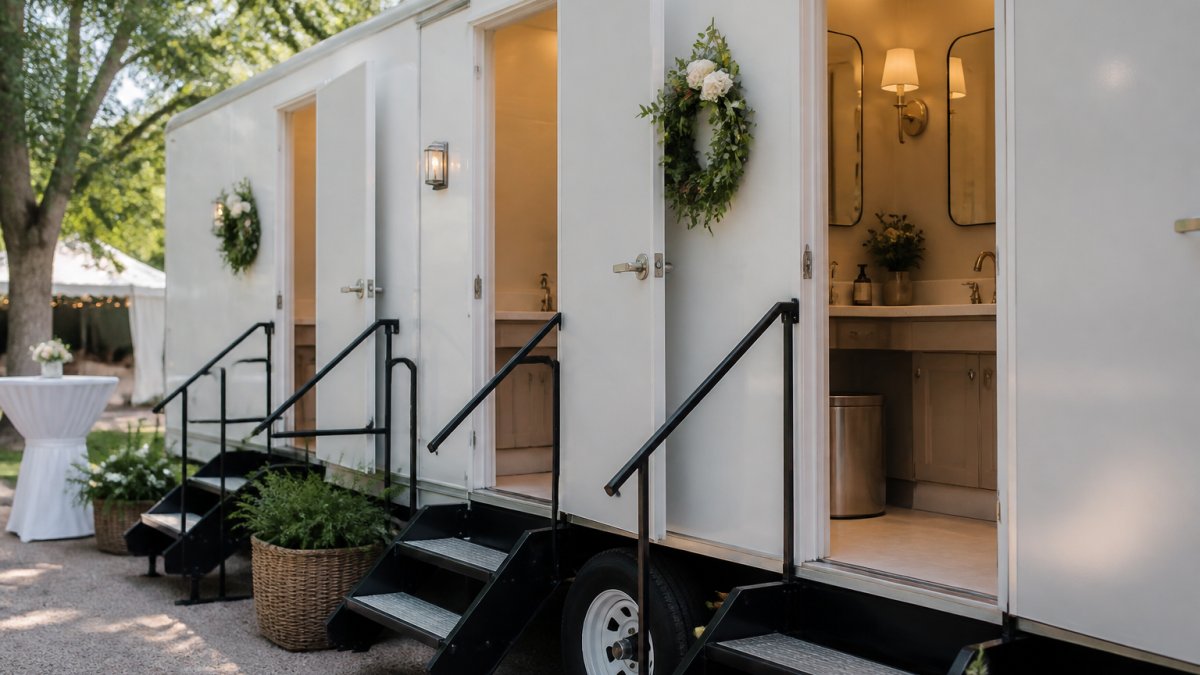
For trailers, confirm what the provider supplies versus what you bring. Many trailers include lighting and running water.
The Occupational Safety and Health Administration sanitation standards outline basic requirements for workplace restrooms, which offer a useful baseline for hygiene expectations at any event.
Wedding-Day Sanitation Schedule: Hour-by-Hour Planning
A written schedule keeps sanitation from becoming an afterthought. Build it around the reception timeline, then assign a name to every task. A schedule without an owner is just a wish list.
The table below is the baseline. Adjust the timing to your ceremony start, dinner service, and last-call hour.
| Time | Action | Owner |
|---|---|---|
| 3 hours before guests | Pre-event inspection: walk every unit, confirm doors latch, lights work, tanks are empty, and supplies are full | Planner or site lead |
| 2 hours before guests | Final walkthrough: restock toilet paper, soap, towels, and odor control; confirm the accessible route is clear and lit | Planner or site lead |
| Guest arrival | Attendant on standby; first supply check within 30 minutes of the first guest entering | Attendant |
| Mid-ceremony | Quiet visual check from outside the units, no entry, no disruption | Attendant |
| Dinner service | Full service visit: wipe surfaces, restock all consumables, check waste level | Attendant or provider |
| Peak dancing | Quick supply and odor check; empty trash before it reaches the rim | Attendant |
| Last hour | Final restock, confirm the post-event pump-out window with the provider | Planner |
| Post-event | Walkthrough with the provider before the truck leaves; note any damage or shortage in writing | Planner |
What to Inspect at Each Checkpoint
A schedule only works if the checks are specific. At every checkpoint, confirm:
- Odor, no ammonia or sewage smell at the door. If you smell it outside, guests smell it inside.
- Surfaces, seat, lid, door handle, and dispenser housings wiped and dry.
- Supplies, toilet paper at half a roll or more, soap dispenser at half or more, towels stocked, sanitizer present.
If any item fails, log it and fix it before the next checkpoint. Do not wait for the mid-event service.
Trigger Points That Override the Schedule
Some conditions force an off-schedule check regardless of the clock:
- Temperature above 85°F, odor develops faster; check every 90 minutes.
- Alcohol service, usage roughly doubles during the cocktail hour and again after dinner; add a check after each bar rush.
- Rain or mud, floors and entry paths degrade quickly; wipe and re-mat as needed.
Share this schedule with the venue and the provider before the event. Everyone should know who checks what, when, and what happens if a check is missed.
Portable Restroom Attendant Checklist for the Reception
An attendant solves most sanitation problems before guests notice them. The role is simple: keep units clean, stocked, and welcoming. But a vague instruction like "keep things tidy" produces inconsistent results.
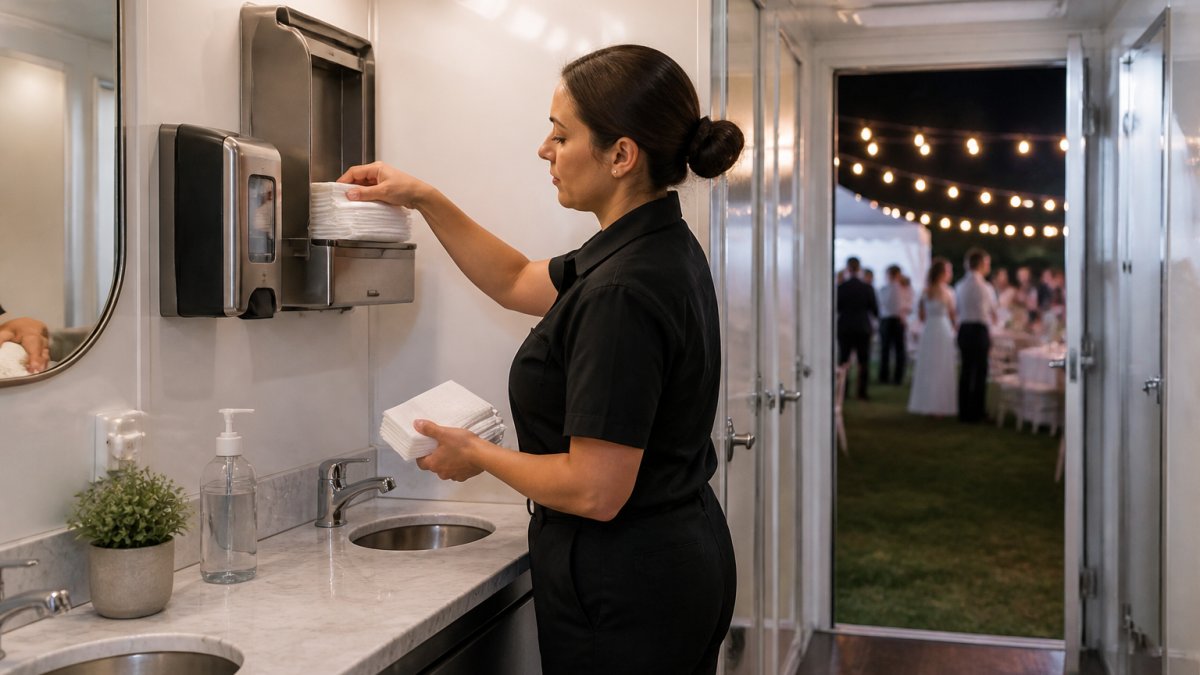
Every 30 Minutes
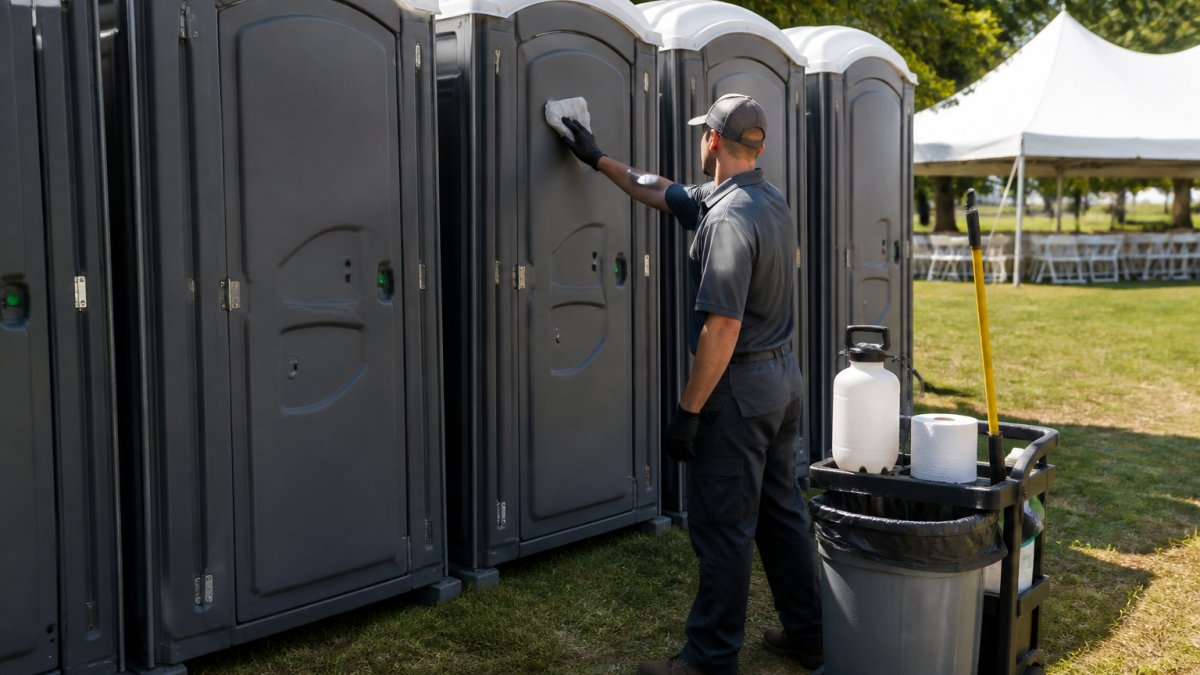
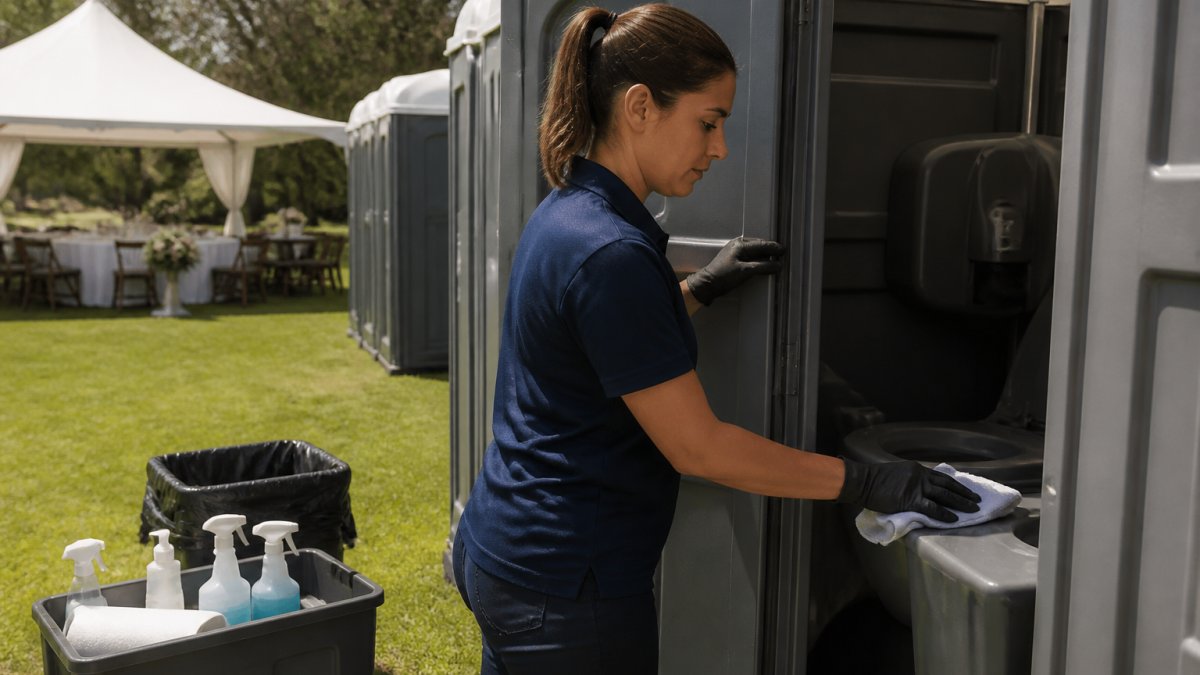
- Wipe door handles, locks, seat, lid, and dispenser housings with disinfectant
- Sweep or wipe the floor; replace the entry mat if it is saturated
- Check the trash; empty when it reaches three-quarters full
Every Hour
- Toilet paper, at least one full roll plus a spare in each unit
- Hand soap, dispenser at half or more; refill before it runs dry
- Paper towels, full stack; replace damp towels
- Hand sanitizer, at least half full at the entry station
Every Two Hours
- Deep wipe of all high-touch surfaces, including walls near the seat and the inside of the door
- Restock the on-site supply kit from the backup bin
- Log the time, unit number, and any issue in a shared note or text thread
What the Attendant Should Escalate Immediately
- A tank that appears full or is backing up
- A door that will not latch or lock
- A broken light fixture
- A persistent odor that returns within 15 minutes of refreshing
The attendant should have the planner's number and the provider's emergency line saved before the first guest arrives. A 30-second call at 8 p.m. prevents a 30-minute problem at 10 p.m.
What the Attendant Should Not Do
- Do not attempt repairs on pumps, tanks, or plumbing, that is the provider's job
- Do not block the service truck path with supply bins or carts
- Do not leave the units unattended for more than 20 minutes during peak use
- Do not enter an occupied unit or rush a guest
Supplies the Attendant Should Carry
Keep a rolling kit or tote stocked with:
- Two rolls of toilet paper per unit plus spares
- One bottle of hand soap per dispenser plus a refill
- One pack of paper towels per unit
- One canister of disinfecting wipes
For upscale events, an attendant is not a luxury. It is the cheapest insurance against a guest complaint, and the fastest way to catch a failing tank before it becomes a story the couple hears about later.
Placement, Access, and Guest Comfort at Outdoor Venues
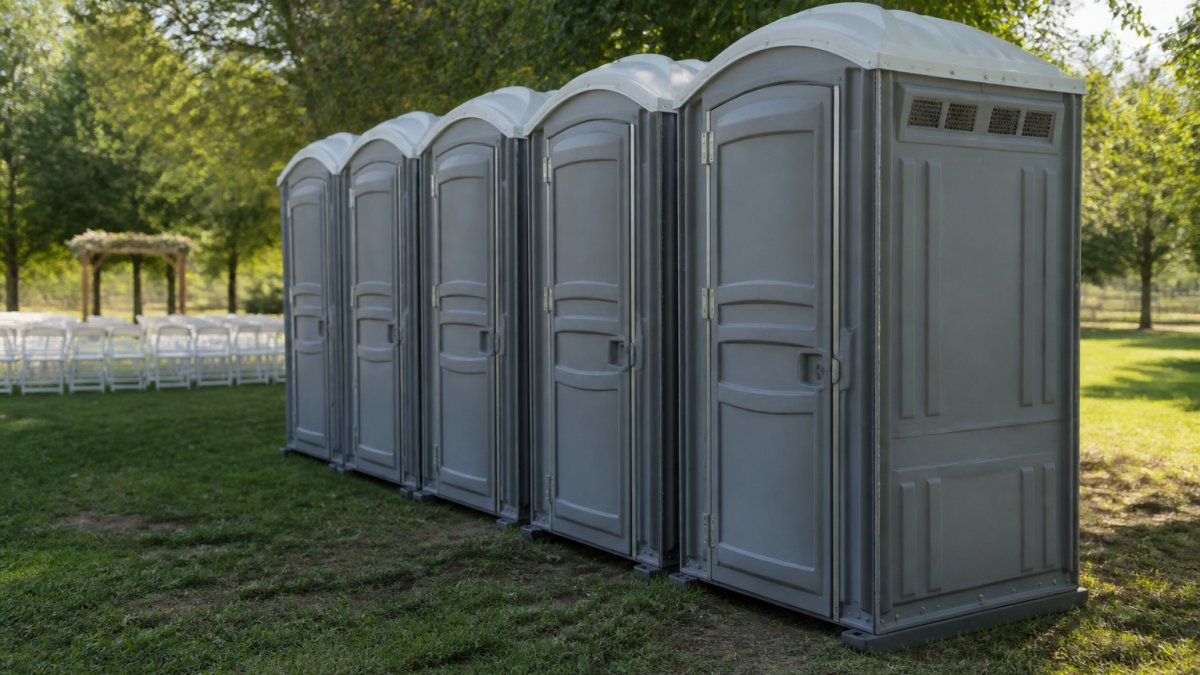
Placement affects how often units need attention. A unit in full sun heats up fast, which speeds up odor. Shade and airflow matter more than most planners realize.
Keep these rules in mind:
- Place units within a short, lit walk of the reception
- Avoid low spots that collect water
- Screen units from the main guest view
- Keep the service truck path clear all night
For trailers, confirm power and water access ahead of time. A trailer without running water defeats the purpose.
Accessibility and Hygiene for All Guests
At least one unit should meet ADA requirements. This is not optional for public events.
- Confirm the unit is ADA-compliant before booking
- Keep a firm, level path to the accessible unit
- Add lighting for evening events
- Stock accessible units with the same supplies
The Americans with Disabilities Act requirements set the standard for accessible facilities. Build this into your plan from the start.
Contingency Planning for Sanitation Failures
Things break. A pump fails, a door jams, a tank fills early. What matters is how fast you respond.
Keep a backup plan ready:
- One spare unit on standby for larger weddings
- Provider's emergency contact saved in your phone
- A restock kit in case supplies run short
- A backup placement spot if the first one fails
Confirm your provider's response time before the event. Ask what happens if a unit fails at 9 p.m. A dependable local team makes this easy.
Frequently Asked Questions
How do you keep portable restrooms clean during a wedding?
Assign an attendant to check units every 60 to 90 minutes during the reception. Each check covers toilet paper, hand soap, paper towels, and surface wipe-downs. For a 100-guest wedding, plan on at least one mid-event service visit from your rental provider to pump waste tanks and refresh supplies. Place a small trash can inside or beside each unit, and empty it at every check. If the event runs past four hours, add a second service visit or extend the attendant's shift.
How often should portable restrooms be serviced at a wedding?
In practice, most weddings schedule one pre-event service, one mid-reception pump and restock, and one post-event service. For events longer than six hours or in hot weather, add a mid-afternoon visit. Confirm your service schedule with the rental provider at least two weeks before the wedding so trucks are routed correctly.
How many portable restrooms should you provide for a wedding?
Plan for one restroom per 50 guests for a four-hour event with no alcohol, and one per 35 guests if alcohol is served. A 200-guest wedding with a bar should have at least six units, plus one ADA-compliant unit. If you rent a restroom trailer, capacity is higher per stall, so a two-stall trailer can serve about 100 guests over four hours. Always round up rather than down, and add one extra unit as a buffer for vendor staff and late arrivals.
What should a wedding restroom attendant check during the event?
The attendant should check each unit every 60 to 90 minutes for toilet paper, soap, paper towels, and hand sanitizer levels. They should wipe down sinks, counters, and door handles, empty trash bins, and note any odors or clogs. After each check, they log the time and supplies used on a simple clipboard sheet. If a waste tank nears full, the attendant calls the rental provider for an emergency pump-out. Attendants should also keep a small kit with spare supplies and cleaning cloths on hand.
Sanitation is the part of a wedding no one wants to think about, until something goes wrong. A written schedule, a stocked supply kit, and a provider who shows up on time prevent almost every problem. Patriot Solutions offers clean equipment, fast delivery, and dependable local service for weddings and events across the area. Get started with Patriot Solutions and give your clients a reception where no one has to think about the restroom.