 how-to
Avoiding Extra Fees for Dumpster Rentals
Table of Contents
- Understanding Dumpster Rental Costs and Common Fees
- Prohibited Items in Roll-Off Dumpsters
- How to Estimate Dumpster Size and Avoid Overage Charges
- Dumpster Rental Weight Limits and Tonnage Allowances
- Dumpster Rental Duration and Extension Fees
- Contract Red Flags and Negotiation Tactics
- Proper Loading Techniques to Prevent Overweight Charges
- Conclusion
Last Updated: August 28, 2026
Understanding Dumpster Rental Costs and Common Fees
When you rent a dumpster, the quoted price is rarely the final price. Most renters discover unexpected charges only after the container is picked up, which is precisely why avoiding extra fees for dumpster rentals requires understanding what drives costs before you sign. The base rental rate covers the container delivery, placement, and pickup, but that's where transparency often ends.
Dumpster rental companies typically charge fees across several categories: weight overage, prohibited items disposal, extension charges, permit fees, and fuel surcharges. Some providers bundle these into one quote; others reveal them incrementally. The difference between a straightforward rental and one loaded with surprise charges often comes down to how carefully you review the contract and ask the right questions upfront.
At Patriot Solutions, we believe clarity matters. Construction site managers, homeowners, and event organizers deserve to know exactly what they're paying for before equipment arrives. The most common fees renters encounter are weight-related charges, which occur when debris exceeds the tonnage allowance included in your rental agreement. Understanding these cost drivers helps you make informed decisions and protects your budget.
Prohibited Items in Roll-Off Dumpsters
Not all debris is created equal in the eyes of waste management facilities. Prohibited items in roll-off dumpsters exist for safety, environmental, and regulatory reasons, and disposing of banned materials often triggers separate disposal fees that can rival the cost of the rental itself.
Common prohibited items include hazardous waste such as paint, solvents, batteries, and propane tanks. Asbestos, refrigerants, and electronics are typically banned as well due to environmental regulations. Tires, appliances with freon, and certain construction materials like roofing shingles with tar also fall into restricted categories. When these materials end up in your dumpster, the waste facility charges a handling fee to remove and dispose of them separately, sometimes at rates significantly higher than standard debris disposal.
The challenge is that many renters don't know what qualifies as hazardous or prohibited until they're already loading. A homeowner clearing out a garage might toss in old paint cans without realizing the cost implications. A contractor might assume drywall and insulation are acceptable when local regulations restrict them.

Before renting, ask your provider for a complete list of prohibited items specific to your location and waste facility. Some facilities have stricter rules than others. Clean fill, soil, rock, and uncontaminated earth, is often prohibited because it's heavy and takes up valuable landfill space. Construction debris like wood, drywall, and concrete may be accepted at some facilities but banned at others. Clarifying these restrictions upfront prevents costly surprises and ensures your debris is properly categorized.
How to Estimate Dumpster Size and Avoid Overage Charges
Choosing the right dumpster size is one of the most direct ways to avoid extra fees for dumpster rentals. Overestimating leaves you paying for unused capacity; underestimating forces you to either rent a second container or pay overage fees for excess weight.
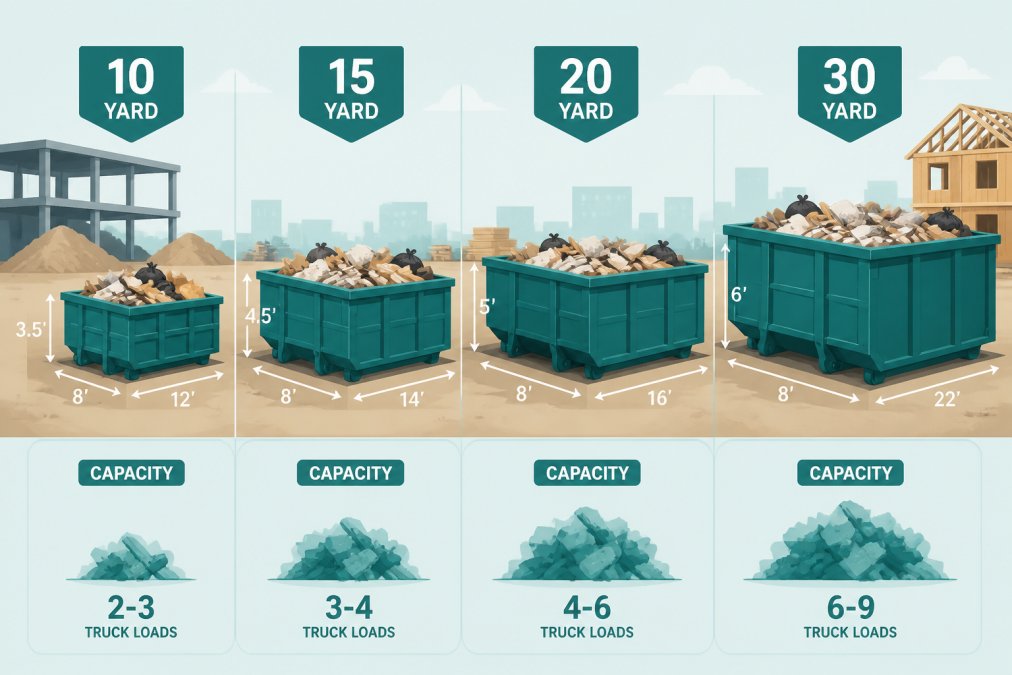
Dumpster sizes are typically measured in cubic yards: 10, 15, 20, and 30 cubic yards are standard roll-off container sizes. A 10-yard dumpster holds roughly the equivalent of three pickup truck loads (the CDC). A 20-yard container accommodates a small kitchen remodel or garage cleanout. A 30-yard dumpster suits larger construction projects or demolition work. The physical dimensions matter too, a 20-yard dumpster is roughly 22 feet long, 8 feet wide, and 4.5 feet deep, so confirm your space can accommodate it before delivery.
To estimate size accurately, consider the project scope. A residential cleanout generating light debris (furniture, boxes, yard waste) typically needs 10-15 cubic yards. A kitchen or bathroom renovation with construction waste usually requires 20 cubic yards. Larger demolition or full-house cleanout projects often need 30 cubic yards or more. When in doubt, it's better to overestimate slightly than underestimate and face overage charges, though going too large wastes money on unused space.
Weight limits complicate the picture. A 20-yard dumpster might hold 2 tons of light debris or only 1 ton of heavy material like concrete or soil. Asking your provider for the weight allowance included in your rental prevents the shock of discovering you've exceeded capacity. Many renters focus on cubic yards and ignore tonnage allowance, then face overage fees because the debris type was heavier than expected.
Dumpster Rental Weight Limits and Tonnage Allowances
Weight limits are where many dumpster rental costs spiral unexpectedly. Your rental agreement includes a tonnage allowance, typically 1 to 3 tons depending on the container size, and anything beyond that incurs per-ton overage fees. Understanding this distinction between capacity and weight is critical to avoiding extra fees for dumpster rentals.
A 10-yard dumpster might come with a 1-ton allowance. A 20-yard container often includes 2 tons. A 30-yard dumpster typically allows 3 to 4 tons. These limits exist because waste facilities charge disposal companies based on weight, and those costs get passed to you if you exceed the included allowance. Heavy materials like concrete, brick, soil, and metal weigh significantly more than light debris like drywall, wood, or household items.
The math matters. If your rental includes 2 tons and you fill the dumpster with concrete, you might hit that limit with only half the cubic yard capacity used. Conversely, if you're disposing of light construction debris, you could fill the entire 20-yard container and stay under the 2-ton allowance. Overage fees typically range from $40 to $75 per ton, depending on your location and the waste facility.
To stay within weight limits, ask your provider what type of debris you're disposing of and confirm the included tonnage. If you're uncertain about weight, err on the side of caution and request a heavier allowance upfront, paying for extra tonnage in advance is cheaper than overage fees after pickup. Some providers offer tiered weight packages, so you can upgrade from 2 tons to 3 tons for a modest additional fee rather than face per-ton overage charges.
Patriot Solutions helps customers understand these weight dynamics before rental, ensuring you choose the right container and allowance for your specific project. Transparent conversations about weight prevent the most common overage scenario.
Dumpster Rental Duration and Extension Fees
Rental periods typically run 7 days, though many providers offer flexible terms. Extension fees apply when you keep the dumpster beyond your contracted return date, and these charges accumulate quickly if your project runs longer than expected. Avoiding extra fees for dumpster rentals means being realistic about how long you'll need the container.
Most providers charge a daily extension fee, often $5 to $15 per day, once your rental period expires (the FTC). A week-long overage can add $35 to $105 to your bill. Longer overages become expensive fast. Some companies offer weekly extension rates that are cheaper than daily rates, so asking about bulk extension pricing upfront can save money if you suspect your project might run long.
The key is planning conservatively. If your renovation is scheduled for two weeks, rent for two weeks plus a few days as buffer. If you're uncertain, rent for the longer period rather than face extension fees. The per-day rental cost is typically lower than the extension fee rate, making it more economical to rent longer upfront.
Communication with your provider matters. If you know you'll need an extension, contact them before your pickup date. Some companies offer courtesy extensions or discounted rates if you notify them in advance. Waiting until after your rental period expires and then requesting an extension often results in standard extension rates with no negotiation room.
Contract Red Flags and Negotiation Tactics
The dumpster rental contract is where many hidden fees hide. Before signing, review the agreement carefully for language that could trigger unexpected charges. Common red flags include vague definitions of "prohibited items," unclear weight limits, and ambiguous fuel surcharge policies.
Watch for contracts that reserve the right to charge "environmental fees" or "disposal facility fees" without specifying amounts. These blanket clauses give providers flexibility to add charges after pickup, when you have limited recourse. Similarly, contracts that mention "additional charges as determined by the facility" should raise concerns, you're essentially agreeing to unknown fees.
Fuel surcharges are another negotiation point. Some providers bundle fuel costs into the base rate; others add a surcharge that fluctuates with fuel prices. Ask whether fuel is included or if it's a separate line item. If it's separate, request the current surcharge amount and ask if it's locked in or subject to change.
Negotiation tactics work better than you might expect. If you're renting multiple containers or for an extended period, ask for a discount on the base rate or reduced extension fees. Providers often have flexibility on pricing, especially for larger projects or repeat customers. Patriot Solutions values straightforward negotiations, we'd rather adjust terms upfront than deal with disputes after the fact.
Request a detailed quote in writing before committing. The quote should itemize the base rental, weight allowance, tonnage overage rate, extension rate, permit fees if applicable, and any surcharges. A provider unwilling to provide this level of detail is a red flag.
Proper Loading Techniques to Prevent Overweight Charges
How you load the dumpster directly impacts whether you'll face overage fees. Improper loading can cause you to hit weight limits with unused cubic yard capacity, essentially wasting money on space you didn't fully use.
Level-load your debris by distributing weight evenly across the container. Don't pile heavy materials like concrete or soil in one corner or end of the dumpster. Instead, spread them across the entire floor, then add lighter debris on top. This distribution prevents the scale from registering excessive weight in localized areas and maximizes your usable capacity.
Separate heavy and light materials strategically. Load heavy debris first, concrete, brick, metal, soil, then fill remaining space with lighter materials like wood, drywall, and insulation. This approach uses weight allowance efficiently and prevents the dumpster from becoming unbalanced or top-heavy.
Compact debris when possible. Breaking down large items and stacking materials tightly reduces wasted space. A sofa takes up significant cubic yard capacity; breaking it down and flattening the frame reduces its footprint. Crushing cardboard boxes and flattening metal items maximizes usable space without increasing weight proportionally.
Ask your provider about weight limits before loading. Some companies offer to do a pre-load weight check, which helps you understand how much additional debris you can safely add. This service prevents the unpleasant surprise of discovering you've exceeded your allowance only after the dumpster is full and pickup is scheduled.
Avoid overfilling the container. Dumpsters have maximum fill lines, and exceeding them can result in additional fees or refusal to pick up the container. Overfilled containers also pose safety risks during transport and at the disposal facility.
Conclusion
Avoiding extra fees for dumpster rentals comes down to clarity, planning, and communication. Understanding weight limits, prohibited items, contract terms, and proper loading techniques prevents most surprise charges. Before renting, get an itemized quote that specifies every potential fee, confirm your dumpster size and weight allowance match your project scope, and ask questions about anything unclear in the contract.
Patriot Solutions specializes in transparent dumpster rentals paired with dependable local service. Our team provides clear, upfront pricing, explains weight limits and prohibited items thoroughly, and delivers clean equipment on schedule. When you need reliable waste management solutions, we handle the details so you can focus on your project. Contact Patriot Solutions for a detailed quote and experience the difference professional, straightforward service makes.
Frequently Asked Questions
What are the most common hidden fees in dumpster rentals?
Beyond the daily rental rate, watch for overage fees when you exceed weight limits, extension fees if you keep the container longer than agreed, permit fees for placing dumpsters on public property, environmental fees for hazardous waste disposal, fuel surcharges, and tipping fees at the disposal facility. Request an itemized quote upfront that clearly breaks down each charge so you know exactly what to expect. Ask your rental provider to explain any fees you don't understand before signing the rental agreement.
How can I avoid dumpster overage charges?
Overage charges occur when your debris exceeds the weight limit or container capacity. To avoid them, ask your rental provider about the tonnage allowance included with your rental size. Estimate your debris weight conservatively and choose a larger container if uncertain. Distribute weight evenly throughout the dumpster using level-load techniques rather than piling debris in one spot. Get clarification in writing on what happens if you exceed limits, and confirm whether your quote includes overage protection or what the per-ton surcharge would be.
What items are prohibited in a standard roll-off dumpster?
Most dumpsters prohibit hazardous waste including paint, batteries, propane tanks, refrigerants, and asbestos. Tires, electronics, appliances with refrigerant, and fluorescent bulbs are typically banned due to environmental regulations. Some providers restrict yard waste, clean fill, or certain metals. Your rental agreement should list prohibited items clearly. Placing banned materials in your dumpster can result in hefty surcharges or disposal delays. Always confirm the prohibited items list with your rental provider before loading, and ask about alternative disposal options for restricted materials.
Does the weight of my debris affect the final rental price?
Yes. Your rental agreement specifies a tonnage allowance, typically 2-4 tons depending on container size. If your debris weighs more, you'll pay surcharges per ton. Heavier materials like concrete, soil, or metal cost more to haul and dispose of than lighter debris like drywall or wood. Request a weight estimate from your provider based on your project type so you understand potential overweight charges upfront. Being honest about your debris type and volume helps your provider quote accurately and prevents surprise fees at pickup.
This article was written using GrandRanker