 how-to
How to Obtain a Street Permit for Dumpsters: 2026 Guide
Table of Contents
- When a Street Permit for Dumpsters Is Required
- Dumpster Permit Requirements: What Your Application Needs
- Step-by-Step: How to Apply for a Street Permit for Dumpsters
- The Cost of a Dumpster Street Permit and What Affects It
- Avoiding Fines for Dumpster Placement: Display, Safety, and Compliance
- Permit Denials, Post-Permit Responsibilities, and Insurance
- Frequently Asked Questions
Last Updated: September 11, 2026
When a Street Permit for Dumpsters Is Required
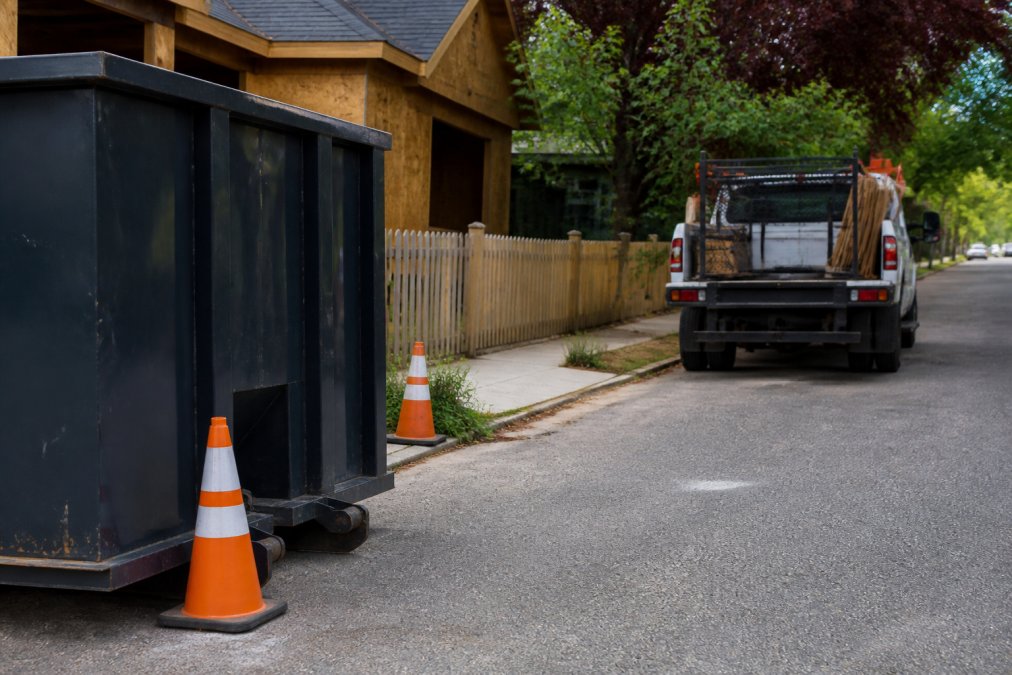
A street permit for dumpsters is official authorization from your local government to place a refuse container in the public right-of-way. Most municipalities require it whenever a dumpster blocks any portion of a public street, sidewalk, or alley (the EPA). Patriot Solutions can help coordinate delivery once your permit is approved.
Public Right-of-Way vs. Private Property
Right-of-way is publicly owned land used for transportation or utilities: streets, sidewalks, alleys, and the strips between curb and property line. A dumpster placed entirely on private property, such as a driveway or staging area, typically requires no street permit.
The moment a container touches public thoroughfare, you need authorization. This includes any portion extending into a traffic lane, containers blocking sidewalk access, placement in municipal alleys, or temporary storage that obstructs utility access.
For properties without adequate off-street space, the permit becomes unavoidable. Homeowners in Delta and Fillmore often find their driveways cannot fit a roll-off alongside parked vehicles, making street placement the only practical option.
How Long a Permit Lasts and When It Expires
Permit duration varies by municipality but commonly ranges from a few days to several months (dot.gov). Short-term permits suit weekend events or quick cleanouts. Construction projects typically require longer windows, sometimes with renewal options.
Most agencies tie permit validity to the stated purpose: a permit issued for a three-week renovation won't cover a six-week project without amendment.
Dumpster Permit Requirements: What Your Application Needs
Dumpster permit requirements vary by jurisdiction, but most applications request the same core information. Knowing them before you apply saves time and prevents rejection.
Common requirements include property owner authorization or tenant permission, the proposed dumpster location, container dimensions and type, expected duration, proof of insurance, and contact information for the responsible party.
Some municipalities require a site inspection before approval, with a compliance officer assessing traffic flow, pedestrian safety, and utility access (fhwa.dot.gov). Schedule it early.
Plot Plans and Required Documentation
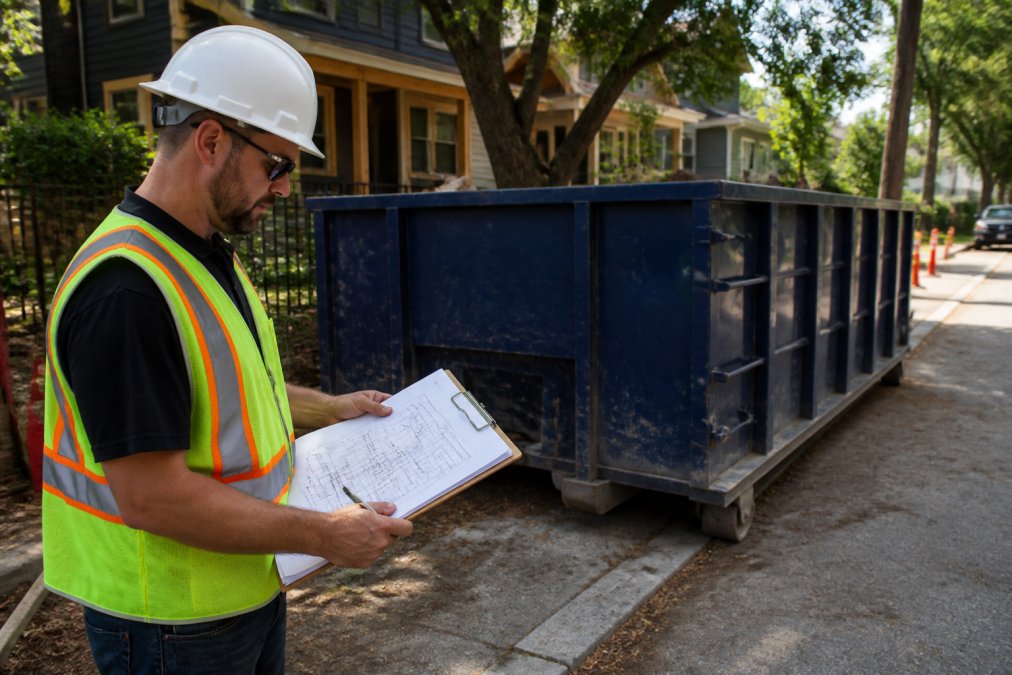
A plot plan is a scaled drawing showing property boundaries, existing structures, and the proposed dumpster location relative to streets, sidewalks, and utility lines.
A rough sketch on graph paper rarely satisfies reviewers. Include property lines with dimensions, building footprints and driveways, sidewalk and street locations, utility poles, fire hydrants, and storm drains, the dumpster footprint drawn to scale, and distance from the container to traffic lanes.
Step-by-Step: How to Apply for a Street Permit for Dumpsters
The application process follows a predictable sequence across most jurisdictions. Here's how to obtain a street permit for dumpsters without delays.
Step 1: Confirm your municipality's requirements. Check the local government website or call public works, and ask which agency handles right-of-way permits, since duties sometimes split between departments.
Step 2: Gather required documentation. Collect your plot plan, proof of insurance, and property owner authorizations. Contractors may need a signed letter from the owner.
Step 3: Complete the permit application. Most agencies offer online portals, though some require paper. Provide accurate dimensions and placement details.
Step 4: Pay the permit fee. Fees vary by duration, dumpster size, and location; payment is typically online, by check, or in person.
Step 5: Schedule any required inspections. Some jurisdictions inspect before approving; others inspect after placement to verify compliance.
Step 6: Receive your approved permit. Once approved, you'll receive documentation to display at the site. Keep copies accessible for compliance officers.
Who Is Eligible to Apply
Property owners can always apply on their own behalf. General contractors, carting companies, and event organizers may also apply with proper authorization.
Tenants typically need written permission from the property owner, and some municipalities require the owner to sign the application directly.
On construction projects, the general contractor usually handles the permit as part of site logistics, keeping responsibility clear if violations occur.
The Cost of a Dumpster Street Permit and What Affects It
Permit fees are set locally, but their structure is remarkably consistent, once you understand it, you can estimate your cost before you call the office.
How Permit Fees Are Typically Structured
Most agencies use one of four pricing models:
- Flat fee. A single charge regardless of duration. Common for short event permits and residential cleanouts.
- Daily or weekly rate. You pay per day or week the dumpster occupies the right-of-way, the most common model for construction placements because it scales with project length.
- Tiered by duration. The rate steps up after a set window, such as a lower rate for the first 30 days and a higher rate beyond that, to discourage long-term street storage.
- Per-container fee. Charged for each dumpster, so a two-container placement doubles the permit line item even if the duration is identical.
On top of the base fee, expect add-ons:
- Administrative or processing fee. A flat charge applied to every application, often non-refundable even if the permit is denied.
- Rush processing. Expedited review usually carries a premium, and not every agency offers it.
- Metered parking or loading zone impact. If your dumpster occupies metered spaces or a loading zone, some jurisdictions charge for the lost revenue or require you to bag the meters.
- Inspection fee. A separate charge when a compliance officer must visit the site before or after placement.
- Deposit or restoration bond. Refundable in many cases, held against damage to the roadway, curb, or sidewalk.
What Actually Drives Your Number Up
Four variables move the price most:
- Duration. A weekend event permit and a six-month construction permit are not the same product. Daily and weekly models punish long placements by design.
- Footprint and lane impact. A dumpster tucked against the curb costs less than one that closes a travel lane, because the latter may trigger a traffic control plan and additional review.
- Location sensitivity. Downtown commercial districts, school zones, and hospital routes typically carry higher fees and stricter conditions than residential side streets.
- Container size and count. Larger roll-offs and multiple containers increase both the permit fee and the insurance exposure.
How to Get an Accurate Number Before You Apply
Rather than guessing, do this:
- Search your municipal website for the right-of-way or encroachment permit fee schedule. Most publish a PDF table.
- Call the public works or transportation department and ask three specific questions: the base fee, the per-day or per-week rate, and whether a deposit is required.
- Ask whether the fee is prorated if your project finishes early. Some agencies refund unused days; many do not.
- Confirm the payment methods accepted. Online portals, checks, and in-person payments are all common, and some agencies will not accept a card.
A Note on Refunds and Extensions
If your project ends early, ask about a partial refund before assuming one exists, many agencies treat the fee as earned once the container is placed. If your project runs long, an extension is usually cheaper than a new permit, but only if you request it before expiration; a lapsed permit often means reapplying at full price.
For current pricing in your area, contact your local regulatory agency directly or check their website. Patriot Solutions can also help coordinate delivery once your permit is approved.
Avoiding Fines for Dumpster Placement: Display, Safety, and Compliance
Avoiding fines for dumpster placement comes down to three things: proper display, safety measures, and ongoing compliance. Most violations stem from simple oversights, not intentional disregard.
Permit display requirements: Most jurisdictions require the approved permit to be visible on or near the dumpster. Some specify exact placement, such as taping it to the container's side. Others accept posting at the nearest building entrance.
Safety barricades and traffic control: If your dumpster occupies any portion of a traffic lane, you may need cones, reflective tape, or barricades. High-traffic areas sometimes require a traffic control plan.
Reflective markings: Containers placed on streets during darkness need reflective elements visible to drivers. This requirement protects both your equipment and passing vehicles.
Maintaining clearances: Never block fire hydrants, storm drains, or utility access points. Keep sidewalks passable, or provide an alternate pedestrian route.
Permit Denials, Post-Permit Responsibilities, and Insurance
Approval is not the finish line, it is the start of ongoing obligations, and the two most common reasons a permit gets denied or revoked are insurance gaps and placement conflicts that were visible on the plot plan all along.
Why Applications Get Denied
Denials are rarely arbitrary. Reviewers reject applications for a short list of predictable, preventable reasons:
- Blocking a fire hydrant or fire lane. The single most common hard stop. Most jurisdictions require a clear buffer around hydrants, and no justification overrides it.
- Sightline or visibility obstruction. A dumpster near an intersection, crosswalk, or driveway can block a driver's view of pedestrians or oncoming traffic. Reviewers reject these even if the container technically fits.
- Obstructing a storm drain, utility vault, or access point. If crews cannot reach infrastructure, the placement fails.
- Incomplete or unscaled plot plans. A sketch without dimensions, property lines, or utility locations is the most frequent documentation rejection.
- Missing or insufficient insurance documentation. If your certificate does not name the required coverage or the correct insured party, the application stalls.
- Unresolved property owner authorization. If a tenant applies without written owner consent, or a contractor applies without a signed letter, the file is incomplete.
- Conflicts with an existing permit. Another active permit on the same block, a moving truck, a crane, a street fair, can block yours.
If you are denied, ask the reviewer for the specific reason in writing. Most denials can be cured by adjusting placement, adding a safety measure, or resubmitting a corrected plot plan. A resubmission is usually faster than a fresh application, but confirm whether the processing fee is charged again.
Insurance and Liability Requirements
Many municipalities will not issue a street permit without proof of general liability insurance, because the container sits on public property where the public can be injured by it.
What reviewers typically look for:
- General liability coverage in an amount set by the municipality, evidenced by a certificate of insurance.
- The municipality named as an additional insured on some permits, particularly for long-duration or lane-closing placements.
- A certificate that matches the applicant. If the contractor applies but the policy is in the homeowner's name, the file is incomplete.
- Coverage that explicitly extends to temporary placements on public property. A standard homeowner's policy may or may not cover a roll-off sitting in the street; verify before you rely on it.
General contractors usually already carry this coverage, so the permit is a matter of producing the certificate. Homeowners and event organizers often need to check with their insurer first. If your policy does not extend to street placement, a short-term rider or a named additional insured endorsement is the usual fix.
Post-Permit Responsibilities
Once the permit is issued, you own a set of ongoing duties. Compliance officers can issue violation notices on the spot, and the burden is on you to prove compliance at the time of placement.
Your responsibilities typically include:
- Keeping the dumpster in the approved location. Moving it even a few feet can void the permit if the new position blocks a sightline or utility.
- Displaying the permit as required. Some agencies want it taped to the container; others want it posted at the nearest building entrance. Follow the specific instruction on your approval.
- Maintaining safety markers. Containers left on a street overnight usually need reflective tape, reflective cones, or barricades, and some placements require lighting so drivers can see the container in the dark.
- Keeping clearances clear. Fire hydrants, storm drains, crosswalks, and utility access points must remain unobstructed for the life of the permit.
- Managing debris and runoff. Loose material around the container, or anything escaping it, is your responsibility to clean up.
- Removing the container before expiration. An expired permit converts a legal placement into a violation, and removal is often at your expense.
- Notifying the agency of timeline changes. If your project runs long, request an extension before the deadline, not after.
Violations can result in fines, forced removal at your expense, or denial of future permits. Treat the post-permit period as an active obligation rather than a formality.
Frequently Asked Questions
Do I need a permit to place a dumpster on a public street?
In most cases, yes. Any dumpster sitting in the public right-of-way, including the street, curb lane, or sidewalk, requires a street permit from your local regulatory agency. A dumpster placed entirely on private property, like a driveway, usually does not need one. Check your municipal code or call your city or county offices before delivery to confirm what applies to your address.
Does the dumpster rental company handle the permit application?
Some carting companies will file the permit for you, but many leave it to the property owner or general contractor. Ask your hauler upfront who submits the application, who pays the permit fee, and who is listed as the responsible party. If you handle it yourself, confirm current dumpster permit requirements with your local office so the application is not rejected for missing documents.
What happens if I place a dumpster on the street without a permit?
Unpermitted dumpsters can trigger a violation notice, daily fines, and a requirement to remove the container immediately. Some jurisdictions also hold the property owner liable for sidewalk obstruction or blocked utility access. Avoiding fines for dumpster placement starts with getting the permit before delivery and keeping it displayed on site where a compliance officer can see it.
How long does it take to get a dumpster street permit?
Processing time varies by jurisdiction. Some agencies issue permits the same day if the application and plot plan are complete, while others take several business days for review or a site inspection. Apply at least a week before your scheduled delivery whenever possible, and ask whether an inspection is required, since that step adds time to the approval.