 how-to
Can Better Site Sanitation Boost Worker Productivity?
Last Updated: October 25, 2026
Quick Summary
Better site sanitation boosts worker productivity by removing small, repeated delays that compound across a crew and season, such as walking to find a restroom, waiting in lines, and stretching breaks. A written plan covering toilets, handwashing, drinking water, and servicing, with a named owner, keeps facilities reliable so crews spend more time on the job.
- Satellite Industries' 2025 guide sets a benchmark of one toilet per 20 workers.
- Size facilities to your largest crew on any single day, not the average.
- A workable starting point is one service visit per unit per week for a standard crew.
- A 12-minute round trip taken twice daily by 30 workers equals 12 hours of lost time per day.
- Name a site lead who checks facilities daily and a backup for days off.
Table of Contents
- Why Site Sanitation Belongs in Your Work Plan
- What a Jobsite Sanitation Plan Should Include
- Portable Restroom Placement That Cuts Downtime
- Portable Restroom Servicing Frequency and Accountability
- Worksite Cleanliness Best Practices for Busy Crews
- Measuring the Productivity Impact of Site Sanitation
- Sanitation Access on Remote, Temporary, and Changing Sites
- Planning Sanitation for Your Next Project
- Frequently Asked Questions
Why Site Sanitation Belongs in Your Work Plan
A 2025 construction sanitation guide from Satellite Industries sets a benchmark of one toilet per 20 workers.
Here's the core argument. Improving worker productivity through better site sanitation access isn't about comfort. It's about removing small, repeated delays that compound across a crew and a season.
Think about what happens when facilities fall short:
- Workers walk to find a restroom, sometimes off site
- Handwashing stations run dry, so breaks stretch longer
- Lines form at shift change and after lunch
None of these show up on a schedule. All of them show up in the budget.
The CEO Water Mandate's business case for sanitation cites a UN-Water estimate that improved sanitation gives each covered household an extra 1,000 hours a year for work, study, and caregiving.
What a Jobsite Sanitation Plan Should Include
A jobsite sanitation plan is a written schedule of facilities, placement, servicing, and responsibility for a project.
Satellite Industries' 2025 compliance guide lists four core areas: toilets, accessible handwashing stations, potable drinking water, and regular facility service. Build your plan around those four and you cover the basics.
For a deeper walkthrough of renting restrooms for construction work, our portable restroom rental guide for construction sites breaks the process into steps.
Sizing Facilities to Crew Size
Start with the ratio, then adjust. One toilet per 20 workers is a common benchmark, but peak crew counts and shift overlap change the math fast. To work out how many units your own crew needs, use our guide to calculate portable toilet needs for large construction projects.
- Count your largest crew on any single day, not the average
- Add units for multi-shift operations
- Add accessible units for workers who need them
Assigning Responsibility and Service Schedules
Someone has to own the plan. Name a site lead who checks facilities daily and a backup who covers days off.
Set servicing on a fixed cadence, then post it where the crew can see it. For long-term projects, our portable toilet maintenance schedule gives you a template to set servicing frequency. A schedule nobody knows about is a schedule nobody trusts.
Portable Restroom Placement That Cuts Downtime
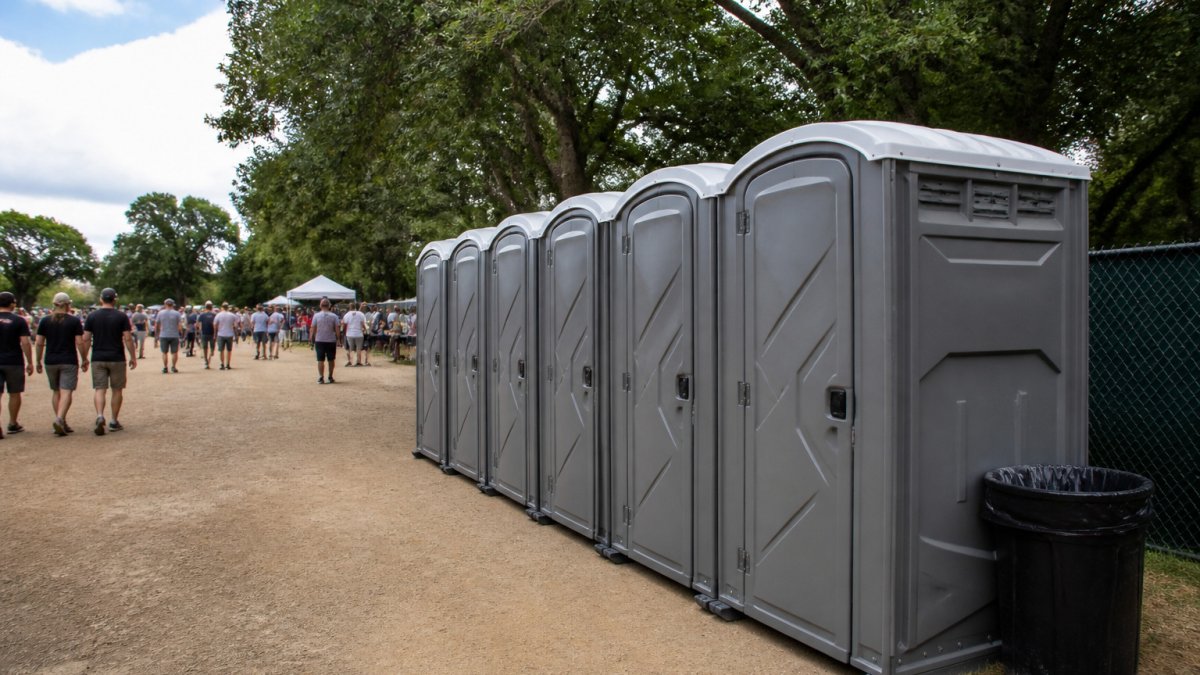
Place restrooms within a short walk of where crews actually work, not where the site trailer happens to sit.
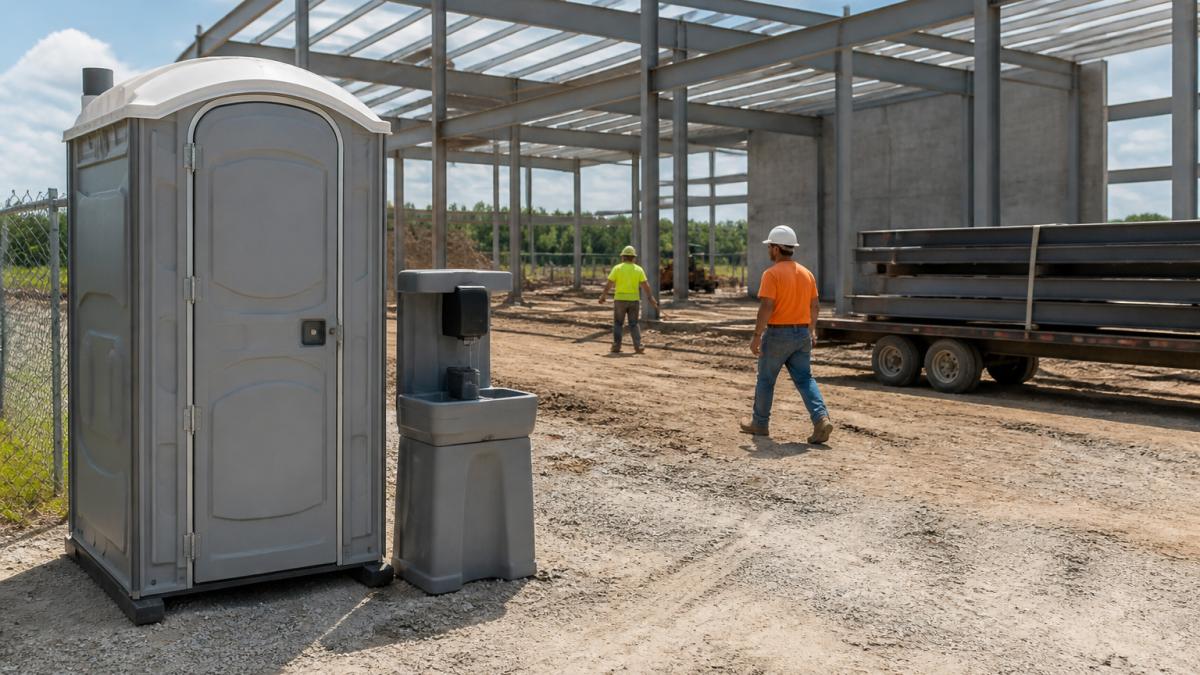
Good placement follows the work. On a large site, that means spreading units across zones rather than clustering them at one corner.
- Put units near active work areas, not just the entrance
- Keep handwash stations beside every restroom group
- Place units on firm, level ground with clear access for service trucks
For large or phased sites, our guide to portable restroom placement on large sites covers zone planning in more detail.
Portable Restroom Servicing Frequency and Accountability
Servicing frequency depends on unit count, crew size, and weather, so there's no single correct number. What matters is a fixed schedule with a named provider, a posted log, and a checklist that turns general hygiene advice into an actionable system.
A common mistake is treating service as reactive. Crews call when a unit is full, the provider comes when it can, and the site loses time in between. Set the cadence up front instead.
Set a Servicing Cadence by Use, Not by Habit
A workable starting point for most construction sites is one service visit per unit per week for a standard crew, tightened to twice weekly when a unit serves more than its rated worker count, when temperatures are high, or when the unit is the only facility on a remote site. Adjust from there based on the service log, if a unit is full before the scheduled visit, the interval is too long.
- Agree on the interval and the provider's response window before the project starts
- Confirm the provider services your actual location, including travel time and access
- Post the schedule and the provider's contact where crews can find it
Daily Inspection Checklist
Assign these to the site lead who owns the sanitation plan, with a backup named for days off:
- Confirm each unit has paper, soap, and sanitizer
- Check handwash water levels before each shift
- Verify doors latch and locks work
- Clear trash and debris from around units
- Confirm the path to units is clear, dry, and lit
- Report damage, clogs, or full units the same day
Restocking and Cleaning Frequencies
- Daily: wipe high-touch surfaces, restock soap and paper, check water
- Weekly: deep clean interior and exterior, inspect for damage, review the service log
- Per service visit: pump, rinse, recharge, and log the visit
A Simple Responsibility Matrix
| Task | Owner | Frequency |
|---|---|---|
| Daily inspection and restock | Site lead | Every morning |
| Service visit log review | Site manager | Weekly |
| Provider scheduling and escalation | Site manager | As needed |
| Damage and clog reporting | Any crew member | Same day |
Worksite Cleanliness Best Practices for Busy Crews
Worksite cleanliness best practices are the daily habits that keep facilities usable between service visits. They take minutes and prevent the mess that shuts a unit down.
Assign these to the same site lead who owns the sanitation plan:
- Wipe down high-touch surfaces each morning
- Restock soap, paper, and sanitizer daily
- Check handwash water levels before each shift
- Clear trash and debris from around units
- Report damage or clogs the same day
- Keep the path to units clear and dry
Clean facilities get used properly. Neglected ones get avoided, and workers find workarounds that cost time.
Measuring the Productivity Impact of Site Sanitation
Most guides skip measurement entirely. That's a mistake, because you can't defend a sanitation budget you can't tie to results. The unique angle here is treating sanitation like any other site variable you baseline, track, and adjust, not a comfort line item.
You won't find a clean published number linking site sanitation to construction productivity. The research is thin. What you can do is build a simple measurement system on your own site using indicators that are already observable.
Build a Baseline Before You Change Anything
Pick one work zone and one crew. For two weeks, record the following on a shared log, a clipboard at the trailer or a simple spreadsheet works:
- Restroom trip time: ask a handful of workers to note the clock time when they leave and return for a restroom break. Average the round trip. On a sprawling site, a 12-minute round trip taken twice a day by 30 workers is 12 hours of lost time per day, that's the number that gets a budget approved.
- Queue time: note how long workers wait at shift change and after lunch. If the line runs past the break, that's overtime or lost production.
- Service misses: log every time a unit is full, out of water, or out of soap before the scheduled service. Each miss forces a workaround, an off-site trip, a borrowed facility, or a skipped handwash.
Turn the Log into a Weekly Review
Once a week, the site manager reviews the log against three questions:
- Did any service miss cost measurable work time? If yes, the servicing interval is wrong or the provider is unreliable.
- Is restroom trip time trending up as the site expands? If yes, units need to move with the work.
- Did output per crew-hour change after a placement or servicing change? If yes, you have a defensible case for the next project.
What the Numbers Let You Do
A baseline turns a soft argument into a hard one. When a project manager asks why the sanitation line item is what it is, you can point to hours lost per week, service misses per month, and output per crew-hour before and after.
Improved sanitation is framed by providers as a way to reduce work interruptions from workers leaving site to find facilities, according to Lang Restroom Trailers' jobsite sanitation guidance.
Sanitation Access on Remote, Temporary, and Changing Sites
Remote and temporary sites break standard planning. Crew counts swing, locations shift, and there's no building to fall back on.
This is where fixed contracts hurt. Seasonal farm crews, short demolition jobs, and pop-up event sites need units that scale up and down.
- Size to peak crew, then reduce units as the crew shrinks
- Plan delivery and pickup around phase changes
- Confirm the provider actually services your location before you sign
If your site is rural or hard to reach, ask about service range and delivery time before the project starts.
Planning Sanitation for Your Next Project
Pull the pieces together and the plan writes itself. Size to your peak crew, place units where the work is, set a service cadence, and name who owns it.
That's the whole argument for improving worker productivity through better site sanitation access: fewer small delays, fewer workarounds, more time on the job.
| Step | What to Do | Who Owns It | When |
|---|---|---|---|
| 1. Size | Count peak crew, add accessible units | Site manager | Before mobilization |
| 2. Place | Map units near active work zones | Site lead | Before crews arrive |
| 3. Schedule | Set servicing interval and post it | Site lead | Before crews arrive |
| 4. Clean | Daily wipe, restock, and check | Assigned crew member | Every morning |
| 5. Measure | Log service misses and break overruns | Site manager | Weekly review |
When you're ready to set up facilities for a project around Delta and Central Utah, portable restroom and porta john rentals from Patriot Solutions cover jobsites, farms, and events, with clean equipment and fast local delivery.
Frequently Asked Questions
How does access to clean restrooms affect worker productivity?
Crews that have to leave the site or walk far to find a restroom lose working time on every trip. Providers report fewer disruptions when restrooms are on site and serviced, though they give no measured effect size. The broader UN-Water 2009 estimate, cited by the CEO Water Mandate, puts improved sanitation at roughly 1,000 extra hours per covered household per year for work, study, and caregiving. On a jobsite, the practical gain shows up as less downtime, fewer trips off site, and steadier focus through the day.
How many portable restrooms does a construction site need?
A common benchmark in jobsite sanitation guidance is one toilet per 20 workers, per Satellite Industries' 2025 compliance guide. That is a starting point, not a rule that fits every job. Adjust upward for multi-shift schedules, large crews, heat, or sites where workers cannot easily leave. Pair toilets with accessible handwashing stations and potable drinking water, and confirm the count against the requirements that apply to your project before you order.
How often should portable restrooms be serviced on a jobsite?
Servicing frequency depends on crew size, weather, and how hard the units are used. A busy construction site with a full crew typically needs service more often than a small event. Put the schedule in writing as part of your jobsite sanitation plan, name who confirms each service visit, and keep a log. Missed pickups are the most common complaint site managers raise, so build in a check that the truck actually arrived and the unit was cleaned.
Where should portable restrooms be placed on a worksite?
Portable restroom placement should balance distance and access. Put units within a short walk of the main work area so trips do not eat the day, but away from material staging, heavy equipment paths, and food areas. Keep them on level ground, reachable in bad weather, and lit if crews work early or late. For remote or seasonal sites, place units where service trucks can reach them without getting stuck, and revisit placement as the site layout changes.
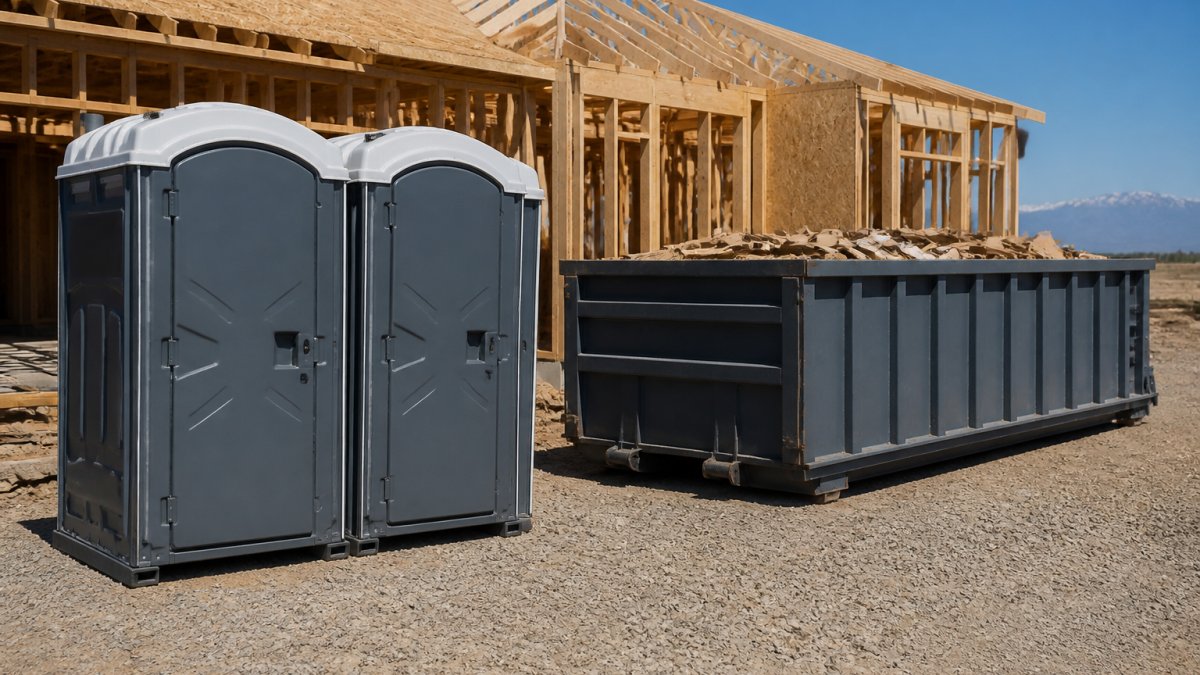
Crews notice when facilities are missing, dirty, or out of reach, and the time lost adds up quietly across a season. Patriot Solutions supplies clean portable restrooms and roll-off dumpsters with fast delivery and dependable local service, so your site stays running without sanitation delays. Get started with Patriot Solutions and build a sanitation plan your crew can count on.